Understanding timelines Social Studies Worksheets for Ages 5-9
5 filtered results
-
From - To
Explore our engaging "Understanding Timelines" Social Studies worksheets, specifically designed for children aged 5-9. These printable resources make learning about history and chronology fun and interactive! Our worksheets introduce young learners to the concept of timelines, helping them understand the sequencing of events in both personal and historical contexts. Through vibrant illustrations and simple activities, kids will develop essential skills, including critical thinking and comprehension. Perfect for home schooling or classroom use, these worksheets encourage children to visualize time, fostering a strong foundation in social studies while enhancing their ability to organize and connect information. Download your worksheets today!
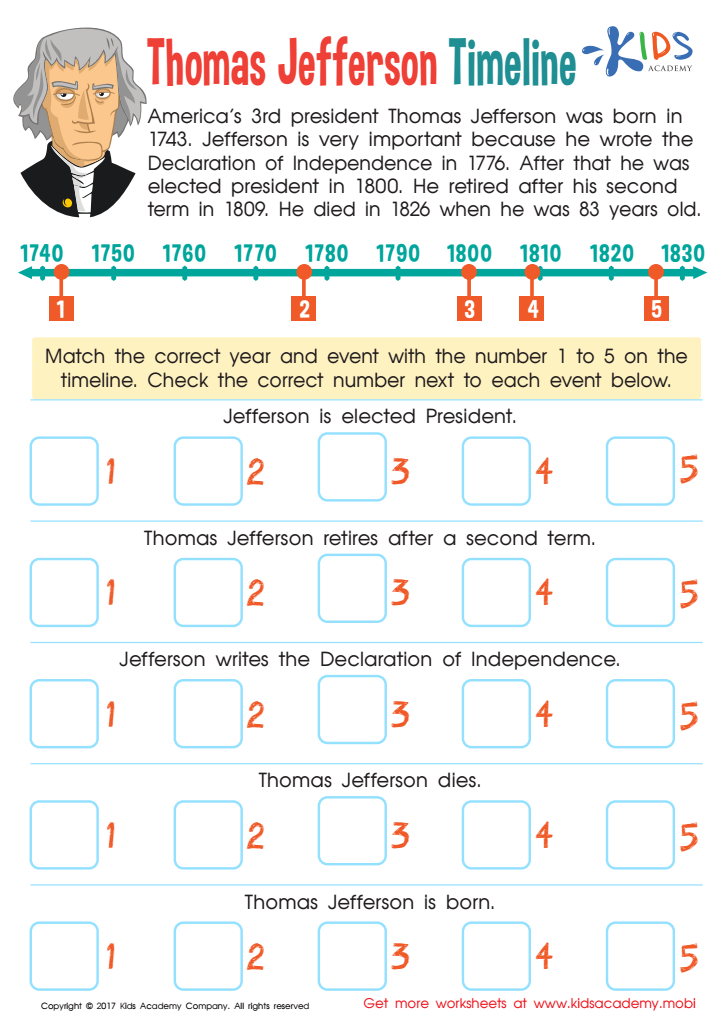
Thomas Jefferson Timeline Worksheet
 Assign to My Students
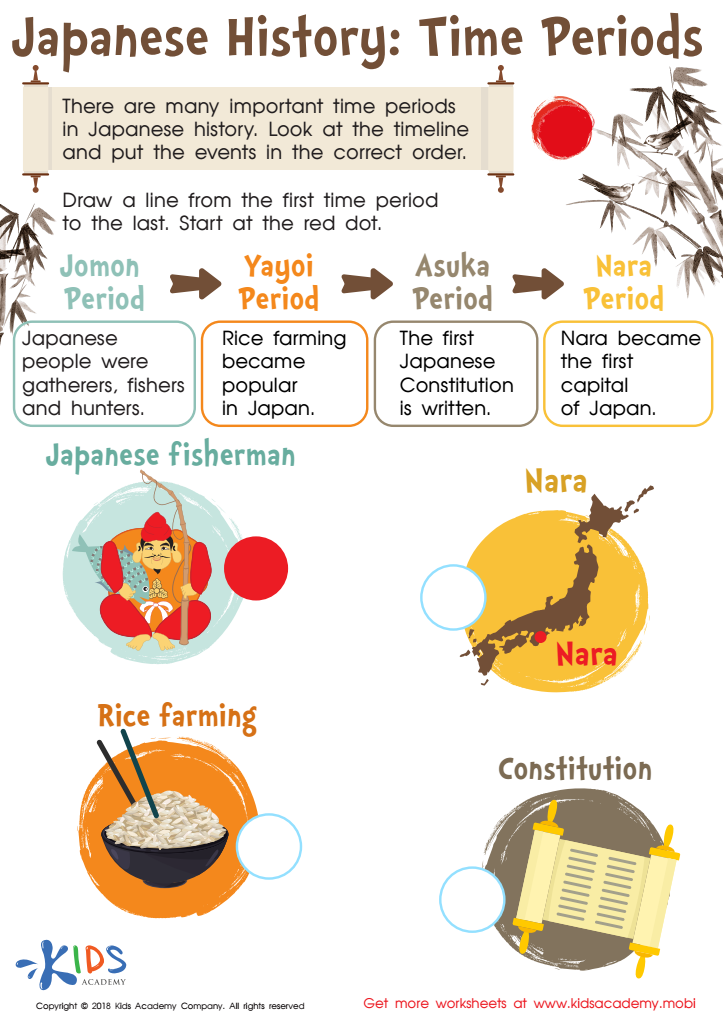
Japanese History: Time Periods Worksheet
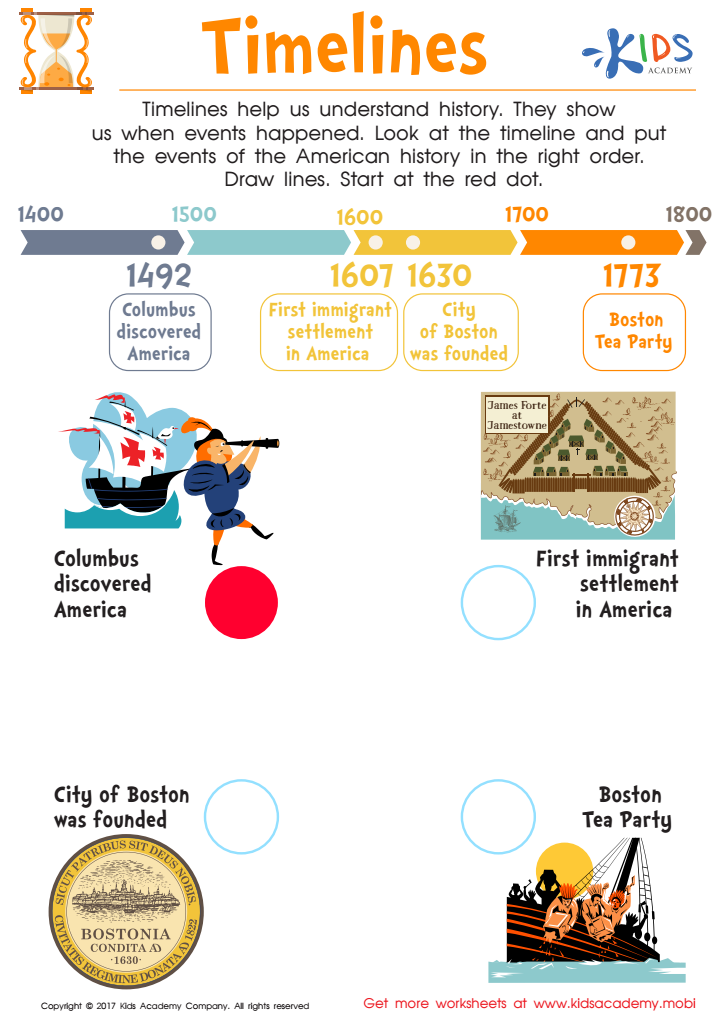
American History Timeline Worksheet
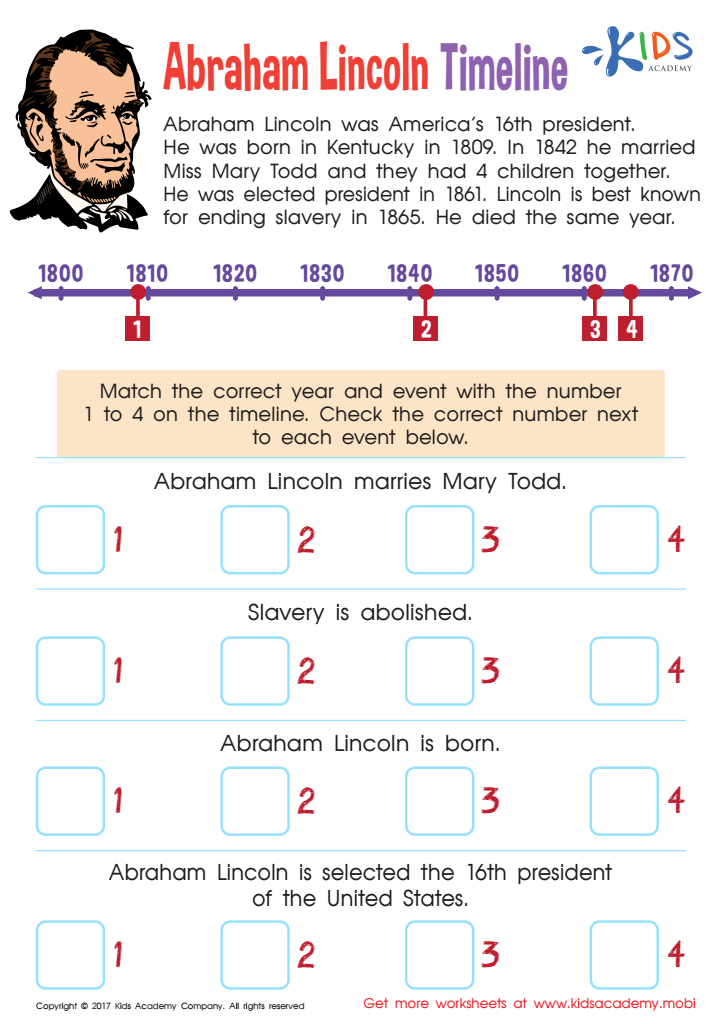
Abraham Lincoln Timeline Worksheet
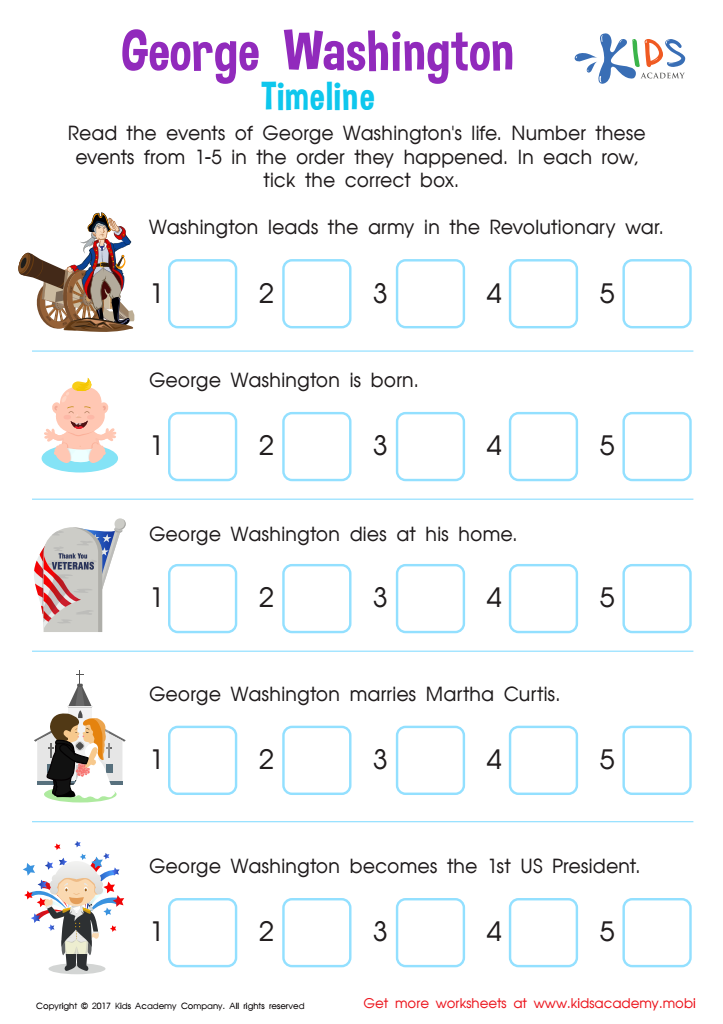
George Washington Timeline Worksheet






Understanding timelines in Social Studies is essential for young learners aged 5-9 because it establishes a foundation for grasping historical events, cultural contexts, and the chronology of personal and societal developments. Timelines offer a visual representation of events, helping children comprehend the sequence and relevance of happenings over time. This skill nurtures their ability to recognize cause-and-effect relationships and understand how events are interconnected.
For parents and teachers, fostering timeline awareness encourages critical thinking and promotes organization skills. As children engage with timelines, they begin to categorize and organize information effectively, a crucial skill in both academic and real-world scenarios. These skills also empower them to connect past experiences with current understanding, enhancing their ability to reflect on and learn from history.
Moreover, timelines foster a sense of identity and belonging, as children learn about their family histories and cultural backgrounds. By exploring timelines, children can appreciate diversity in narratives, understanding that history is shaped by a multitude of voices and experiences. Ultimately, by encouraging timeline comprehension, parents and teachers facilitate a deeper appreciation for history, engage learners in meaningful discussions, and foster a lifelong curiosity about the world around them.








