Phonics recognition Writing Worksheets for Ages 5-9
5 filtered results
-
From - To
Unlock the power of phonics with our engaging Phonics Recognition Writing Worksheets designed for children ages 5-9. These colorful and interactive worksheets are tailored to enhance reading and writing skills, enabling young learners to recognize sounds and apply phonics rules effectively. Activities include letter matching, sound identification, and creative writing prompts that make learning fun and effective. Perfect for classroom use or at-home education, these worksheets cater to different skill levels, ensuring that every child can thrive. Foster a love for literacy while helping your child master essential phonics concepts with our expertly crafted worksheets today!
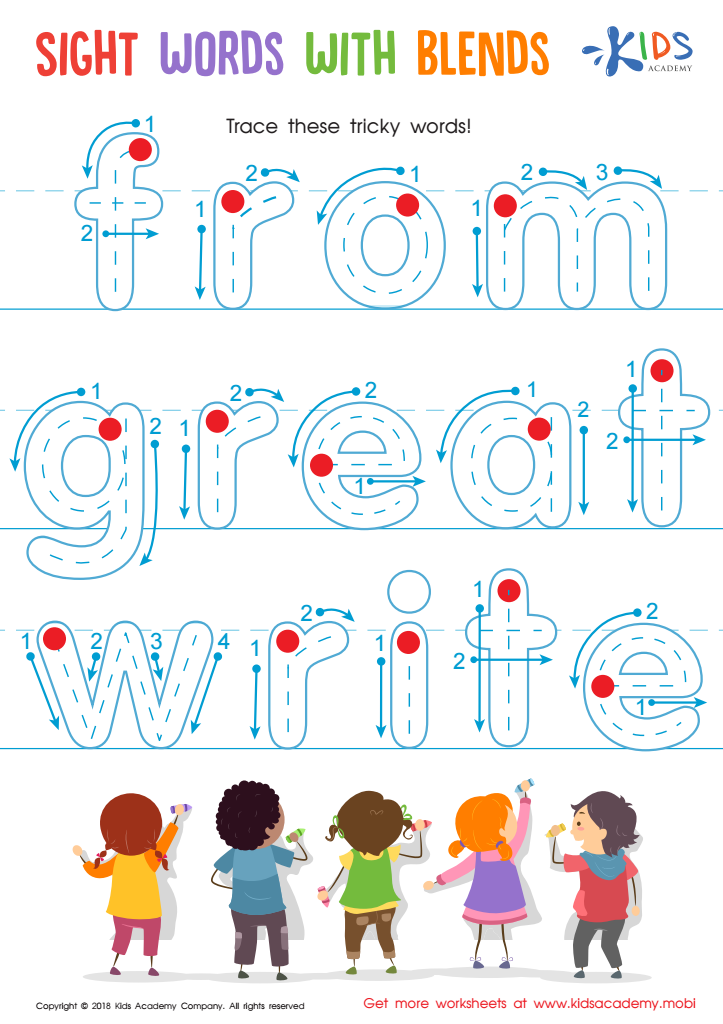
Sight Words with Blends Worksheet
 Assign to My Students
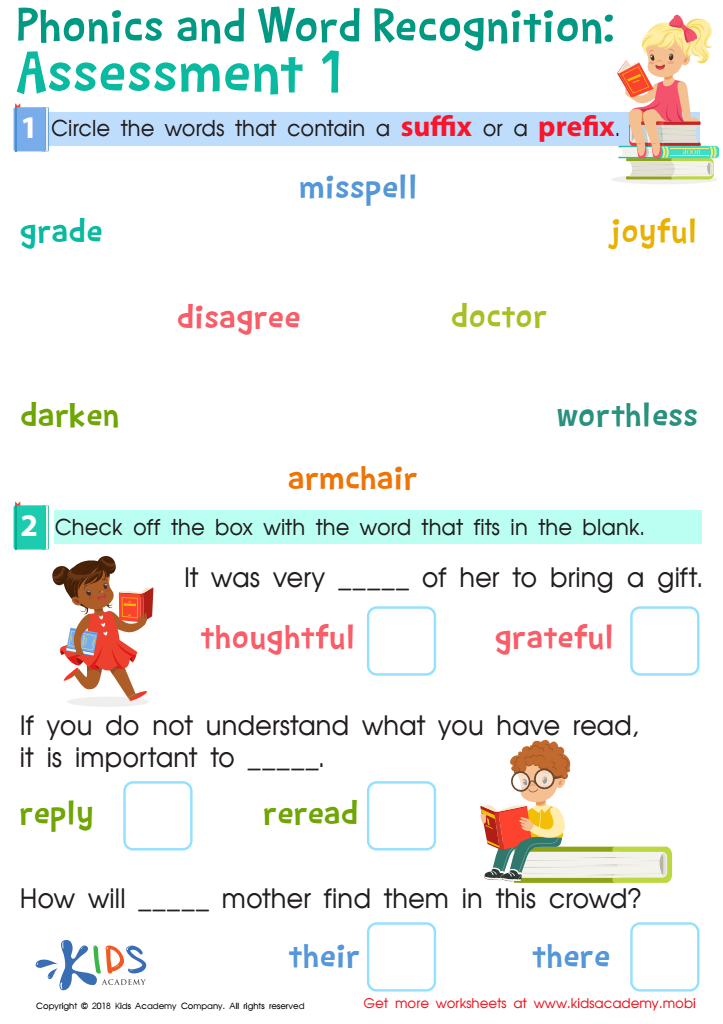
Phonics and Word Recognition: Assessment 1 Worksheet
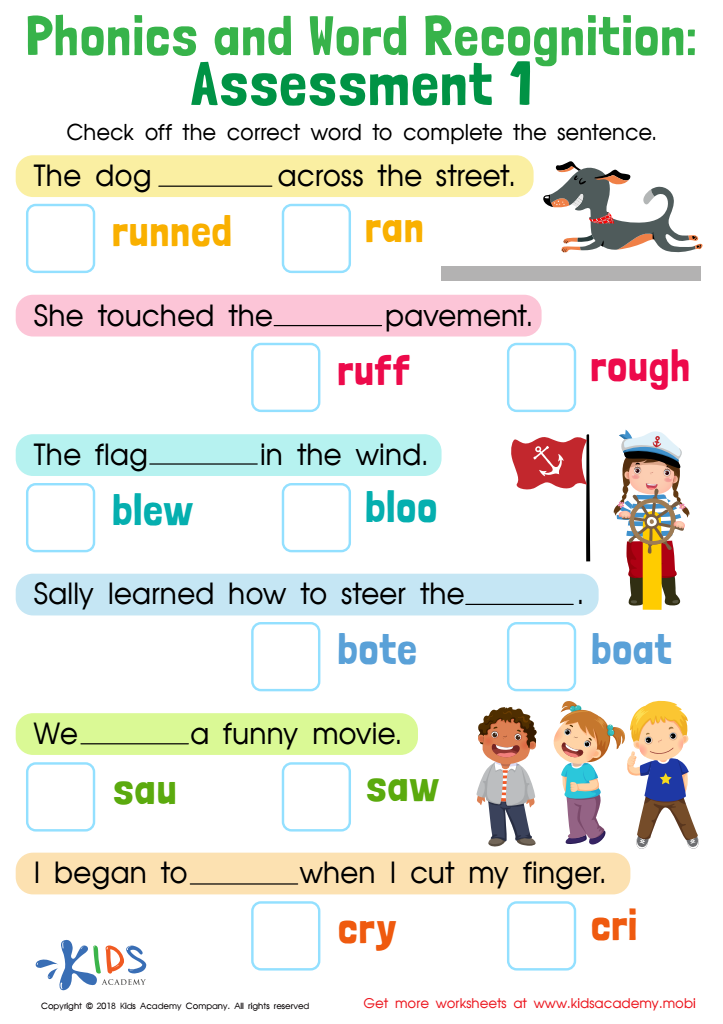
Phonics and Word Recognition: Assessment 1 Worksheet
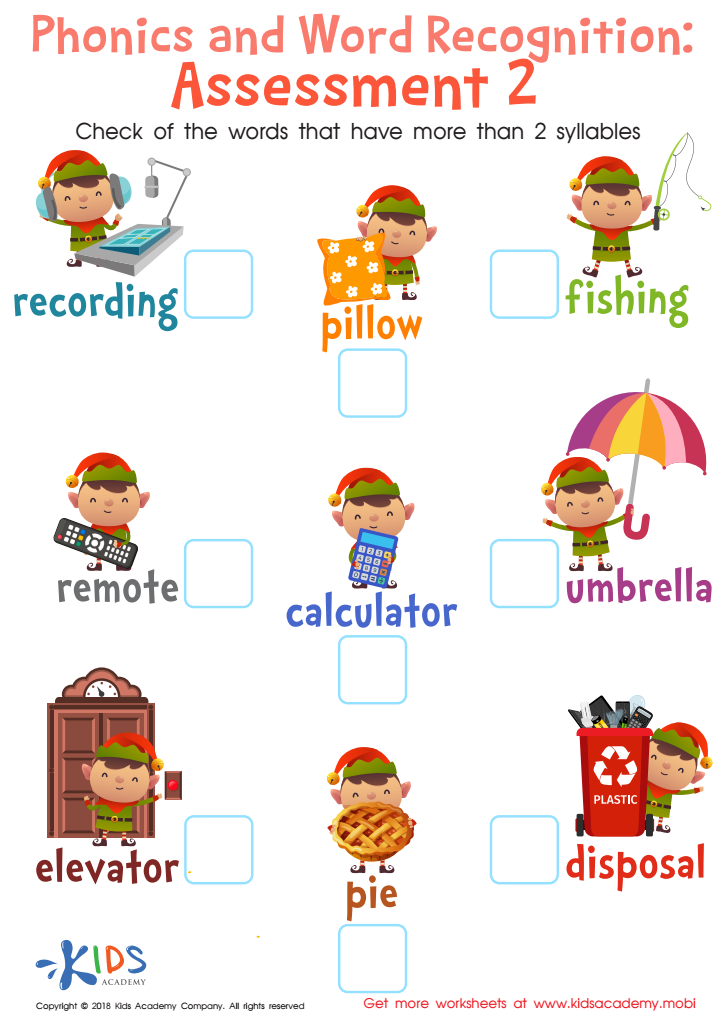
Phonics and Word Recognition: Assessment 2 Worksheet
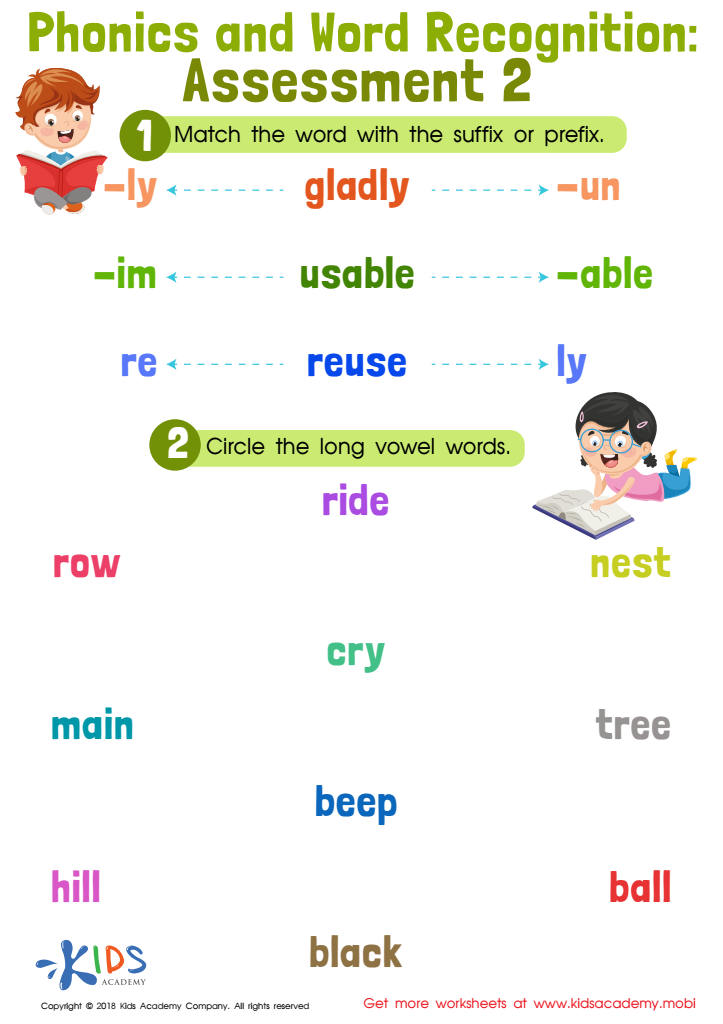
Phonics and Word Recognition: Assessment 2







.jpg)
Phonics recognition writing is a crucial skill for children aged 5 to 9, as it serves as the foundation for literacy development. Parents and teachers should prioritize this area because phonics helps young learners decode words, enabling them to read independently. Understanding the relationship between letters and sounds allows children to systematically approach reading and spelling, leading to enhanced communication skills.
Moreover, mastery of phonics contributes to broader literacy practices, facilitating greater comprehension and enjoyment of reading. When children grasp phonics, they become more confident readers, which nurtures a lifelong love for literature. This confidence is essential not just academically— it supports critical thinking and cognitive development.
Additionally, strong phonics skills positively impact children’s writing abilities. Standardized assessments often reflect literacy development linked to phonics, and disparities in these skills can lead to challenges in later schooling. By nurturing phonics recognition writing, parents and teachers can empower students to become proficient communicators, setting them on a path to success in all areas of learning.
In conclusion, prioritizing phonics recognition writing equips children with fundamental skills that are essential for their academic and personal development, ensuring a solid foundation for future achievement.








