
Understanding syllables Writing Worksheets for Ages 5-9
3 filtered results
Difficulty Level
Grade
Age
-
From - To
Subject
Activity
Standards
Discover the essential "Understanding Syllables Writing Worksheets" designed for children ages 5-9! These engaging printable worksheets help young learners grasp the concept of syllables, a fundamental building block for reading and writing. Our activities promote phonemic awareness, enabling kids to identify, count, and break down words into syllables. Interactive exercises like matching, sorting, and filling in the blanks make learning enjoyable while reinforcing essential language skills. Perfect for teachers or parents seeking to enrich their child's education at home or in the classroom. Download our worksheets today and set your child on a path to literacy success, one syllable at a time!
Favorites
With answer key
Interactive
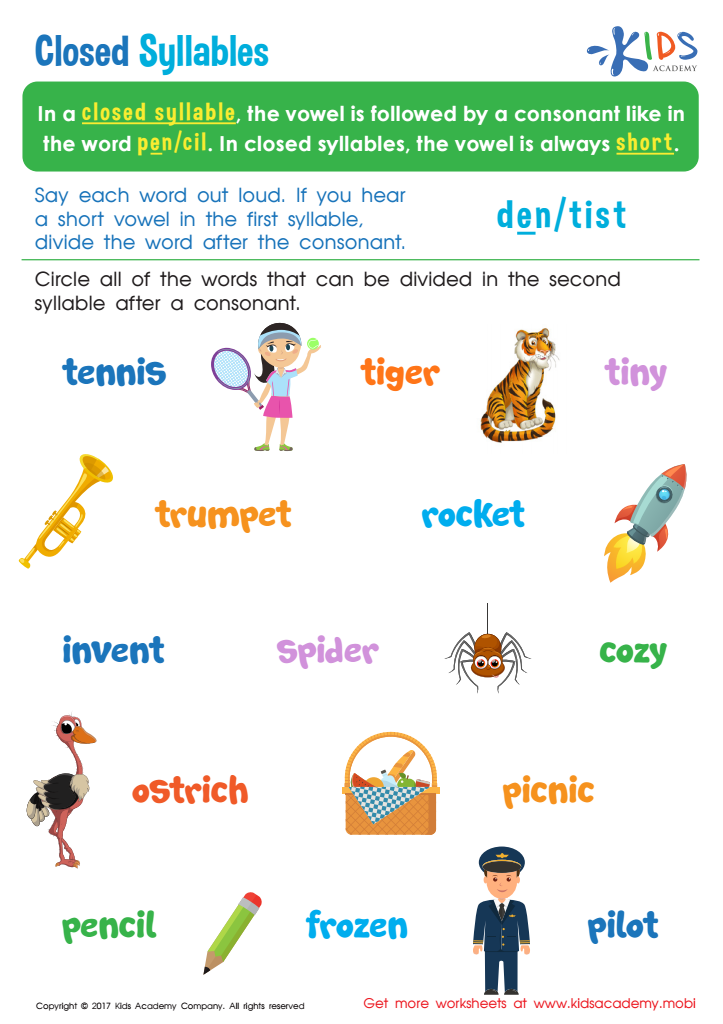
Closed Syllable Spelling Worksheet
Learning syllables can be tough, but we can make it easier! Look for long and short vowel sounds to identify closed syllables. This worksheet can help 3rd graders do just that, with its fun and colorful design.
 Assign to My Students
Closed Syllable Spelling Worksheet
Worksheet
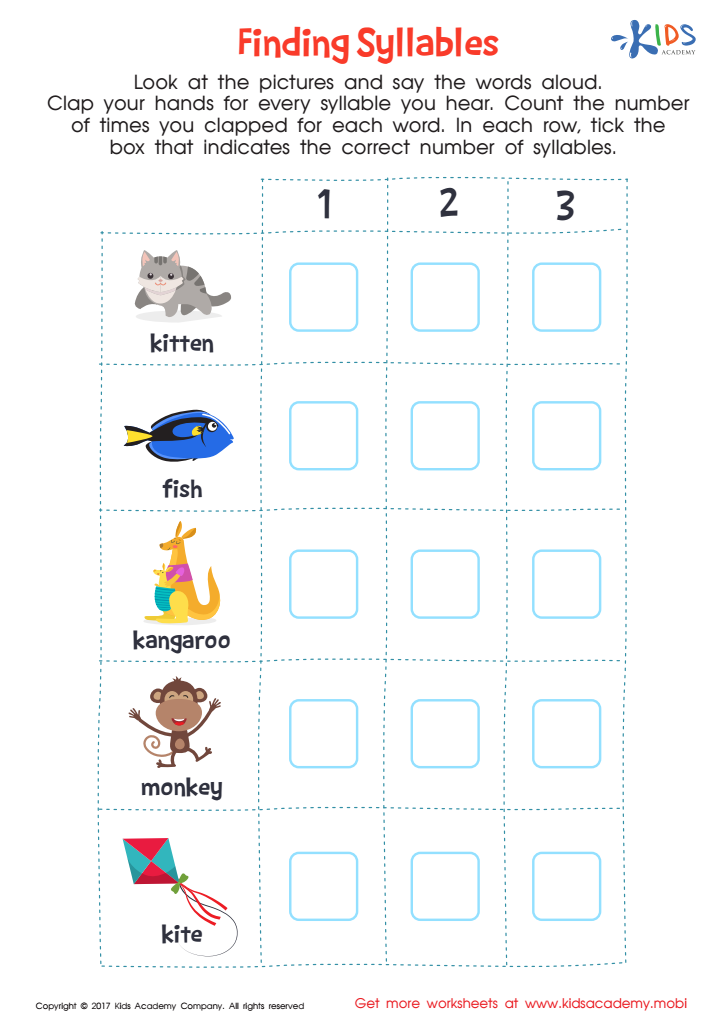
Finding Syllables Word Structure Worksheet
Have your kid clap and count syllables in words to improve their reading and spelling! Use this word structure worksheet for a fun activity - syllables!
Finding Syllables Word Structure Worksheet
Worksheet
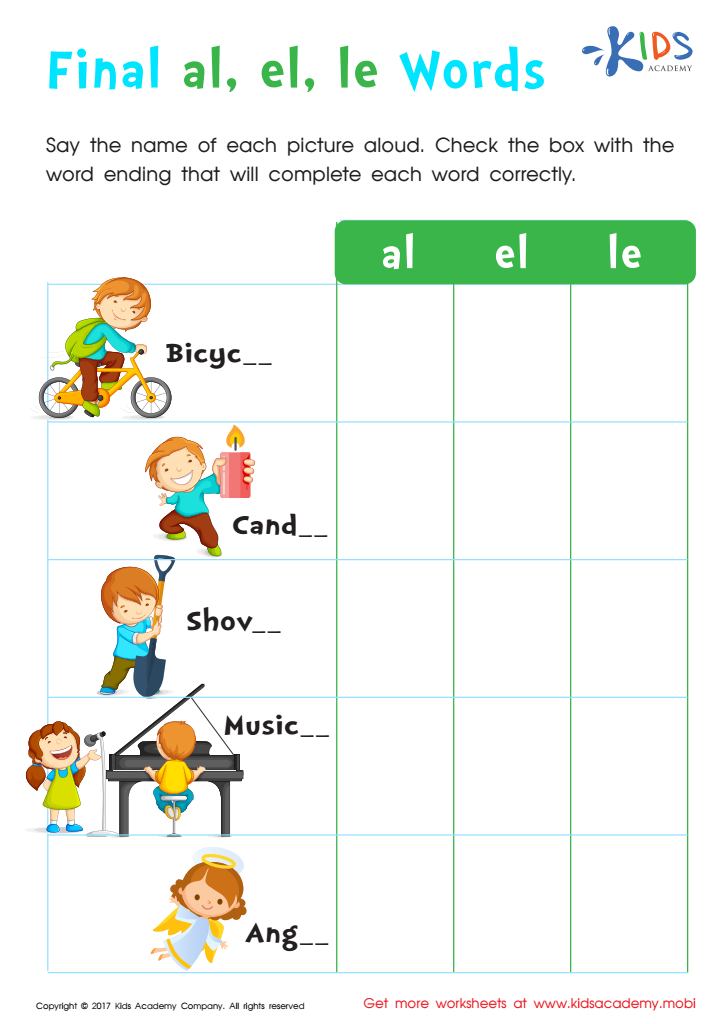
Spelling Words Ending with –le, –el and –al Worksheet
Spelling tricky words with the same ending sounds can be fun with this worksheet! Kids learn to spell -le, -el, and -al words while enjoying colorful pictures. It's a great way to refine their usage of tricky word endings.
Spelling Words Ending with –le, –el and –al Worksheet
Worksheet
Join Kids Academy for Free
Who is primarily going to use this learning content?







Understanding syllables is crucial for children aged 5-9 as it lays the foundation for their literacy development. Syllables are the building blocks of words, helping young learners break down and decode unfamiliar vocabulary. By grasping syllable patterns, children improve their reading fluency because they can approach longer words more confidently.
Additionally, recognizing syllables supports spelling skills. When children learn about syllable structure, they become more adept at spelling, as they can segment words into manageable parts. This is especially beneficial for words that may not follow conventional spelling rules.
In the age of digital communication and writing, clear written expression has never been more important. Teachers and parents should promote syllable awareness to enhance children's sentence construction, enabling them to create variety in their writing. Understanding syllables also assists in language rhythm and phonemic awareness, which are vital for oral communication skills.
Furthermore, early mastery of syllables contributes to a love for reading and writing, making it a valuable focus in education. By fostering this skill, parents and teachers empower children to articulate their thoughts effectively and boosts their confidence as learners in a rapidly evolving society.








