Phonological awareness Phonics Worksheets for 5-Year-Olds
8 filtered results
-
From - To
Discover our engaging Phonological Awareness Phonics Worksheets designed specifically for 5-year-olds! These interactive resources help young learners develop essential phonemic skills, crucial for reading success. Our worksheets incorporate fun activities focused on sound recognition, rhyme identification, and syllable segmentation, laying a solid foundation for phonics. Each visually appealing worksheet encourages children to explore language in a playful manner, enhancing their auditory discrimination and vocabulary. Suitable for both classroom and home use, these worksheets promote early literacy skills while keeping learning enjoyable. Start your child on the path to reading readiness with our thoughtfully crafted phonological awareness activities today!
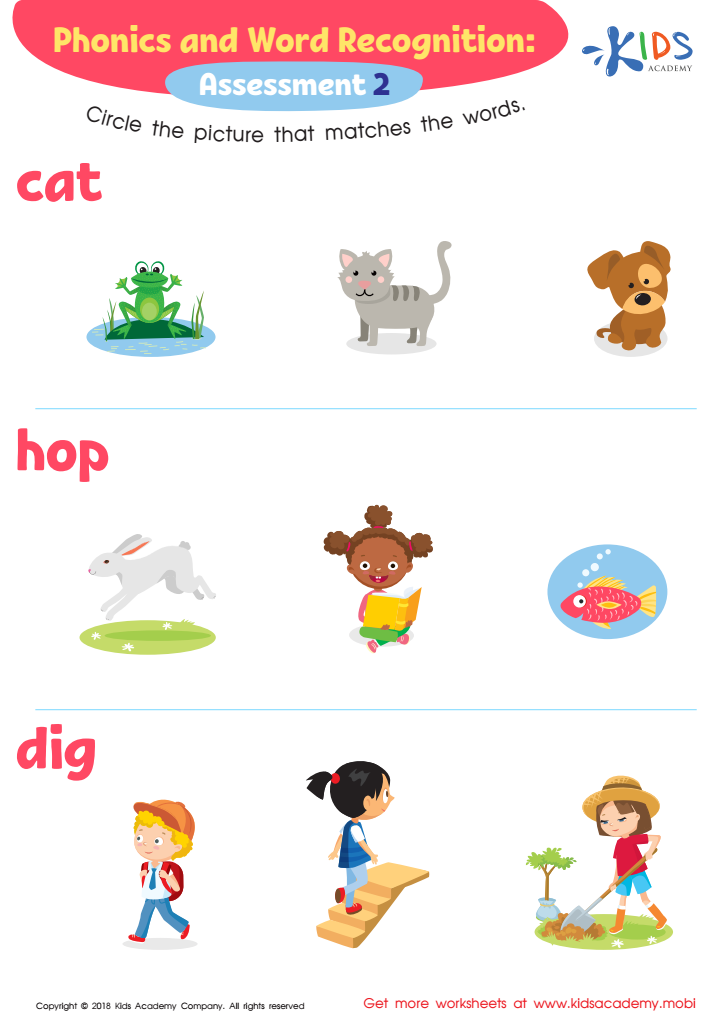
Phonological Awareness: Assessment 2 ELA Worksheet
 Assign to My Students
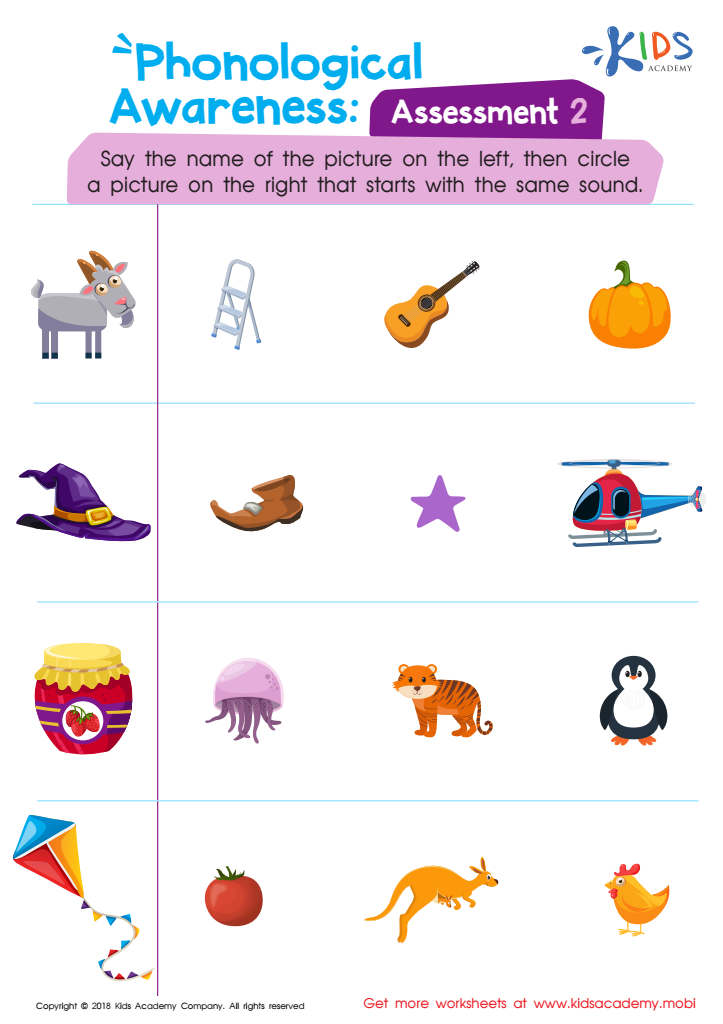
Phonological Awareness: Assessment 2 Worksheet
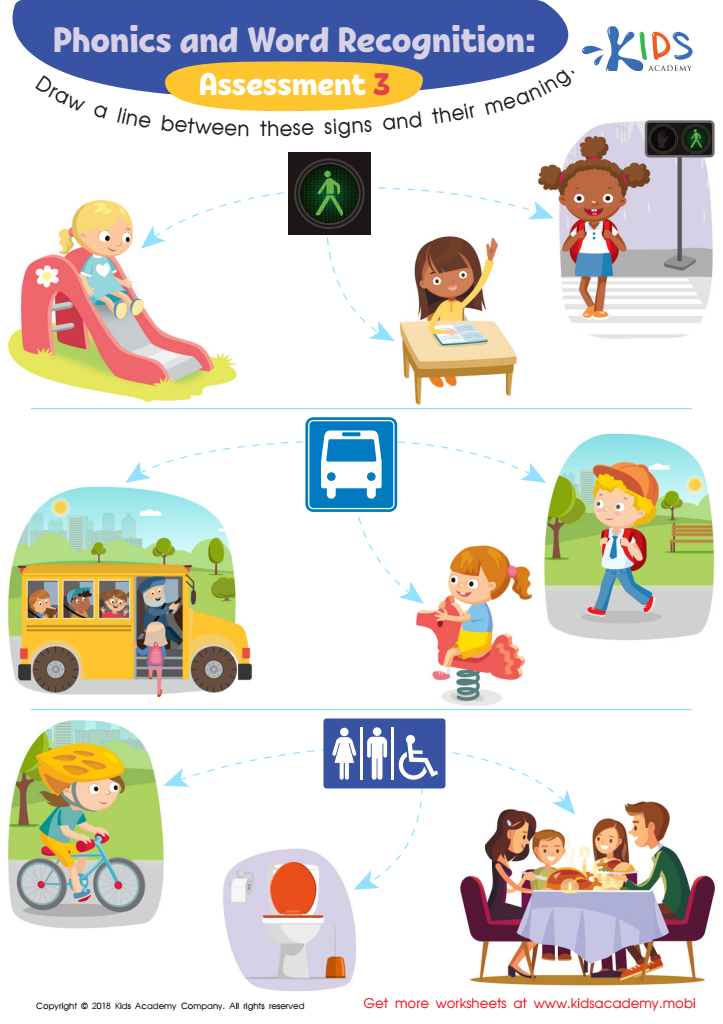
Phonological Awareness: Assessment 3 ELA Worksheet
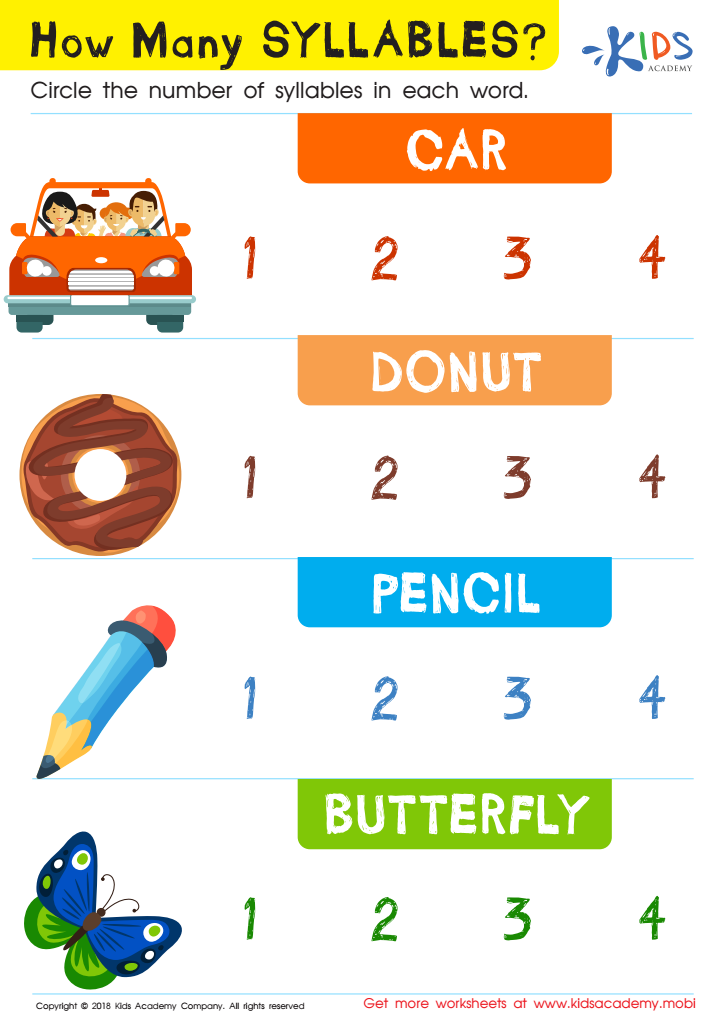
How Many Syllables? Worksheet
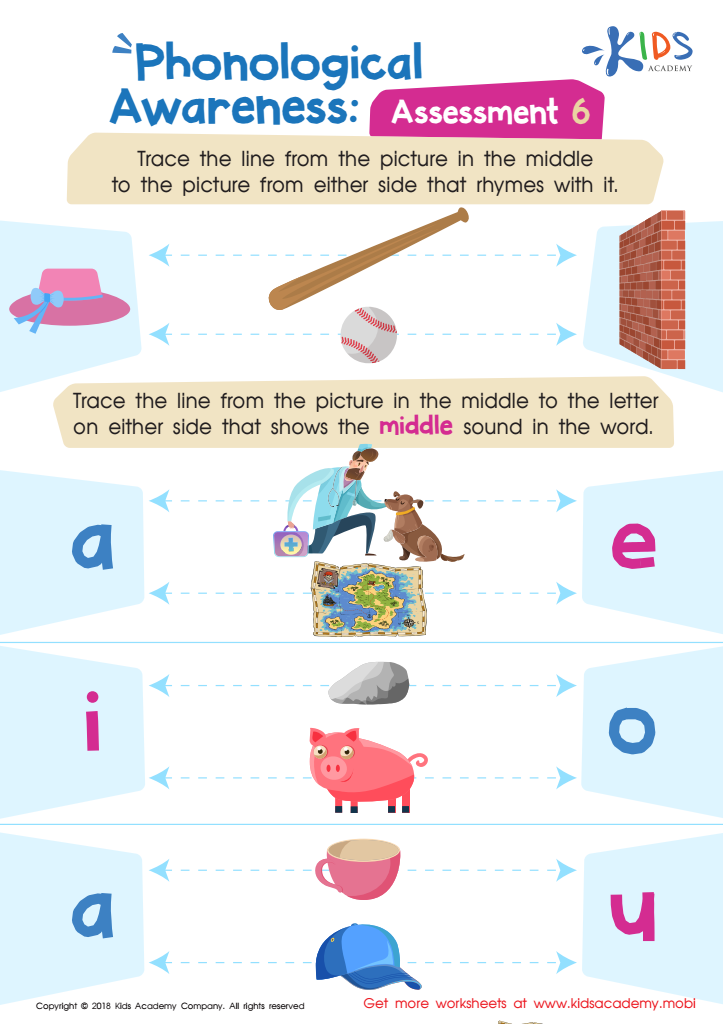
Phonological Awareness: Assessment 6 Worksheet
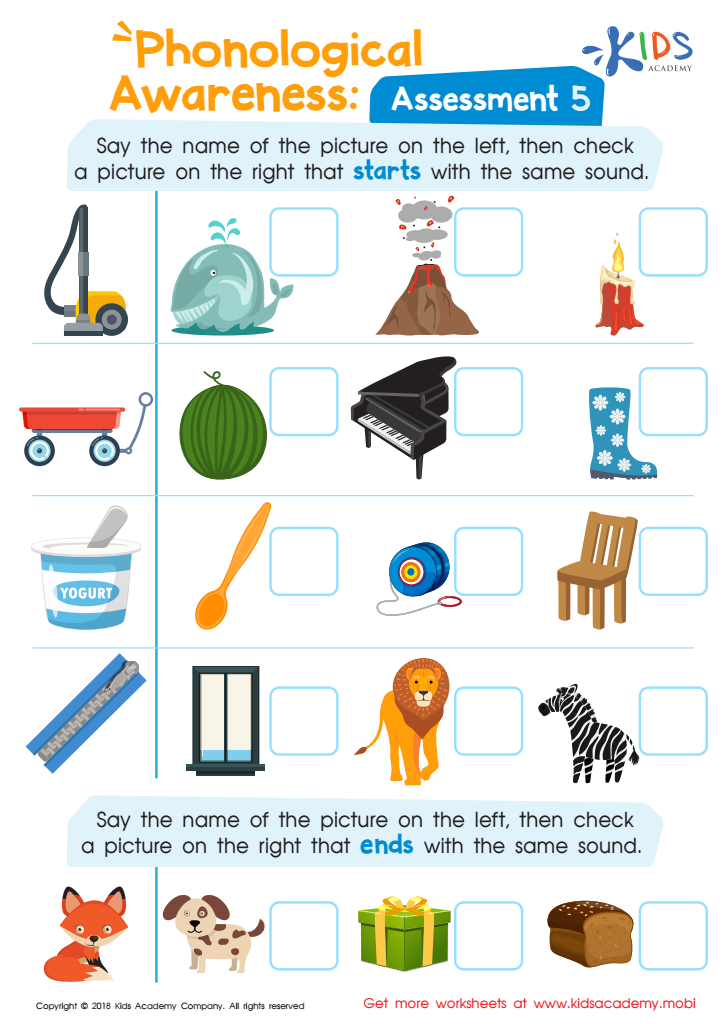
Phonological Awareness: Assessment 5 Worksheet
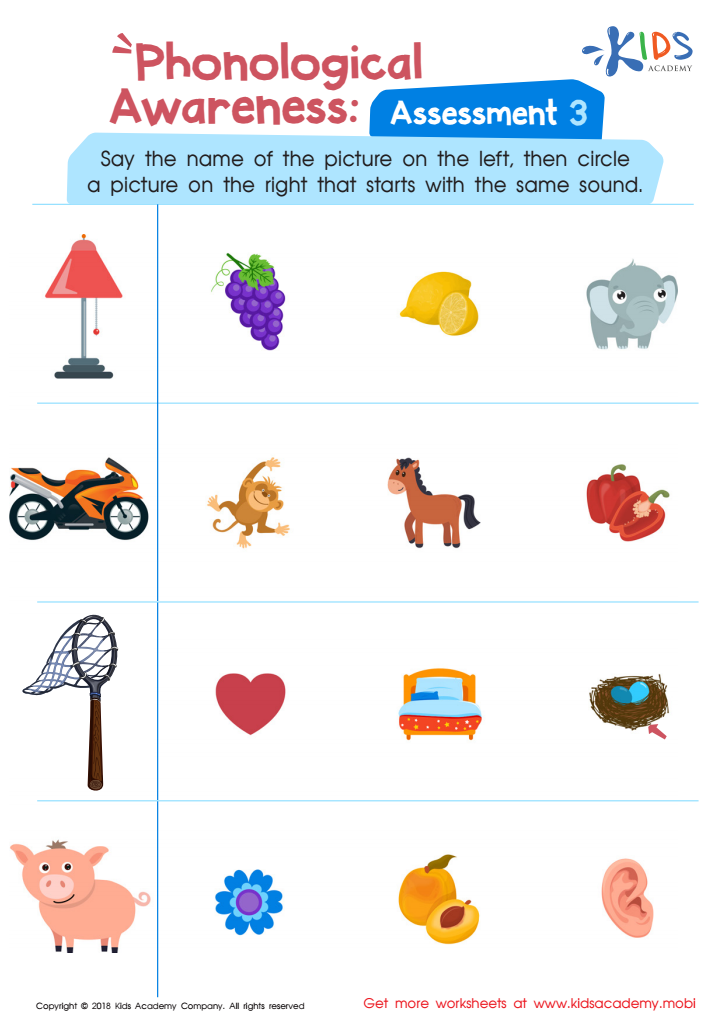
Phonological Awareness: Assessment 3 Worksheet
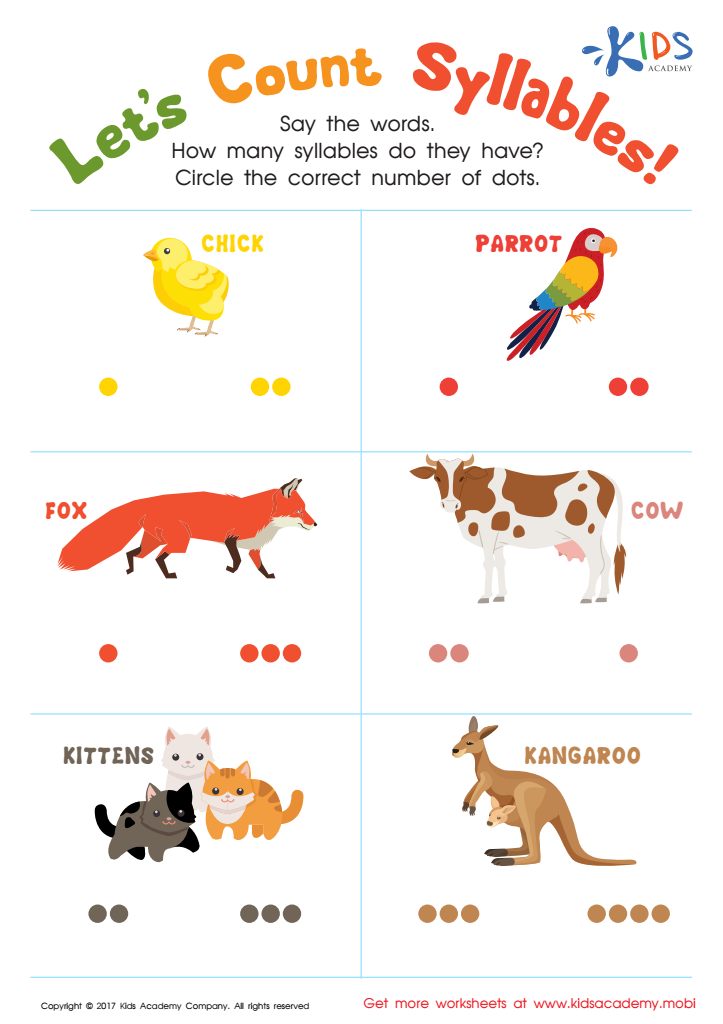
Lets Count Syllables Worksheet








Phonological awareness and phonics are essential components of early literacy development, making them crucial for parents and teachers of 5-year-olds. Phonological awareness refers to the ability to recognize and manipulate the sounds in spoken language, including rhymes, syllables, and phonemes. It lays the groundwork for reading and writing skills, as it enables children to understand how sounds correspond to letters and words.
When children develop strong phonological awareness, they can better decode and encode language, improving their reading fluency and comprehension. Phonics, which focuses on the relationship between sounds and letters, reinforces this understanding, helping children to sound out words and build vocabulary.
For parents and teachers, fostering these skills in young learners promotes confidence and enthusiasm for literacy. Early intervention is key; children who struggle with these foundational concepts may face challenges in reading later on. Engaging activities like rhyming games, songs, and reading aloud can enhance these skills, creating a fun learning environment. By prioritizing phonological awareness and phonics, adults can nurture a child’s love for reading, setting the stage for academic success and lifelong learning.







