Cognitive Development Worksheets for 5-Year-Olds - Page 9
197 filtered results
-
From - To

Night Sky Numbers Worksheet
 Assign to My Students
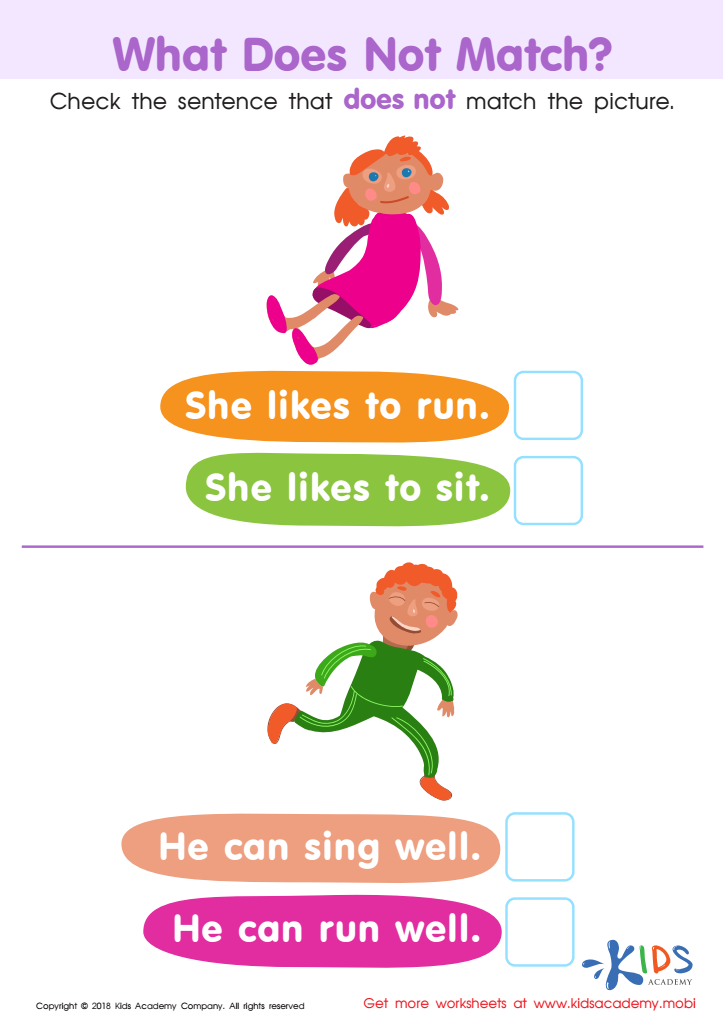
What Does Not Match? Worksheet








Cognitive development is crucial for 5-year-olds as it lays the foundation for future learning and overall development. During this stage, children rapidly enhance their ability to think, learn, and process information. Understanding cognitive development helps parents and teachers identify milestones, ensuring that children receive appropriate support and stimulation.
Caring about cognitive development fosters critical thinking, problem-solving skills, and creativity, which children will use throughout their lives. Engaging children in activities that promote these skills, such as puzzles, storytelling, and imaginative play, cultivates a love for learning and exploration.
Moreover, cognitive skills are closely linked to academic success; children who develop strong cognitive abilities are often more prepared for school challenges. Recognizing the signs of cognitive delays allows for early intervention, which can significantly improve long-term outcomes.
Additionally, supportive parenting and teaching methods, such as promoting discussions and asking open-ended questions, nurture children’s inquisitive nature. This creates an enriching environment that encourages exploration, curiosity, and resilience. Ultimately, by prioritizing cognitive development, parents and teachers ensure that children have the tools necessary to navigate their world, fostering a lifetime of learning and achievement.








