Improves counting skills Addition & Subtraction Worksheets for 5-Year-Olds
3 filtered results
-
From - To
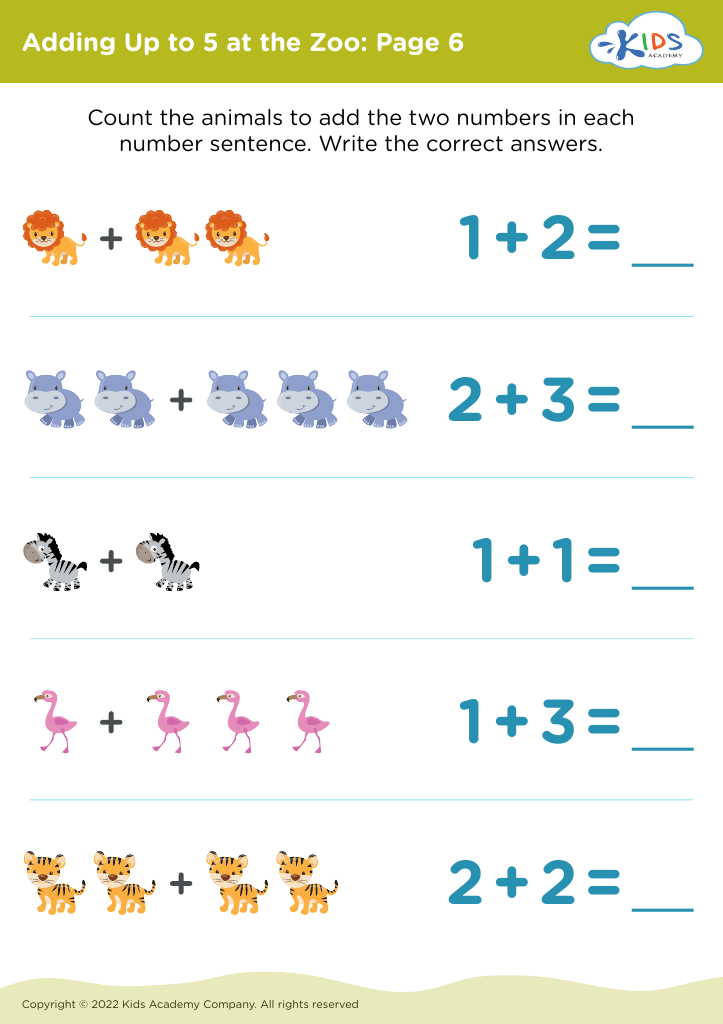
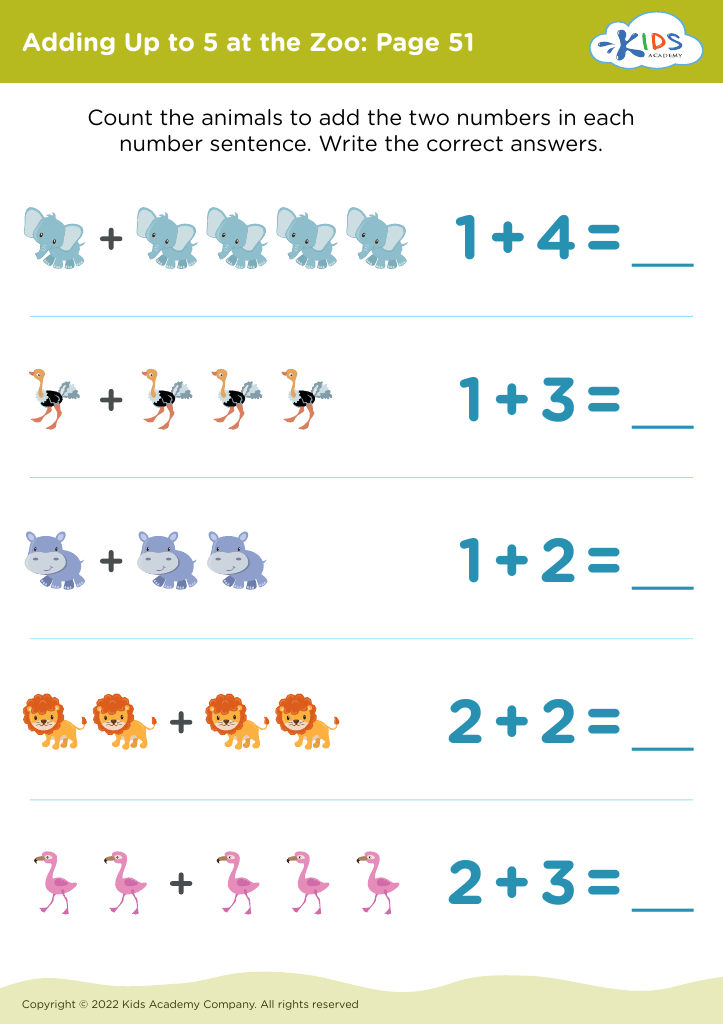
Enhance your 5-year-old's counting skills with our engaging Addition and Subtraction Worksheets! Designed specifically for young learners, these worksheets provide a fun and interactive way to develop essential math foundations. Through colorful illustrations and age-appropriate exercises, children will practice basic addition and subtraction concepts while improving their counting abilities. Our resources promote critical thinking, enhance number recognition, and boost confidence in mathematical skills. With easy-to-follow instructions and varying difficulty levels, these worksheets cater to every child's learning pace. Explore our collection today and pave the way for your child's success in math!
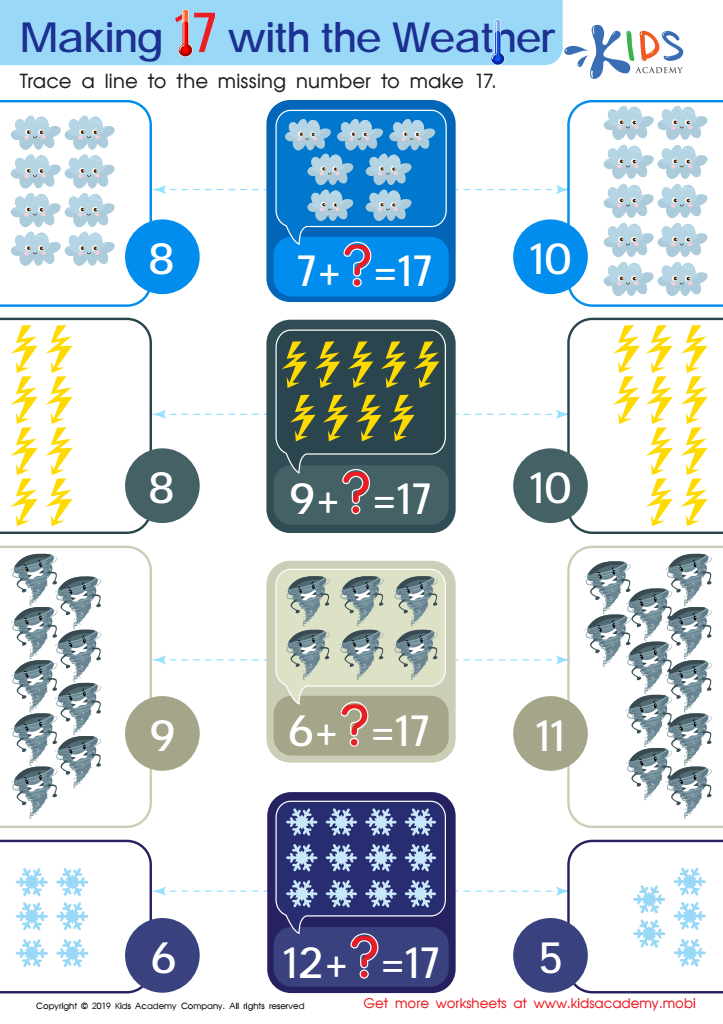
Making 17 with the Weather Worksheet
 Assign to My Students








Enhancing counting skills, along with addition and subtraction proficiency, is crucial for 5-year-olds as it lays the foundation for their future mathematical understanding and overall academic success. At this age, children are naturally curious and eager to explore new concepts, making it an ideal time to introduce essential math skills.
Firstly, counting is a fundamental skill that develops number sense, allowing children to recognize patterns and relationships between numbers. This foundational knowledge supports more advanced mathematical concepts later on, such as place value and multiplication.
Secondly, focusing on addition and subtraction during these early years cultivates critical thinking and problem-solving skills. These operations help children understand the concept of relationships—how numbers can be combined or separated.
Furthermore, early exposure to these skills fosters confidence and a positive attitude toward math. Engaging in games and activities that promote counting and basic operations can make learning fun and interactive, making it more likely that children will embrace math throughout their education.
Ultimately, by nurturing these skills promptly, parents and teachers empower children to develop a solid mathematical foundation, equipping them for future success both in school and in everyday life.








