Hand-eye Coordination Addition Worksheets for 5-Year-Olds
18 filtered results
-
From - To
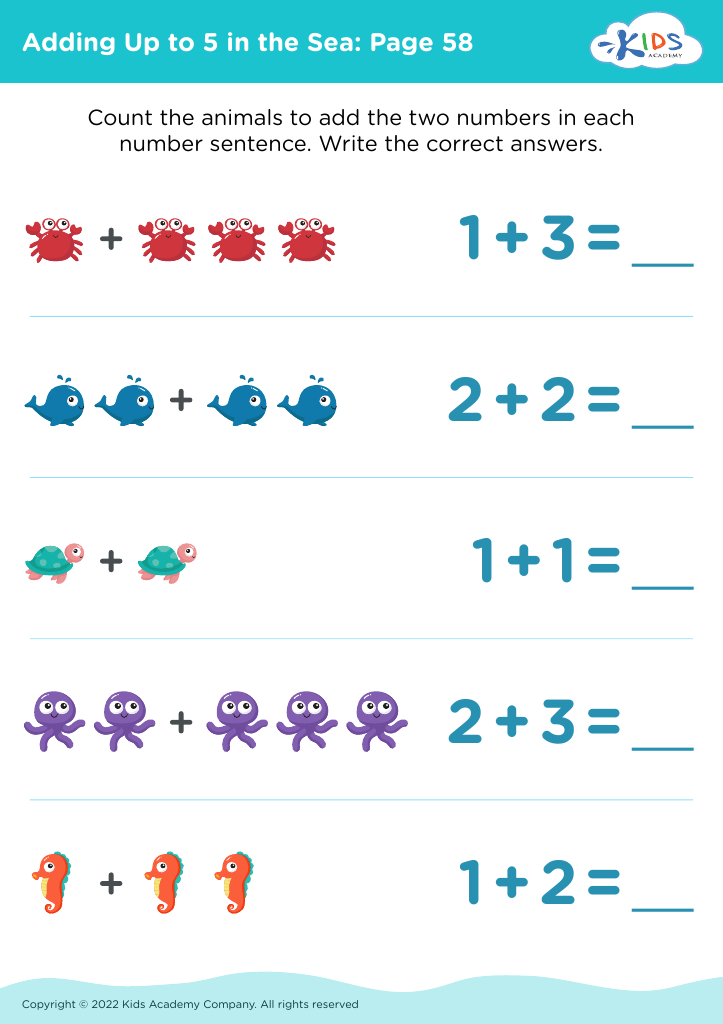
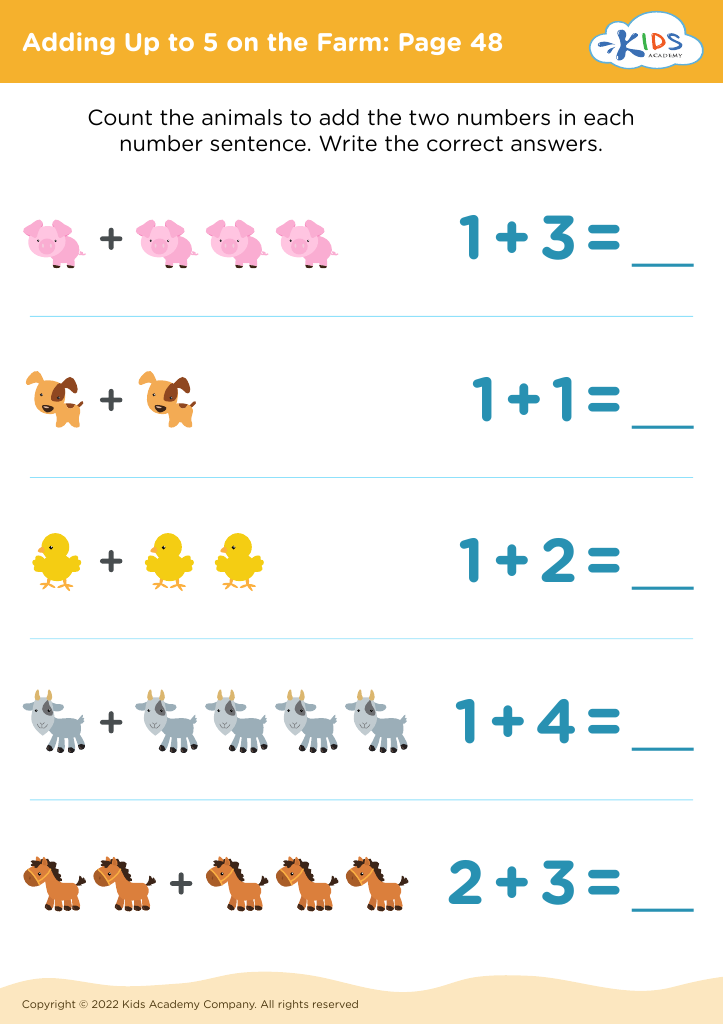
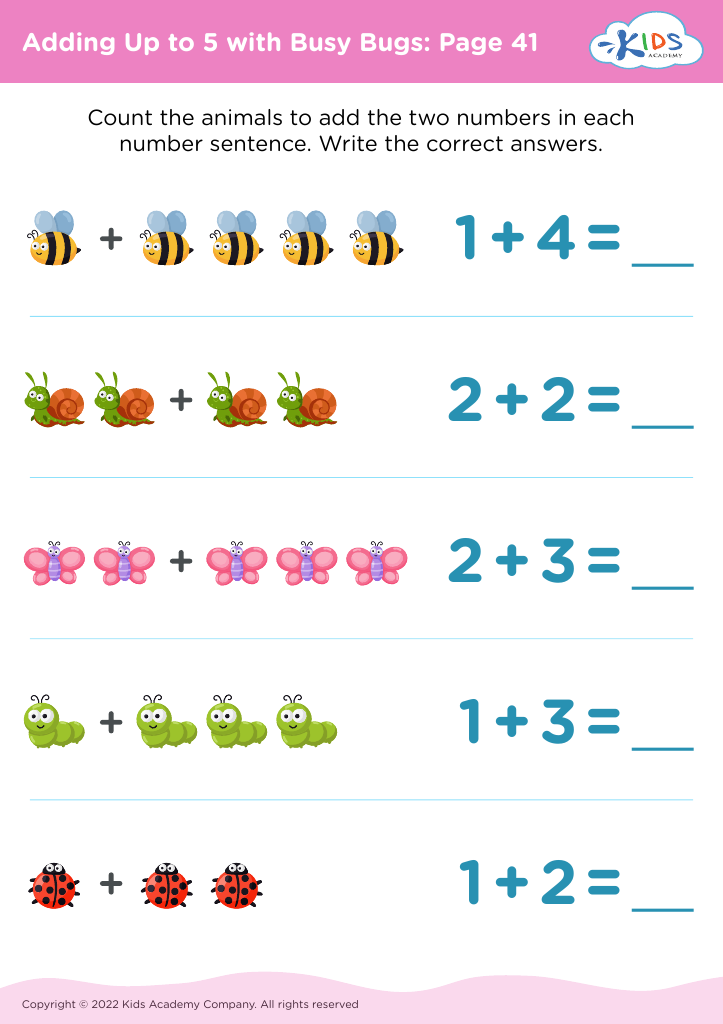
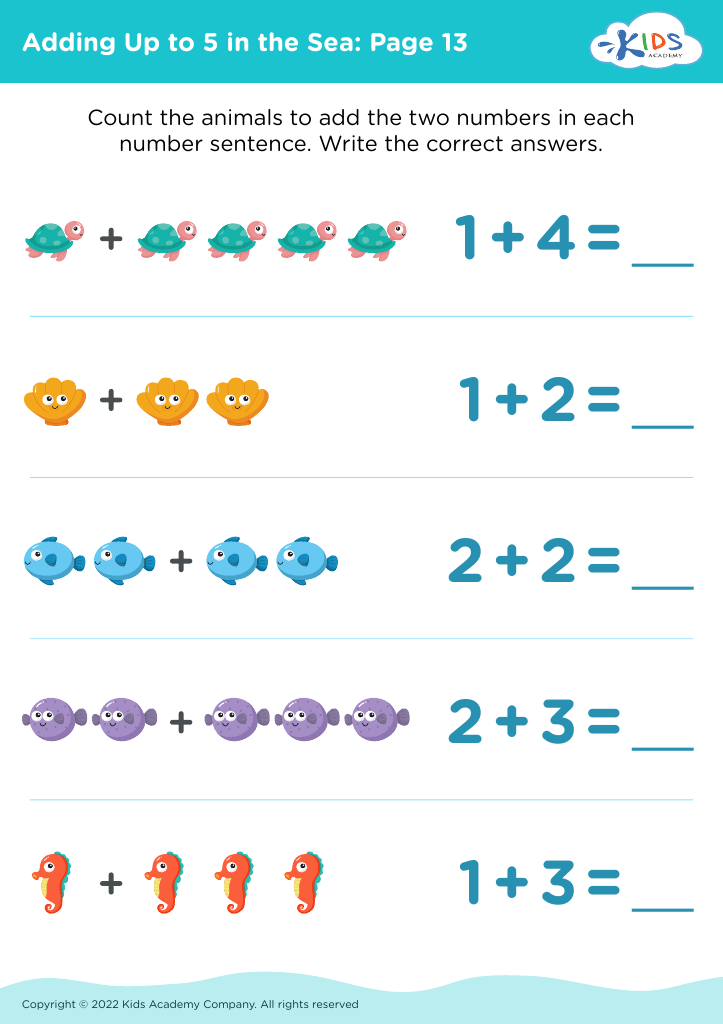
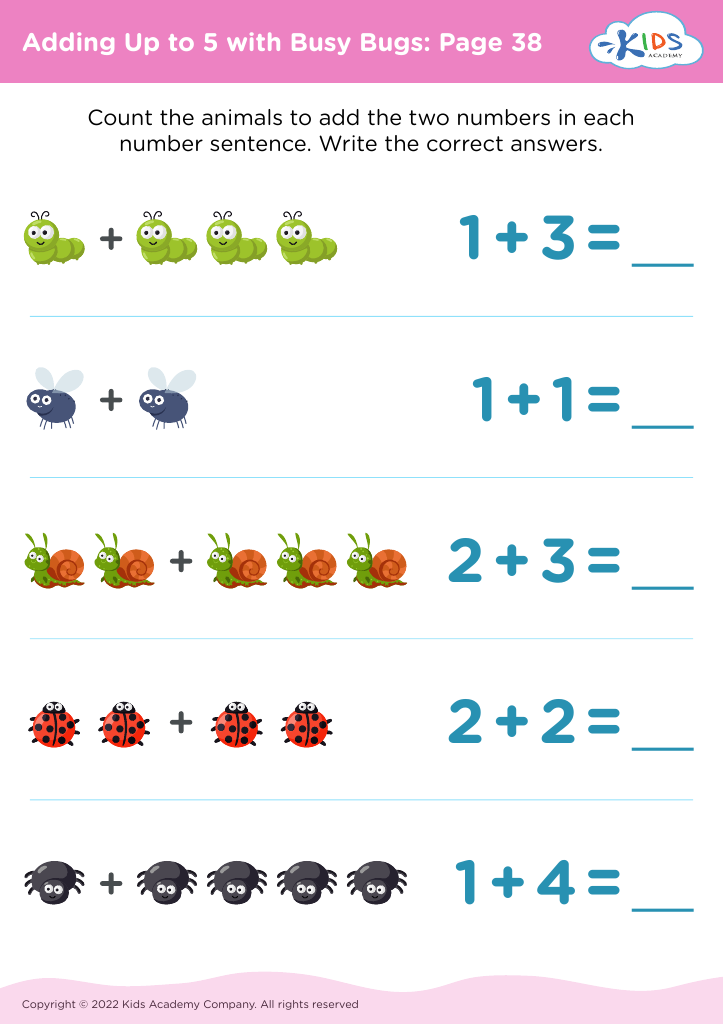
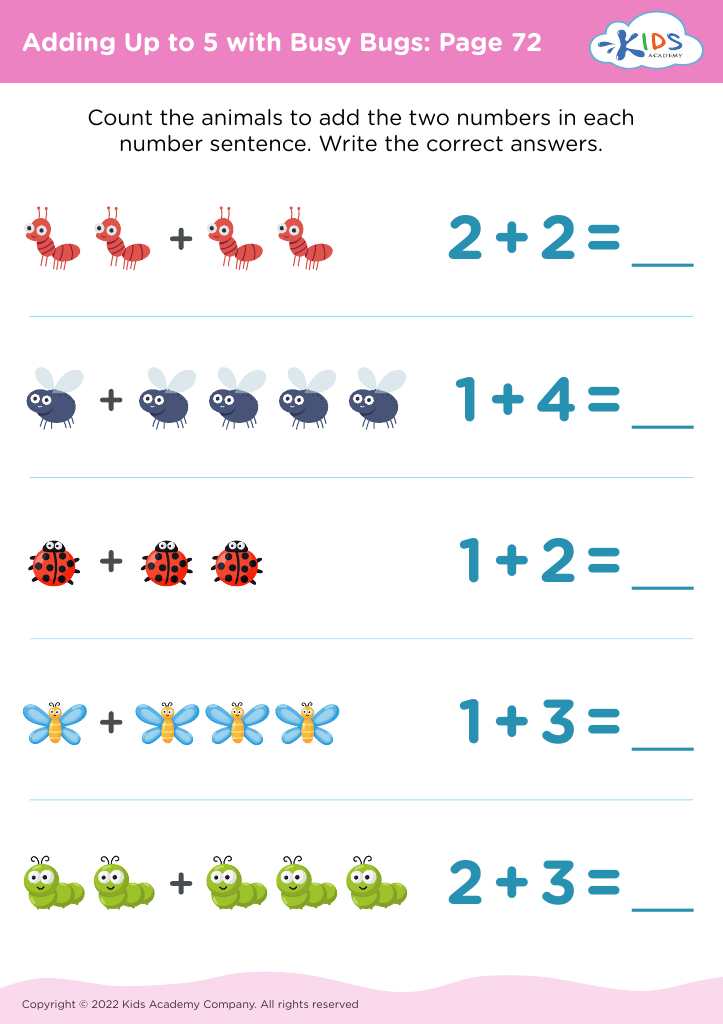
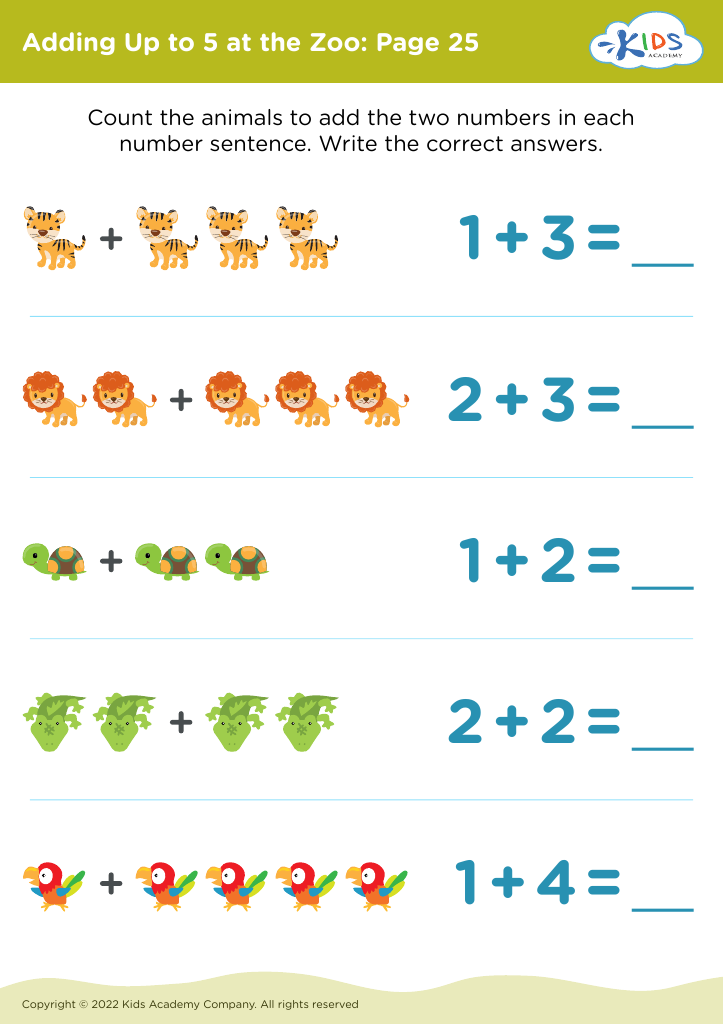
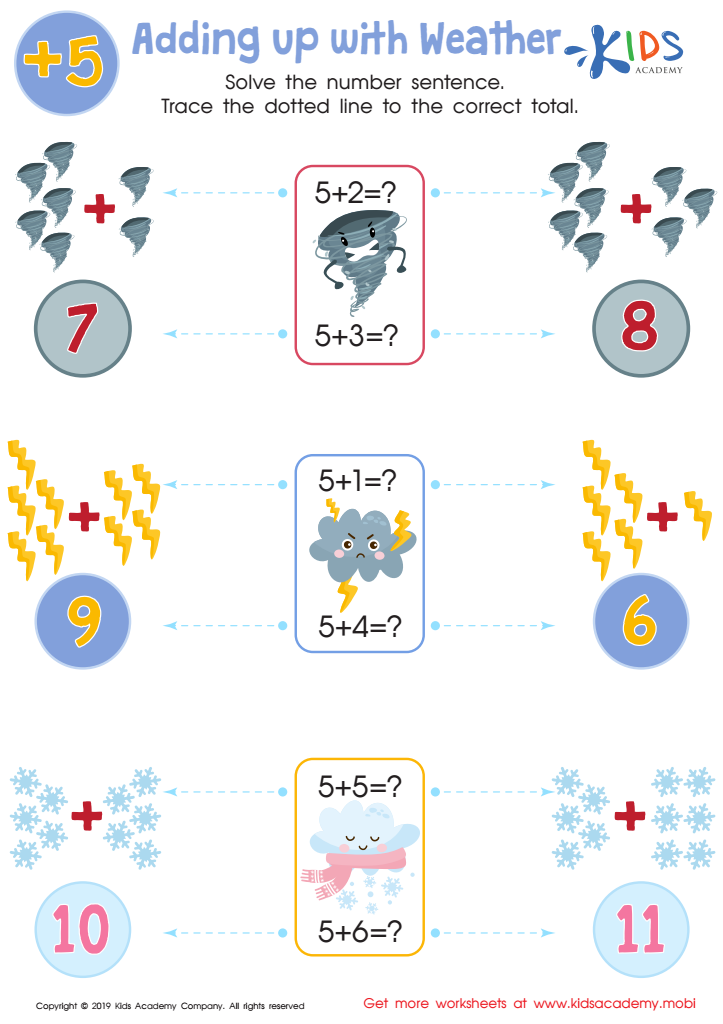
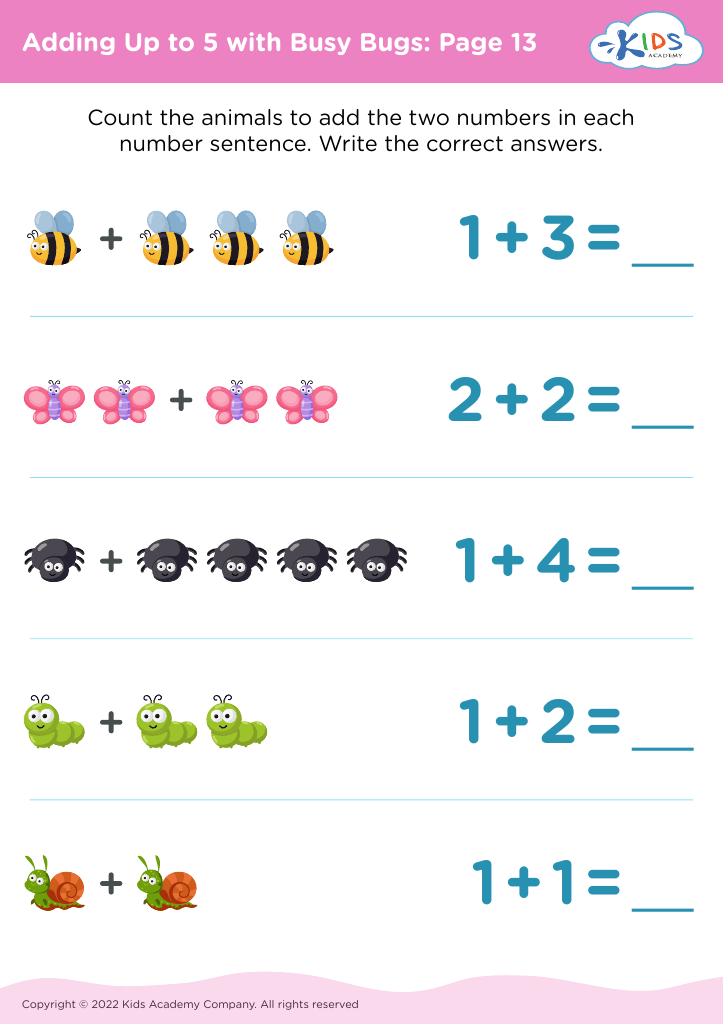
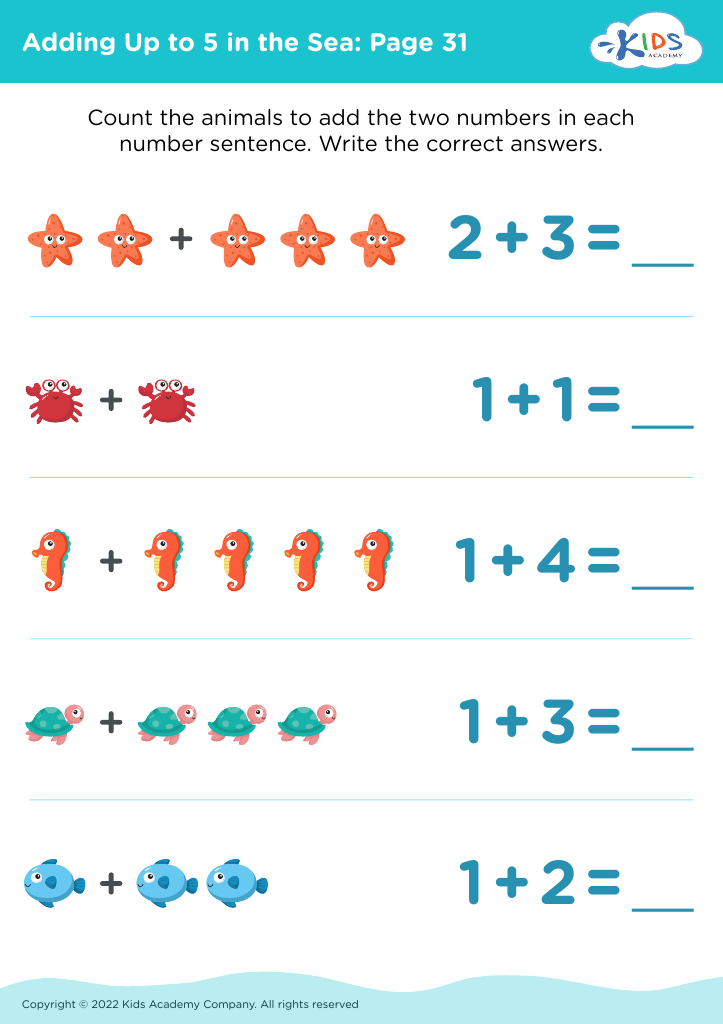
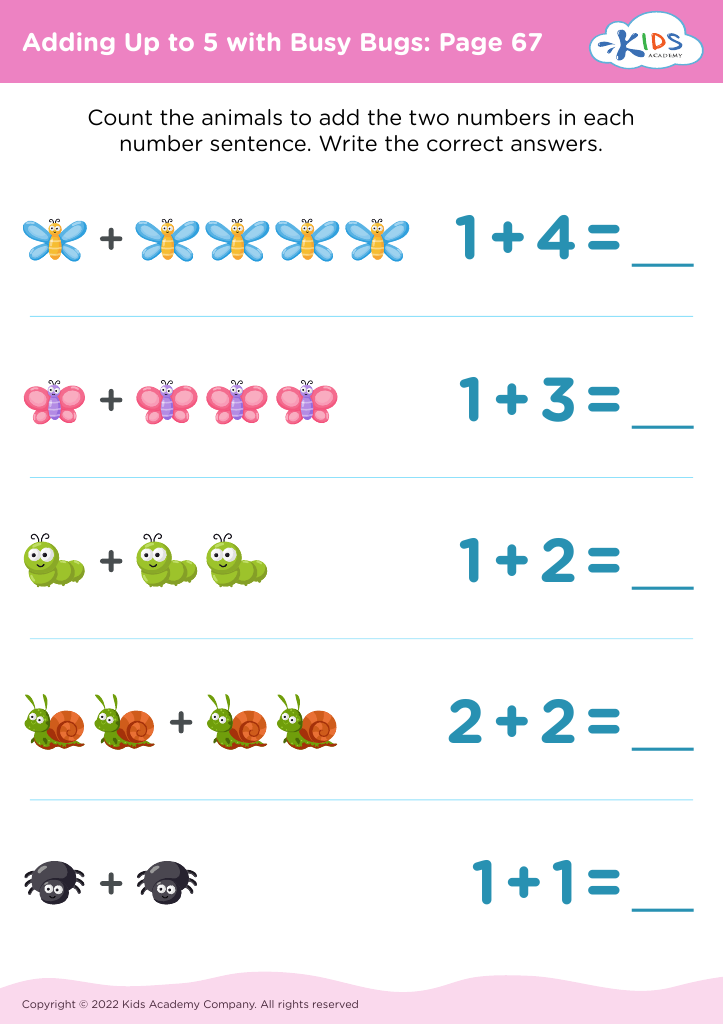
Enhance your child's math skills with our Hand-eye Coordination Addition Worksheets for 5-year-olds. These engaging worksheets are specially designed to develop addition skills while simultaneously improving your child's hand-eye coordination. Each activity combines simple math problems with fun, interactive tasks that keep young learners captivated. By completing these exercises, children practice adding numbers and hone fine motor skills essential for writing and daily tasks. Make learning a delightful and productive experience with our colorful, user-friendly worksheets, perfect for home or classroom use. Foster a love for math through play and hands-on activities!
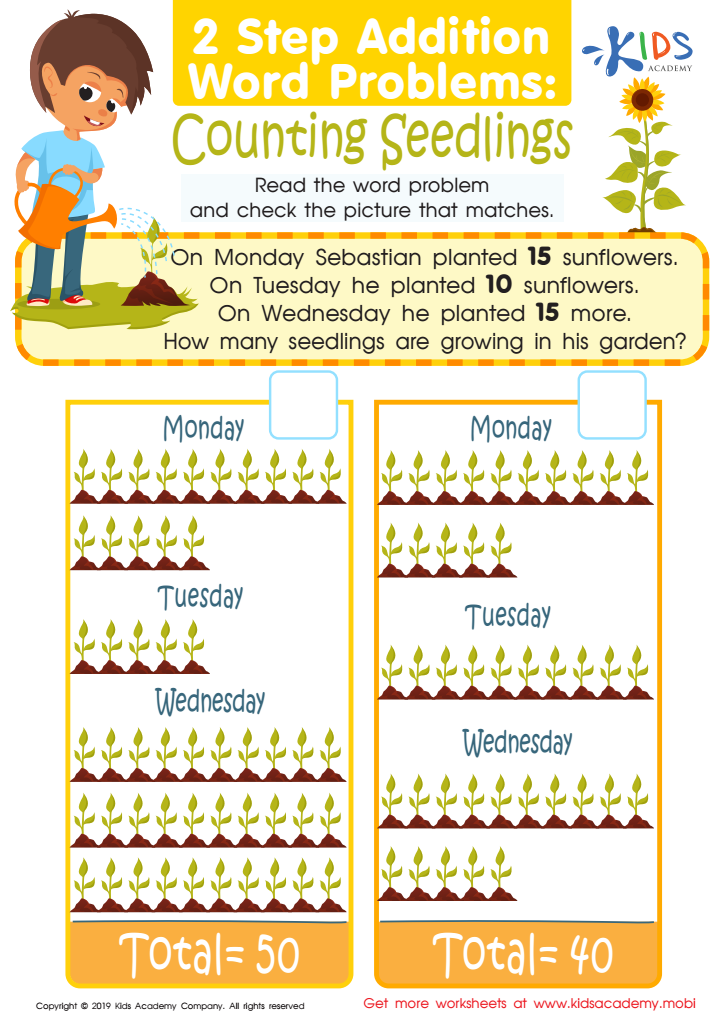
Counting Seedlings Worksheet
 Assign to My Students
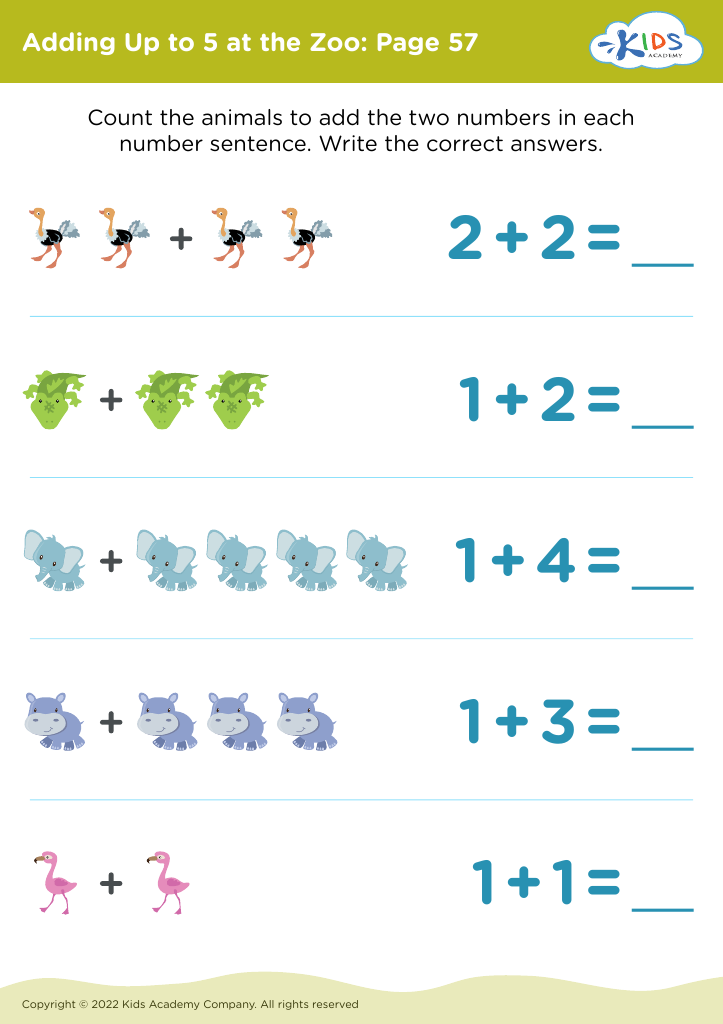
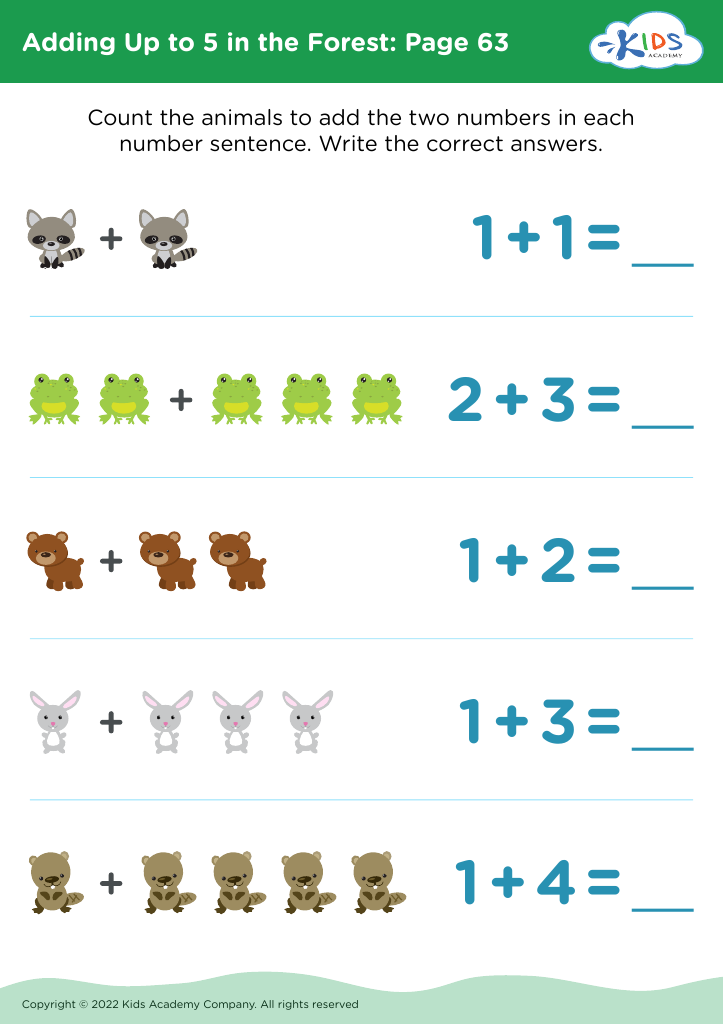
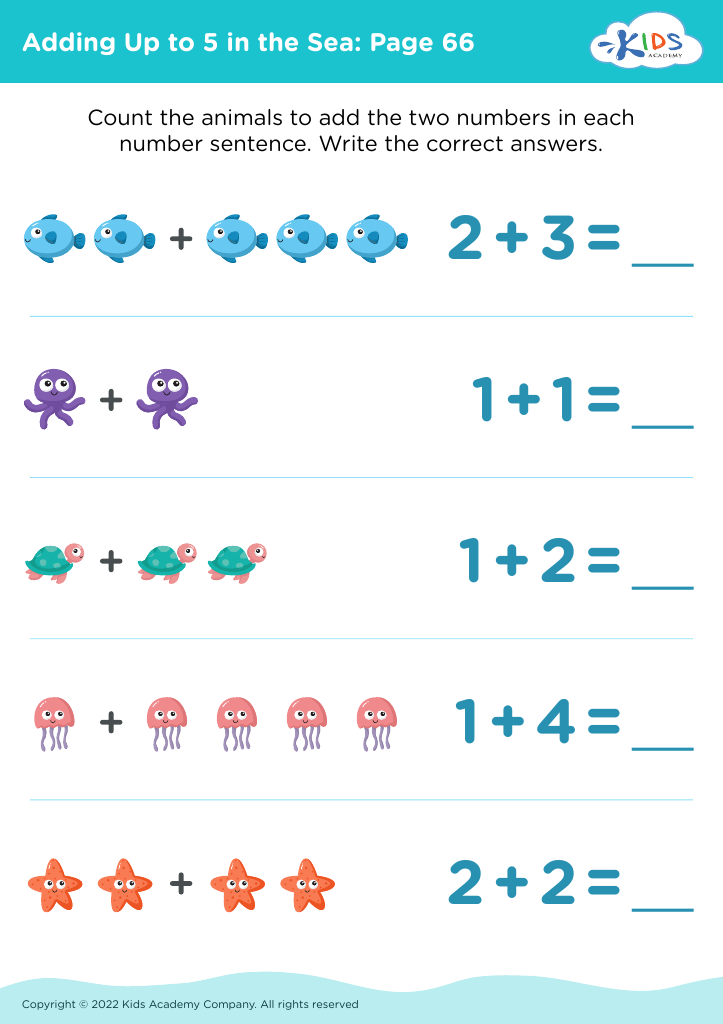
Adding up With Water Worksheet
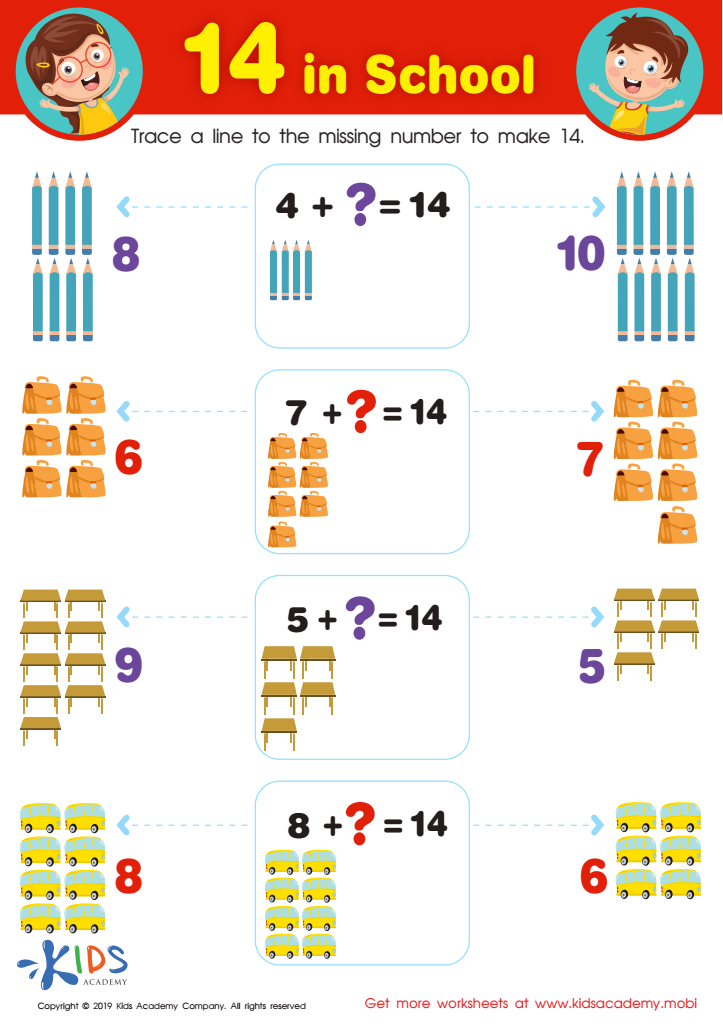
14 in School Worksheet
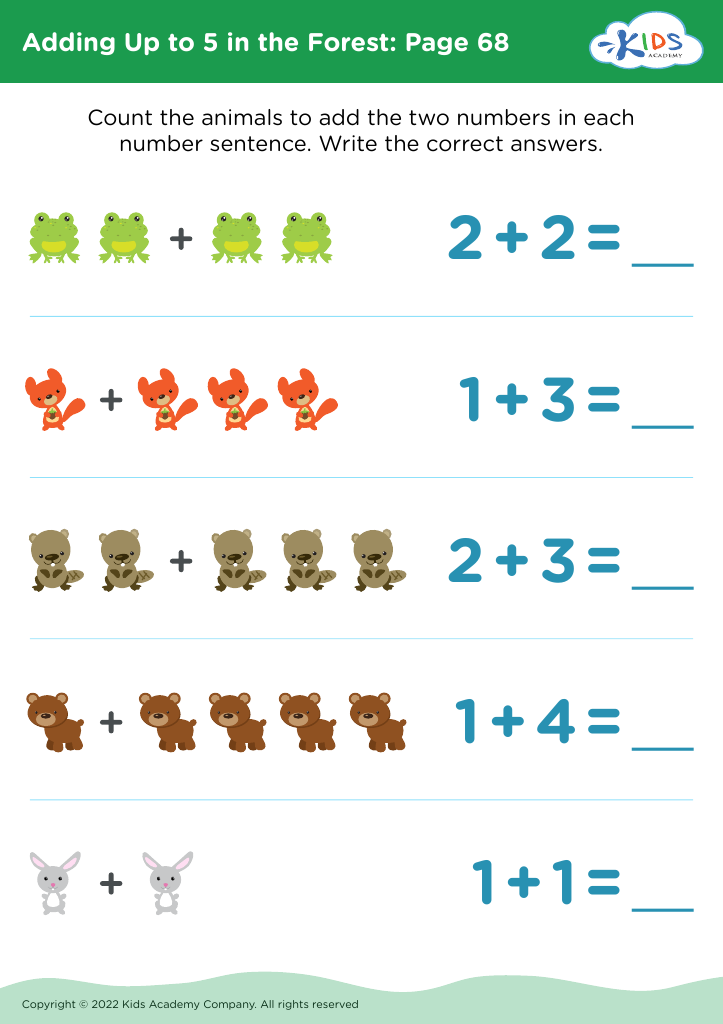
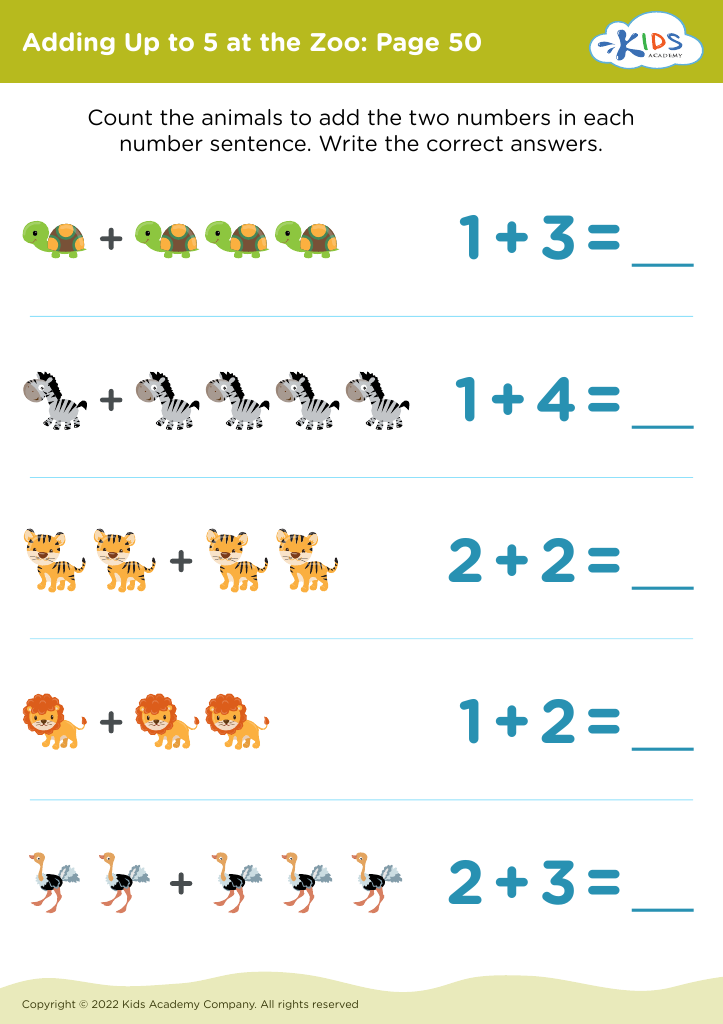








Hand-eye coordination is a crucial developmental skill that involves the synchronized control of eye movement with hand actions. For 5-year-olds, enhancing hand-eye coordination through addition games or activities is vital for several reasons. Firstly, it supports cognitive development by engaging the brain in tasks that require concentration and problem-solving. As children learn to visually process numbers and physically manipulate objects or write answers, their neural pathways are strengthened, promoting overall intellectual growth.
Secondly, strong hand-eye coordination is foundational for a child’s academic success. When children practice addition through hands-on activities, they better understand mathematical concepts and improve their counting and arithmetic skills. This experiential learning enhances their ability to transition to more abstract mathematical reasoning in future grades.
Additionally, these activities foster fine motor skills. Manipulating objects boosts dexterity and strength in small hand muscles, which is essential for writing, drawing, and other classroom activities. Improved coordination also boosts children’s confidence and independence as they experience success in completing tasks.
Finally, engaging in hand-eye coordination activities, such as addition games, can be enjoyable and motivating for children. When learning feels like play, children are more likely to participate actively and develop a lifelong love for mathematics and learning in general.








