Logical Reasoning Geometry Worksheets for 5-Year-Olds
4 filtered results
-
From - To
Unlock early learning potential with our Logical Reasoning Geometry Worksheets for 5-Year-Olds! Specially crafted to engage young minds, these worksheets blend fun activities with educational objectives, helping children grasp foundational geometry concepts. Kids will explore shapes, patterns, and spatial awareness while sharpening their logical reasoning skills. Perfect for curious minds, our worksheets make it easy for children to understand geometry in a playful and interactive way. Ideal for home use or classroom settings, boost your child's confidence and academic success today with our expertly designed resources. Start their geometry journey now!
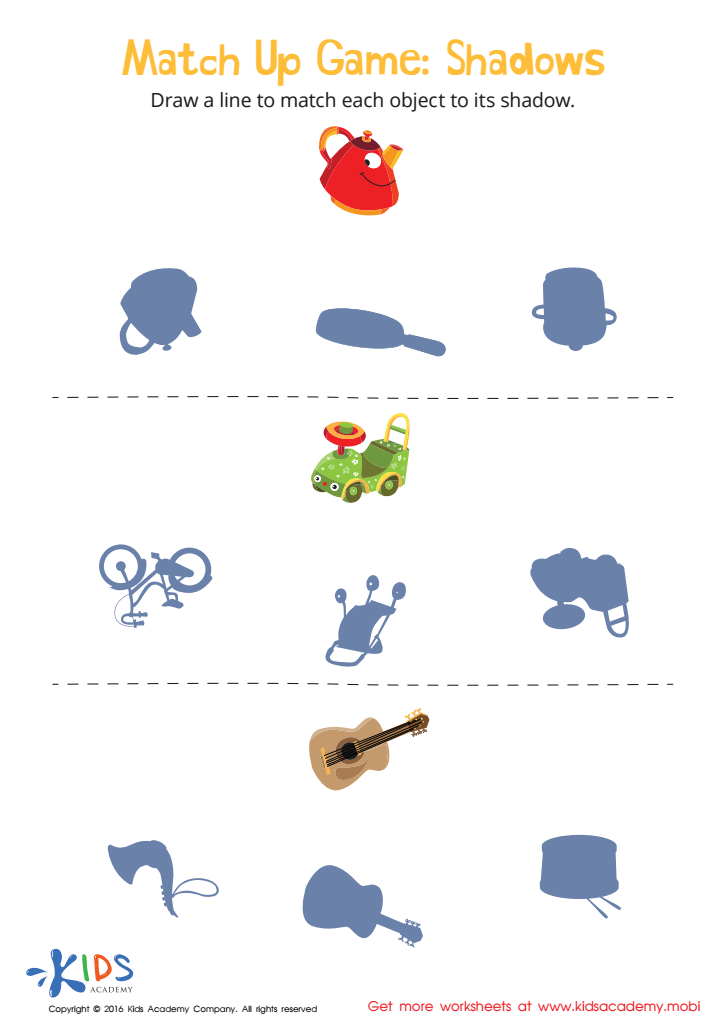
 Assign to My Students











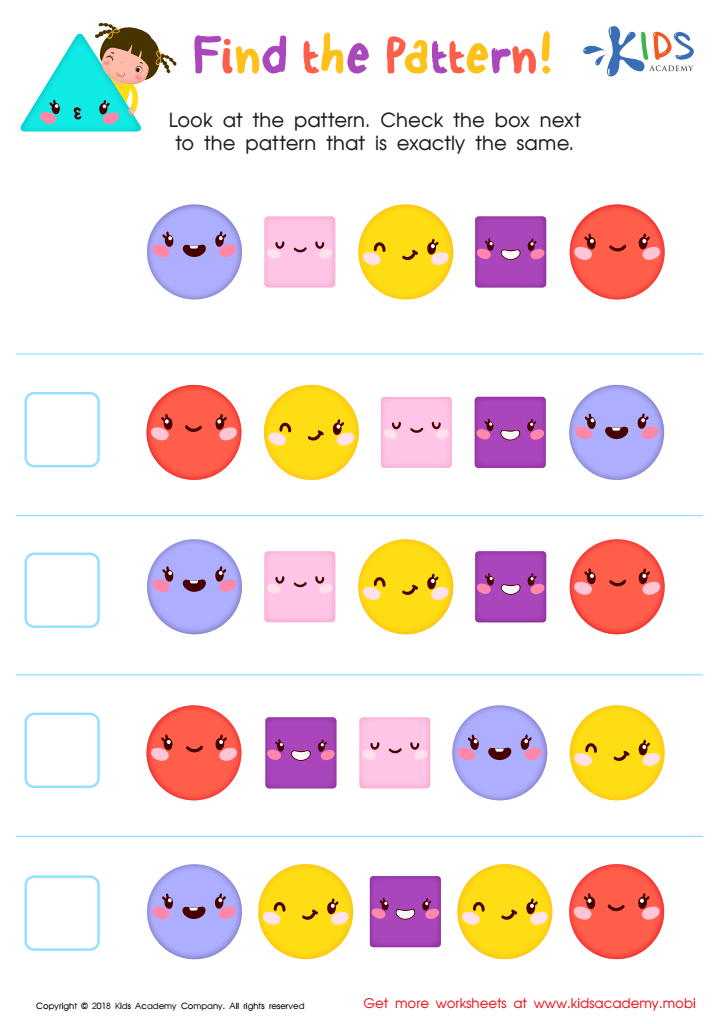
Find the Pattern Worksheet
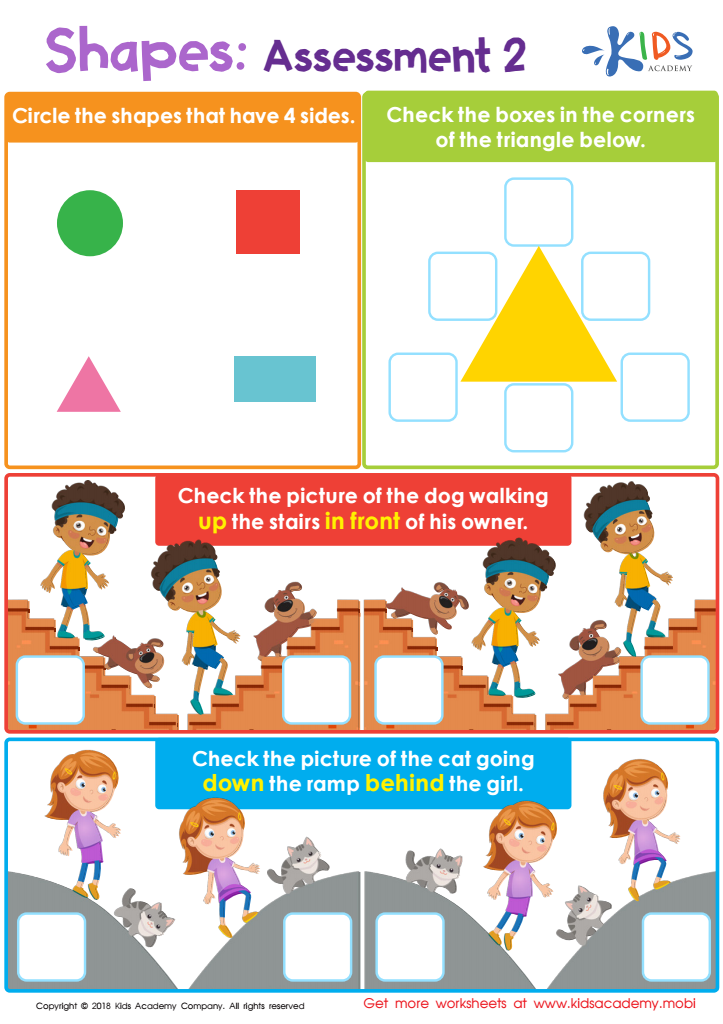
Shapes: Assessment 2 Worksheet
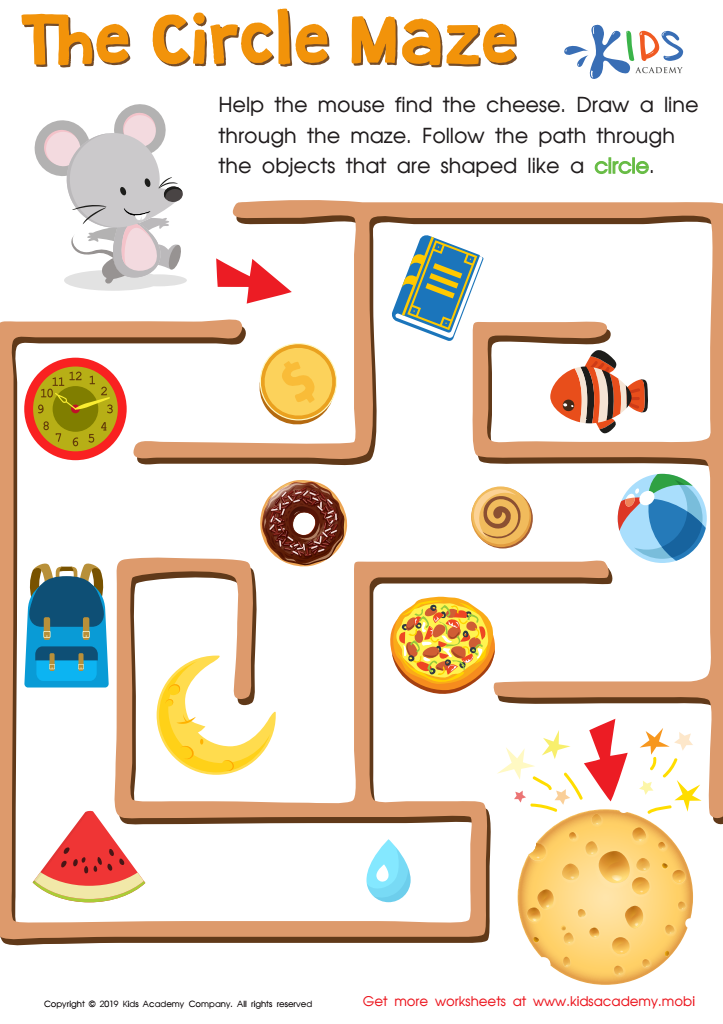
The Circle Maze Worksheet








Introducing logical reasoning and geometry to 5-year-old children provides an important foundation for for critical thinking, problem solving, and spatial awareness—key skills that benefit them throughout their education and everyday life.
Early exposure to logical reasoning helps foster a child’s ability to think systematically and make connections between different pieces of information. By learning to recognize patterns, sequences, and relationships, children develop their deductive and inductive reasoning skills. These intellectual tools are fundamental not only in mathematics but also in literacy and science, enabling kids to understand stories, predict outcomes, and grasp scientific concepts.
Geometry introduces young learners to basic shapes, sizes, and positional concepts. This spatial awareness is crucial as it strengthens both fine motor skills and coordination. Understanding shapes and spatial relationships aids in interpreting diagrams, maps, and even assembling puzzles, contributing to their visual learning skills. Furthermore, these basic geometric concepts serve as the building blocks for more advanced math topics such as measurement, algebra, and trigonometry.
Moreover, integrating logical reasoning and geometry can make learning fun and interactive. Games, puzzles, and hands-on activities engage young learners, making educational experiences enjoyable and memorable. By valuing these areas of learning, parents and teachers are investing in a child's comprehensive development, equipping them with essential life skills.








