Matching skills Geometry Worksheets for 5-Year-Olds
6 filtered results
-
From - To
Discover our engaging Matching Skills Geometry Worksheets designed specifically for 5-year-olds! These fun, interactive worksheets help young learners develop essential skills while exploring the world of shapes and patterns. By matching different geometric figures, children enhance their recognition and critical thinking abilities. Our worksheets are carefully crafted to foster creativity, boost confidence, and improve focus in early math education. Ideal for both classroom use and at-home learning, these printable resources offer vibrant visuals and captivating activities that keep little minds inspired. Start your child's geometric journey today with our thoughtfully designed matching skills worksheets!
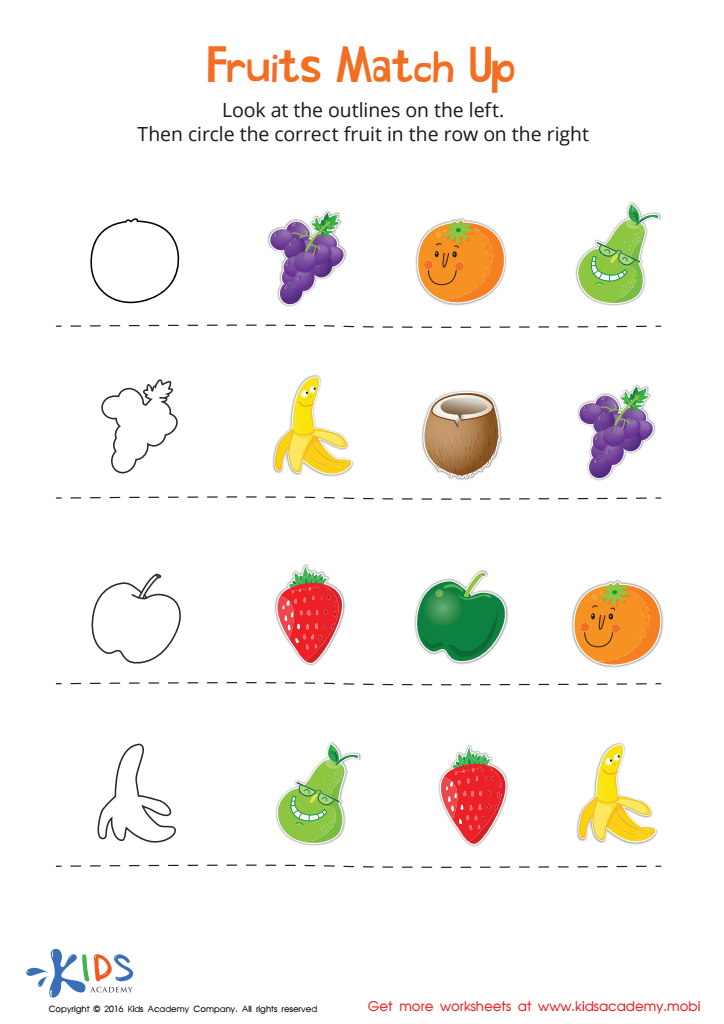
Fruits Match Up Worksheet
 Assign to My Students











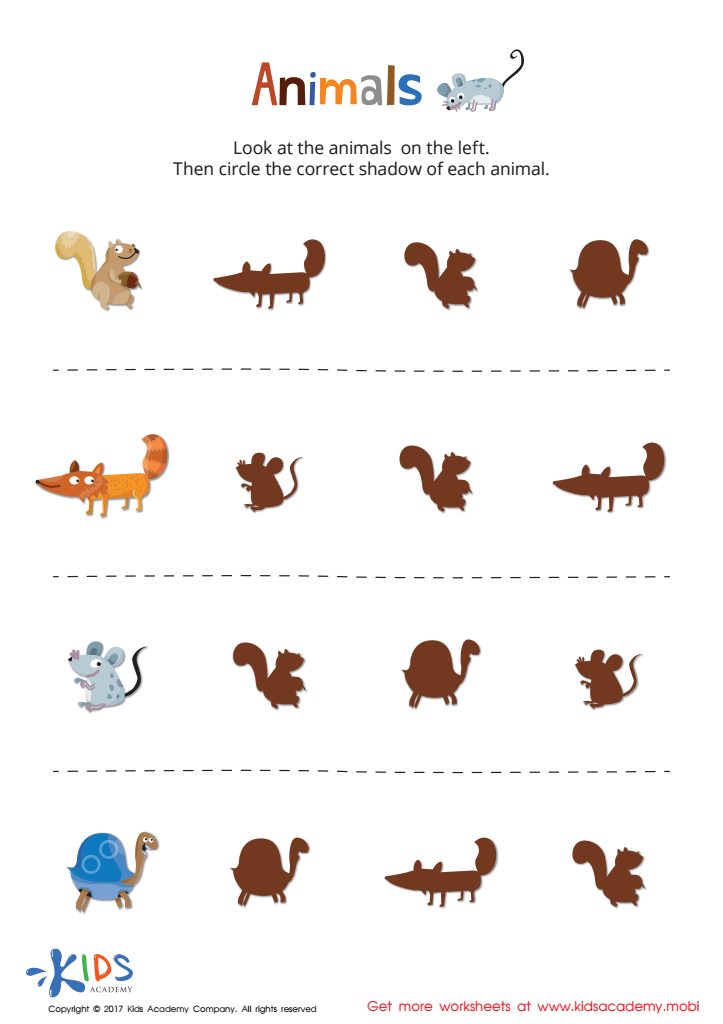
Animal Shadows Sorting Worksheet
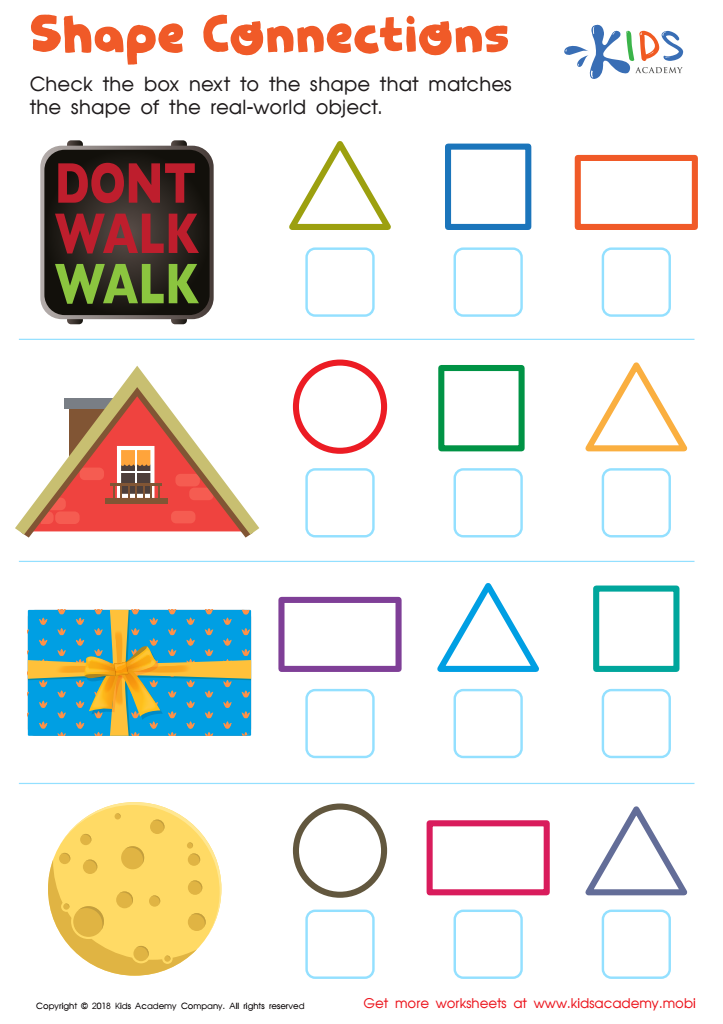
Shape Connections Worksheet
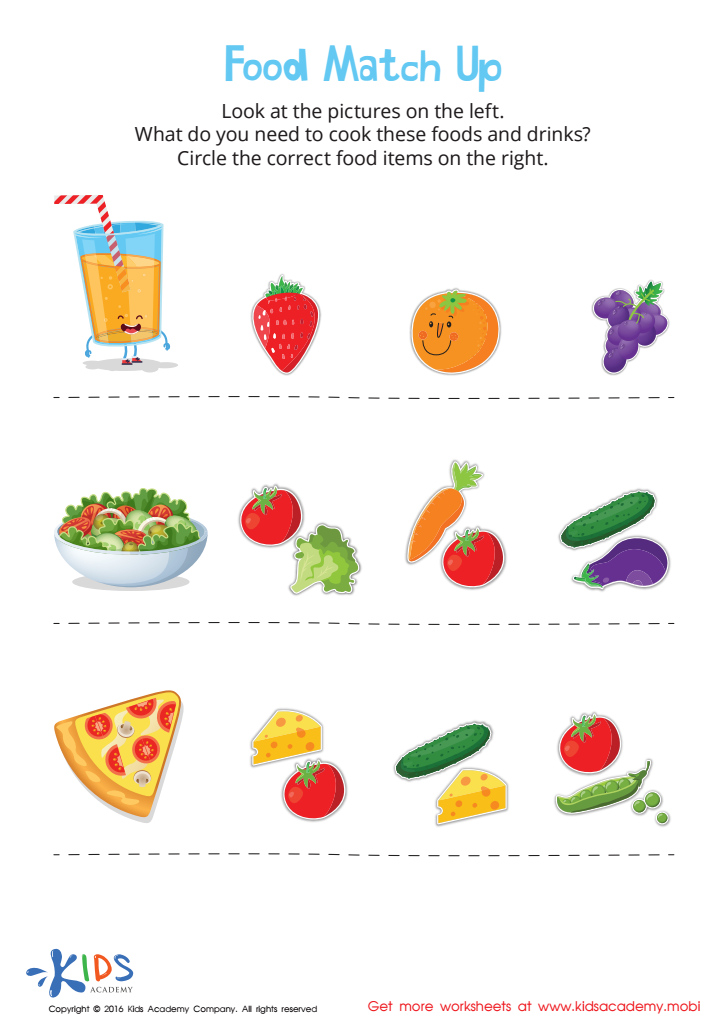
Food Match Up Worksheet
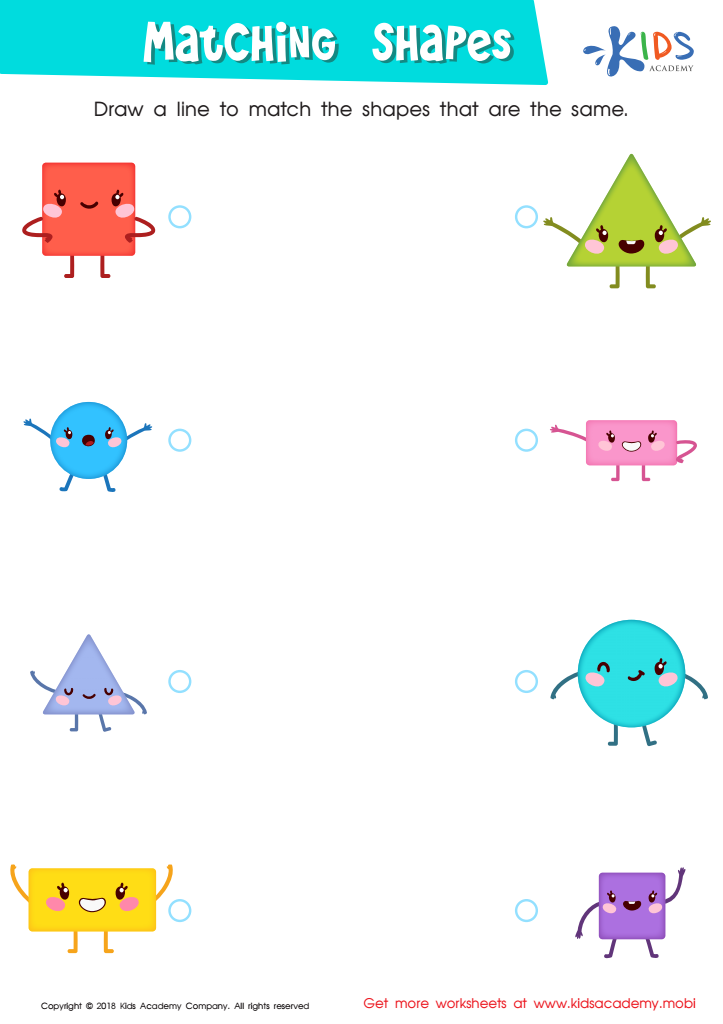
Matching Shapes Worksheet
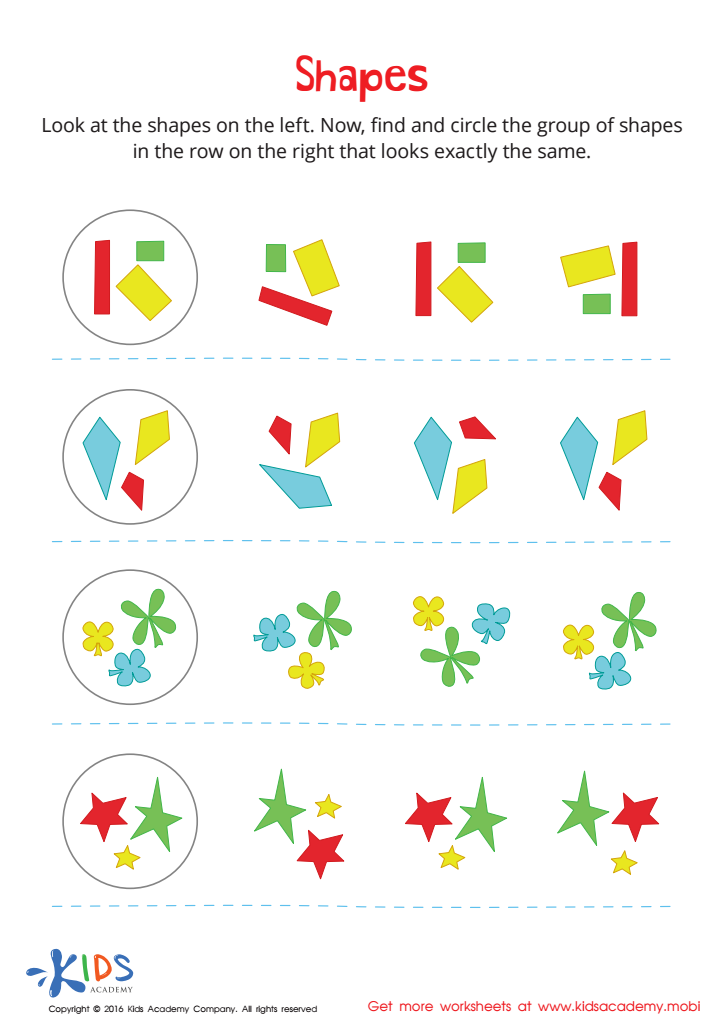
Shapes Worksheet








Understanding matching skills in geometry is essential for 5-year-olds as it serves as a foundational block for their overall cognitive development. At this age, children are naturally curious and eager to explore shapes and spatial relationships. Engaging with geometric shapes through matching activities not only helps to enhance their recognition skills but also sharpens their ability to classify and differentiate between various forms.
Parents and teachers should care about these skills because geometry lays the groundwork for critical thinking and problem-solving abilities. As children match shapes, they begin to understand basic properties such as size, color, and orientation, which are crucial in developing logical reasoning. Additionally, this kind of playful learning promotes fine motor skills as children manipulate shapes, improving their hand-eye coordination.
Furthermore, success in these activities boosts confidence and encourages a love for math and science. The skills acquired from matching geometrical shapes also translate into practical life skills, enhancing spatial awareness essential for everyday tasks. By incorporating geometric matching into play, parents and teachers foster an enriching learning environment that supports academic readiness and promotes lifelong learning. Thus, prioritizing matching skills in geometry during these formative years is vital for future educational success.








