
Visual discrimination Geometry Worksheets for 5-Year-Olds
5 filtered results
Difficulty Level
Grade
Age
-
From - To
Subject
Activity
Standards
Our "Visual Discrimination Geometry Worksheets for 5-Year-Olds" are designed to enhance early math skills through engaging activities. These worksheets help young children recognize and differentiate between various geometric shapes, fostering critical thinking and geometric awareness. Each activity is crafted to capture children’s attention and make learning fun, ensuring that kids develop strong visual discrimination skills that lay the foundation for future math success. Perfect for home or classroom use, these printable worksheets provide an excellent resource for parents and educators aiming to give their children a head start in geometry. Start building vital math skills early with Kids Academy!
Favorites
With answer key
Interactive
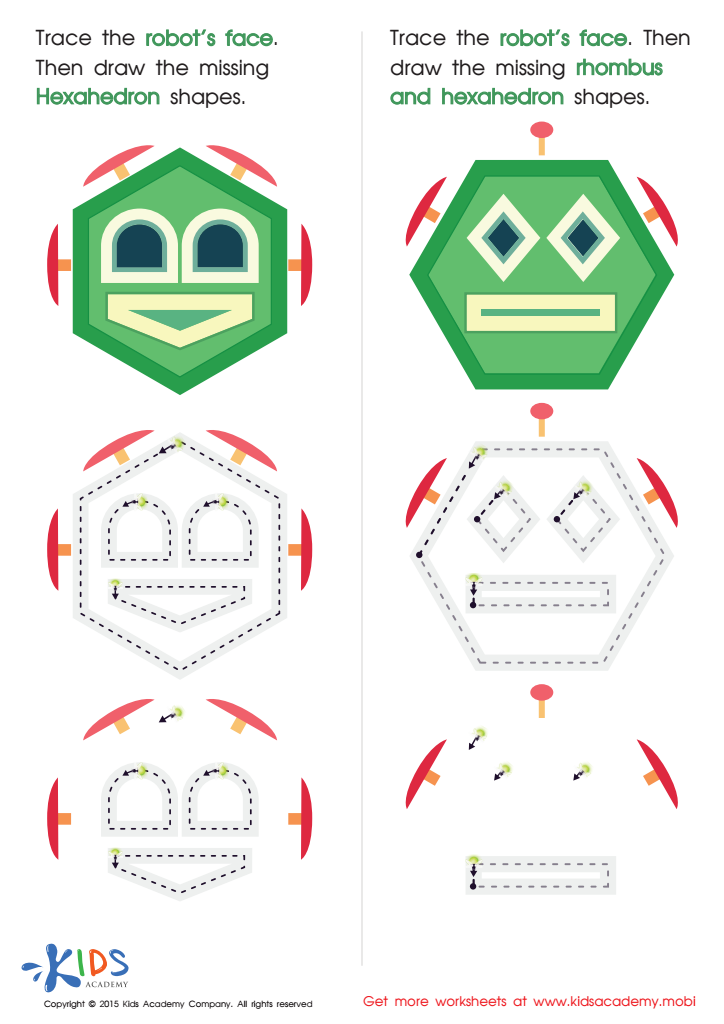
Practice Drawing Hexahedrons And a Rhombus Worksheet
Trace the Robot's face, draw hexahedron and rhombus shapes, then trace again. Our tracing shapes worksheets make it easy for kids to learn geometry. Get more materials from Kids Academy to practice all the shapes.
 Assign to My Students
Practice Drawing Hexahedrons And a Rhombus Worksheet
Worksheet











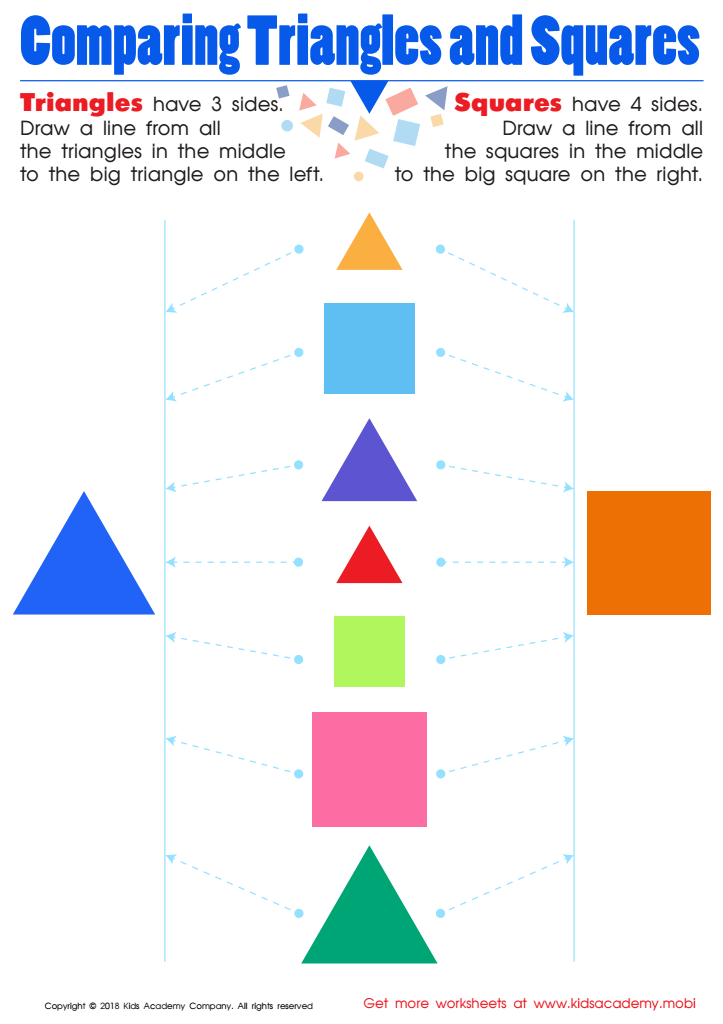
Comparing Triangles Squares Worksheet
Squares and triangles are different in the number of sides they have. Challenge kids to compare them with this fun worksheet! Read the descriptions at the top, then use the left and right shapes to match up the middle ones. Go down the page, joining the middle shapes to the side using the dotted lines!
Comparing Triangles Squares Worksheet
Worksheet
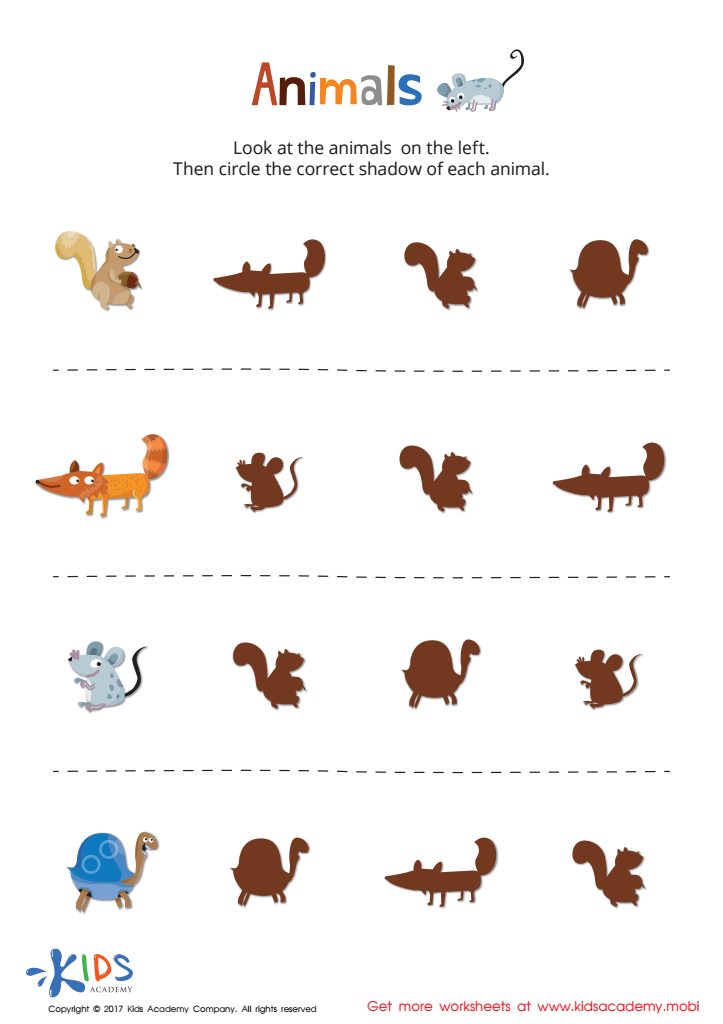
Animal Shadows Sorting Worksheet
This fun worksheet helps your child sharpen many skills. It features animals to match shapes and practice relative directions. Your child will sort animal features, practice spatial recognition, and recognize right/left. Plus, you can use it to start conversations about the animals. And try it also with fruits and veggies to boost sorting skills.
Animal Shadows Sorting Worksheet
Worksheet
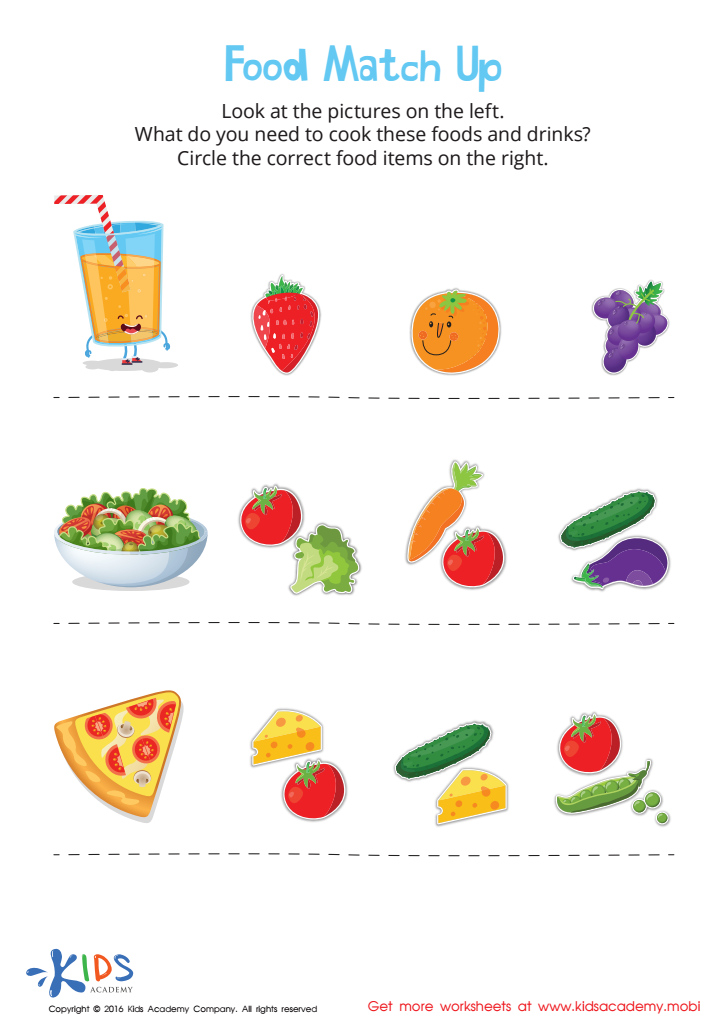
Food Match Up Worksheet
This worksheet will help your preschooler develop early math and cognitive skills. It challenges them to pay attention to details, understand how smaller parts make a whole, and increase important matching skills. Use it to give them a hands-on learning experience in the kitchen, and watch them understand how ingredients come together to make something delicious!
Food Match Up Worksheet
Worksheet
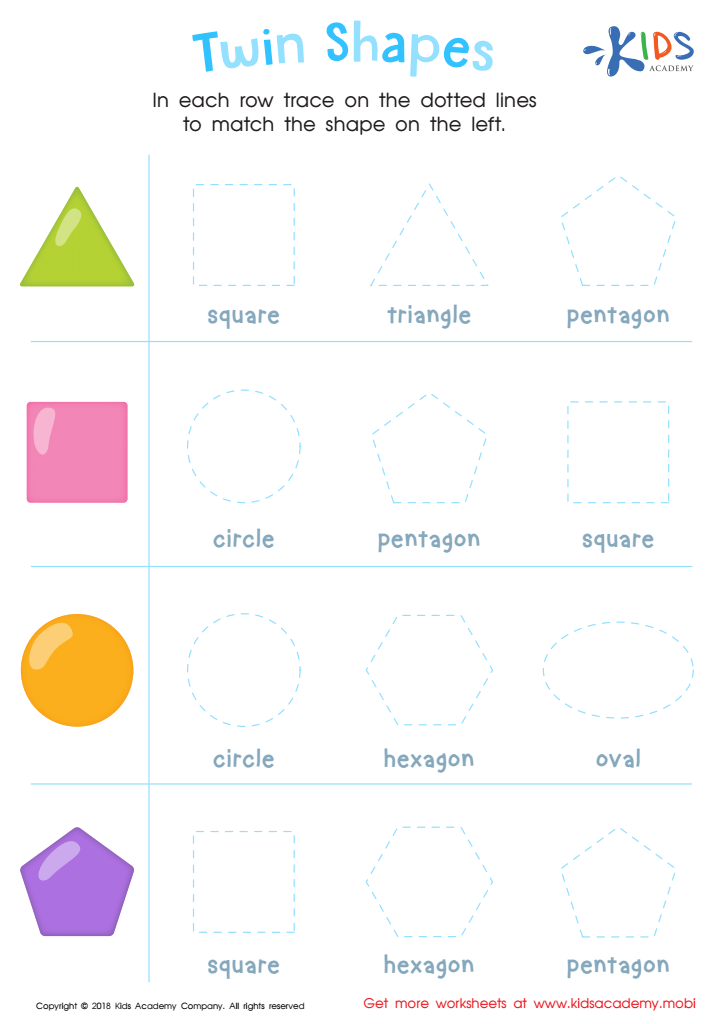
Twin Shapes Dot-to-Dot Worksheet
Test your child's ability to copy with this worksheet. Ask them to find and name the four shapes on the left. Then, they must match each with the dotted lines on the right. Help your child with all four shapes in this fun exercise.
Twin Shapes Dot-to-Dot Worksheet
Worksheet
Join Kids Academy for Free
Who is primarily going to use this learning content?








Visual discrimination in geometry is a crucial skill for 5-year-olds because it lays the foundation for their future learning and cognitive development. At this age, children are beginning to make sense of the visual world around them, and being able to distinguish between different shapes, sizes, and spatial relationships is vital for many areas of their development.
Firstly, geometric visual discrimination enhances a child's spatial awareness. This basic form of visual literacy is pivotal not only in mathematics but also in everyday tasks. For instance, understanding shapes and spatial relationships helps children solve puzzles, build structures with blocks, and even understand directions and maps.
Secondly, honing this skill promotes problem-solving and critical thinking. When children learn to recognize and differentiate geometric shapes, they are engaging in an early form of problem-solving by noticing patterns and organizing visual information logically. This encourages more complex thought processes and analytical thinking as they age.
Thirdly, a strong grasp of geometry improves fine motor skills and coordination. Activities involving geometric shapes often require precise movements, such as cutting along a line or fitting shapes into a puzzle. This fine-tuning of motor skills is critical for later tasks, including writing and artistic endeavors.
Overall, parents and teachers should prioritize visual discrimination in geometry for 5-year-olds as it plays a significant role in various developmental areas, ensuring a strong start in both academic and personal growth.








