
Numeracy skills Math Worksheets for 5-Year-Olds
3 filtered results
Difficulty Level
Grade
Age
-
From - To
Subject
Activity
Standards
Enhance your child's numeracy skills with our engaging Math Worksheets designed specifically for 5-year-olds! Our collection features fun and interactive activities that introduce foundational math concepts, such as counting, number recognition, and basic addition and subtraction. Each worksheet is designed to spark curiosity and promote critical thinking, making learning enjoyable. Our age-appropriate exercises help children develop confidence in their math abilities while honing important cognitive skills. Ideal for home or classroom use, these printable worksheets offer a variety of topics to keep young minds challenged and entertained. Foster a love for mathematics early on with our exciting numeracy resources!
Favorites
With answer key
Interactive
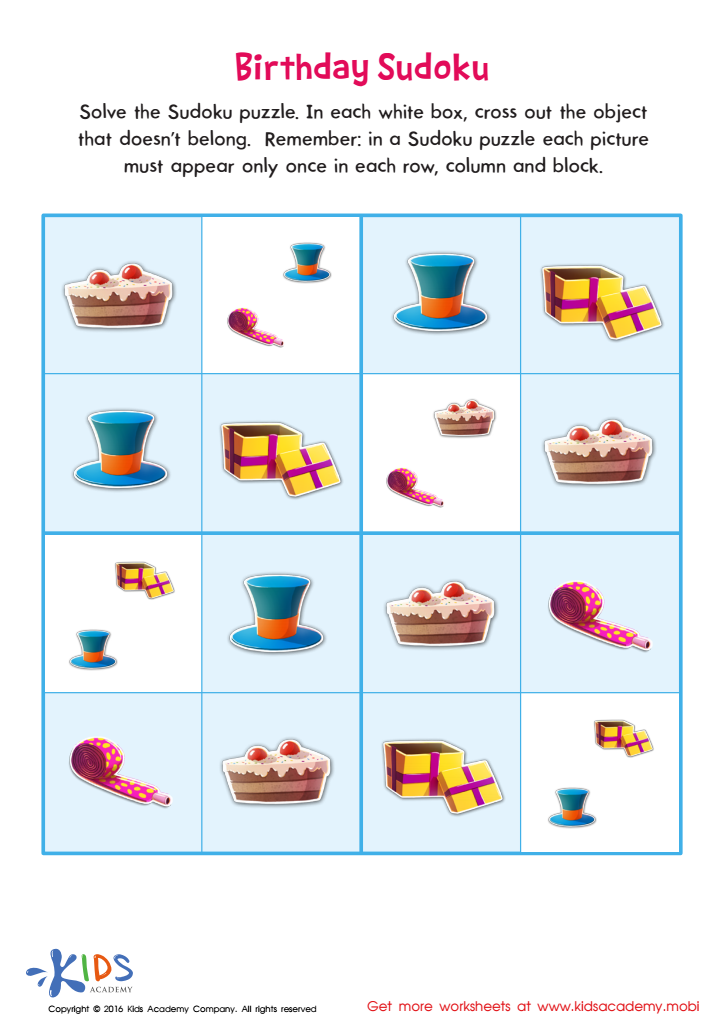
Birthday Sudoku Sorting Worksheet
With this Sudoku printable, your child will have fun and strengthen their problem-solving skills.
 Assign to My Students
Birthday Sudoku Sorting Worksheet
Worksheet
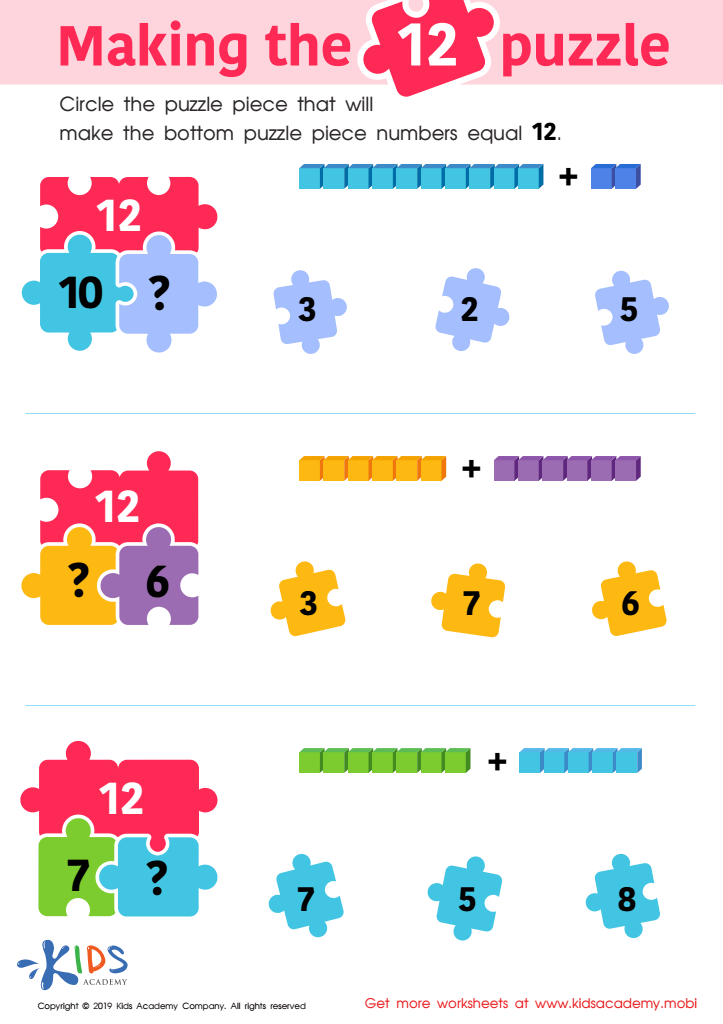
Making the 12 Puzzle Worksheet
Engage preschoolers in learning with this fun and colorful worksheet. Ask them to look at the picture and identify the missing equation on each puzzle piece; then help them solve the problems. When all the puzzle pieces make the bottom numbers equal 12, have them circle it. This is a great way to combine learning and fun!
Making the 12 Puzzle Worksheet
Worksheet
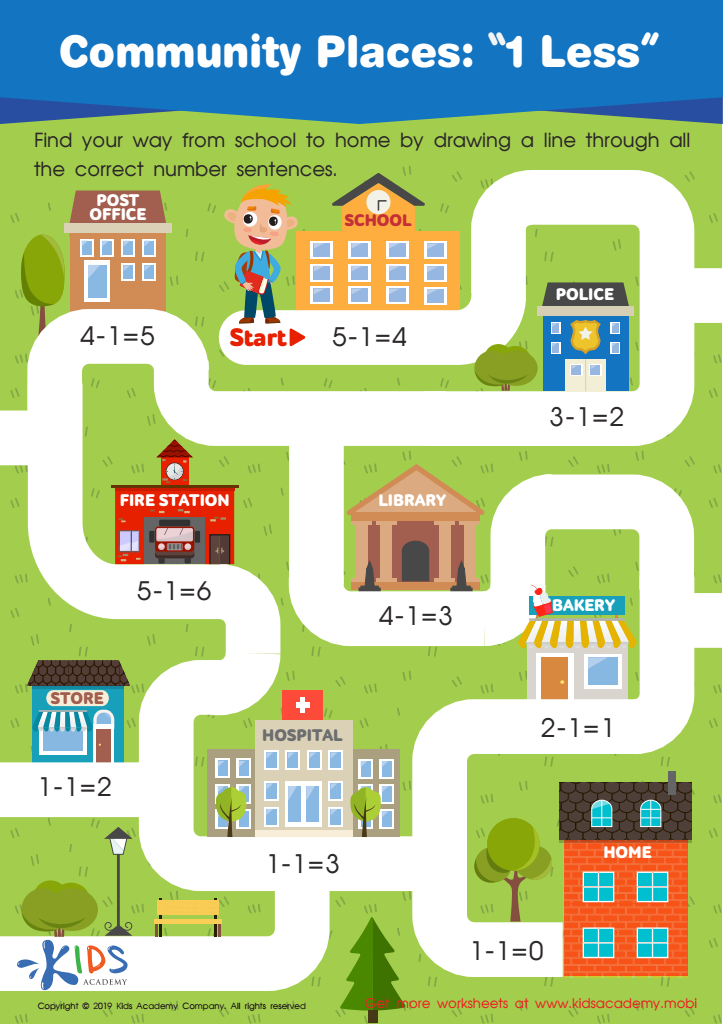
Community Places: 1 Less Worksheet
Have your kindergarteners draw a line through the correct number sentences as they find their way home from school. Ask them to identify the people, places, and buildings in their community and the jobs they do.
Community Places: 1 Less Worksheet
Worksheet
Join Kids Academy for Free
Who is primarily going to use this learning content?







Numeracy skills are crucial for 5-year-olds as they form the foundation for all future mathematical learning and critical thinking. Early exposure to math not only fosters cognitive development but also enhances problem-solving abilities, essential for everyday life. Research shows that strong numeracy skills at a young age correlate with later academic success and can significantly reduce the risk of learning difficulties.
Parents and teachers play a vital role in cultivating a positive attitude towards math. Engaging children with fun activities, such as games involving counting, sorting, and simple addition or subtraction, helps to embed these skills in a playful context. This hands-on approach builds confidence and encourages a love for learning.
Furthermore, numeracy promotes logical reasoning and decision-making skills essential in real-life situations, empowering children in their personal and academic journeys. Parents and teachers should collaborate to identify and nurture individual strengths and interests, creating a supportive environment that celebrates progress. By prioritizing numeracy at this age, we lay the groundwork for lifelong skills that will serve children in school and beyond, helping them to navigate a world increasingly reliant on numbers and data.








