Problem-Solving Skills Sorting Worksheets for 5-Year-Olds
4 filtered results
-
From - To
Boost your 5-year-old's cognitive development with our engaging Problem-Solving Skills Sorting Worksheets! These expertly designed worksheets from Kids Academy promote critical thinking, logic, and creativity in young learners. By sorting and categorizing objects, children enhance their problem-solving abilities in a fun and interactive way. Perfect for preschool and kindergarten, our age-appropriate activities are tailored to capture and maintain your child's interest. Help your little one build a strong foundation in math, reasoning, and analytical skills effortlessly. Start the journey towards confident, independent thinking with our enjoyable and educational sorting worksheets today!
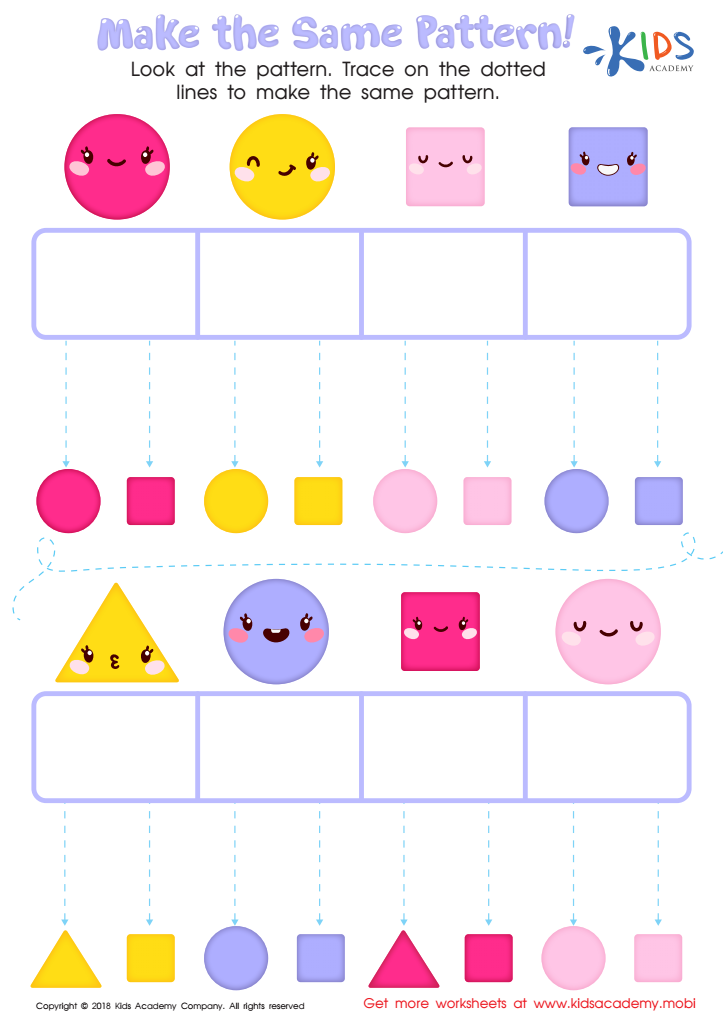
Make the Same Pattern Worksheet
 Assign to My Students
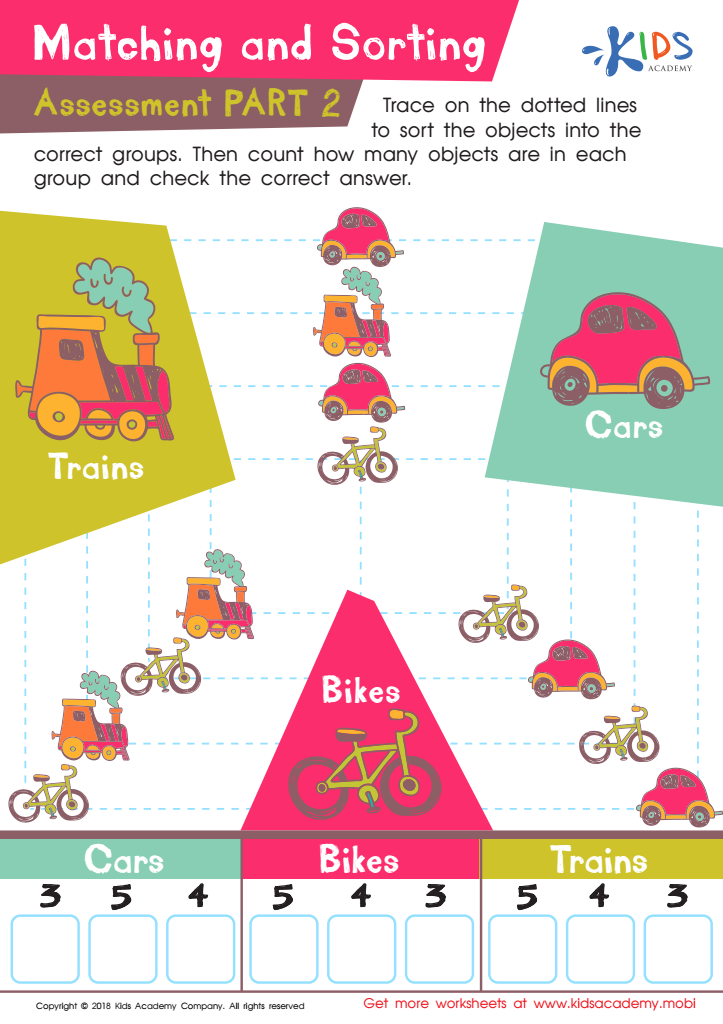
Matching and Sorting for Kindergarten: Assessment 2 Worksheet
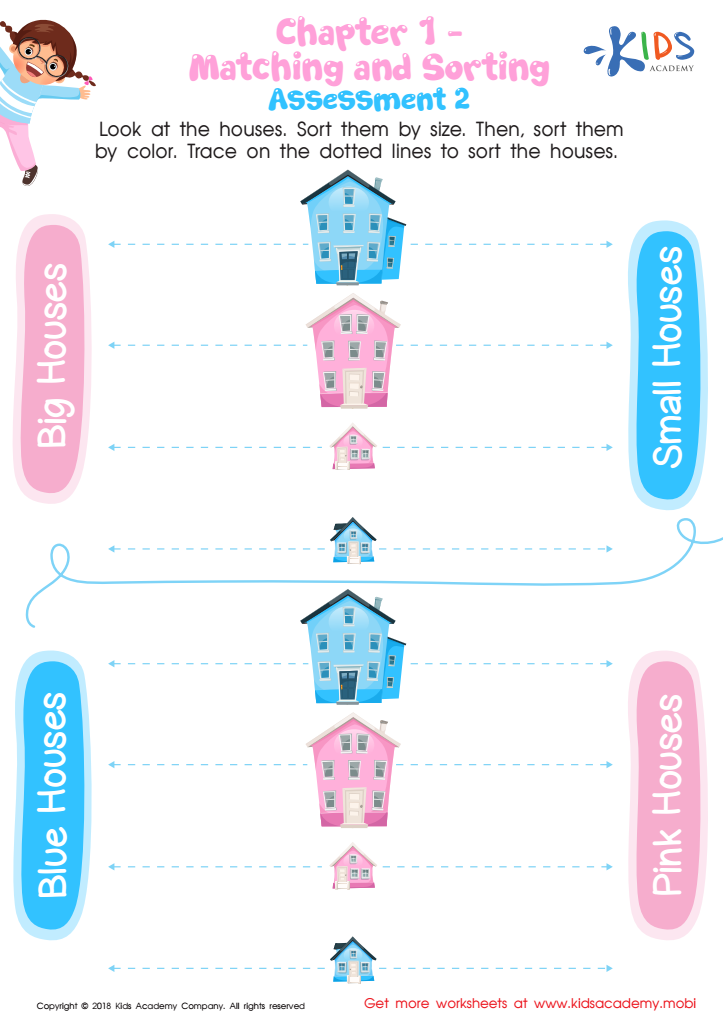
Matching and Sorting for Preschool: Assessment 2 Worksheet
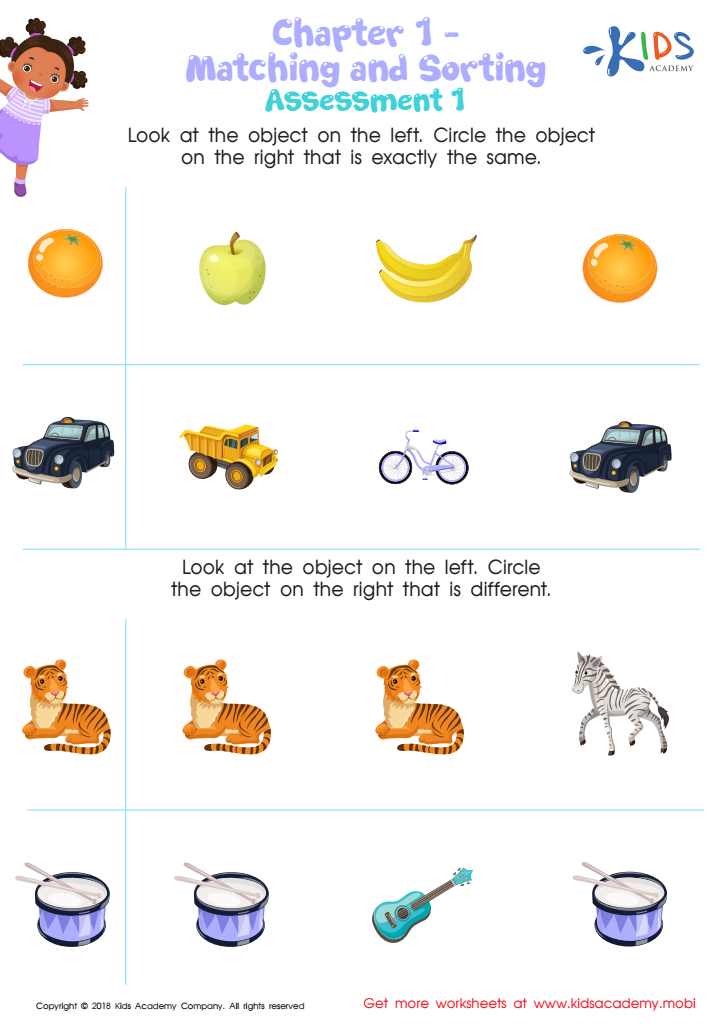
Matching and Sorting for Preschool: Assessment 1 Worksheet








Problem-solving skills sorting at the age of five is fundamental to a child's cognitive and social-emotional development. Parents and teachers should prioritize this because it lays the groundwork for critical thinking, decision-making, and resilience. At this stage, children's brains are incredibly receptive, making it the perfect time to foster these skills.
When children sort objects based on different attributes (like color, shape, or size), they're engaging in activities that require analytical thinking and categorization, which are essential components of problem-solving. This practice helps them learn to approach problems methodically and explore multiple solutions. For instance, if they need to deduce how to group shapes correctly, they're exercising their capacity to recognize patterns and make informed choices—a vital skill they'll use throughout their academic life and beyond.
Additionally, problem-solving builds confidence and independence. As children encounter and overcome challenges, they learn to trust in their abilities and become more self-reliant. This is not only crucial for academic success but also for personal development. Good problem-solvers are typically more adaptive, able to manage their emotions, and better equipped to collaborate and communicate with others.
Incorporating problem-solving activities into early education cultivates an environment where children feel empowered to explore, question, and understand the world around them, setting a solid foundation for lifelong learning and success.








