
Critical thinking skills Reading Worksheets for 5-Year-Olds
3 filtered results
Difficulty Level
Grade
Age
-
From - To
Subject
Activity
Standards
Enhance your 5-year-old’s critical thinking skills with our engaging reading worksheets! Designed to spark curiosity and encourage problem-solving, these worksheets help young learners analyze stories, make predictions, and draw connections between texts and their experiences. Each activity is crafted to be fun and educational, promoting interactive learning through comprehension questions, puzzles, and reasoning exercises. Foster a love for reading while developing essential cognitive skills that will benefit your child throughout their academic journey. Explore our visually enticing and age-appropriate resources to support your child’s growth as a confident reader and thinker. Start your child’s critical thinking journey today!
Favorites
With answer key
Interactive
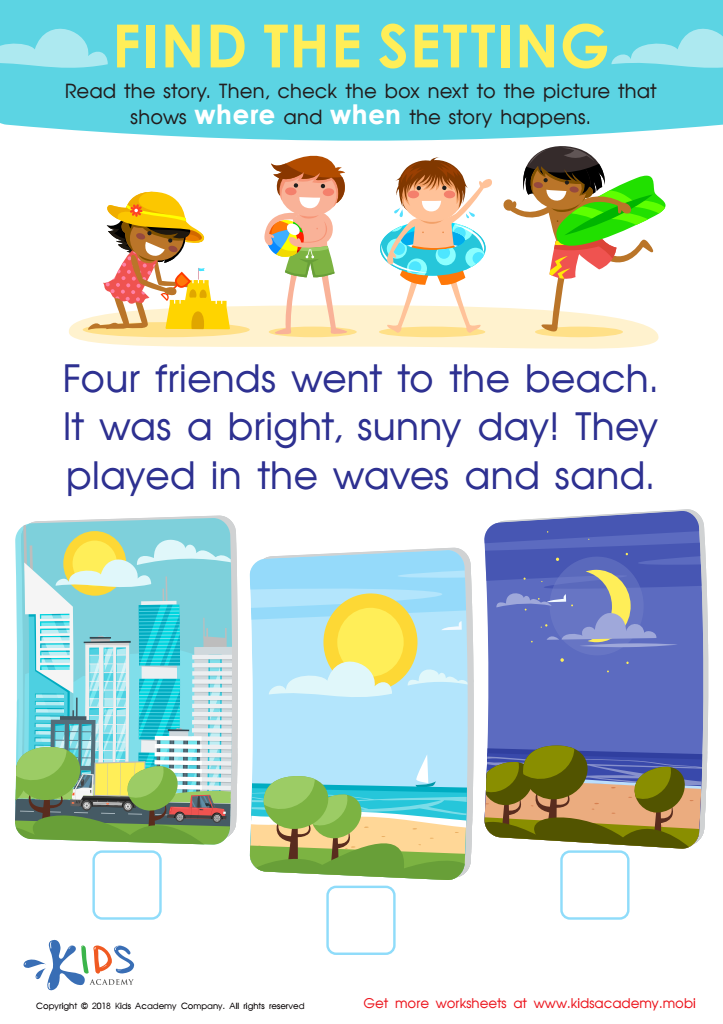
Find the Setting Worksheet
Writing a good story requires decisions about theme, plot, characters, and setting. Setting is the place and time where events occur. Read the story in this fun worksheet with your children and ensure they are paying attention. Guide them to check the box next to the picture that shows the story's setting. 80 words.
 Assign to My Students
Find the Setting Worksheet
Worksheet
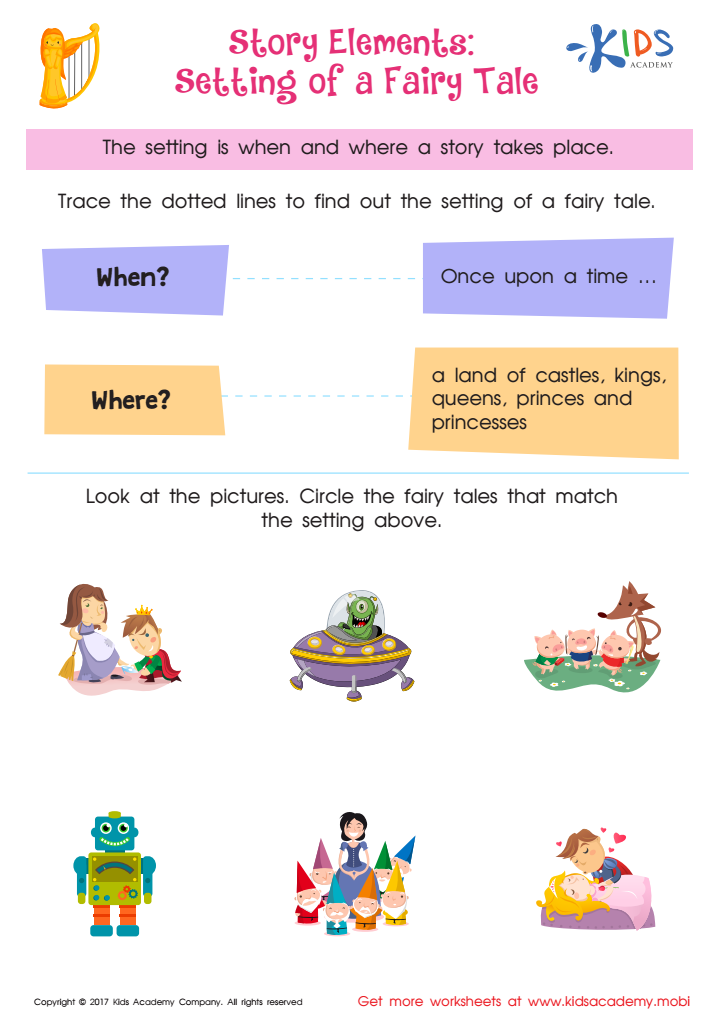
Story Elements: Setting of a Fairy Tale Printable
Help your child learn to analyze stories starting with setting. Use Story Elements worksheet to break down setting into two parts. This will help your child recognize setting quickly and understand its importance in the plot.
Story Elements: Setting of a Fairy Tale Printable
Worksheet
Join Kids Academy for Free
Who is primarily going to use this learning content?







Critical thinking skills are essential for young learners, including 5-year-olds, as they form the foundation for successful problem solving, decision making, and informed reasoning in everyday life. Teaching critical thinking through reading encourages children to analyze, evaluate, and interpret information rather than just memorizing facts. This active engagement fosters curiosity, creativity, and independence, laying the groundwork for life-long learning.
When reading together, parents and teachers can prompt children to ask questions about the story, consider the motivations of characters, or discuss potential alternative endings. These activities not only improve comprehension but also enable children to connect the material to their own experiences, enhancing their emotional intelligence and promoting empathy.
Incorporating critical thinking into reading helps children develop skills necessary for navigating complex societal issues as they grow. Parents and teachers play a crucial role in nurturing these abilities by facilitating discussions, modeling critical thought processes, and providing varied literary materials. Ultimately, investing in critical thinking skill development in early education equips children with the tools they need to thrive academically and socially, ensuring they become thinkers and problem solvers in an increasingly dynamic world.








