Animal identification Science Worksheets for 5-Year-Olds
4 filtered results
-
From - To
Welcome to our Animal Identification Science Worksheets for 5-Year-Olds! Designed to introduce young learners to the world of animals, these engaging worksheets combine fun and education, helping children recognize various animals and their habitats. With vibrant images and interactive activities, your child will explore concepts such as animal characteristics, similarities, and differences. These worksheets encourage critical thinking and enhance observational skills while fostering a love for nature and science. Perfect for at-home learning or classroom activities, our resources support early childhood education objectives and help children develop an understanding of the animal kingdom in an enjoyable and accessible way!
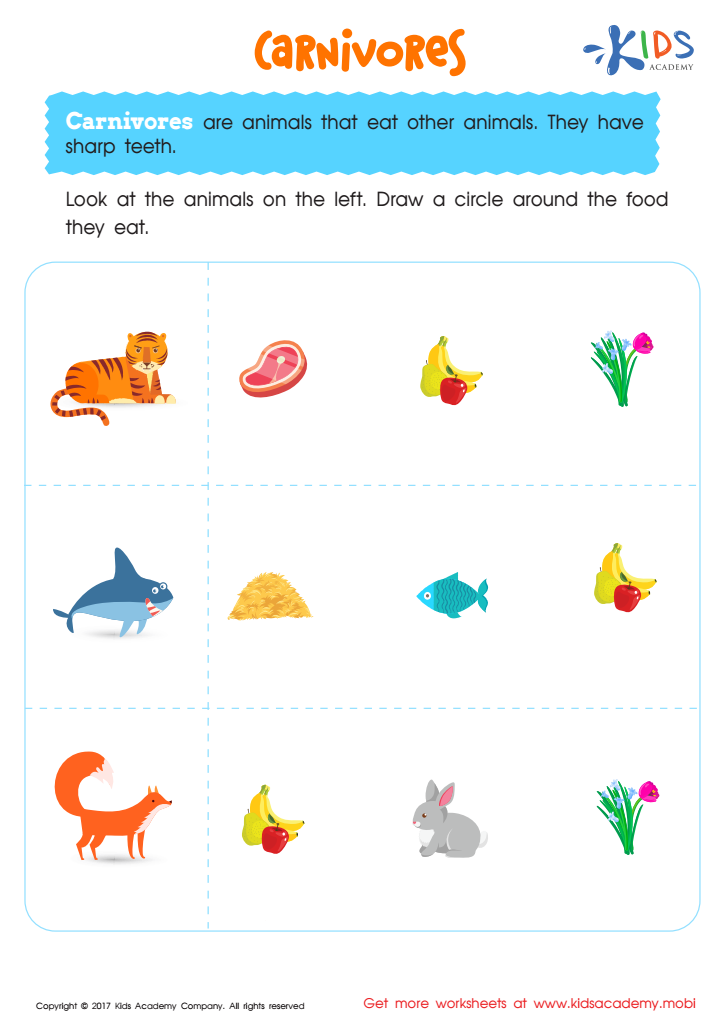
Carnivores Worksheet
 Assign to My Students
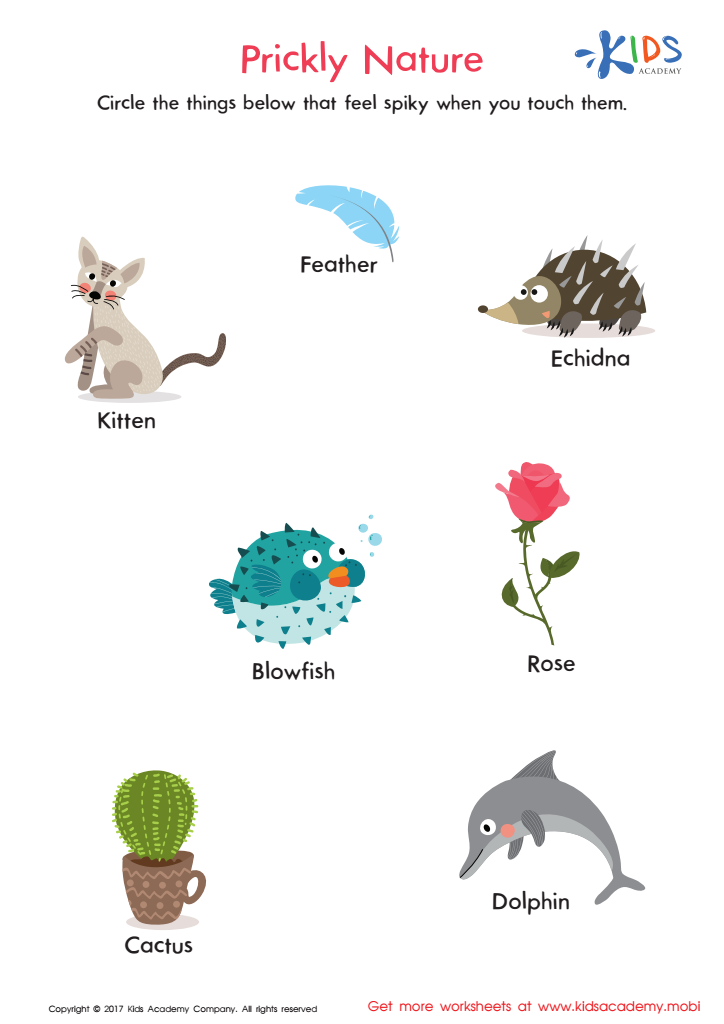
Prickly Nature Worksheet
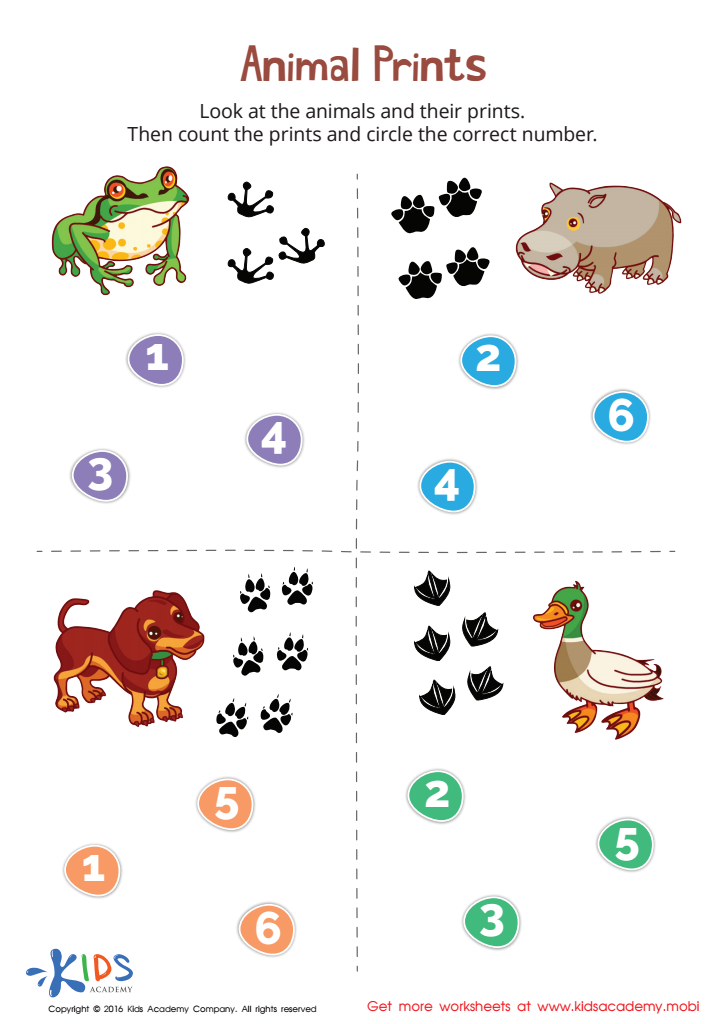
Animal Prints Match-Up Worksheet
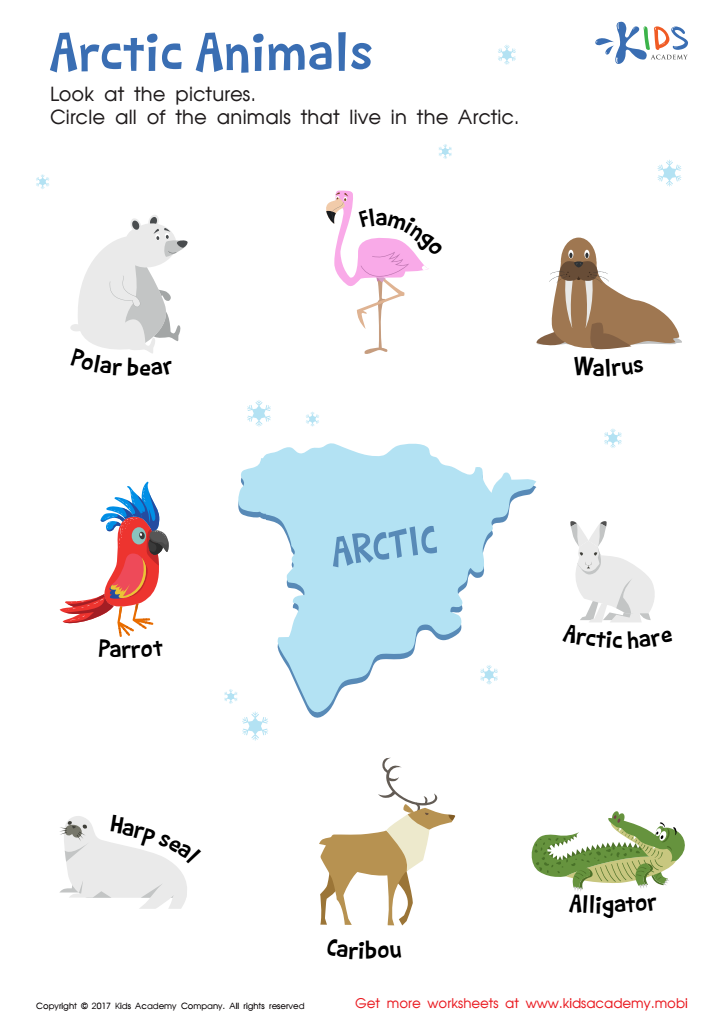
Arctic Animals Worksheet






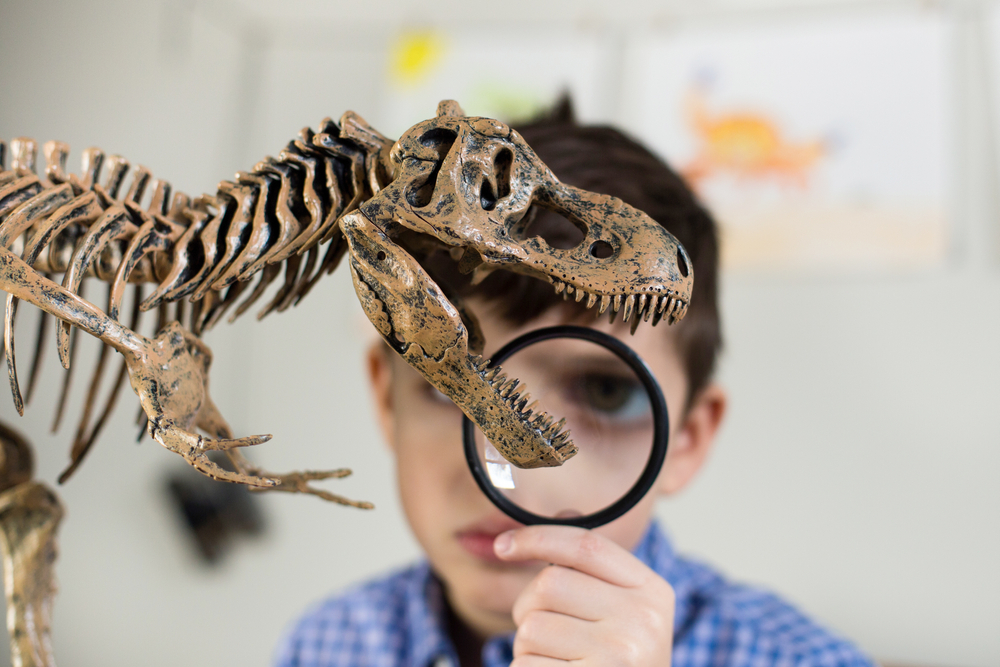

Animal identification science can be an exciting and crucial subject for children as young as five years old, promoting curiosity and a connection to the world around them. At this age, children are naturally curious about animals and their environments. Engaging them in animal identification helps to foster this curiosity while building critical observational skills. Identifying animals encourages children to explore their traits, such as colors, sizes, and behaviors, thus enhancing their cognitive abilities.
Moreover, understanding animal identification lays the groundwork for broader environmental awareness and responsibility. By learning about different species, children can develop empathy and respect for living creatures. This awareness cultivates a sense of stewardship toward the environment, encouraging future generations to consider their impact on wildlife and ecosystems.
In addition, incorporating animal identification into early education can enhance language development. Children learn new vocabulary related to animals, habitats, and conservation themes, broadening their communication skills.
Finally, caregivers and educators who emphasize animal identification science forge a fun and enriching educational experience. It can stimulate enthusiasm for nature, science, and outdoor activities, teaching children to appreciate exploration and inquiry from a young age. This endears them to learning and promotes lifelong learning habits.







