Critical thinking skills Social Studies Worksheets for 5-Year-Olds
3 filtered results
-
From - To
Enhance your 5-year-old's critical thinking abilities with our engaging Social Studies worksheets! Designed specifically for young learners, these worksheets encourage curiosity and exploration as children dive into topics like community, culture, and relationships. Each activity is thoughtfully crafted to promote problem-solving, analysis, and reasoning, allowing kids to develop essential critical thinking skills in a fun, interactive way. Our resources support early education, fostering confidence and creativity while helping children make connections to their world. Explore our collection today and watch your little ones thrive as they grow into thoughtful, informed individuals!
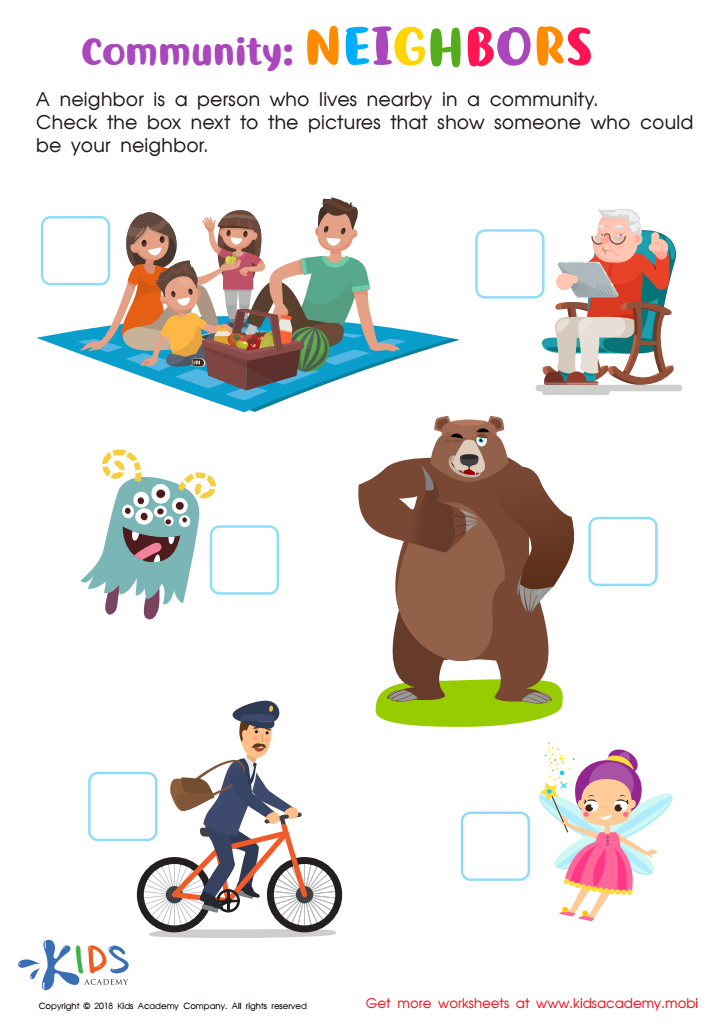
Community: Neighbors Worksheet
 Assign to My Students
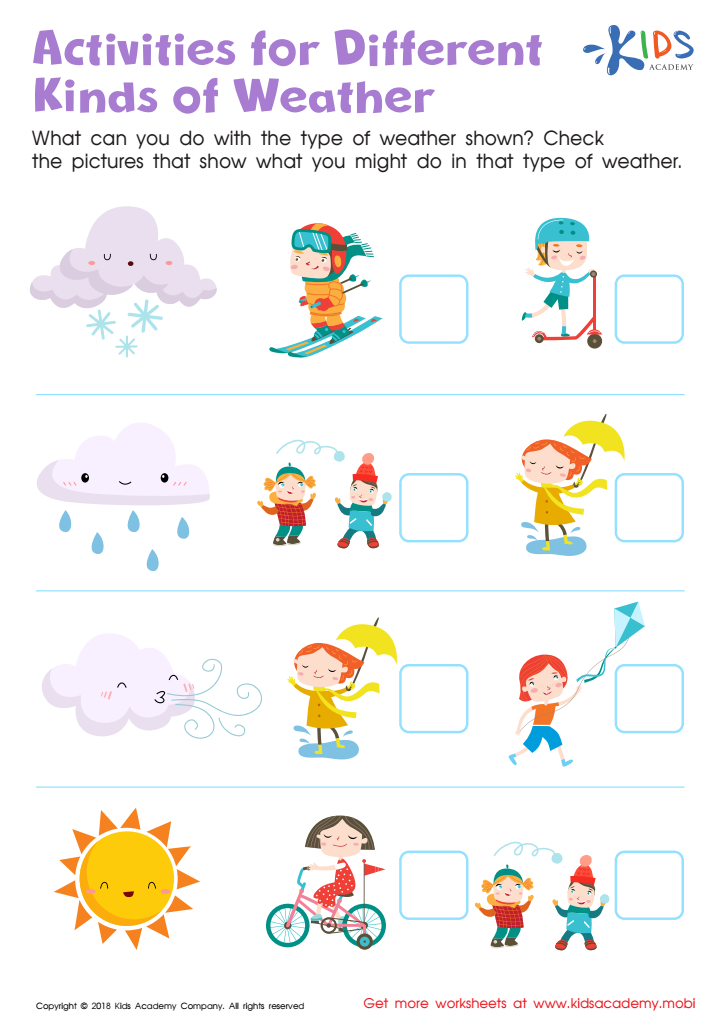
Activities for Different Kinds of Weather Worksheet
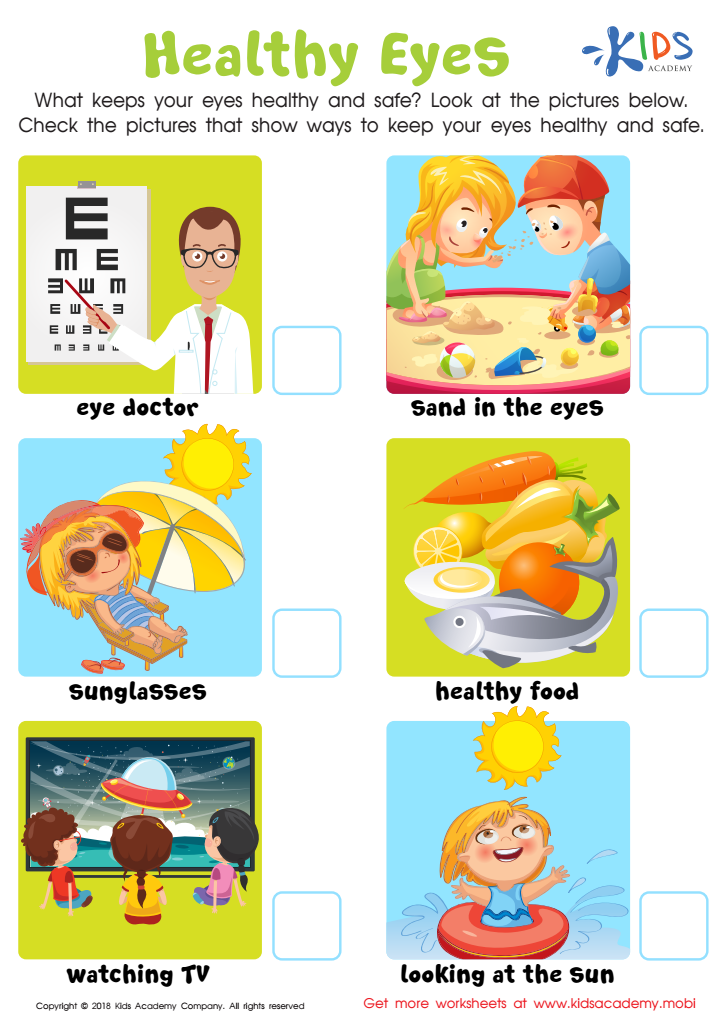
Healthy Eyes Worksheet



.jpg)




Parents and teachers should prioritize critical thinking skills in social studies for five-year-olds because these foundational skills shape how children understand the world around them. At this age, children are naturally curious, asking questions about people, places, and cultural practices. Encouraging critical thinking helps them develop the ability to analyze information, differentiate between fact and opinion, and draw reasoned conclusions.
Social studies provides a rich context for promoting these skills, as it exposes young learners to diverse perspectives and societal concepts such as community, identity, and responsibility. Engaging children in discussions about family traditions, cultural differences, or historical figures enhances their empathy and perspective-taking abilities.
Moreover, nurturing critical thinking at an early age fosters a love for learning that can serve students throughout their educational journey and beyond. It equips them with the skills necessary to engage with complex ideas, make informed choices, and become active, responsible citizens.
Parents and teachers play a vital role in creating environments where children feel safe to express their thoughts, ask questions, and explore their understanding of the world, while helping them establish the foundation for lifelong critical thinking. Prioritizing these skills in early education sets the stage for effective learning and growth.