Alphabet Recognition ABC Letters Worksheets for Ages 6-7 - Page 2
28 filtered results
-
From - To
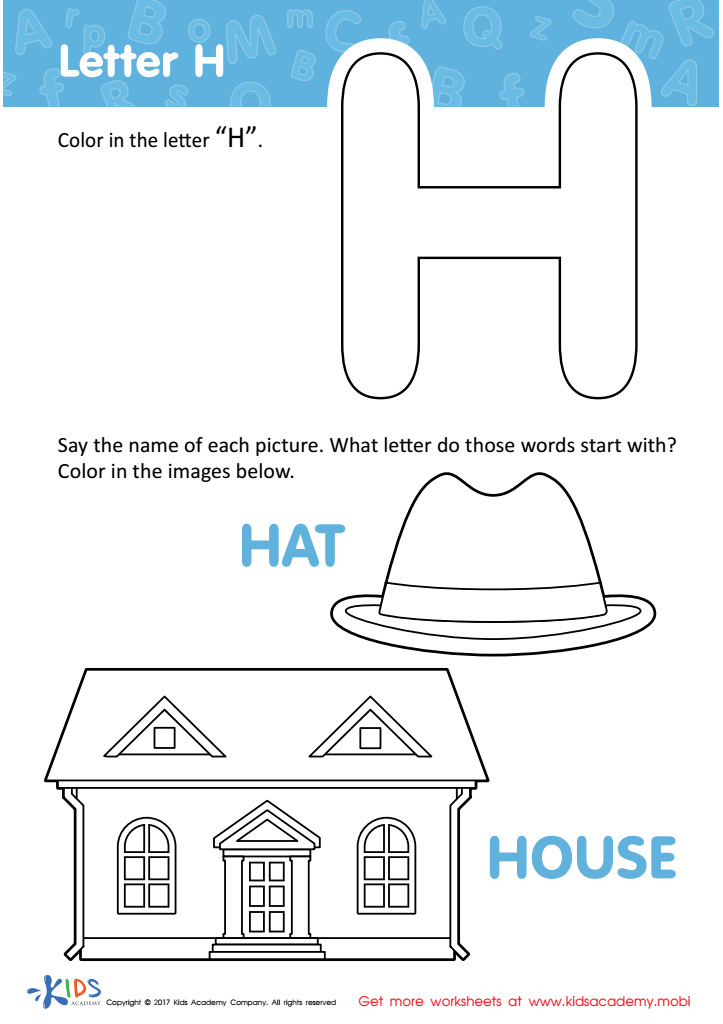
Letter H Coloring Sheet
 Assign to My Students







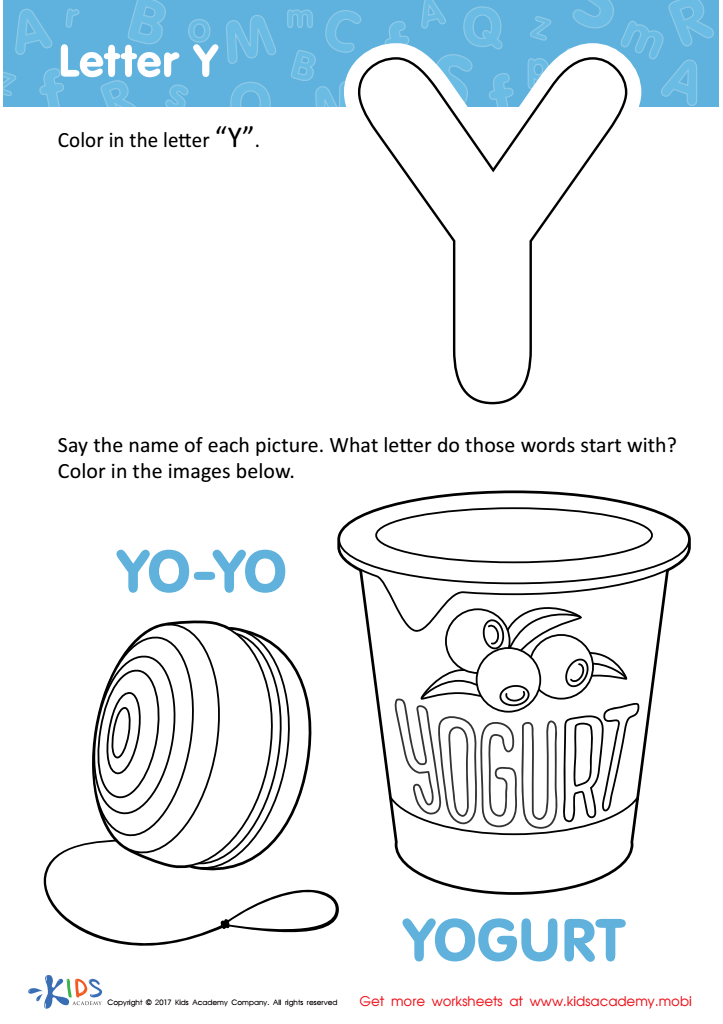
Letter Y Coloring Sheet
Assign to My Students
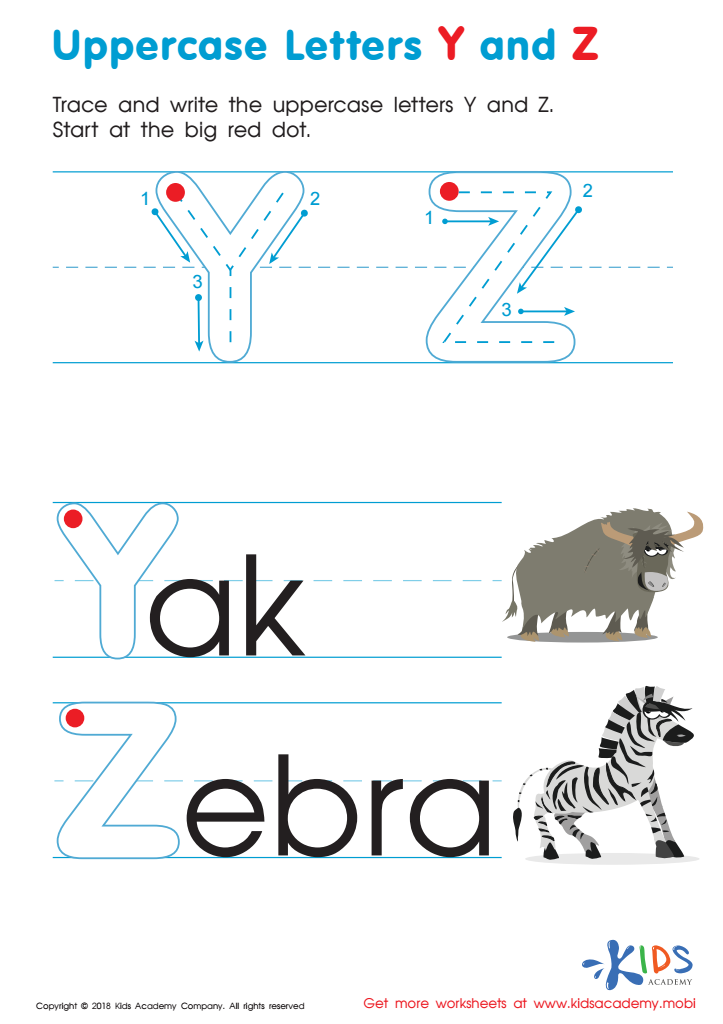
Uppercase Letters Y Z Worksheet
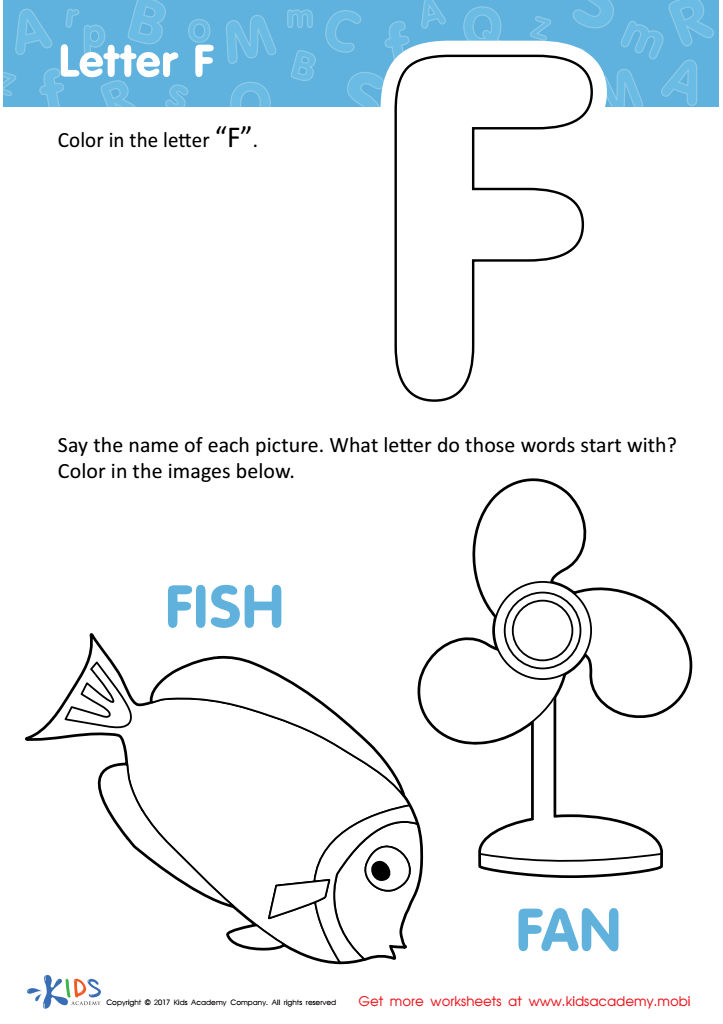
Letter F Coloring Sheet
Assign to My Students






Alphabet recognition is foundational for children's literacy development, particularly between the ages of 6 and 7. During this critical period, children are transitioning from learning to read to reading to learn. Mastery of ABC letters enhances their aptitude for phonics and word formation, which are vital for reading fluency and comprehension. As children recognize letters and associate them with sounds, they develop the skills necessary to decode new words, ultimately fostering a love for reading.
Furthermore, understanding letters contributes to writing skills. As children learn to recognize letters, they also learn how to form them, leading to improved handwriting. This also boosts their confidence as they share their written thoughts or create simple stories.
Families and educators play a crucial role in fostering this recognition through engaging activities, such as interactive games, storytelling, and writing exercises. By providing a rich language environment and encouraging exploration of letters in playful ways, parents and teachers can reinforce the child's learning experience.
Ultimately, a strong foundation in alphabet recognition paves the way for academic success in all subjects, helping children become effective communicators and lifelong learners. Thus, it's imperative for parents and teachers to prioritize and support this essential skill.







