Word Recognition Consonant Digraphs Worksheets for Ages 6-7
5 filtered results
Difficulty Level
Grade
Age
-
From - To
Subject
Activity
Standards
Enhance your child's reading skills with our Word Recognition Consonant Digraphs Worksheets for ages 6-7. Perfectly crafted, these worksheets focus on common consonant digraphs like "ch," "sh," "th," and more, helping young readers confidently identify and pronounce complex sounds. Each worksheet features engaging activities, colorful illustrations, and interactive exercises designed to make learning fun and effective. Developed by education experts, these resources build foundational reading skills crucial for academic success. Ideal for classroom and home use, our worksheets provide consistent practice for mastering digraphs and boosting early literacy. Start your child's reading journey today!
Favorites
With answer key
Interactive
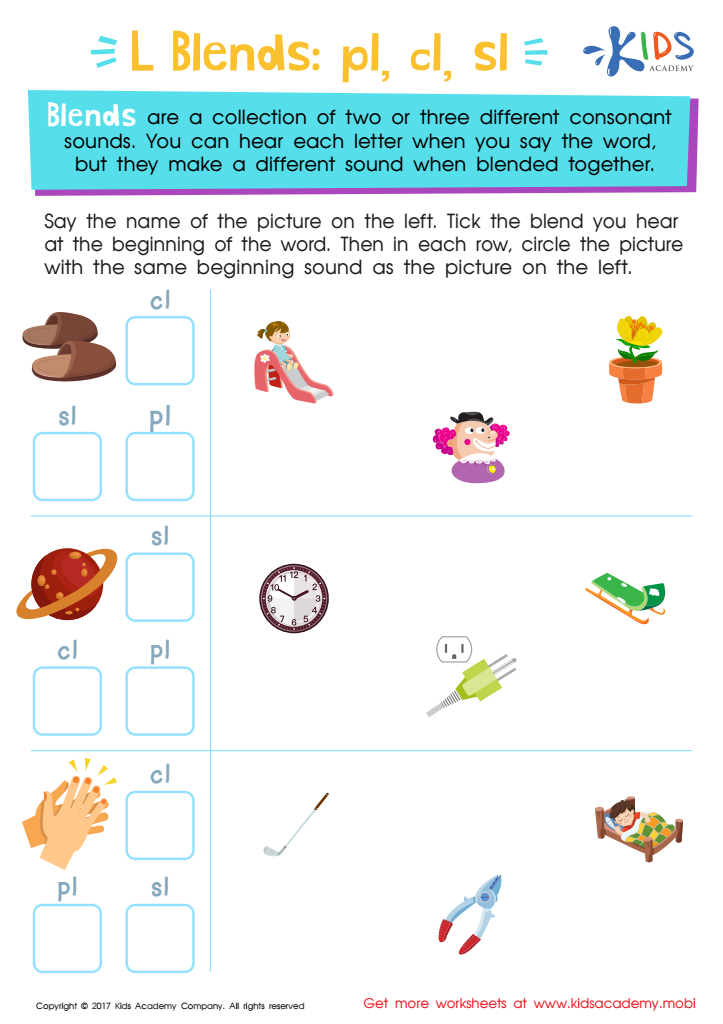
L Blends: "Pl", "Cl" and "Sl" Printable
This printable worksheet will help your child recognize and identify the Pl, Cl, and Sl consonant blends, sound them out, and identify them in print. Improve your child's reading and writing skills with fun and colorful phonics practice!
 Assign to My Students
L Blends: "Pl", "Cl" and "Sl" Printable
Worksheet
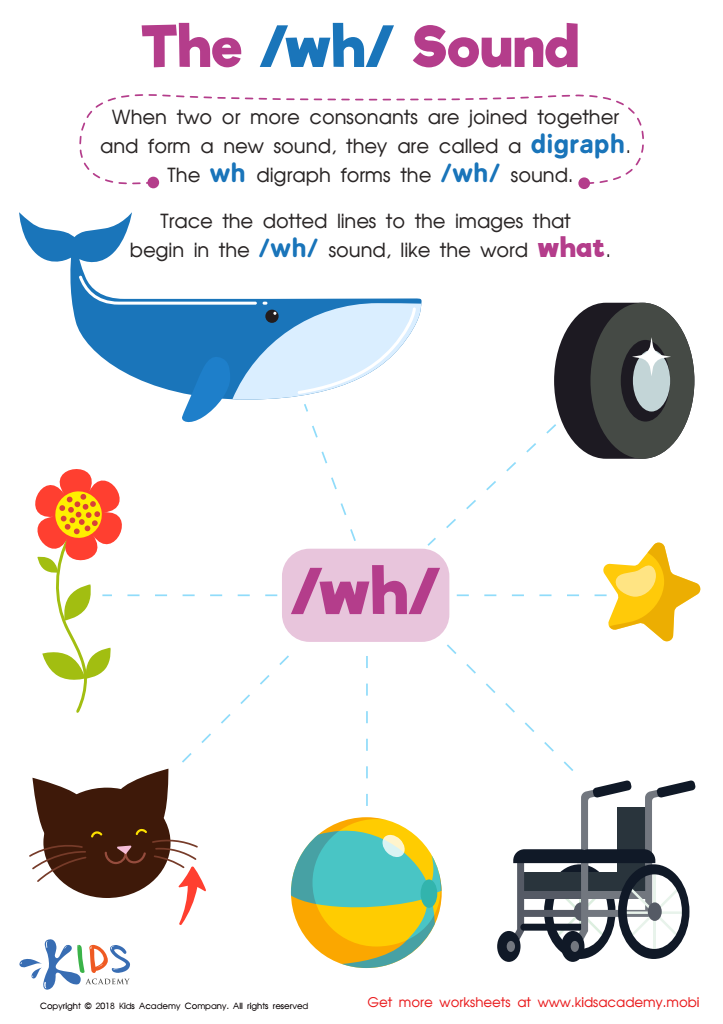
The /wh/ Sound Worksheet
Digraphs join two consonants to make a new sound, like /wh/. Give examples, like "whale", "when" and "why". Ask kids to name pictures in a worksheet and trace dotted lines to images beginning with the /wh/ sound; "what" is one example.
The /wh/ Sound Worksheet
Worksheet
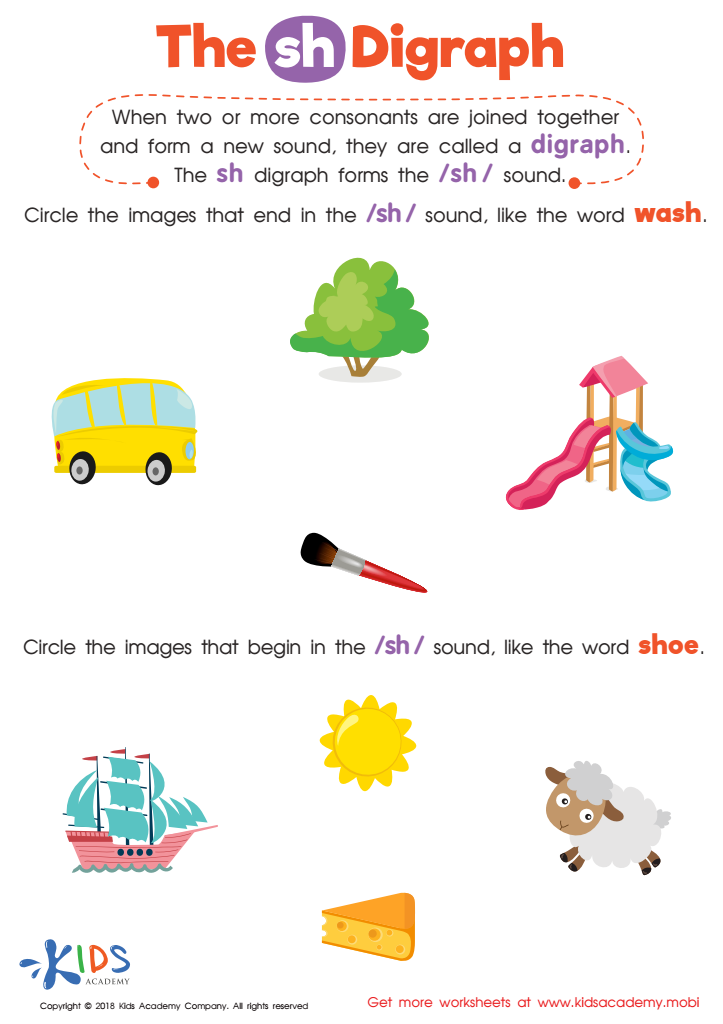
The SH Digraph Worksheet
There are many phonetic sounds, each with its own unique sound. When two or more consonants are combined to create a new sound, it's called a digraph. Example: the sh digraph creates the /sh/ sound. Have kids look at the pictures and say the words aloud. Help them circle the images ending with /sh/, like 'wash'.
The SH Digraph Worksheet
Worksheet
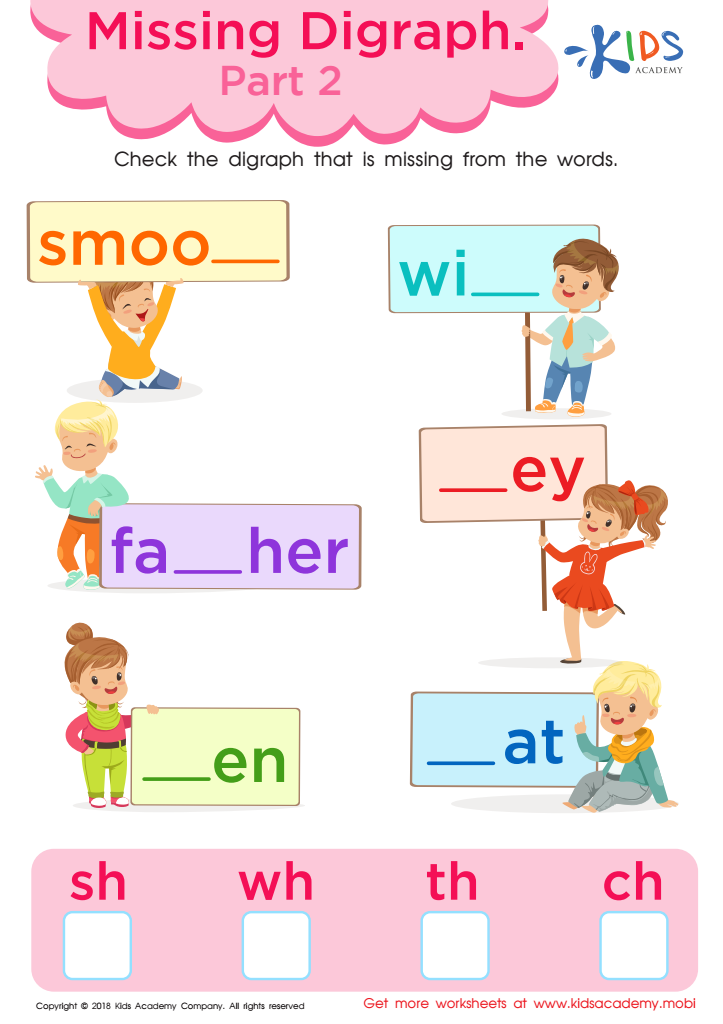
Missing Digraph: Part 2 Worksheet
Practice the "th" digraph with this fun worksheet from Kids Academy! See how it appears at the beginning, middle, or end of words and help learners fill in the blanks. Check if they got it right by finding the th digraph at the bottom!
Missing Digraph: Part 2 Worksheet
Worksheet
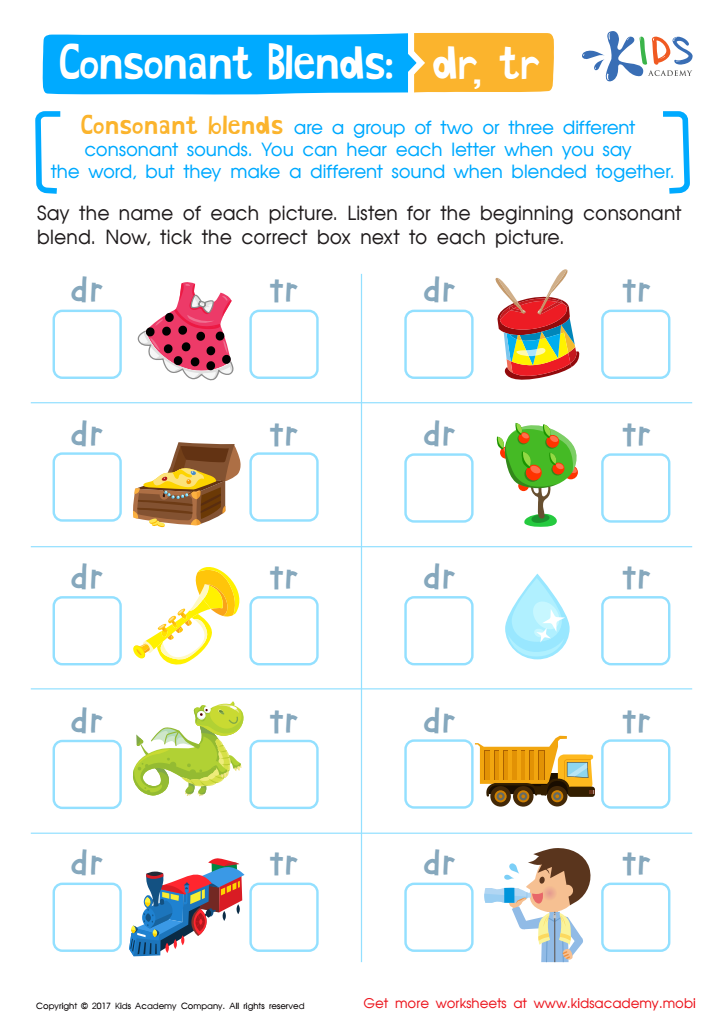
Consonant Blends: "Dr" and "Tr" Printable
Pictures of the words provide a visual cue, and sound-outs help with auditory cues.
Consonant Blends: "Dr" and "Tr" Printable
Worksheet
Join Kids Academy for Free
Who is primarily going to use this learning content?


Parents and teachers should prioritize understanding and teaching consonant digraphs—pairs of consonants that together make a single sound—because they lay a crucial foundation for reading proficiency in children aged 6-7. At this stage, kids transition from recognizing individual letters and sounds to decoding more complex words. Mastering consonant digraphs like "ch," "sh," "th," "wh," and "ck" is vital because it significantly expands their word recognition and vocabulary.
Familiarity with digraphs enhances phonemic awareness, enabling children to blend sounds more effectively, which is a critical skill for fluent reading. Without this foundational knowledge, children might struggle to read smoothly, leading to frustration and potentially hindering their overall academic progress. Effective recognition of consonant digraphs also improves spelling and writing skills, as kids can better predict how words should look and sound.
For teachers, incorporating digraph lessons into the curriculum means leveraging multisensory activities like storytelling, flashcards, and phonics games, which make learning fun and memorable. For parents, supporting this learning at home through reading and engaging in phonics-based activities accelerates progress. Together, these efforts ensure children develop solid reading skills, setting the stage for academic success and a lifelong love of reading.