
Capitalization rules Alphabet Worksheets for Ages 6-7
4 filtered results
Difficulty Level
Grade
Age
-
From - To
Subject
Activity
Standards
Discover our engaging Capitalization Rules Alphabet Worksheets for ages 6-7 at Kids Academy! Designed to make learning fun, these worksheets help young learners understand the important rules of capitalizing letters. Through colorful and interactive activities, children will practice identifying when to use capital letters in sentences, such as for proper nouns, the start of sentences, and the pronoun "I". Ideal for first graders, these worksheets will build essential writing skills and boost confidence. Start your child's journey to mastering capitalization with our age-appropriate, expert-developed materials today! Visit us for free printable resources!
Favorites
With answer key
Interactive
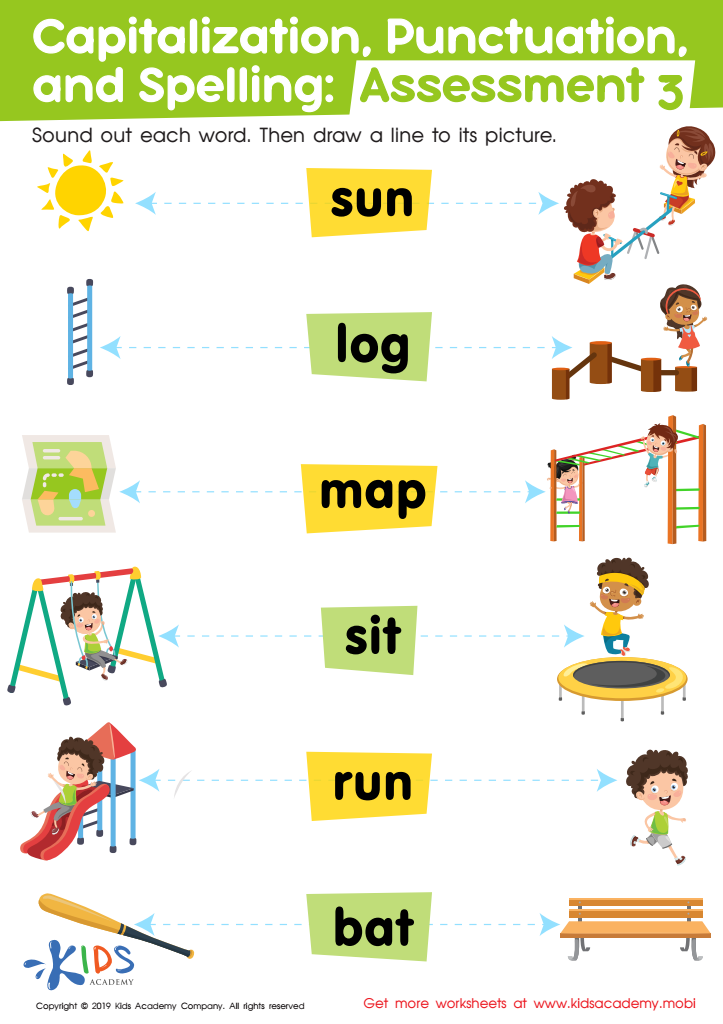
Capitalization. Punctuation. Spelling. Assessment 3 Worksheet
Before starting this worksheet, have your kids spell some simple words. Correct if wrong and show the right spellings. Then, ask them to link the pictures to the words you read out. Spelling is key for a good writer, and kids need to know how to spell to read texts easily.
 Assign to My Students
Capitalization. Punctuation. Spelling. Assessment 3 Worksheet
Worksheet
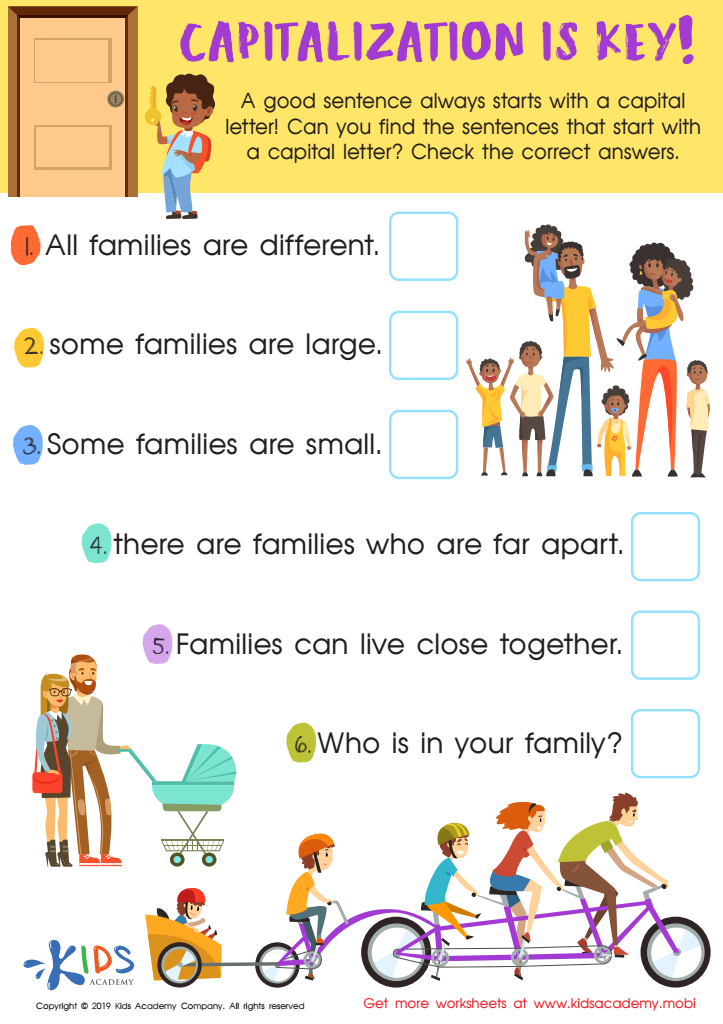
Capitalization Key Worksheet
Help your kids learn the importance of capitalizing at the start of sentences with this fun PDF! It features 6 family-themed sentences, with pictures, that your students have to find the correctly capitalized versions of. Perfect for young learners, this worksheet adds a fun twist to learning.
Capitalization Key Worksheet
Worksheet
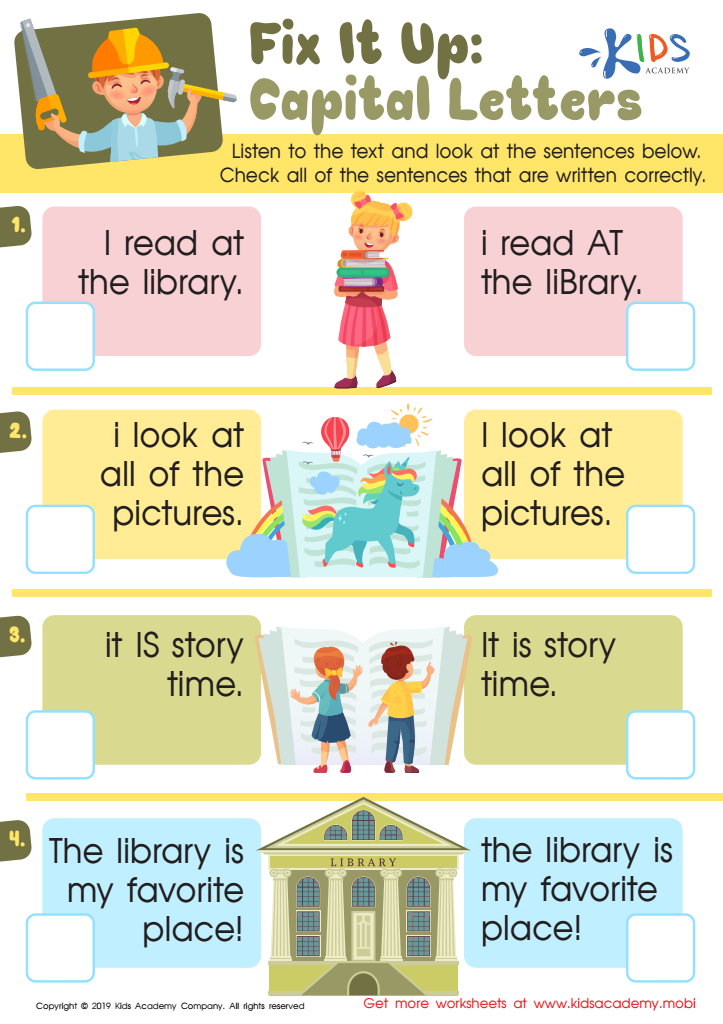
Fix Capital Letters Worksheet
Put on your hardhats and get out the tools - it's time to do some repair work! Have your child identify sentences written with proper capitalization on this fun and colorful worksheet. Ask more advanced students to rewrite incorrect sentences correctly - it'll help them understand letter case better.
Fix Capital Letters Worksheet
Worksheet
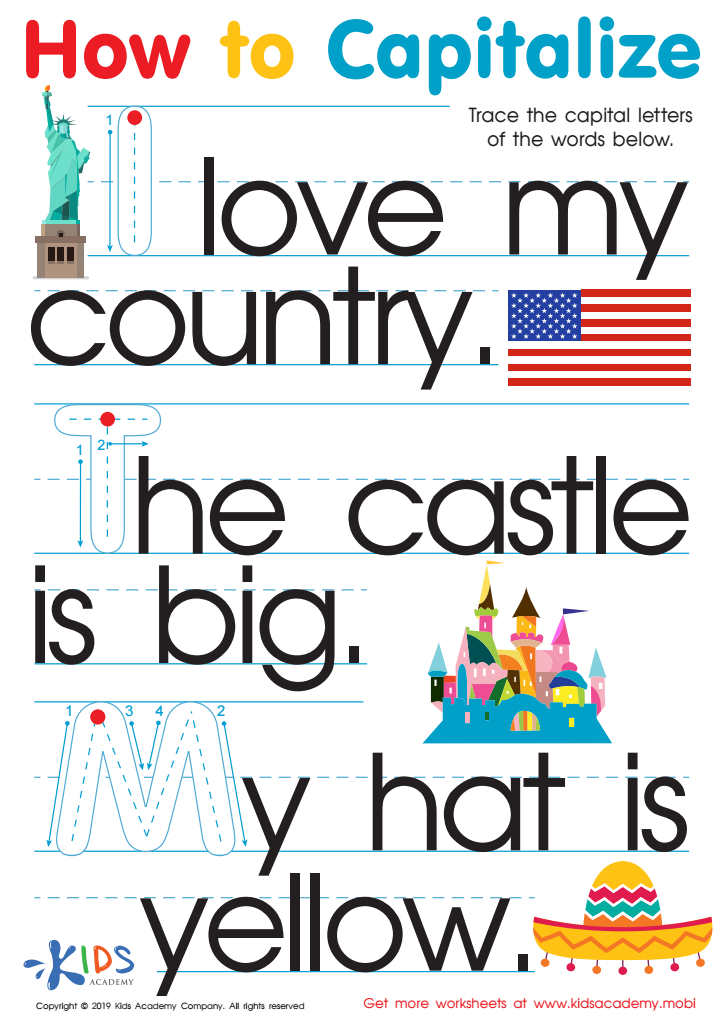
How to Capitalize Worksheet
Capitalizing letters is important in English. This worksheet will help your child learn how to write them. Words such as "the" and "I" will be covered, with visuals such as the Statue of Liberty, the American Flag, a castle, and a sombrero. The "How to Capitalize" PDF is a great way to sharpen your child's writing and aid their success!
How to Capitalize Worksheet
Worksheet
Join Kids Academy for Free
Who is primarily going to use this learning content?







Understanding capitalization rules is crucial for young children aged 6-7 as it forms a fundamental part of their literacy development. At this age, children begin honing their writing and reading skills, making it essential for parents and teachers to emphasize the importance of proper capitalization. By mastering these rules, children can ensure their writing is clear and easily understood, which boosts their confidence and effectiveness as communicators.
Capitalization rules, like beginning a sentence with a capital letter and capitalizing proper nouns such as names and places, help young writers organize their text and convey meaning accurately. It also aids in fostering a sense of attention to detail and introduces them to the conventions of written English. Encouraging correct capitalization practices early on sets a solid foundation for more complex writing tasks in the future, promoting academic success.
Moreover, understanding capitalization is interconnected with reading skills. Recognizing capital letters in texts helps children identify sentence beginnings and proper nouns, improving their reading fluency and comprehension. Parents and teachers, through consistent reinforcement and engaging activities, can support children in grasping these essential rules, thereby equipping them with critical skills for effective communication and lifelong learning.







