
Letter formation Alphabet Worksheets for Ages 6-7
7 filtered results
Difficulty Level
Grade
Age
-
From - To
Subject
Activity
Standards
Enhance your child's writing skills with our engaging Letter Formation Alphabet Worksheets for ages 6-7! Designed to make learning fun and interactive, these worksheets provide step-by-step guidance for mastering both uppercase and lowercase letters. Each worksheet features clear arrow prompts, helping young learners develop proper pencil grip and letter formation techniques. These activities promote fine motor skills, boost confidence, and lay a solid foundation for future writing success. With vibrant designs and varied exercises, children will enjoy practicing their letters while you see their skills flourish. Perfect for homeschoolers or supplementary classroom activities! Download and watch your child's handwriting thrive!
Favorites
With answer key
Interactive
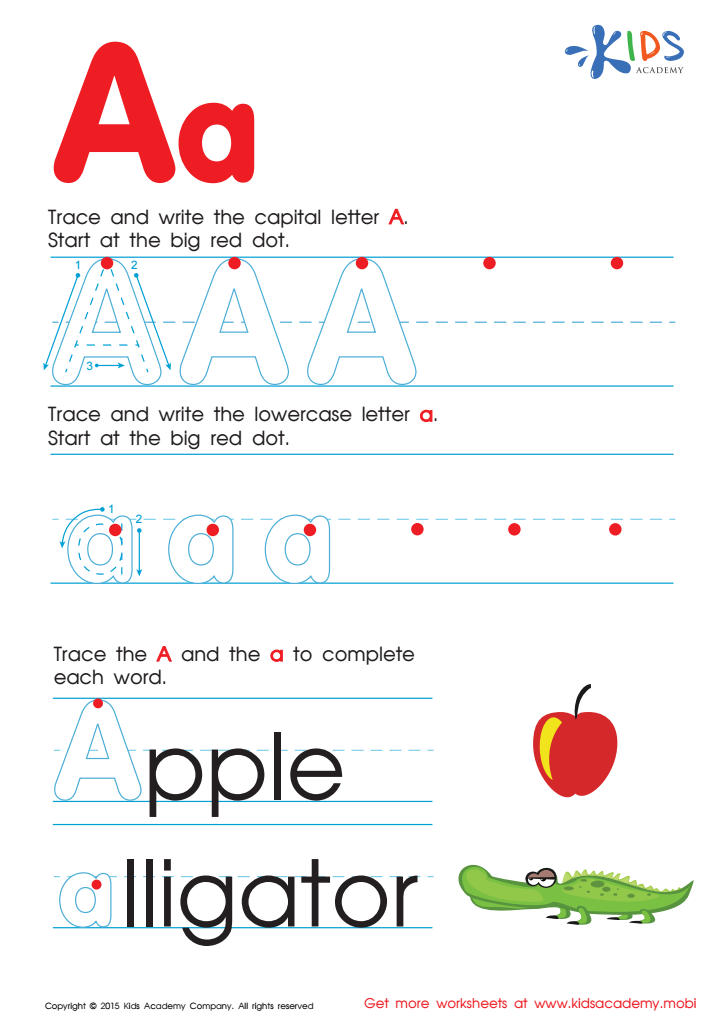
Letter A Tracing Page
Trace and write the letter "A"! Start with the big red dot, then do the capital and lowercase versions. Then write it again with two words - apple and alligator. Download more tracing worksheets at Kids Academy.
Letter A Tracing Page
Worksheet
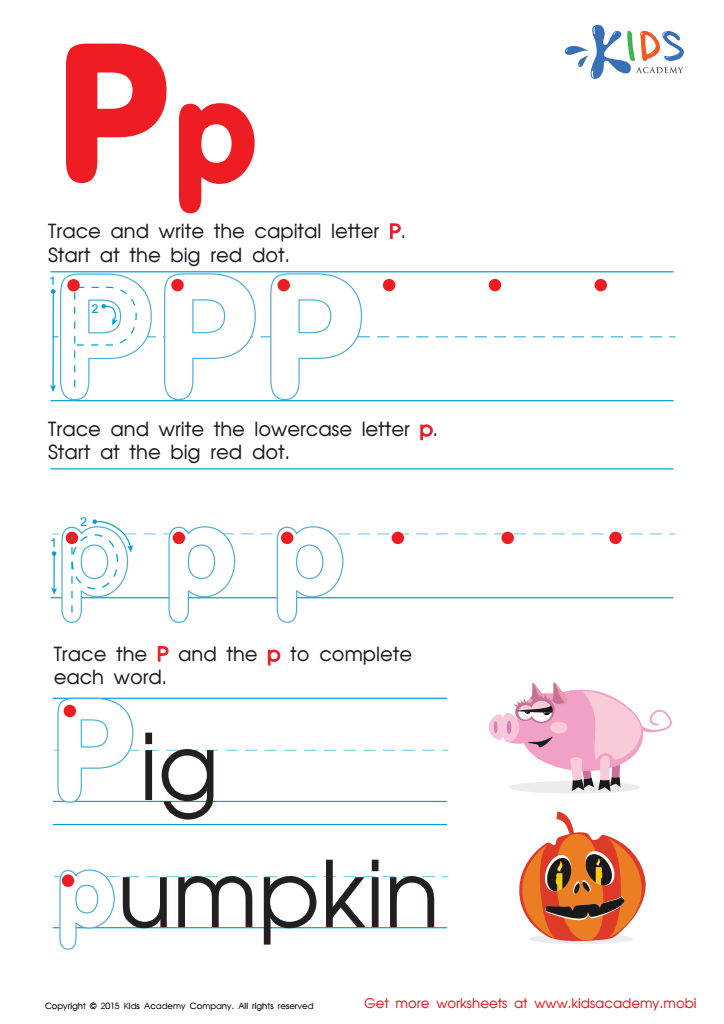
Letter P Tracing Page
Trace the lines from the red dot to learn to write "P"! Then practice this letter with the fun activities: complete the word "Pig" and "Pumpkin". Check out Kids Academy to get more free ABC worksheets.
Letter P Tracing Page
Worksheet
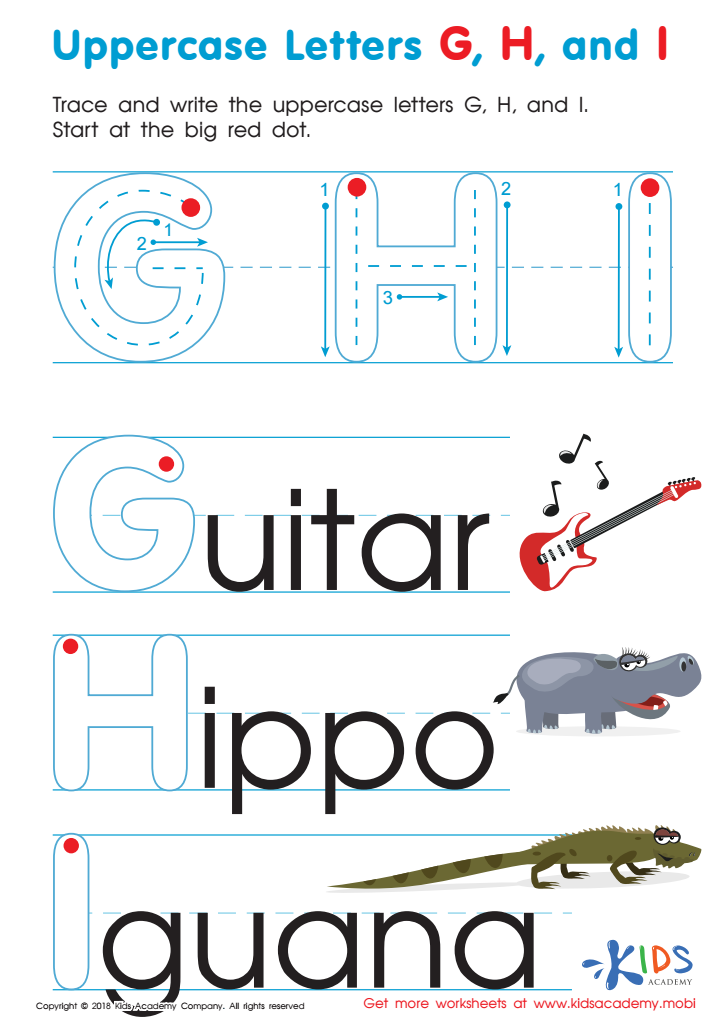
Uppercase Letters G, H, and I Worksheet
Trace each letter with the big red dot, connecting them to sounds as you go. Then write G to I. Congrats on a job well done! Rock on with a cute hippo and iguana while working on this delightful kindergarten worksheet!
Uppercase Letters G, H, and I Worksheet
Worksheet
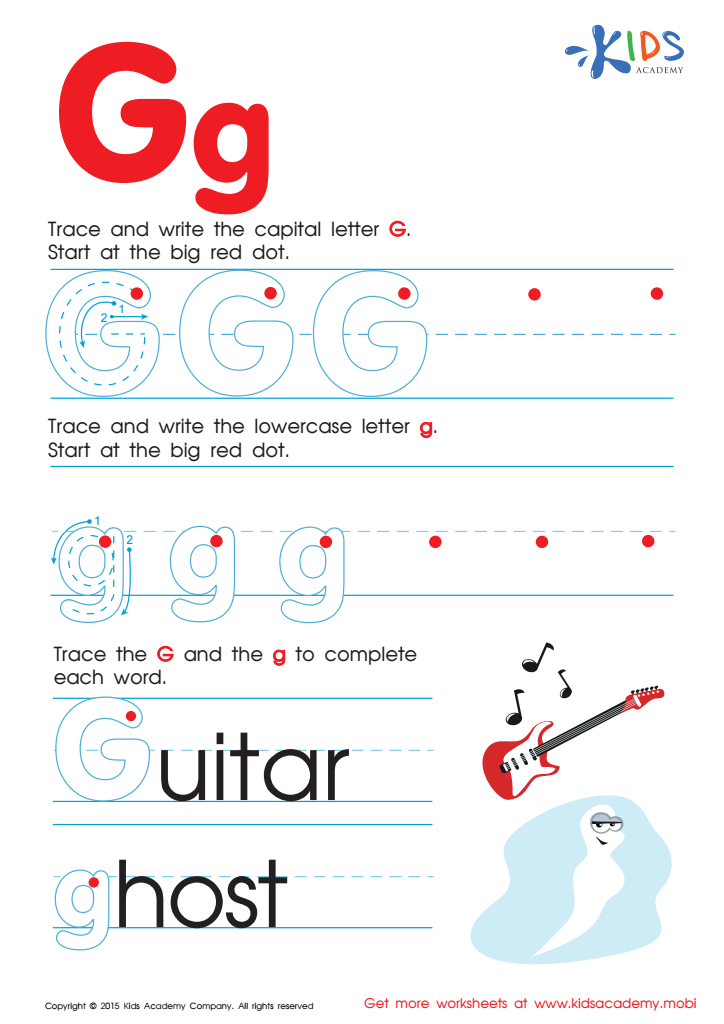
Letter G Tracing Page
Get ready to trace the letter "G" – with a big red spot as the starting point, trace the lines and watch the letter appear. Uppercase and lowercase letters are both easy and fun to write. Give it a go and finish the word "go". Play the guitar and say "hello" to a funny ghost!
Letter G Tracing Page
Worksheet
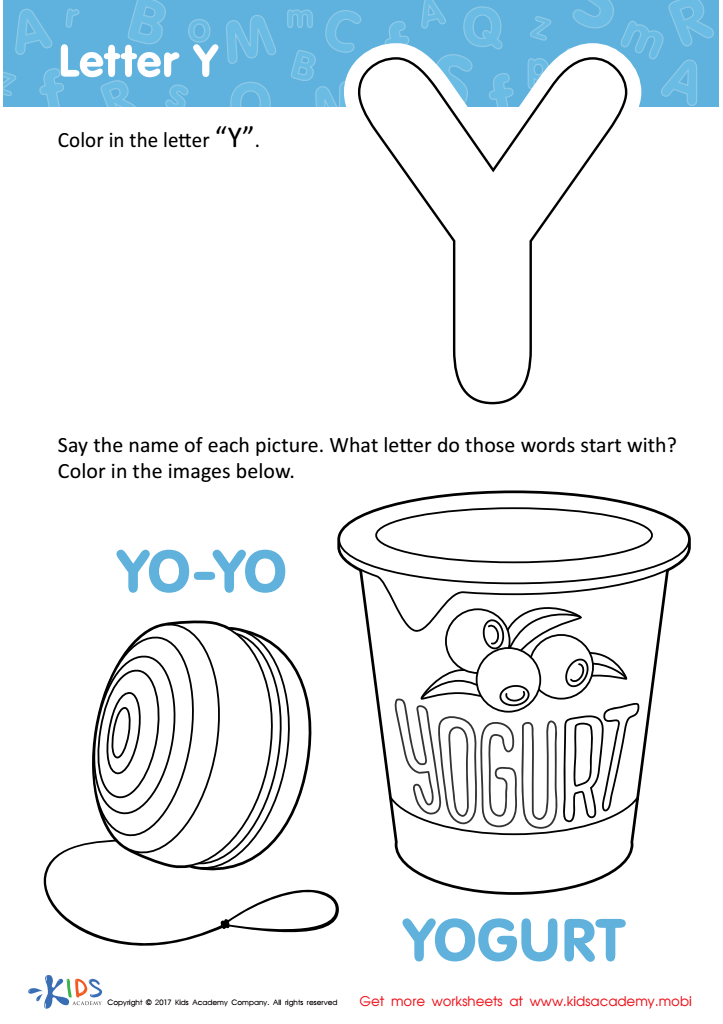
Letter Y Coloring Sheet
Let's celebrate letter "Y"! Here's a fun coloring page that'll help your child learn this end-of-the alphabet letter. It's packed with familiar objects that'll help build their art and literacy skills. So let's say "Yay"!
Download (PDF)
 Assign to My Students
Assign to My Students
Letter Y Coloring Sheet
Worksheet
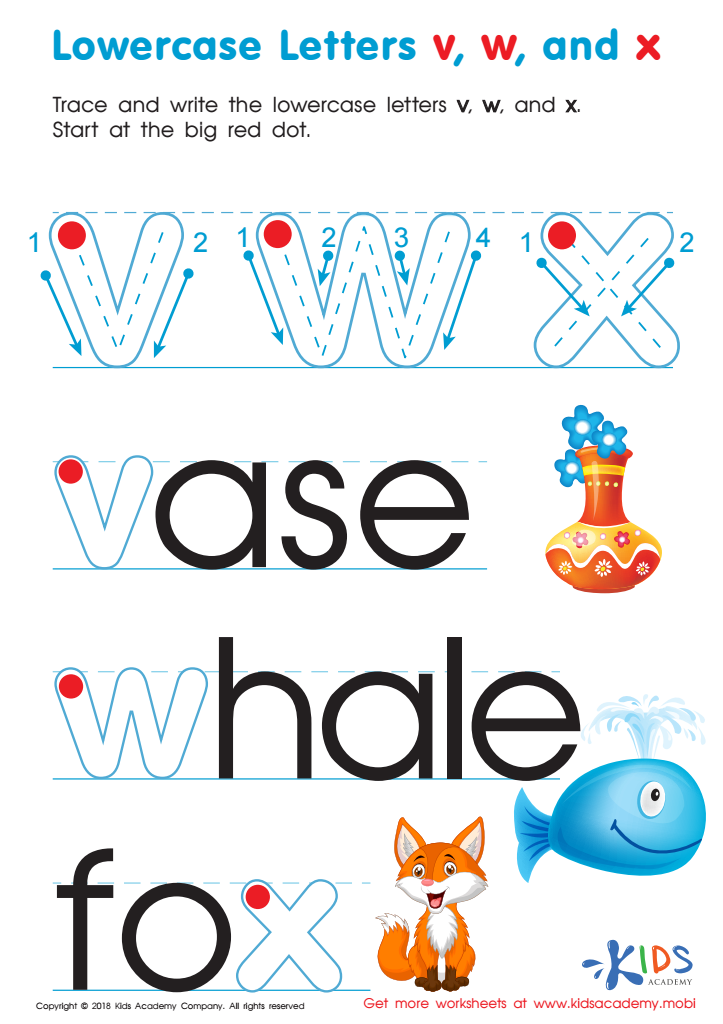
Lowercase Letters v w x Worksheet
Help your child learn to write lowercase letters v, w, and x, starting at the big red dot. This activity will help them develop writing skills and correctly identify the letters. Guide them as they trace the letters and enjoy watching them improve!
Lowercase Letters v w x Worksheet
Worksheet
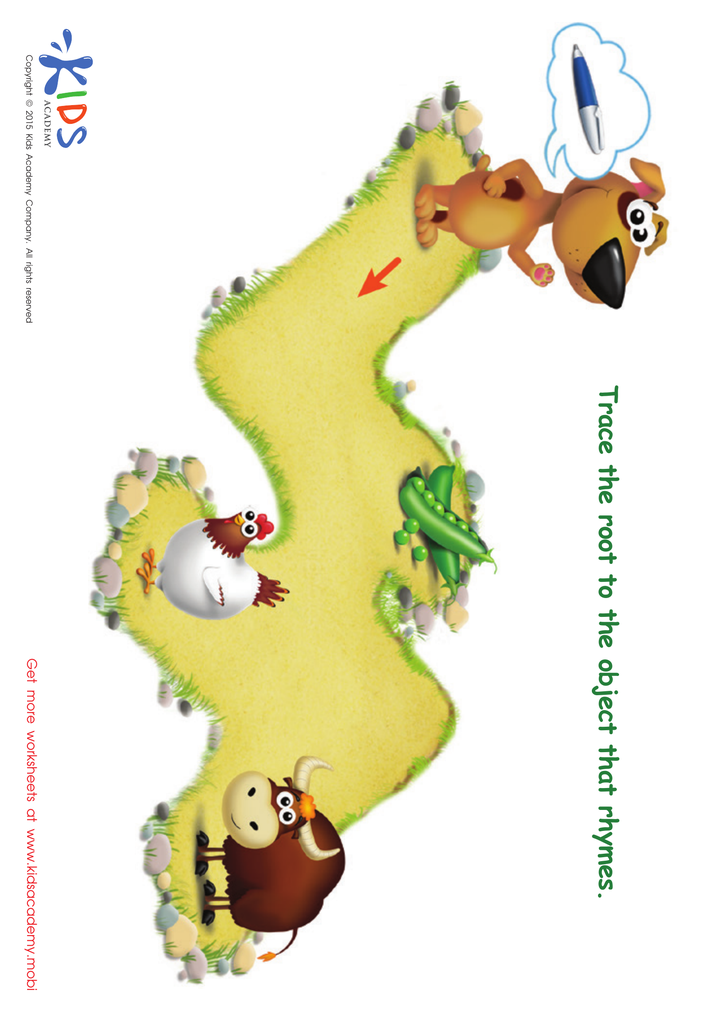
Pen Rhyming Words Worksheet
Check out the cute pup, pondering away. He's thinking of a root word - no suffix or prefix. Now check the hen, green beans, and the cow. Can you find the word that rhymes with pen? Draw a line from the root word to its rhyme for this simple yet beneficial worksheet. It helps young learners practice hearing and recognizing rhymes.
Pen Rhyming Words Worksheet
Worksheet
Join Kids Academy for Free
Who is primarily going to use this learning content?








Letter formation is crucial for children aged 6-7 as it lays the foundation for their writing skills. At this stage, kids begin to develop confidence in their abilities and express their thoughts through writing. Proper letter formation helps ensure legibility, meaning that others can read what they write easily. This fosters a sense of achievement and encourages them to write more, enhancing their communication skills.
Additionally, good letter formation aids in the development of fine motor skills. As children practice writing letters correctly, they enhance their hand-eye coordination and dexterity, which are essential for other activities like drawing and typing. When teachers and parents prioritize letter formation, they instill a strong writing habit early on, setting the stage for future academic success.
Moreover, attention to letter formation can help prevent frustration and anxiety associated with writing tasks. Children who struggle with poor handwriting might feel discouraged and reluctant to participate in activities involving writing, hindering their overall educational experience. By offering support in mastering letter formation, parents and teachers can promote positive attitudes towards writing, increase self-esteem, and cultivate an environment where expressive skills flourish.







