Letter-sound recognition Alphabet Worksheets for Ages 6-7
3 filtered results
-
From - To
Enhance your child's reading skills with our engaging Letter-Sound Recognition Alphabet Worksheets for ages 6-7! These worksheets are expertly designed to help young learners connect letters with their corresponding sounds, building a fundamental understanding of phonetics. With a variety of fun activities and colorful illustrations, children will practice identifying letters, matching sounds, and improving their overall literacy. Our carefully crafted resources encourage independent learning and are perfect for use at home or in the classroom. Help your child boost their confidence in reading while making learning enjoyable. Start their phonics journey today with our comprehensive alphabet worksheets!
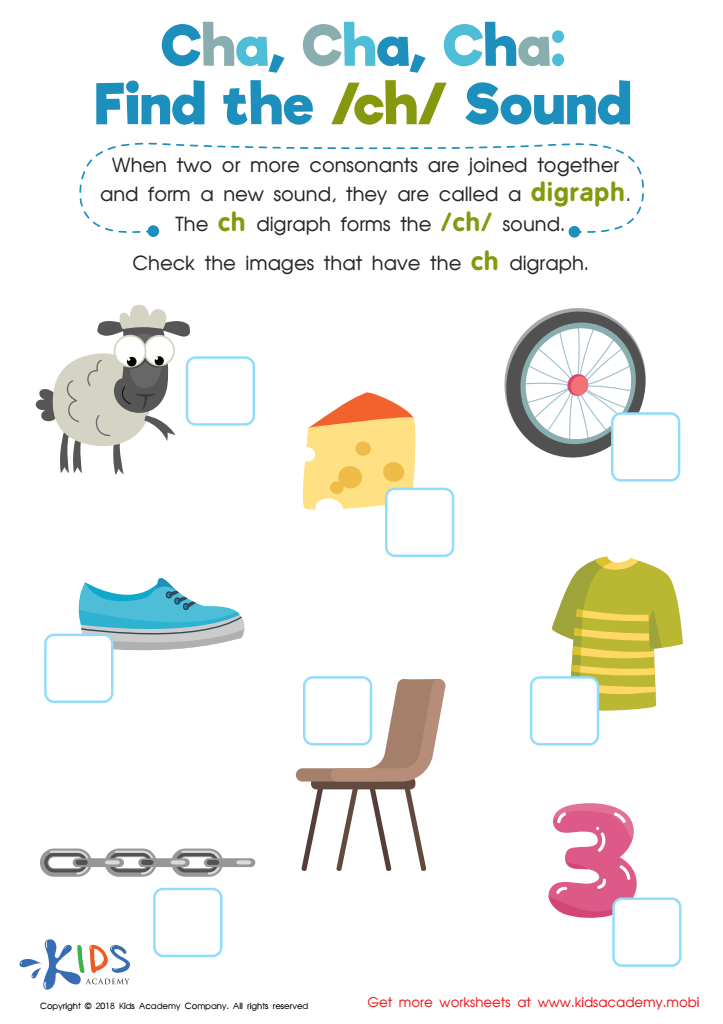
Cha, Cha, Cha: Find the /Ch/ Sound Worksheet
 Assign to My Students
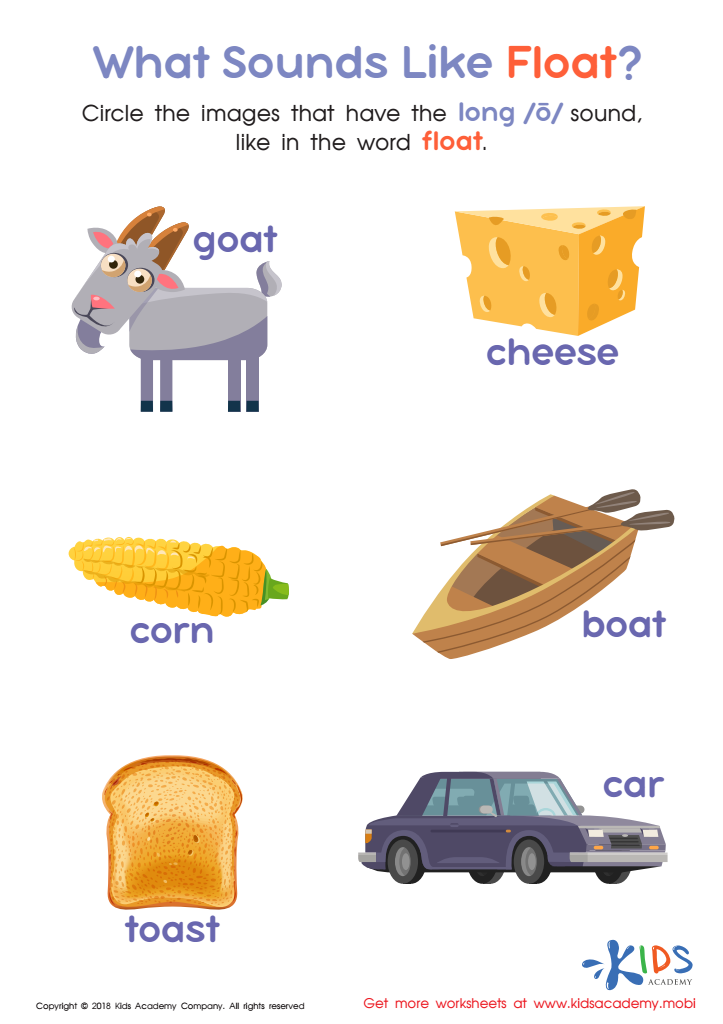
What Sounds Like Float? Worksheet
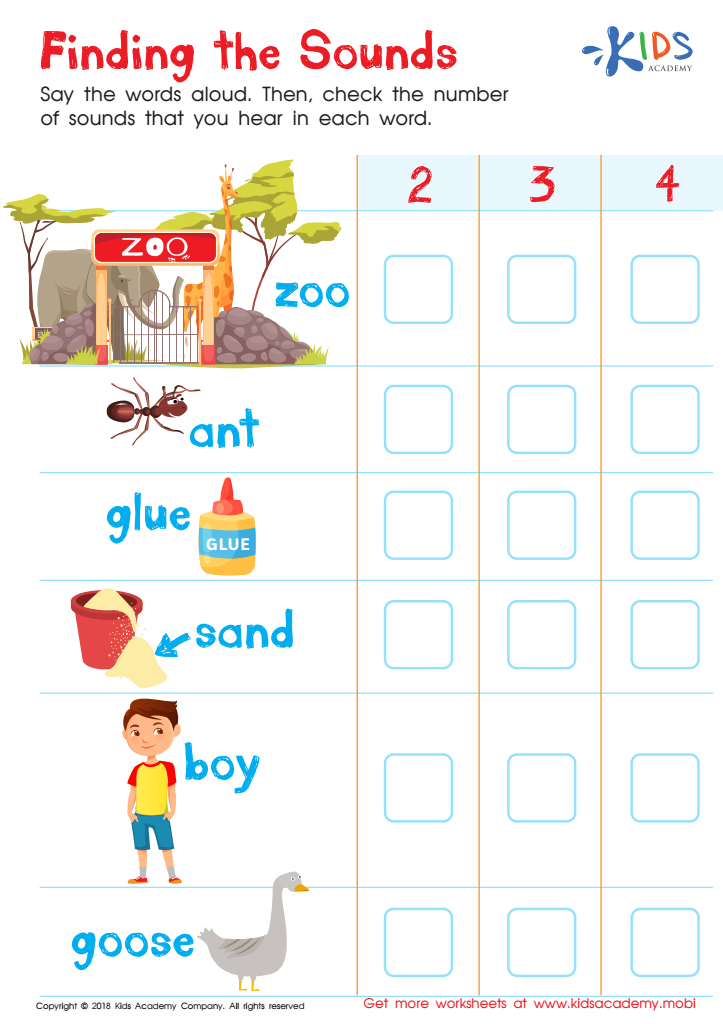
Finding the Sounds Worksheet





Letter-sound recognition is a crucial component of early literacy development for children aged 6-7, and both parents and teachers should prioritize it for several reasons. First, this recognition lays the foundation for reading and writing; children must grasp the connection between letters and their corresponding sounds to decode words effectively. Mastering this skill empowers young learners, enhancing their confidence and independence as they navigate books.
Moreover, letter-sound recognition fosters vocabulary development. Children who understand letter sounds can experiment with blending sounds, enabling them to create and read new words. This exploration broadens their language skills and enhances communication abilities. Additionally, it plays a significant role in spelling; children who can identify sounds in words are better equipped to spell accurately.
Engaging in activities that promote letter-sound recognition also nurtures cognitive and auditory skills, essential for overall learning. Parents and teachers can support this development through interactive games, songs, and reading together, making learning enjoyable and effective.
Ultimately, letter-sound recognition is not just an academic skill; it nurtures a lifelong love for reading, opens doors to knowledge, and fosters critical thinking. Supporting children in achieving proficiency in this area is an investment in their future educational success.







