Rhyming skills development Alphabet Worksheets for Ages 6-7
4 filtered results
-
From - To
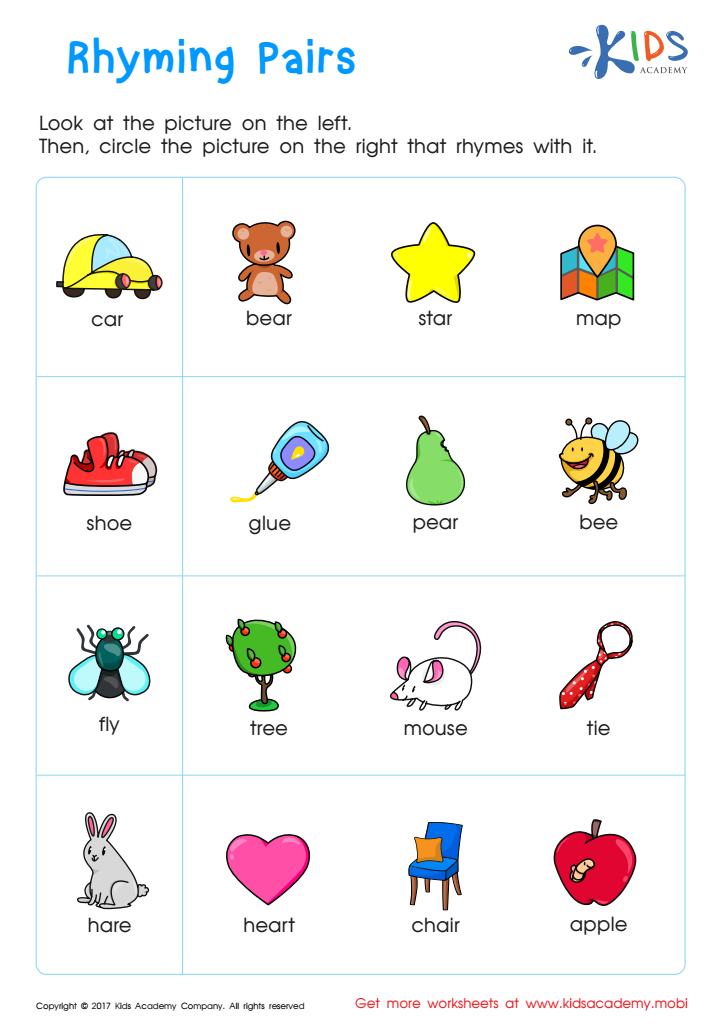
Unlock your child's potential with our Rhyming Skills Development Alphabet Worksheets, designed for children ages 6 to 7. These engaging worksheets foster creativity and critical thinking as students explore the magical world of rhymes. Through fun exercises and interactive activities, children will improve their phonological awareness and enhance their vocabulary. Ideal for both classroom and home learning, our worksheets provide a structured approach to mastering rhyming concepts, making learning enjoyable and effective. Support your child's literacy journey today with these essential resources, helping them build a strong foundation in language skills while having fun! Explore the worksheets now!
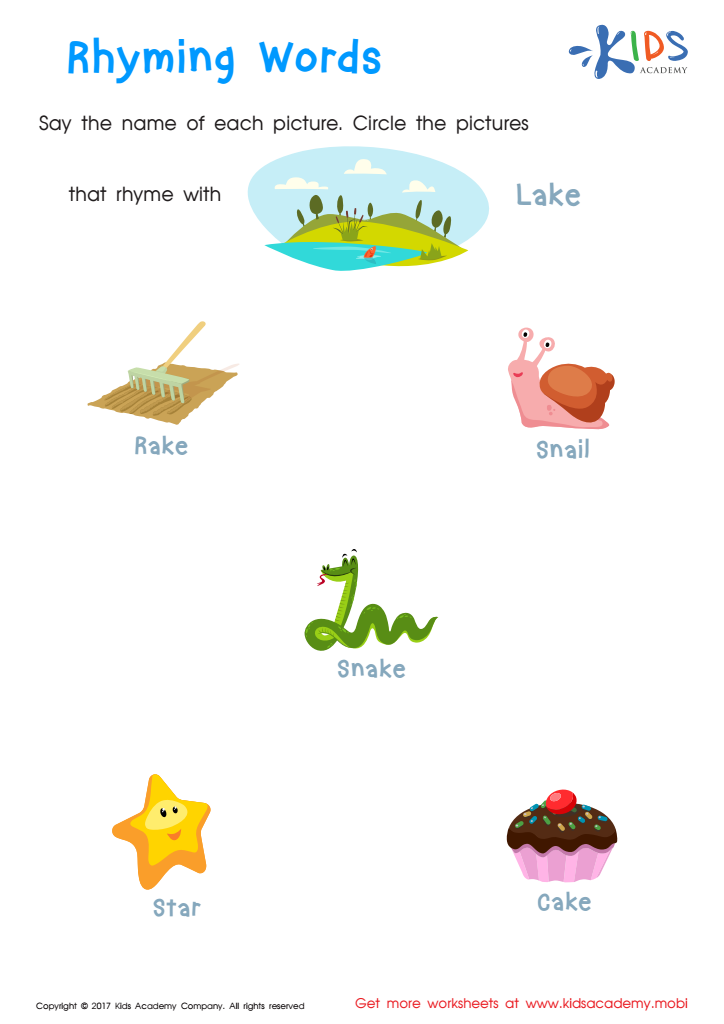
Rhyming Words Rhyming Worksheet
 Assign to My Students
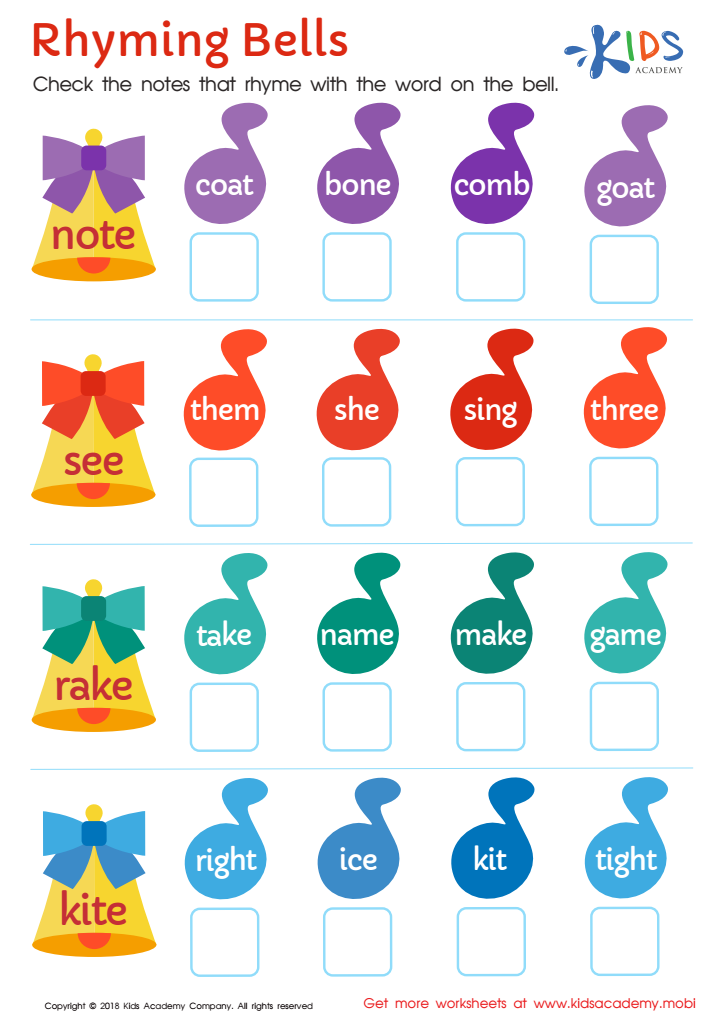
Rhyming Bells Worksheet
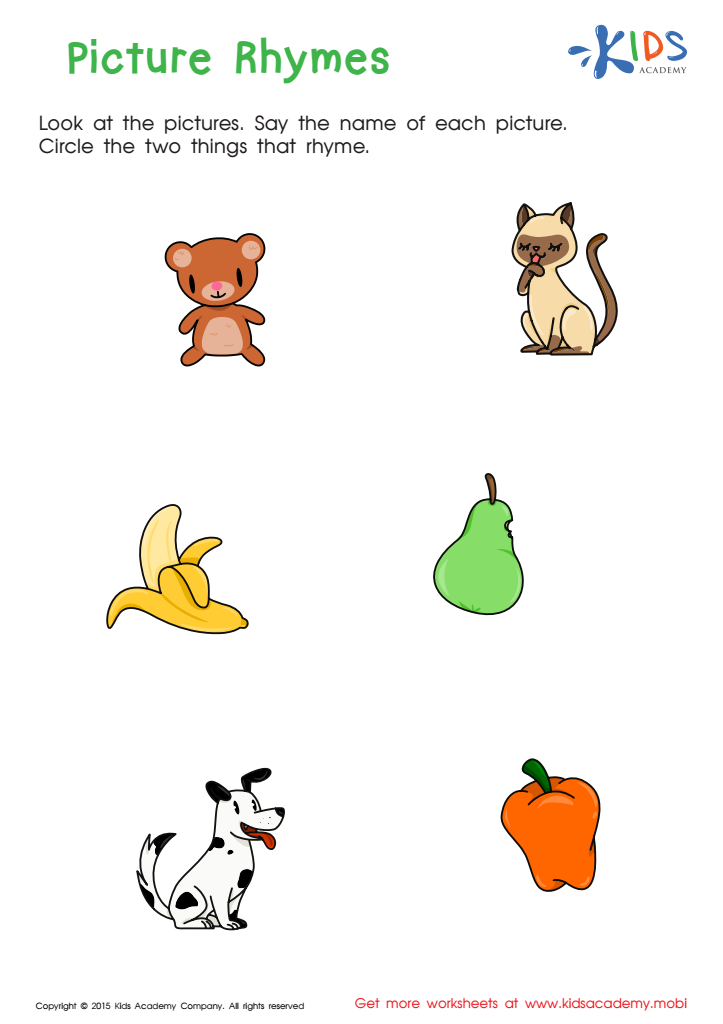
First Words: Picture Rhymes Worksheet






.jpg)

Rhyming skills are a crucial component of early language development, particularly for children aged 6-7. As they prepare for more complex reading and writing tasks, mastering rhyming enhances phonemic awareness, which is the ability to hear, identify, and manipulate sounds in words. When children recognize that different words can share an ending sound, they build foundational skills for decoding and spelling. Understanding rhymes also enriches vocabulary and comprehension as children explore language creatively through poetry and stories, making literacy more enjoyable and engaging.
For parents and teachers, fostering rhyming skills can boost a child's confidence in their reading abilities. Rhyming games and activities promote a playful and positive learning environment, encouraging children to express themselves and experiment with language. Collaboration between home and school on these activities can further solidify the connection between learning and fun, establishing a love for reading early on.
Moreover, enhanced rhyming skills can lead to improved academic performance as children transition to more advanced literacy tasks. In summary, prioritizing rhyming skills development in young learners is essential, promoting literacy, creativity, and confidence that extend beyond the classroom.







