Lowercase identification Letter Recognition Worksheets for Ages 6-7
5 filtered results
-
From - To
Discover our expertly designed Lowercase Identification Letter Recognition Worksheets for Ages 6-7, tailored to help young learners master lowercase alphabet letters. Each worksheet offers fun, engaging activities that ensure children recognize and identify lowercase letters with ease. Perfect for classroom or home use, these worksheets bolster reading and writing skills by promoting letter familiarity and phonetic awareness. Ideal for educators and parents, our resources make learning enjoyable and effective, setting a solid foundation for future literacy success. Empower your kids with the confidence to excel in their language journey today with Kids Academy's reliable tools.
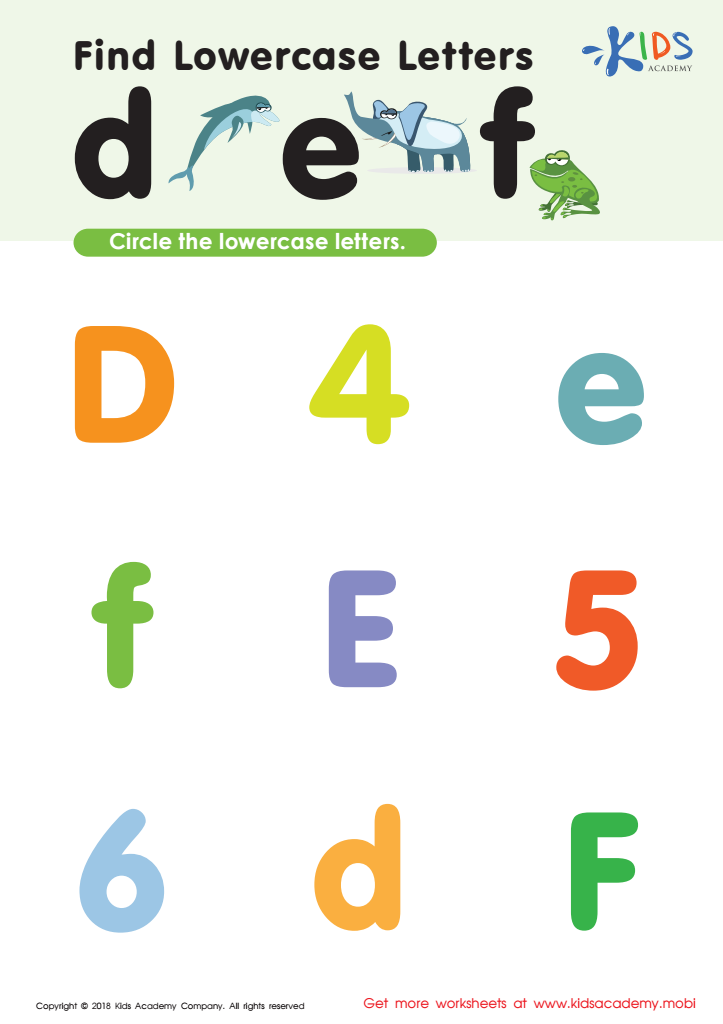
Find Lowercase Letters d e f Worksheet
 Assign to My Students
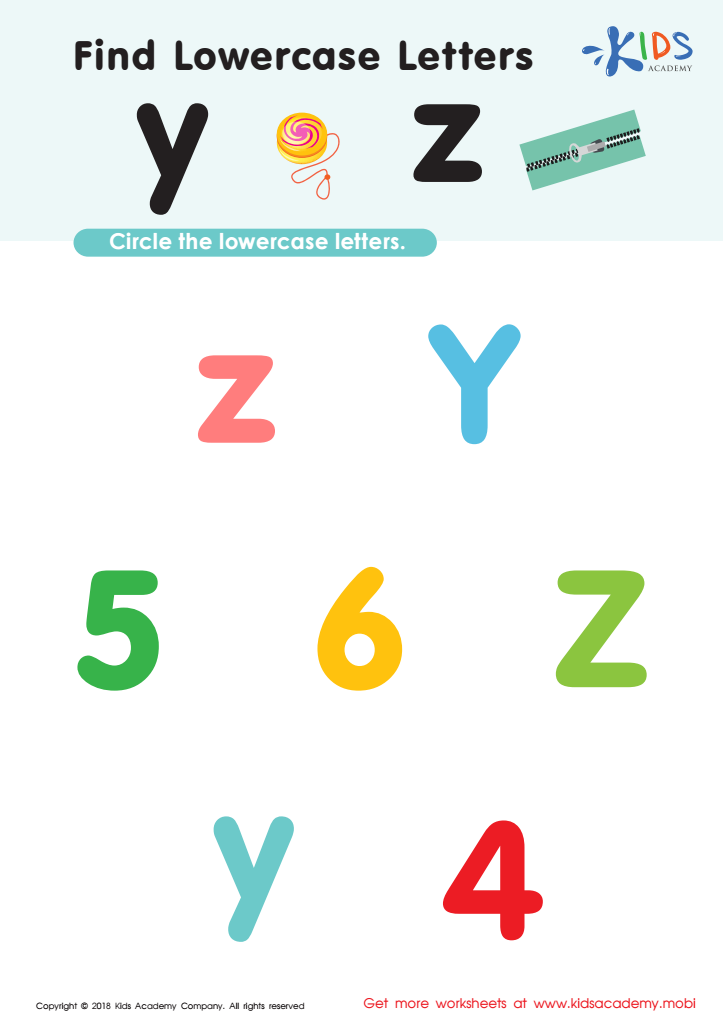
Find Lowercase Letters y z Worksheet
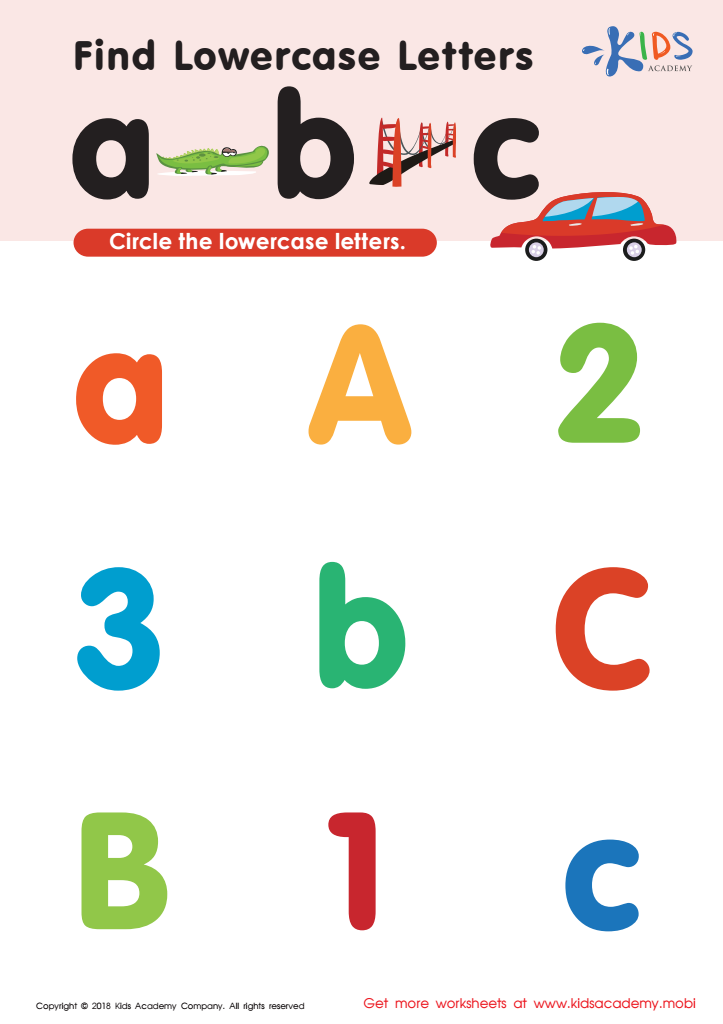
Find lowercase letters a b c Worksheet
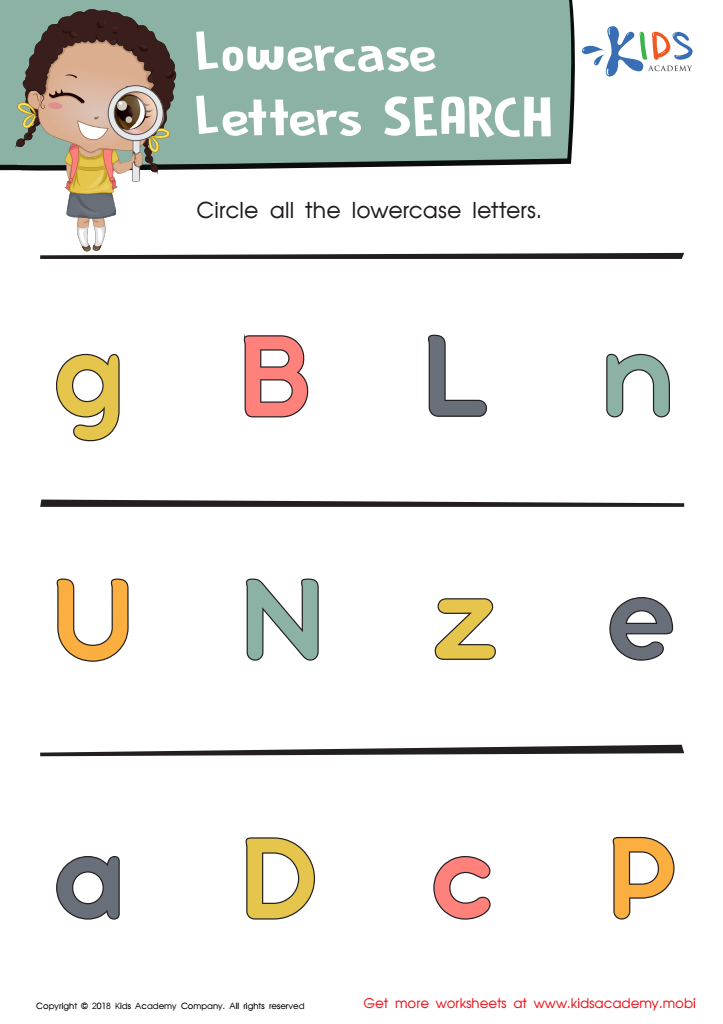
Lowercase Letters Search: Assessment Worksheet
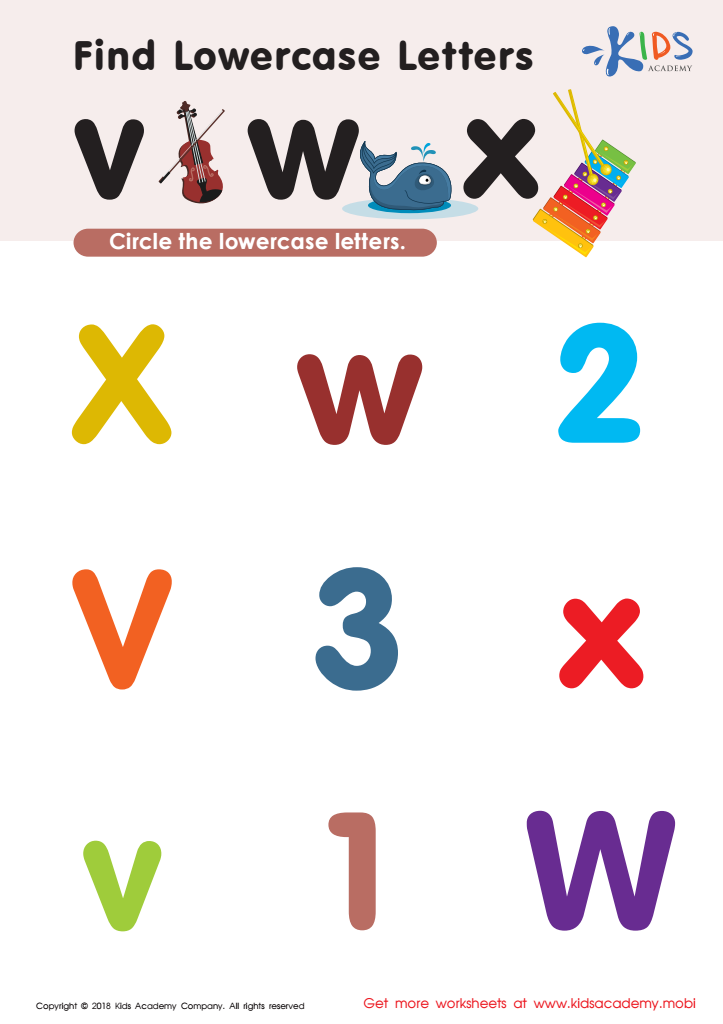
Find Lowercase Letters v w x Worksheet








Parents and teachers should care about lowercase letter recognition for children aged 6-7 because it is a crucial component of early literacy skills, which form the foundation for all future learning. At this age, children transition from pre-literacy to reading and writing, and recognizing lowercase letters is key to this shift. English text is predominantly written in lowercase letters, from books to everyday signs and instructions, so proficiency in recognizing these characters directly impacts a child's ability to read fluently.
Mastering lowercase letters enhances a child’s ability to decode words, a fundamental skill for reading comprehension. Without this recognition, children might struggle to make connections between spoken and written language, hindering their ability to read smoothly. Additionally, early success in reading bolsters self-esteem and creates a positive feedback loop, encouraging children to engage more deeply with written materials.
For teachers, ensuring students are adept at lowercase letter recognition means they can better tailor instruction to individual needs, further fostering an inclusive and supportive learning environment. For parents, supporting this at home through reading and games reinforces classroom learning. Early mastery of lowercase letters provides a critical stepping stone toward lifelong literacy and educational success.







