Handwriting practice Letter V Worksheets for Ages 6-7
3 filtered results
Difficulty Level
Grade
Age
-
From - To
Subject
Activity
Standards
Enhance your child's handwriting skills with our Handwriting Practice Letter V Worksheets designed for ages 6-7. These engaging, printable worksheets from Kids Academy offer young learners structured exercises, helping them master the shape and sound of the letter V. Through tracing and writing activities, children will improve their fine motor skills, hand-eye coordination, and letter recognition. Each worksheet provides fun and interactive practice to boost confidence and proficiency in writing the letter V, setting a strong foundation for future literacy development. Ideal for both classroom and at-home learning, these resources make handwriting practice enjoyable and effective.
Favorites
With answer key
Interactive
Letter V Tracing Page
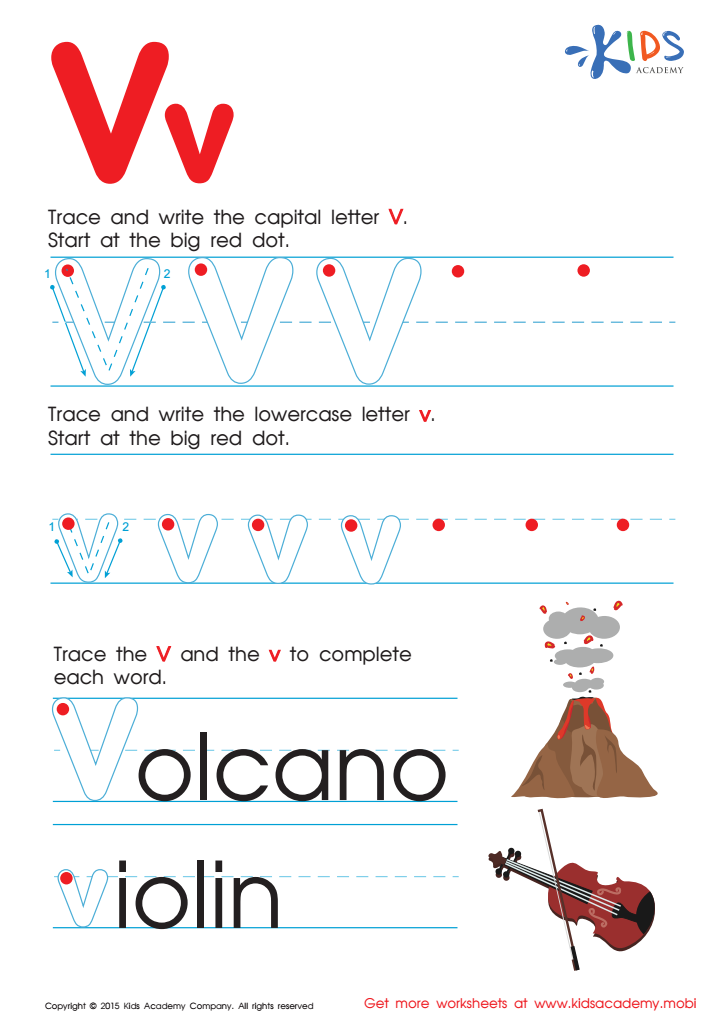
Trace the uppercase and lowercase letter "V" with our kindergarten tracing worksheet. Begin at the red dot and follow the lines. Write it several times. Complete the words "Volcano" and "violin". Get more alphabet activities at Kids Academy.
 Assign to My Students
Letter V Tracing Page
Worksheet
Letters H and V Tracing Worksheet
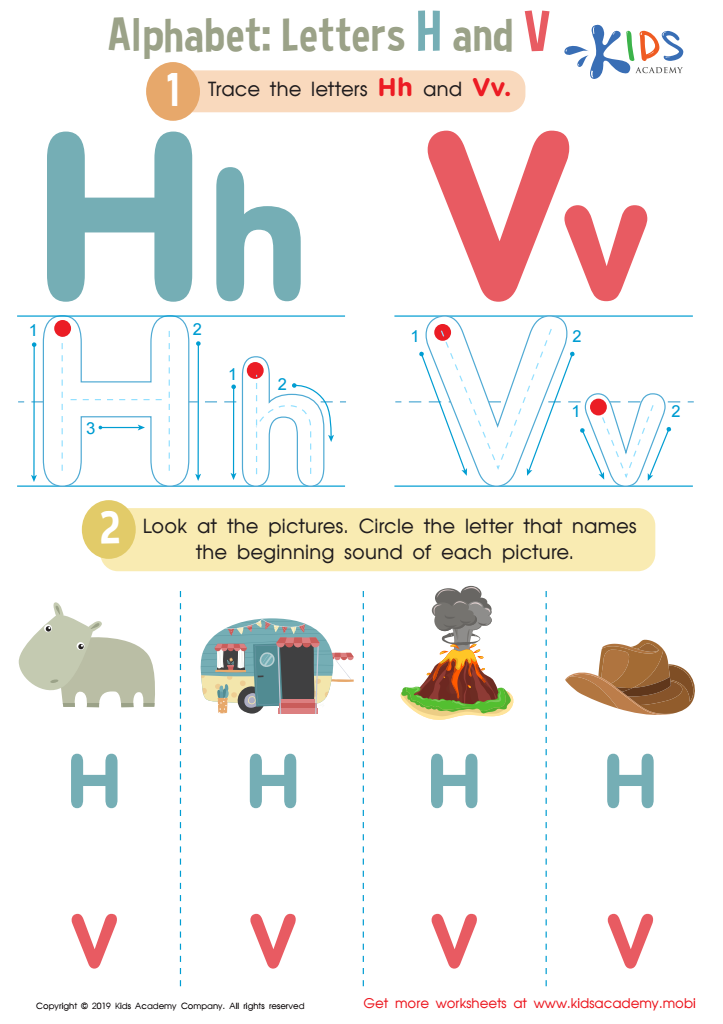
Kids will trace the letters H and V and circle the letter of the beginning sound of each picture. This helps strengthen writing and identify objects with their beginning sound, with two letter options to choose from.
Letters H and V Tracing Worksheet
Worksheet
Uppercase Letters V, W, and X Worksheet
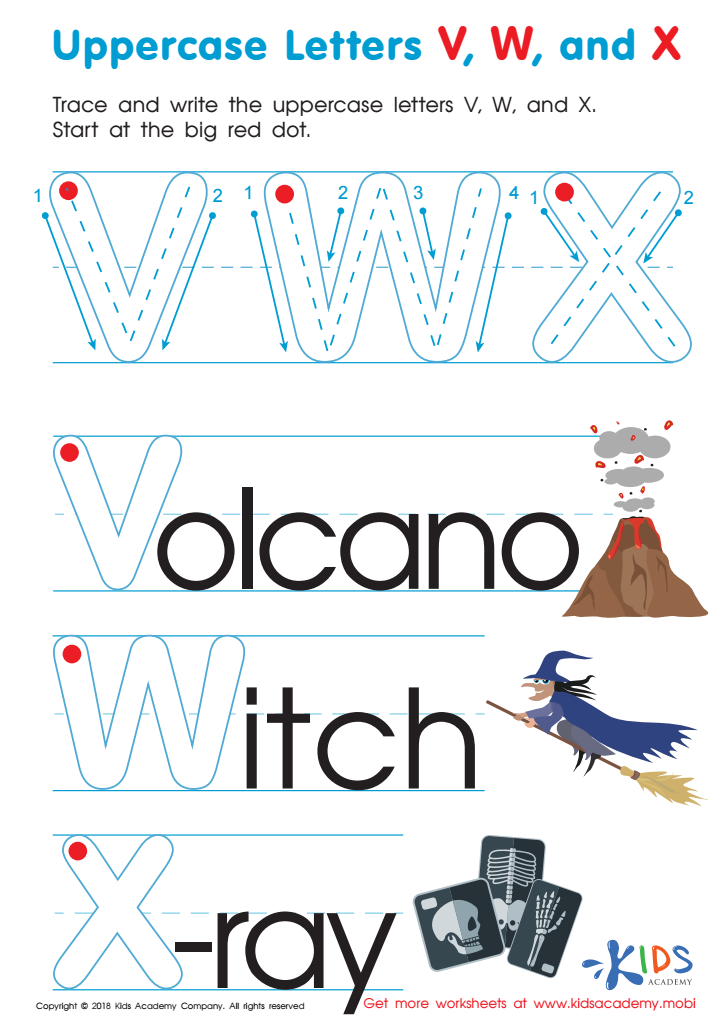
This worksheet is perfect for kids struggling to write uppercase letters V, W, and X. Warm up their brains first by having them name words starting with these letters. Then, help them trace and write each letter from the big red dot. With your assistance, they will quickly sharpen their writing skills.
Uppercase Letters V, W, and X Worksheet
Worksheet
Join Kids Academy for Free
Who is primarily going to use this learning content?




Handwriting practice, especially focusing on individual letters like "V," is crucial for children aged 6-7 for several important reasons. At this developmental stage, fine motor skills are rapidly evolving, and writing activities enhance these abilities. Practicing the letter "V" can improve hand-eye coordination, pencil control, and finger strength.
The process of writing isn't just about forming letters correctly but also about fostering a child's cognitive development. When children repeatedly write the letter "V," they engage their memory and learn to recognize this character in different contexts, which aids in literacy. It also helps in teaching the discipline of following structured lines and shapes, reinforcing both perseverance and focus.
Moreover, early handwriting practice sets the foundational skills needed for later academic success. Properly learning how to form letters makes writing simpler and more automatic, allowing the child to focus better on the content rather than the act of writing. Additionally, for some children, success in handwriting can lead to increased self-esteem and confidence in their abilities.
Therefore, both parents and teachers should prioritize handwriting practice. It's essential not only for developing technical writing skills but also for broader educational achievements and personal growth of the child. Keeping practice engaging and consistent will lay a strong foundation for their future learning endeavors.