Word identification Long Vowels Worksheets for Ages 6-7
3 filtered results
-
From - To
Unlock reading potential with our "Word Identification Long Vowels Worksheets for Ages 6-7." Designed for first and second graders, these engaging worksheets help young readers confidently identify, pronounce, and use long vowel sounds (A, E, I, O, U) in everyday words. Our expertly crafted activities enhance phonemic awareness and reading fluency through fun exercises, colorful illustrations, and easy-to-follow instructions. Perfect for classroom or at-home practice, these worksheets support early literacy skills, making learning enjoyable and effective. Empower your child to become a proficient reader with Kids Academy's comprehensive long vowel resources!
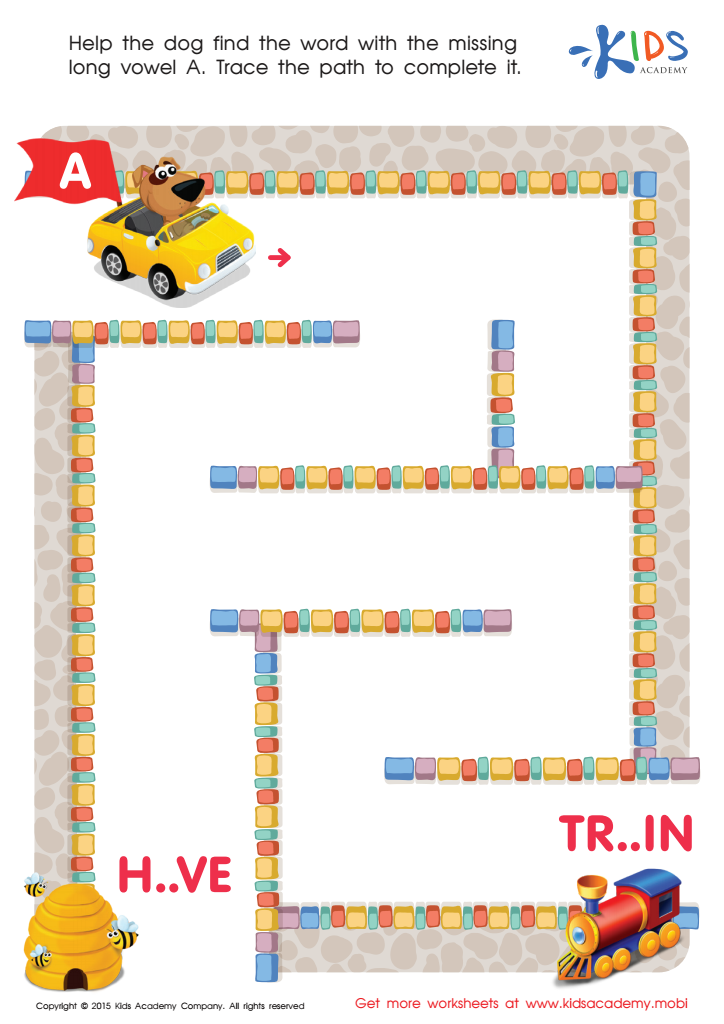
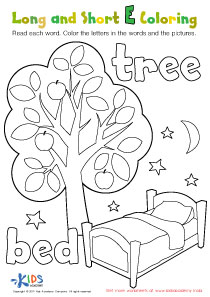
Long Vowel Sound A Worksheet
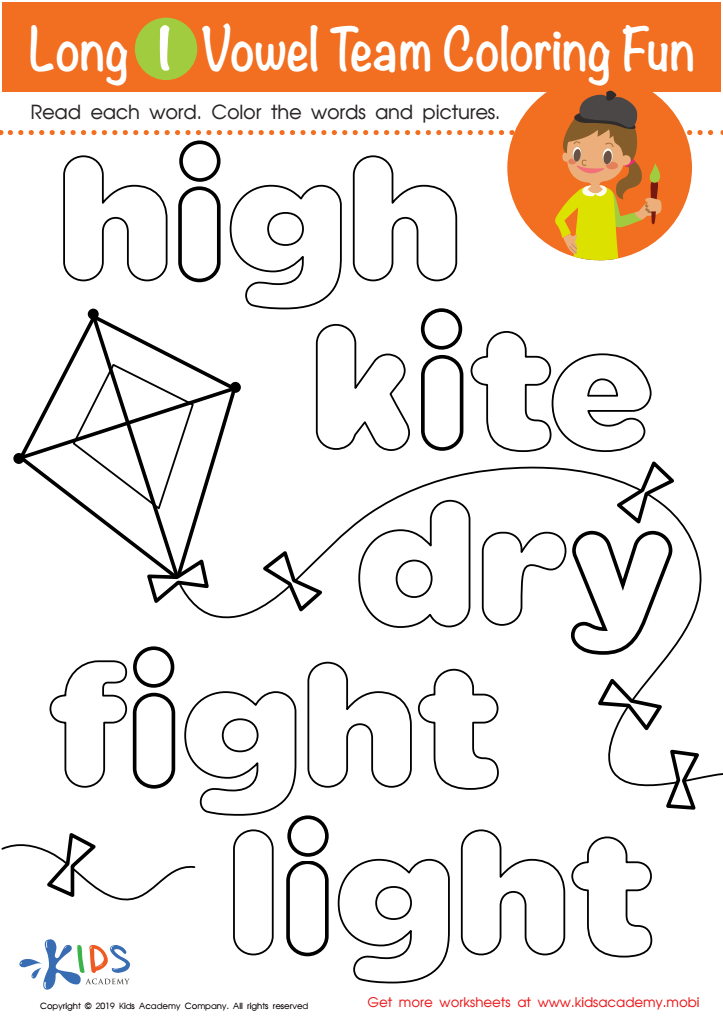
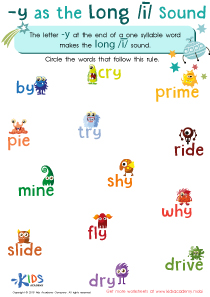
Long I Vowel Team Coloring Worksheet
 Assign to My Students
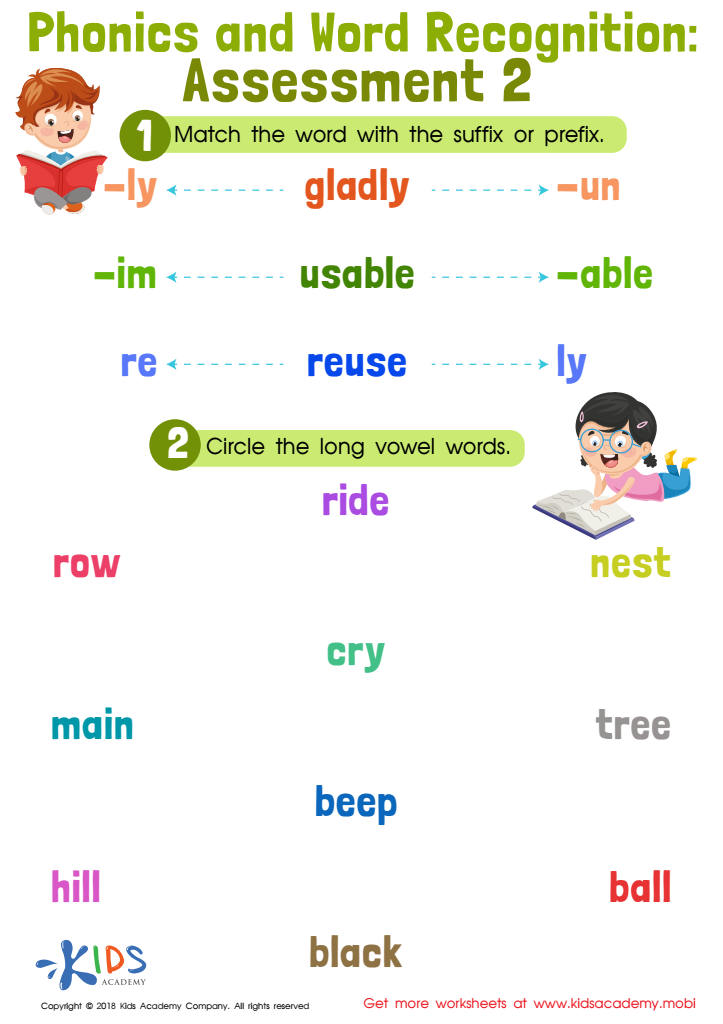
Phonics and Word Recognition: Assessment 2



Learning to identify long vowels is crucial for young readers aged 6-7 as it directly impacts their ability to read and comprehend texts fluently. At this formative stage, children transition from simple deciphering to more advanced reading skills. Long vowels—vowel sounds that match their letter names, such as 'a' in 'cake' or 'e' in 'tree'—feature prominently in a wide variety of words. Understanding these sounds helps children decode words more efficiently and expands their vocabulary.
For parents and teachers, ensuring that children grasp long vowels is integral to their reading development. It provides children with tools to independently recognize and pronounce new words, boosting their confidence and encouraging a love for reading. Poor mastery of these sounds can lead to difficulties in reading fluency and comprehension, leading to future academic struggles.
Moreover, phonemic awareness—the understanding and manipulation of sounds in words—is foundational for proficient reading and writing. By mastering long vowels, children also learn essential spelling patterns, which aids both their reading and writing skills.
Therefore, prioritizing the identification of long vowels creates a strong linguistic foundation, facilitating smoother, more enjoyable reading experiences and setting the stage for ongoing academic success. Parents and teachers play a significant role in guiding and reinforcing this fundamental aspect of literacy learning.