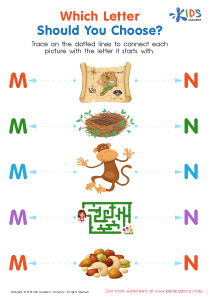
Letter recognition Lowercase/Small Letters Worksheets for Ages 6-7
11 filtered results
-
From - To
Discover our engaging and educational Letter Recognition Lowercase/Small Letters worksheets designed specifically for children ages 6-7. These interactive resources enhance early literacy skills by helping young learners identify, recognize, and write lowercase letters. Each worksheet is thoughtfully crafted to make learning fun and enjoyable, featuring colorful activities that captivate young minds. Perfect for homeschooling or classroom use, our worksheets strengthen foundational reading skills while fostering confidence in writing. With a variety of exercises, your child will master letter recognition in no time. Download our printable worksheets today and support your child's journey to literacy with fun and meaningful activities!
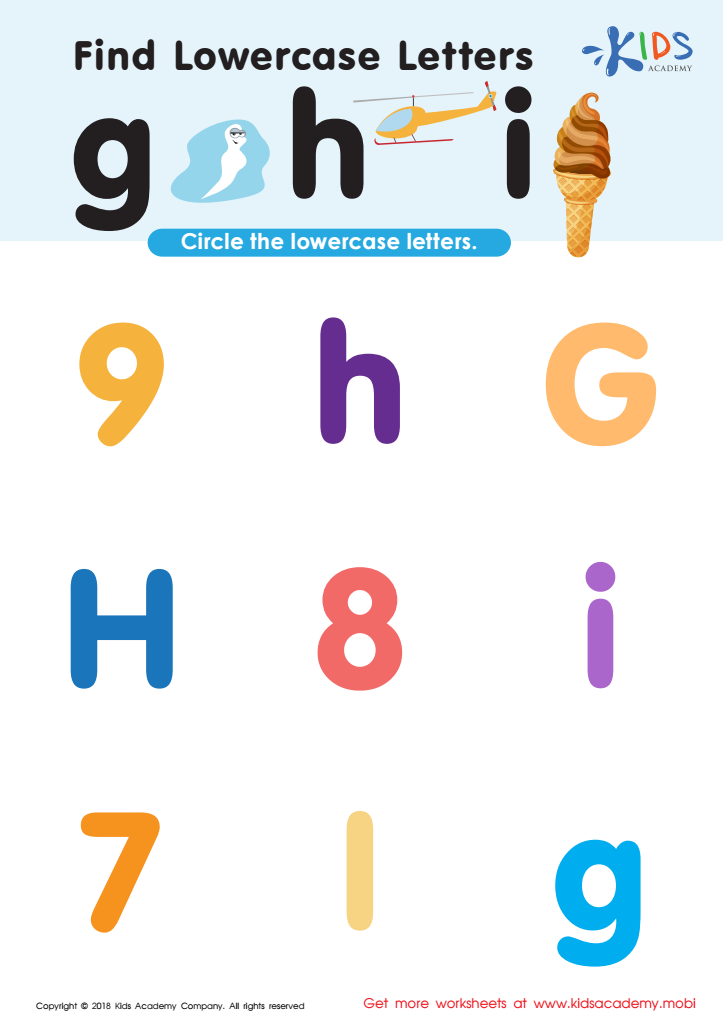
Find Lowercase Letters g h i Worksheet
 Assign to My Students
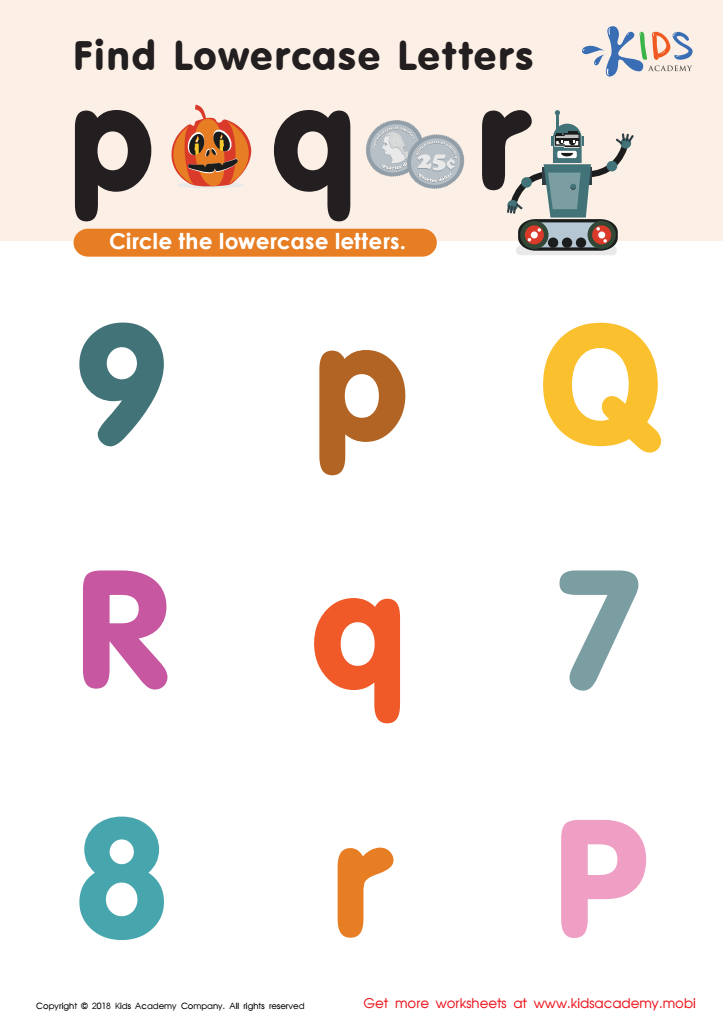
Find lowercase Letters p q r Worksheet
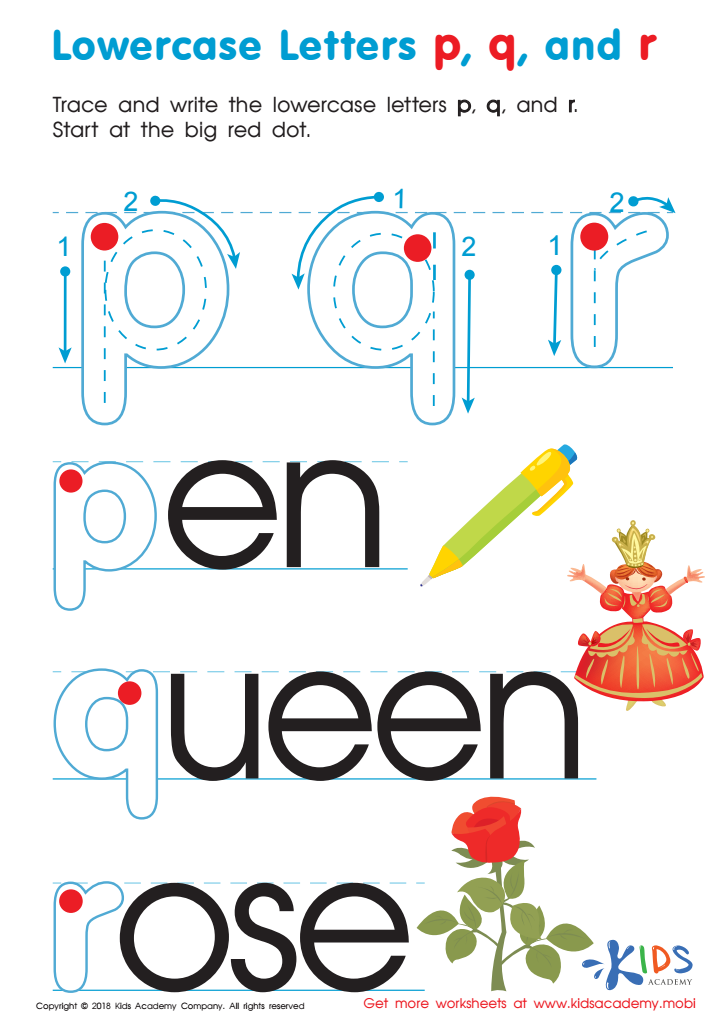
Lowercase Letters p q r Worksheet
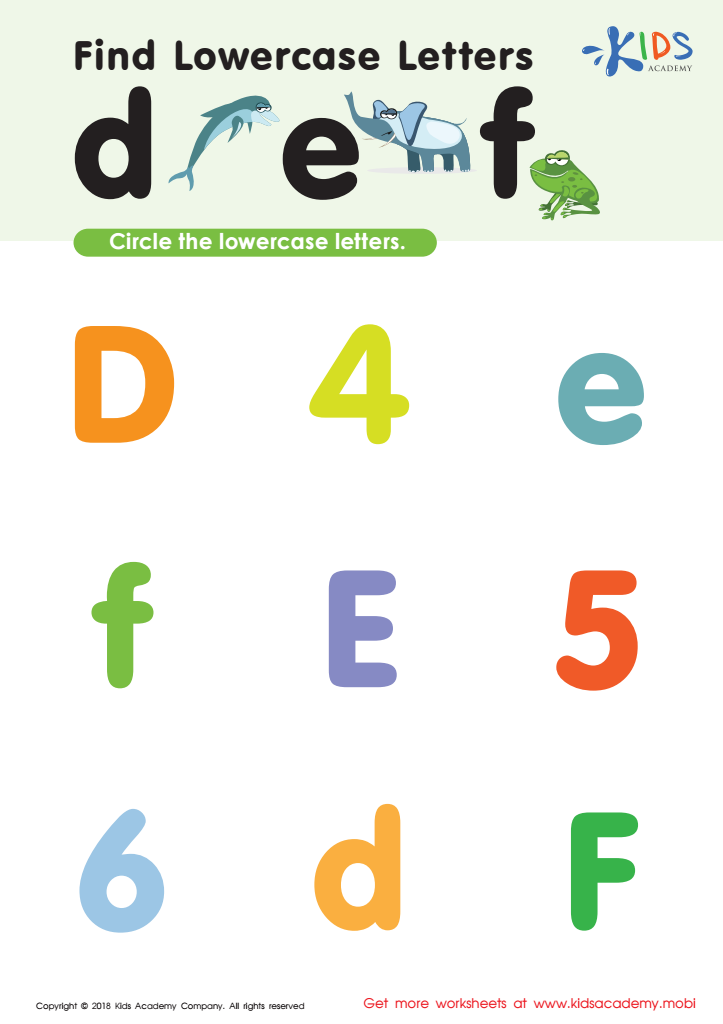
Find Lowercase Letters d e f Worksheet
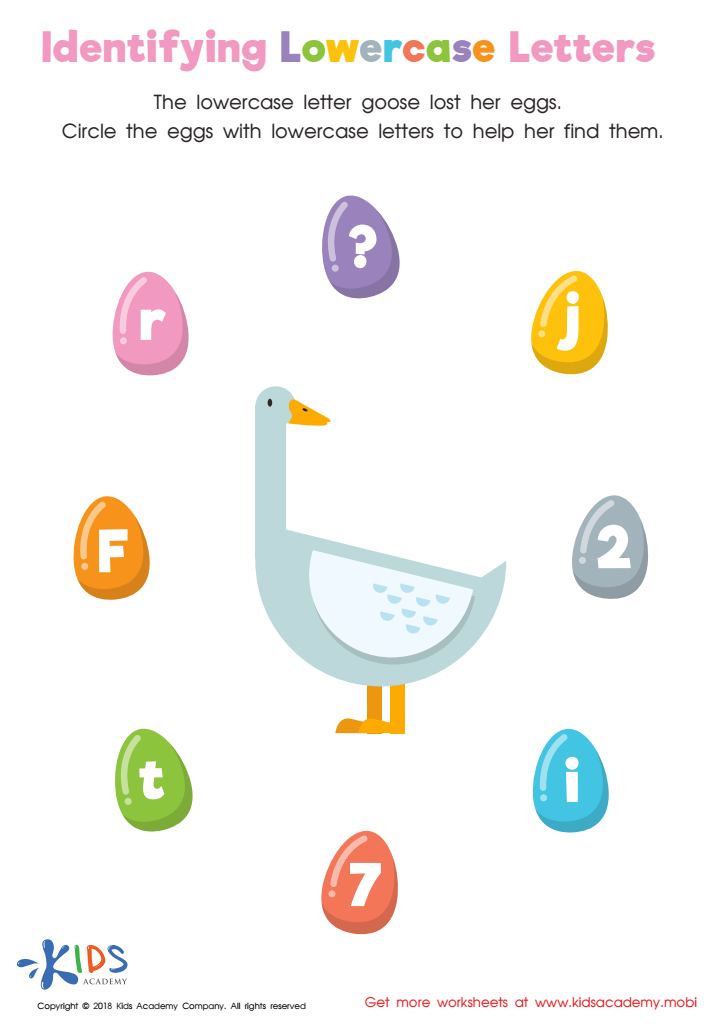
Identifying Lowercase Letters Worksheet
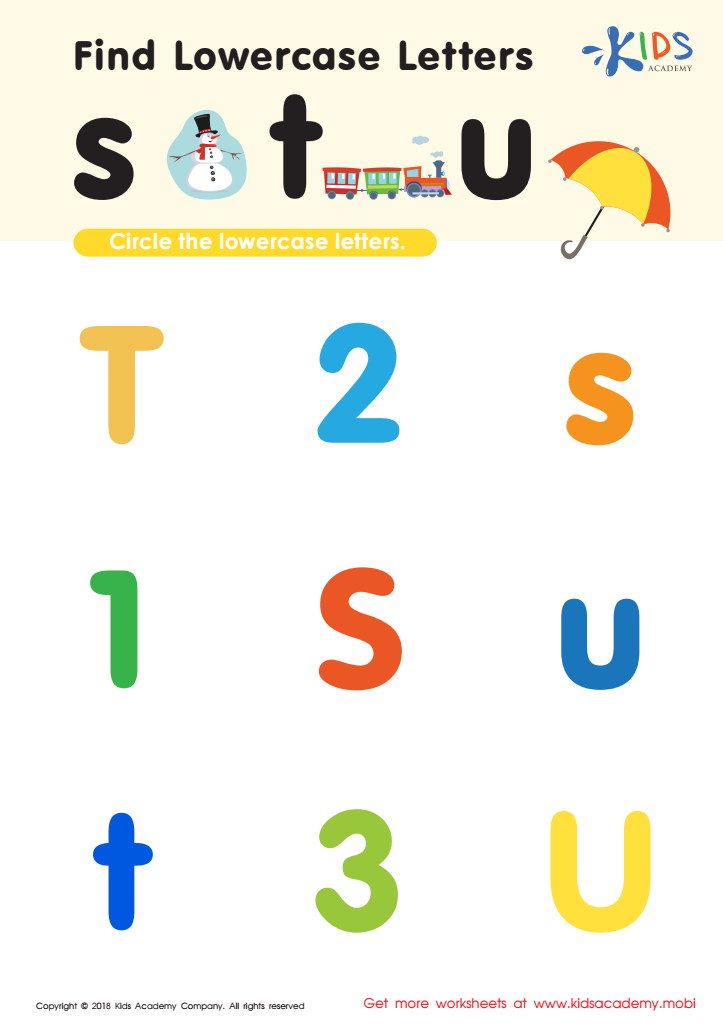
Find lowercase Letters s t u Worksheet
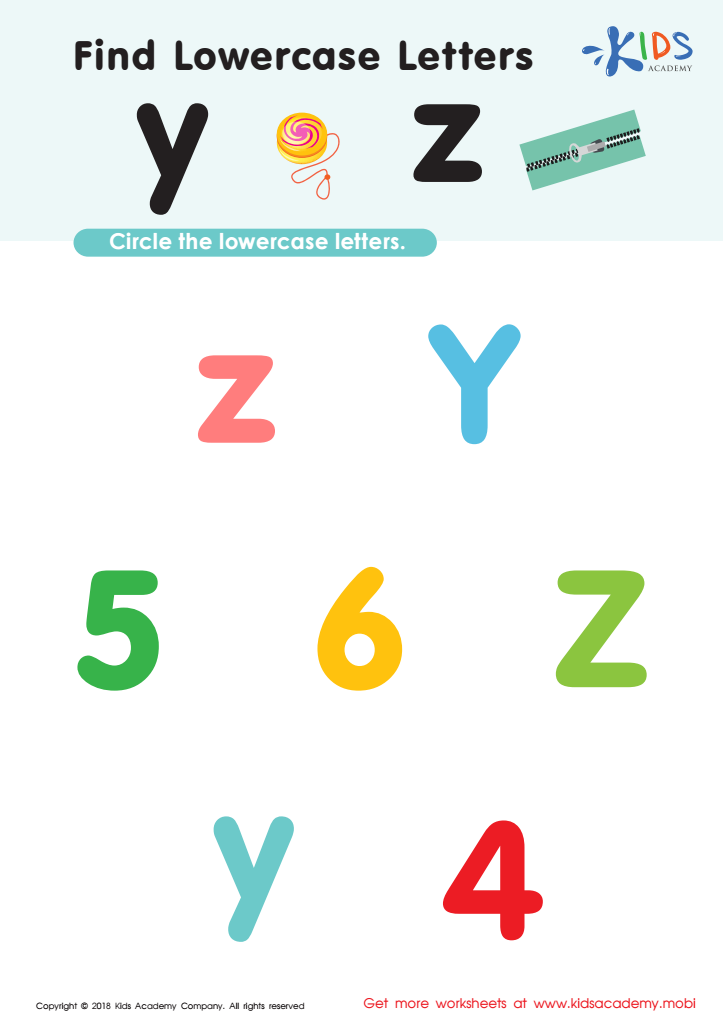
Find Lowercase Letters y z Worksheet
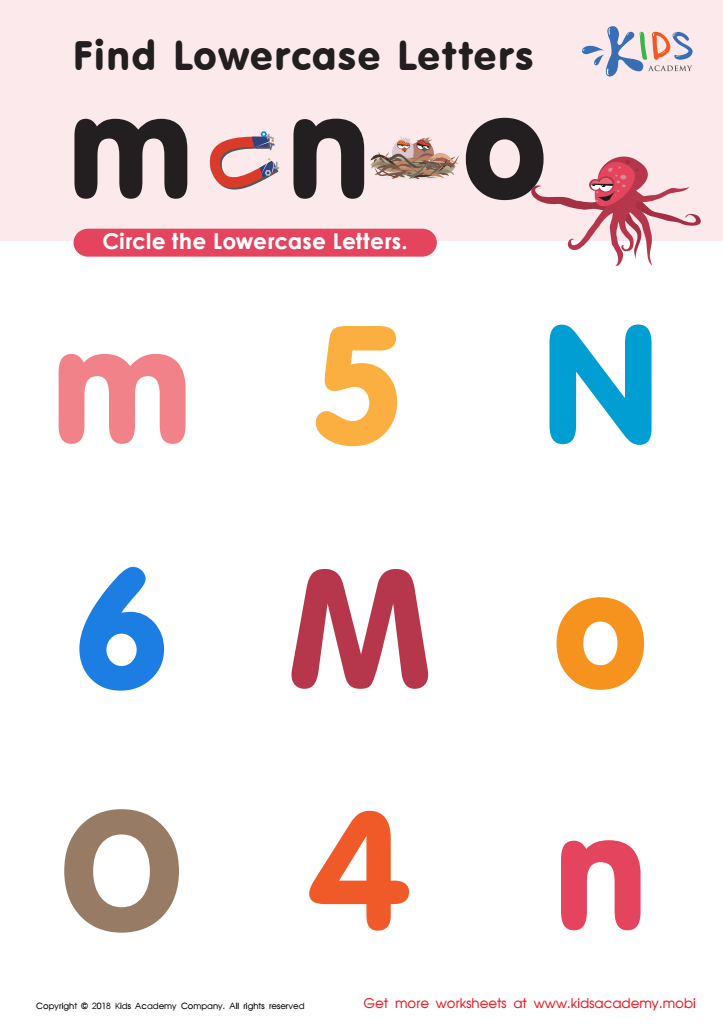
Find Lowercase Letters m n o Worksheet
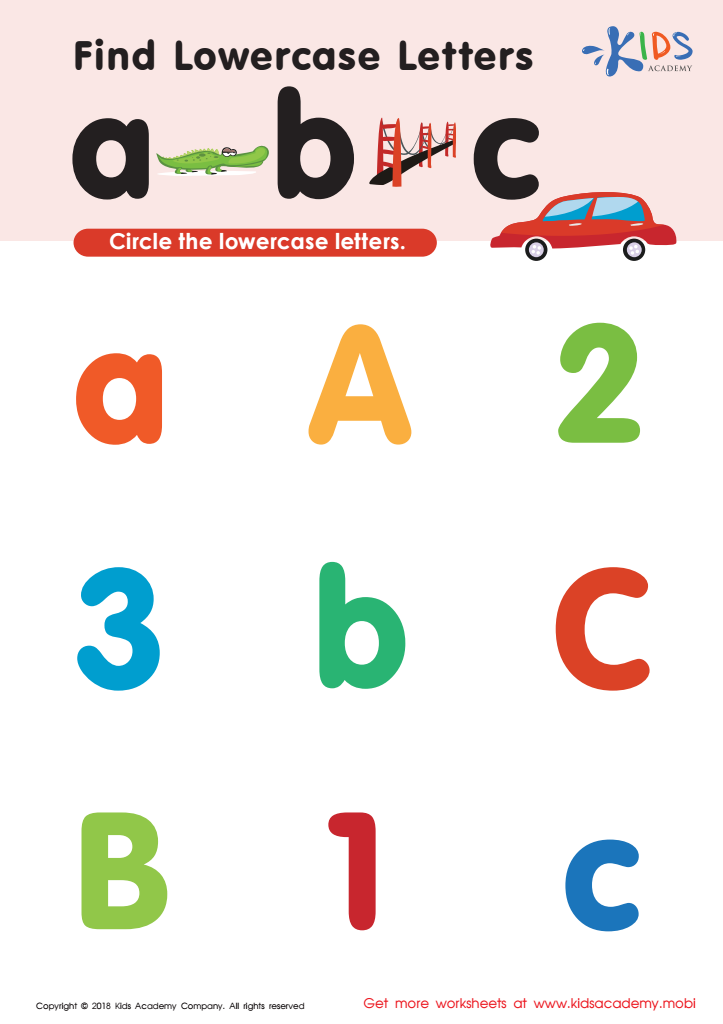
Find lowercase letters a b c Worksheet
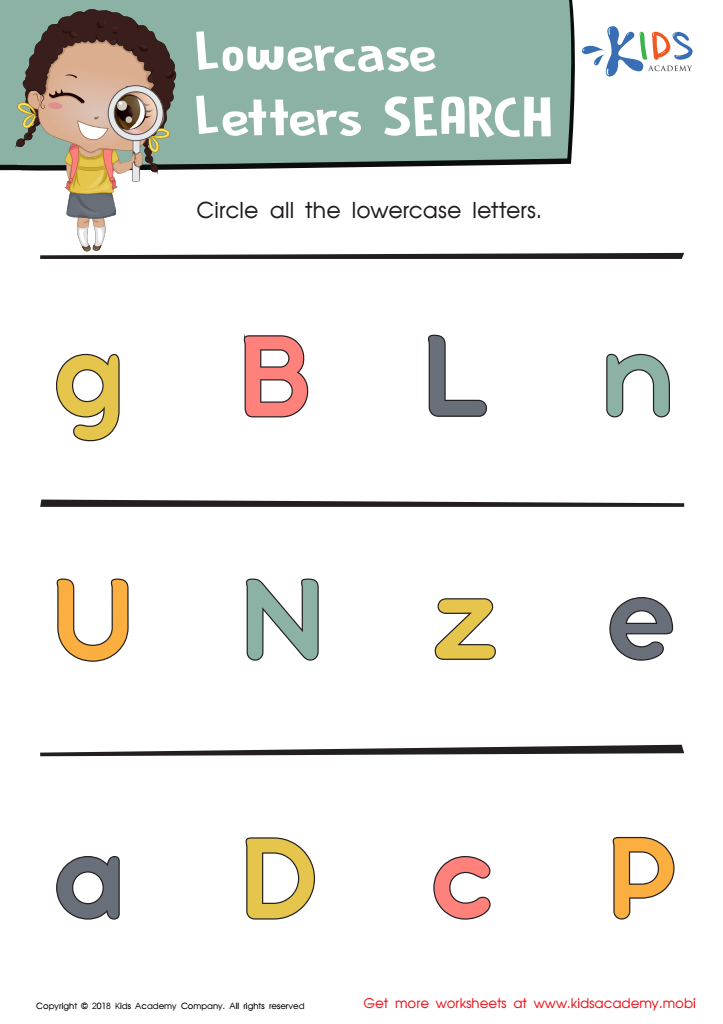
Lowercase Letters Search: Assessment Worksheet
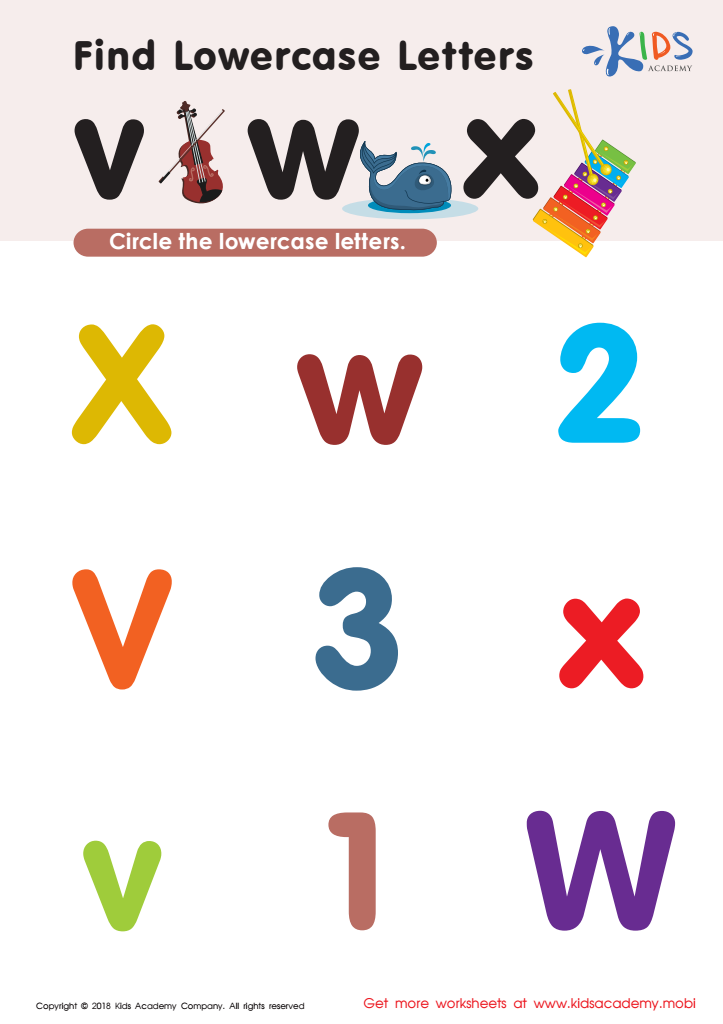
Find Lowercase Letters v w x Worksheet


Letter recognition, particularly lowercase letters, is a foundational skill for early literacy development in children aged 6-7. At this age, learners transition from recognizing letters to using them in reading and writing, making proficiency in lowercase recognition crucial. Parents and teachers should prioritize this skill because understanding lowercase letters fosters word recognition, spelling, and overall reading fluency.
Lowercase letters are more commonly used in texts compared to uppercase ones, hence, children increasingly encounter them in their reading materials. When children can effortlessly recognize these letters, they can focus on comprehension instead of getting bogged down by sounds and shapes. Moreover, this skill contributes to effective writing; recognizing how letters are formed aids in better handwriting and helps students express their thoughts clearly.
Engaging in activities that promote lowercase recognition, such as interactive reading sessions, letter hunts, and writing exercises, also strengthens fine motor skills and language development. Ultimately, laying a strong foundation in letter recognition positively influences a child’s academic trajectory, boosting confidence and enthusiasm towards learning. As partners in their educational journey, parents and teachers can make a meaningful impact by putting emphasis on this skill during critical developmental years.