Sound differentiation Phonics Worksheets for Ages 6-7
3 filtered results
-
From - To
Discover our engaging Sound Differentiation Phonics Worksheets designed specifically for children ages 6-7. These worksheets enhance young learners’ phonemic awareness by helping them identify and differentiate between various sounds in words. Our fun and interactive activities encourage active participation, helping kids to develop essential reading skills in a supportive environment. Each worksheet is tailored to reinforce sound recognition through vibrant illustrations and relatable examples. Ideal for both classroom settings and at-home practice, these worksheets foster a love for learning while building a solid foundation for literacy. Explore our collection and empower your child’s reading journey today!
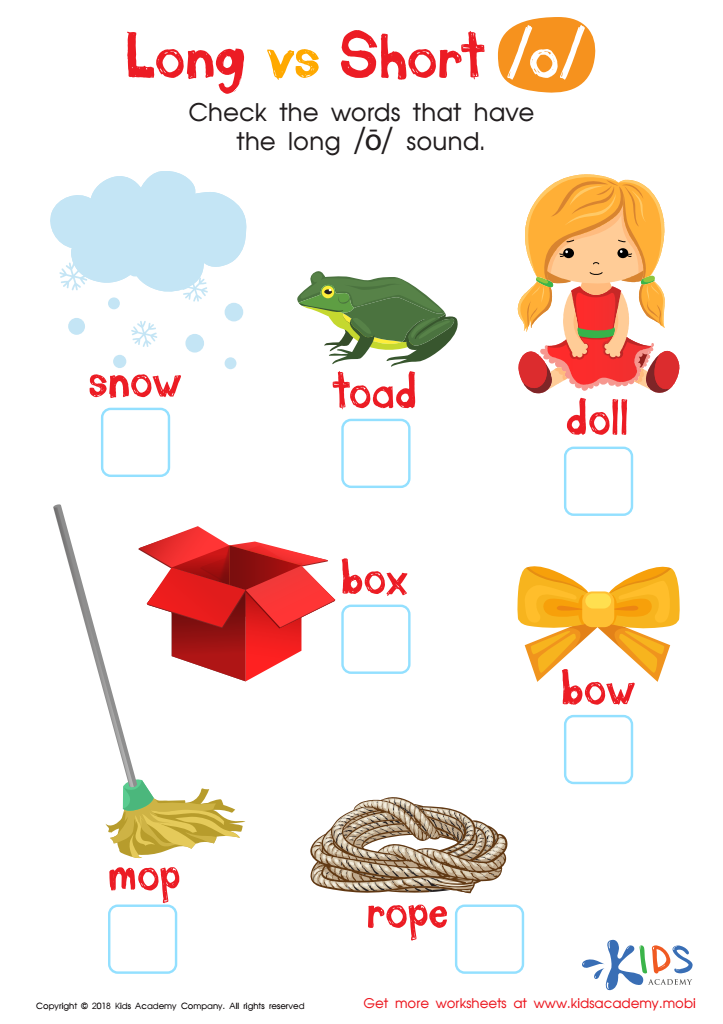
Long vs Short O Reading Worksheet
 Assign to My Students
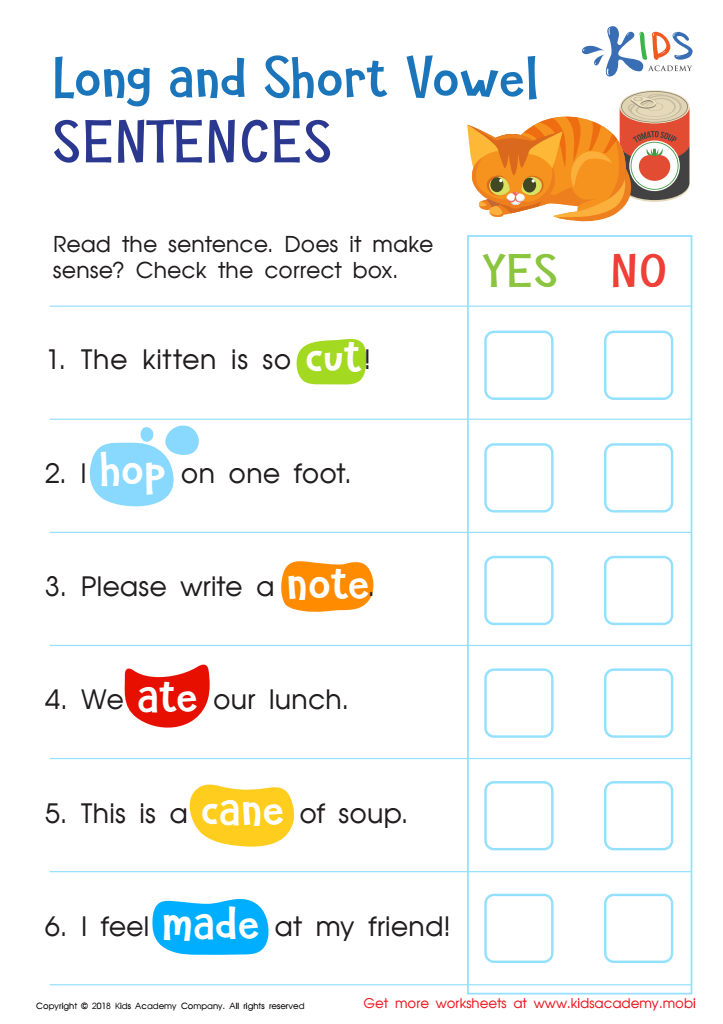
Long and Short Vowel Sentences: Assessment Worksheet
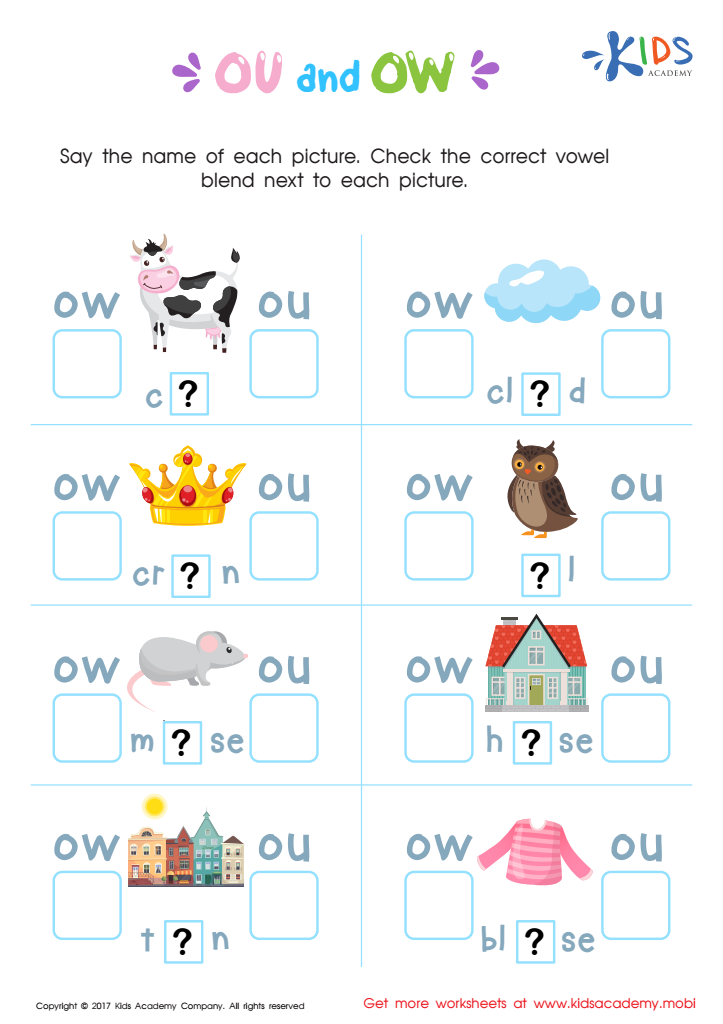
OU and OW Words Worksheet








Sound differentiation phonics is essential for children aged 6-7 as it lays the groundwork for successful reading and writing skills. At this crucial age, children are often transitioning from learning to read to reading to learn. Understanding phonics helps them recognize the relationship between sounds and letters, enabling them to decode words efficiently.
Teachers and parents should care about this because early literacy skills directly influence a child's educational trajectory. Effective phonics instruction prepares students to tackle more complex texts in the future, fostering greater confidence and enthusiasm toward reading. Moreover, a strong phonics foundation helps mitigate the risk of reading difficulties and learning disabilities, which can affect a child's self-esteem and overall academic performance.
Additionally, engaging with phonics activities can be a fun and interactive experience for children, creating a positive learning atmosphere at home and in school. Parents can reinforce what is taught in the classroom by incorporating playful reading exercises, while teachers can implement diverse strategies to accommodate different learning styles. Overall, sound differentiation phonics not only helps children become proficient readers, but it also nurtures a lifelong love for learning. Sharing a commitment to this early literacy skill supports a more equitable and successful academic experience for every child.







