Alphabet Recognition Tracing Letters Worksheets for Ages 6-7 - Page 2
28 filtered results
-
From - To
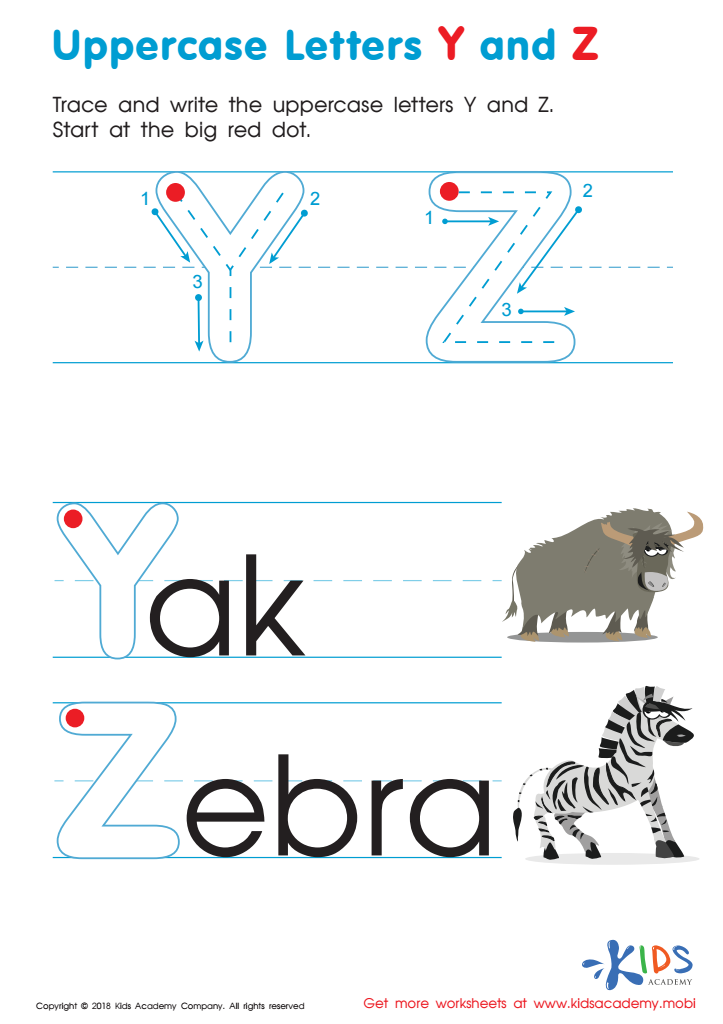
Uppercase Letters Y Z Worksheet
 Assign to My Students
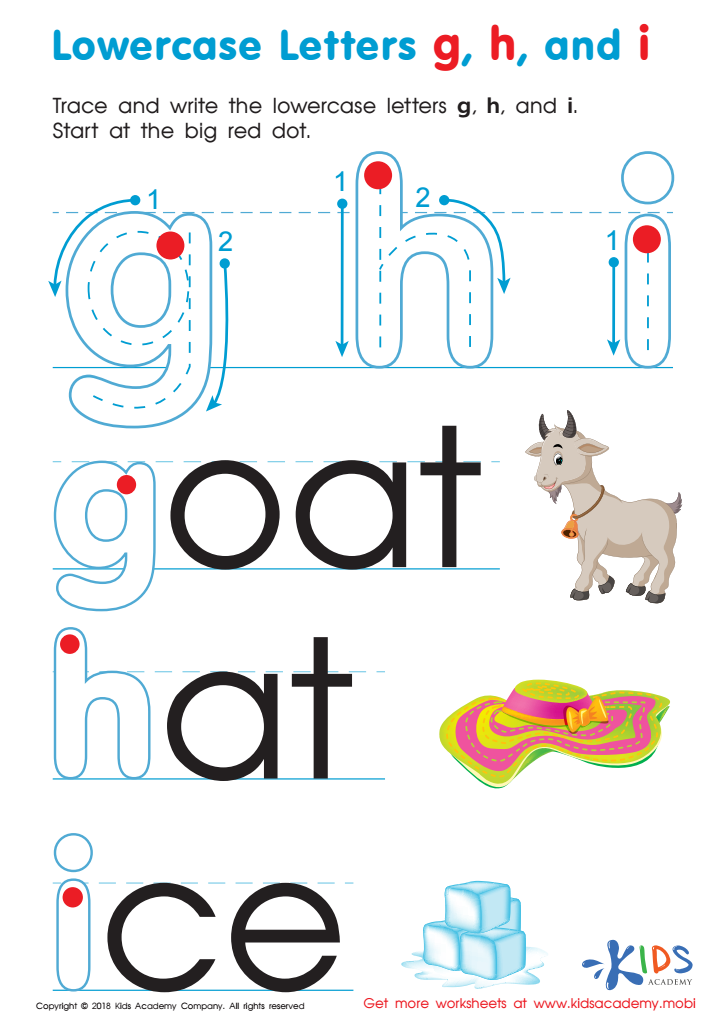
Lowercase Letters g h i Worksheet
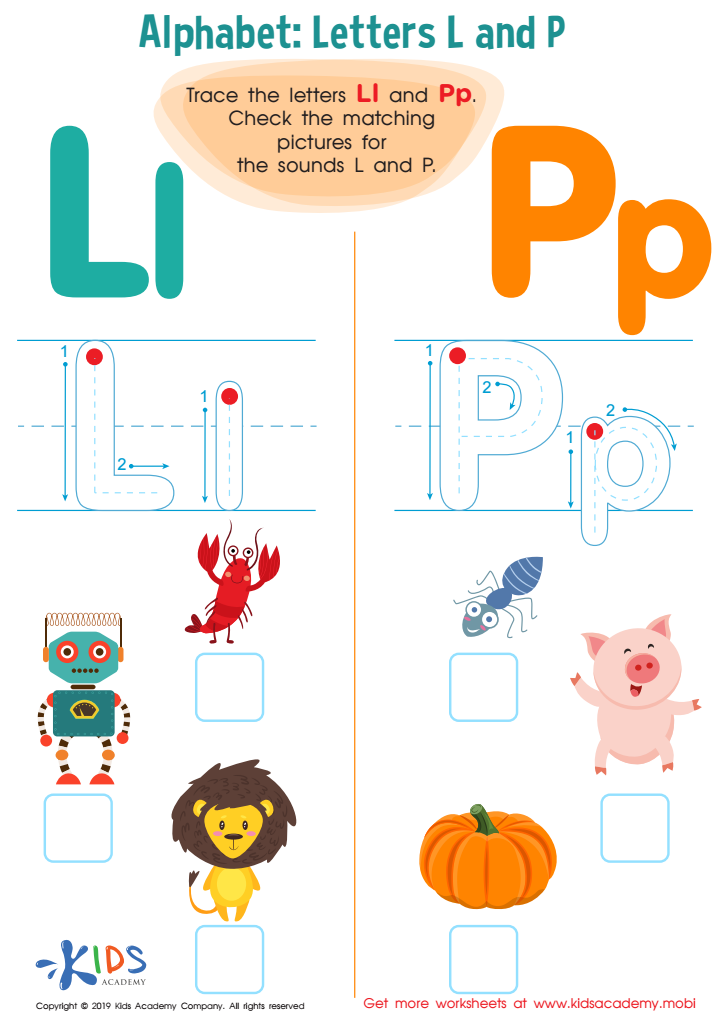
Letter L and P Tracing Worksheet
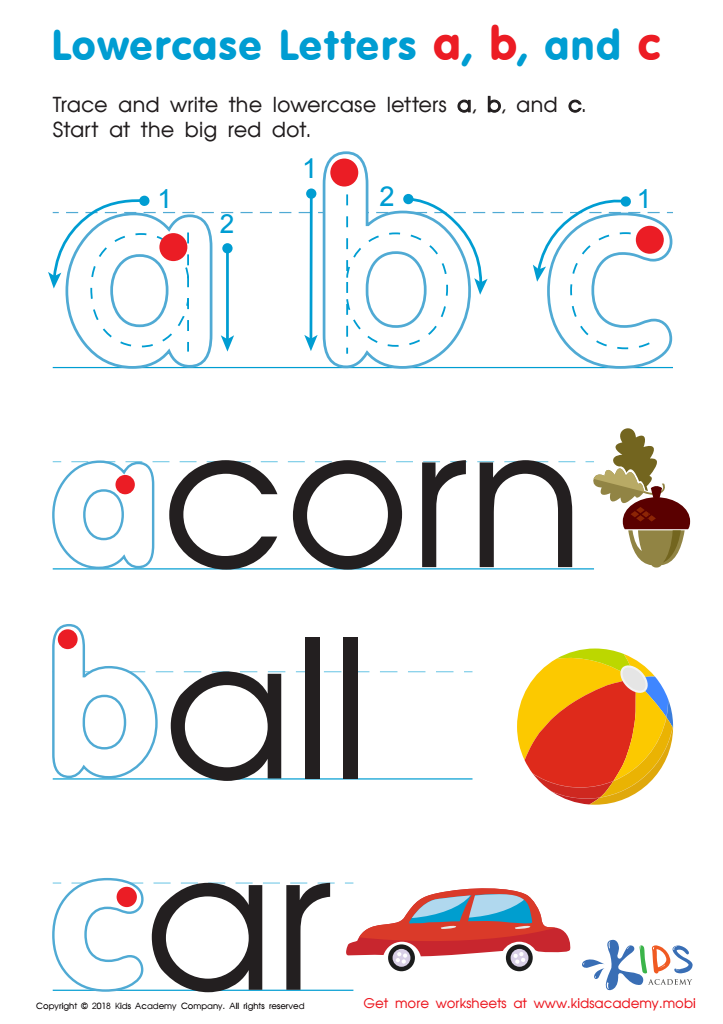
Lowercase Letters a b c Worksheet







Alphabet recognition and letter tracing are crucial for children aged 6-7, as they form the foundation for literacy development. At this stage, children are transitioning from kindergarten to more complex reading and writing tasks. Recognizing letters—and the ability to trace them—enhances fine motor skills, which are essential for handwriting clarity.
When children trace letters, they engage in kinesthetic learning, allowing them to better absorb the shapes and sounds of each letter. This multisensory approach fosters phonemic awareness, which is critical for decoding words later in their learning journey. Additionally, recognizing the alphabet supports vocabulary and comprehension skills, which are vital for effective communication.
For parents and teachers, focusing on this aspect supports overall academic success; children with strong alphabet recognition typically perform better in reading and related subjects. Furthermore, it builds confidence and motivation in young learners, encouraging them to explore language through books and writing activities. By investing time in letter recognition and tracing, parents and teachers can significantly contribute to a child's literacy skills, laying the groundwork for lifelong reading and writing proficiency. Thus, prioritizing this activity is an essential part of nurturing a child's educational journey.








