Critical Thinking Chess Worksheets for Ages 6-7
4 filtered results
-
From - To
Enhance your child's critical thinking skills with our engaging Critical Thinking Chess Worksheets designed for ages 6-7! These age-appropriate activities introduce children to the fundamentals of chess while strengthening their analytical abilities. Each worksheet encourages problem-solving, decision-making, and strategic thinking through fun and interactive challenges. As children learn to navigate the chessboard, they'll develop focus and patience, essential skills for lifelong learning. Perfect for use at home or in the classroom, our worksheets provide a wonderful way to foster cognitive development and creativity. Explore the world of chess and empower your young learners today with our printable resources!
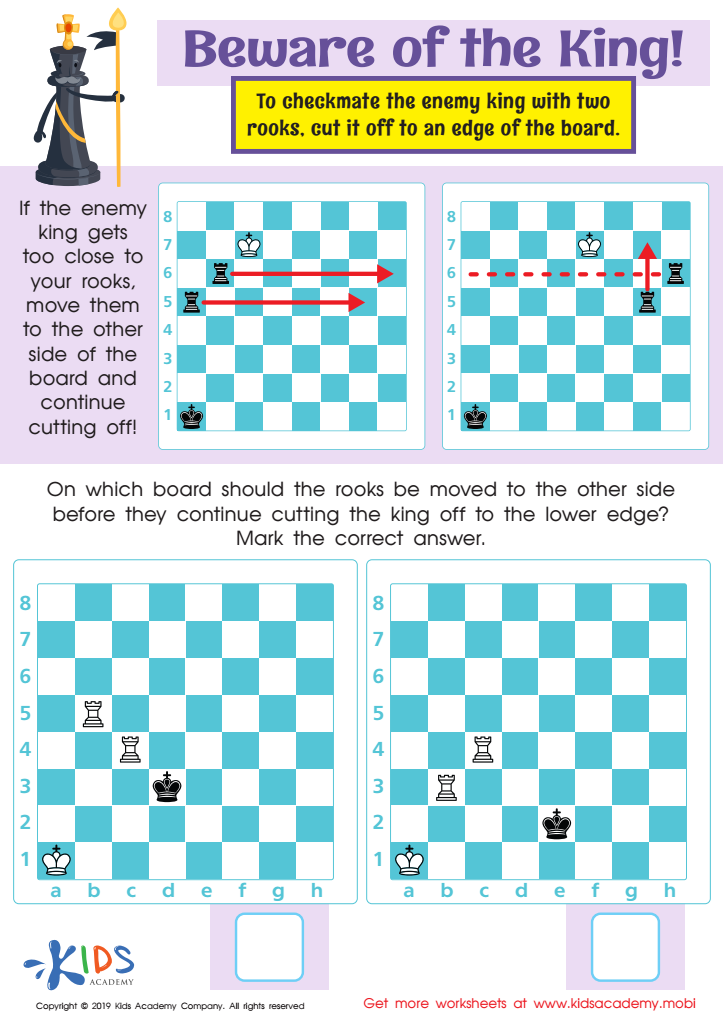
Beware of the King! Worksheet
 Assign to My Students
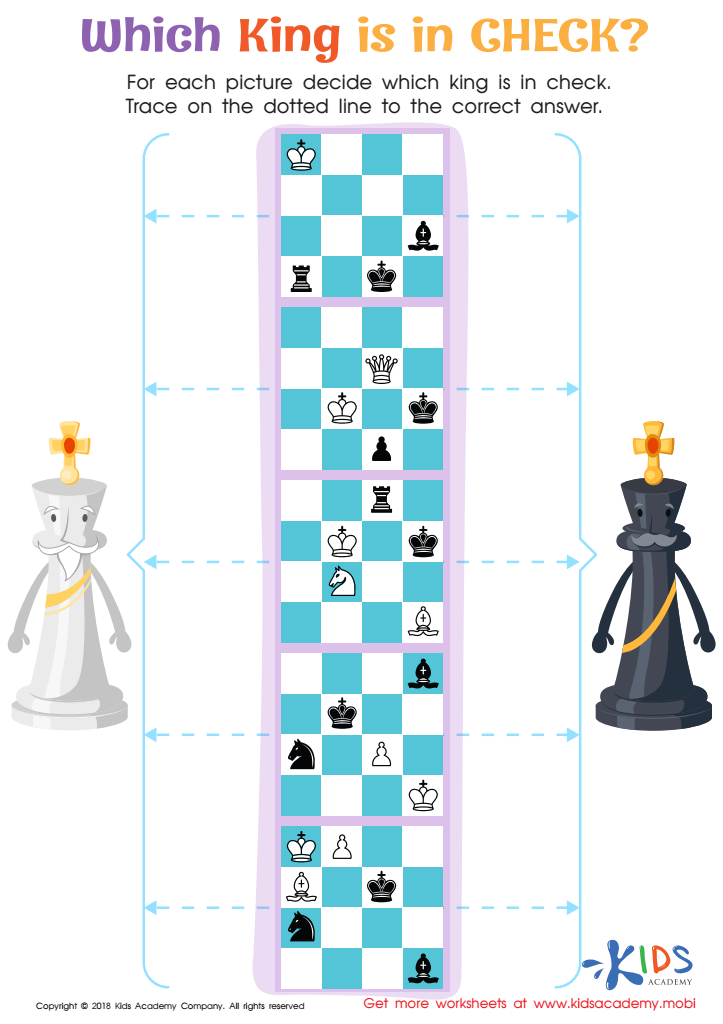
Which King is in Check? Worksheet
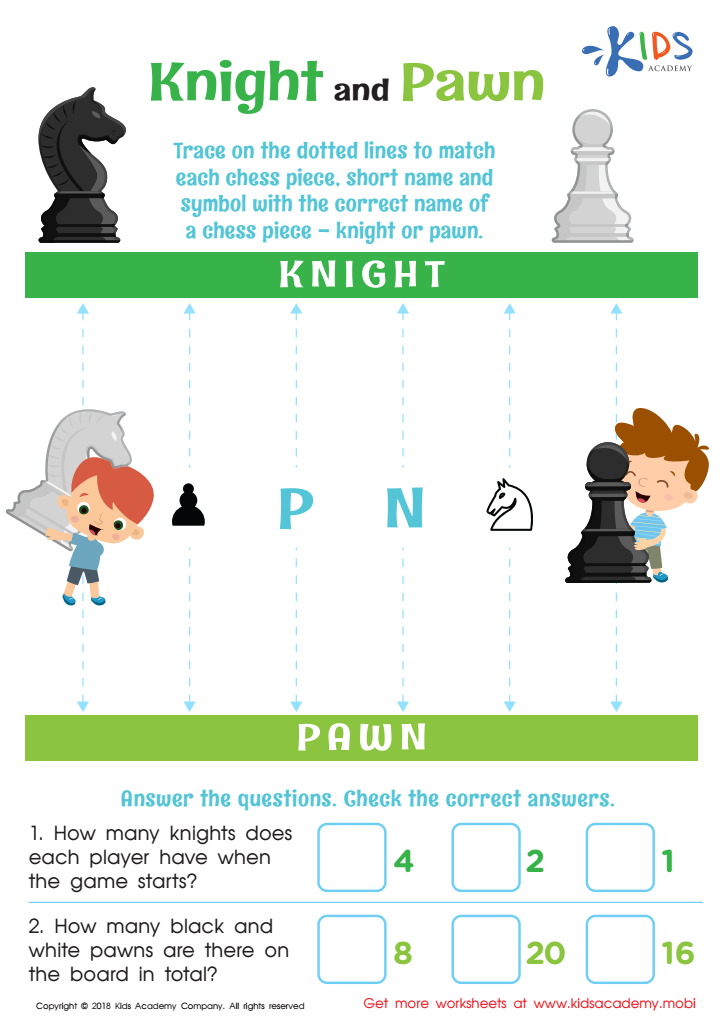
Knight and Pawn Worksheet
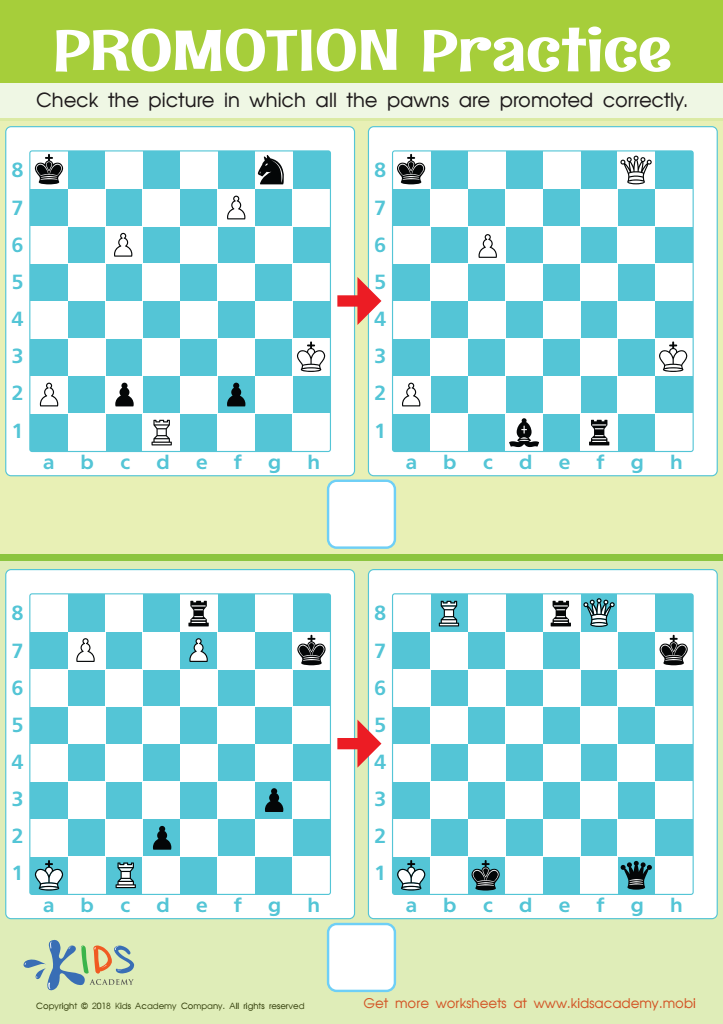
Promotion Practice Worksheet






Parents and teachers should prioritize Critical Thinking Chess for children aged 6-7 because it nurtures essential cognitive and social skills at a formative age. Engaging in chess helps young learners develop critical thinking by encouraging them to analyze possible moves, anticipate opponents’ actions, and make strategic decisions. These skills translate to improved problem-solving abilities in academic subjects and everyday life.
Moreover, as children learn the rules and strategies of chess, they enhance their concentration and focus, fostering a sense of patience and perseverance. Each game serves as a reflective experience, where they evaluate outcomes and learn to appreciate both victories and losses. Socially, chess promotes respectful competition and helps children understand the importance of sportsmanship, cooperation, and sharing ideas with peers.
Additionally, introducing chess at this young age can spark interest in STEM (science, technology, engineering, and math) fields, as the game requires logical reasoning and the application of mathematical concepts. By encouraging young children to engage with Critical Thinking Chess, parents and teachers equip them with lifelong skills that contribute to their academic success and personal growth, creating a solid foundation for future learning and challenges.