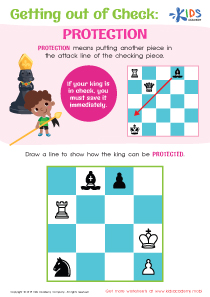
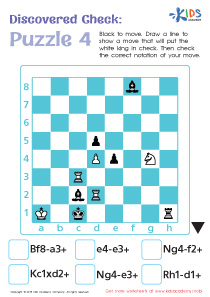
Memory enhancement Chess Worksheets for Ages 6-7
3 filtered results
-
From - To
Boost your child's cognitive skills with our engaging Memory Enhancement Chess Worksheets for ages 6-7! Specifically designed to develop memory retention through fun chess-related activities, these worksheets offer a unique blend of play and learning. Kids will engage in pattern recognition, problem-solving, and recollection exercises inspired by classic chess moves, enhancing their attention and focus. Each worksheet promotes critical thinking and visual memory skills while ensuring that your young learner enjoys every moment. Perfect for parents and educators looking to enrich their students’ learning experience, these resources are a fantastic way to foster growth in essential cognitive abilities. Start enhancing your child's memory today!
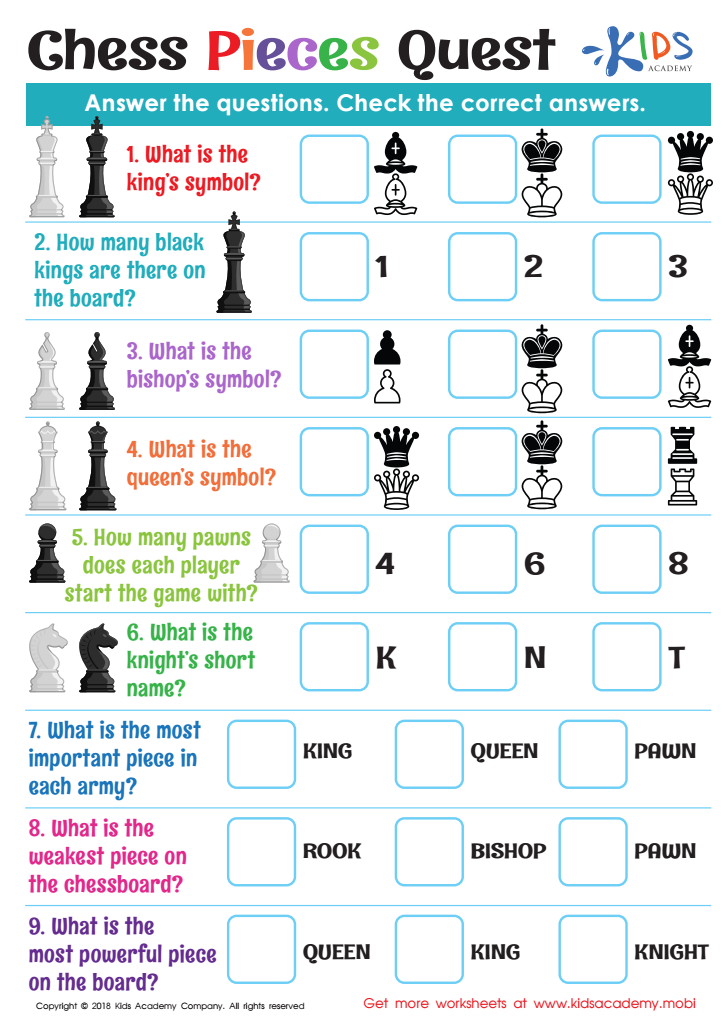
Chess Pieces Quest Worksheet
 Assign to My Students
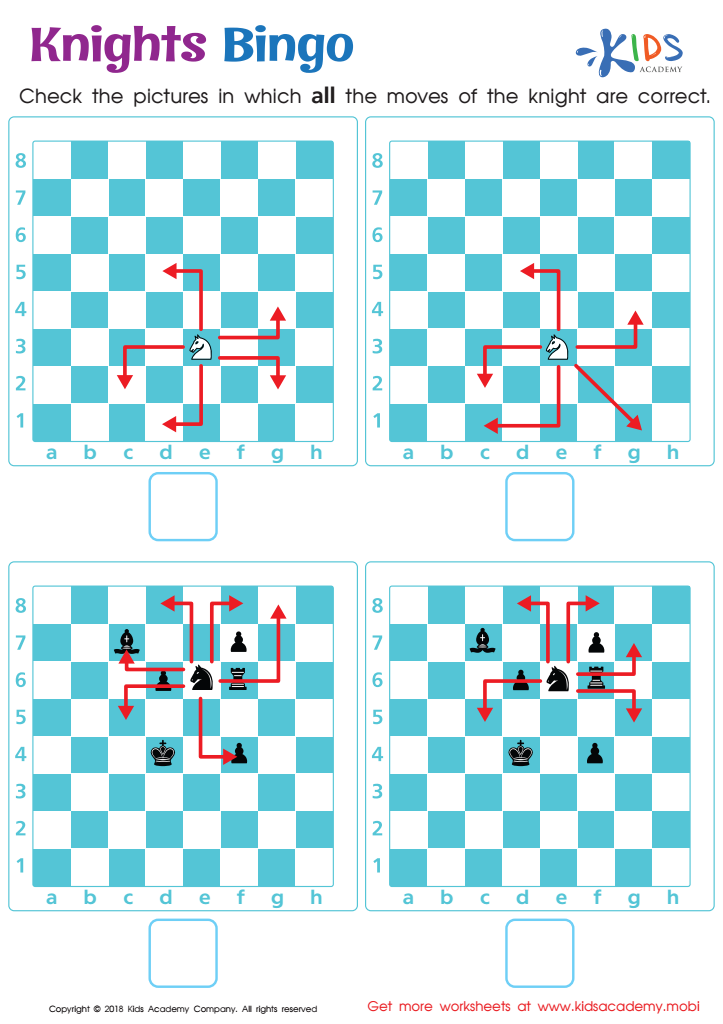
Knights Bingo Worksheet
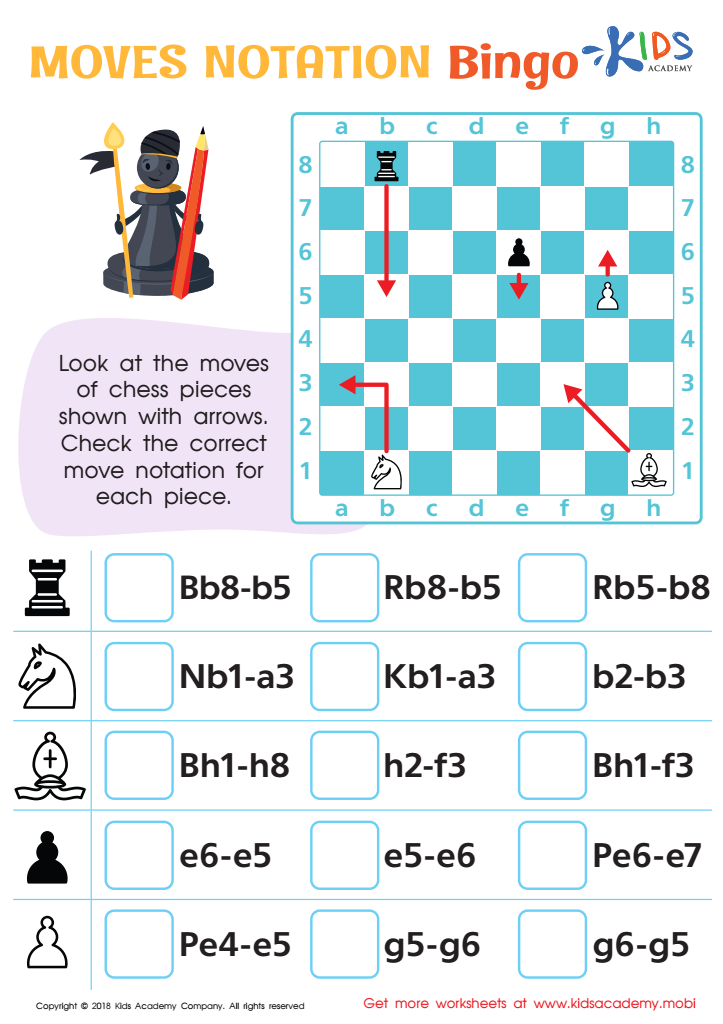
Moves Notation Bingo Worksheet



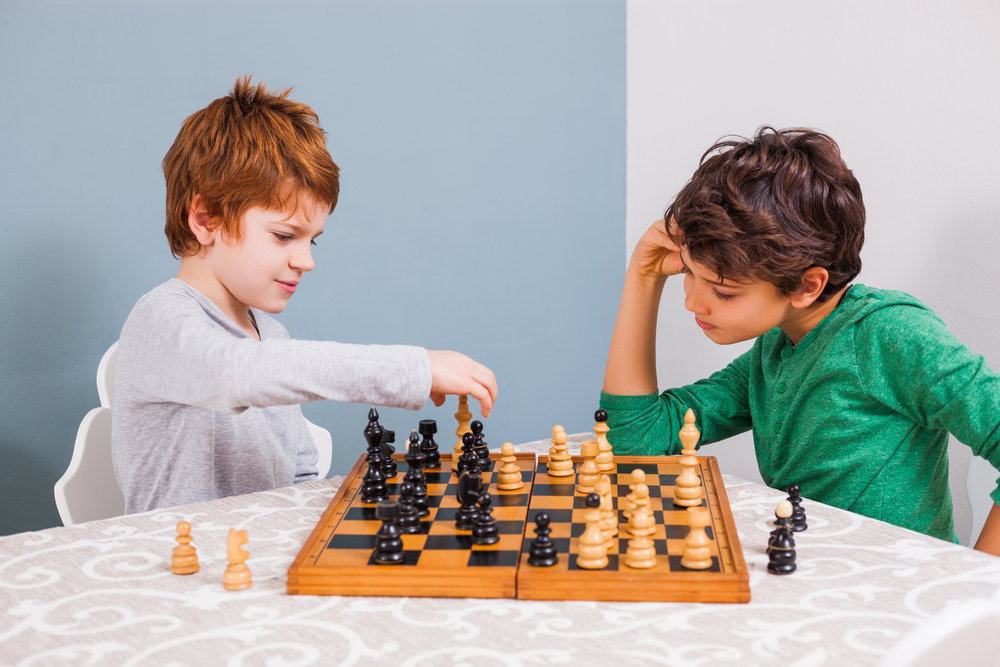


Memory enhancement through chess for children aged 6-7 is crucial for several reasons. Firstly, chess is a strategic game that fosters critical thinking and problem-solving skills. It requires players to remember various moves, strategies, and their opponent's actions, gradually enhancing their short and long-term memory capacity.
For young learners, cognitive development is a key aspect of their growth. Engaging in chess at this early age allows children to improve their concentration and focus, skills that are transferable to their academic pursuits. Enhanced memory skills can lead to better performance in school, particularly in subjects that require recall, such as mathematics and reading comprehension.
Moreover, chess teaches patience and perseverance. Children learn to analyze positions and outcomes, which helps them develop strategies and stay committed to tasks. This fosters a growth mindset, encouraging them to view challenges as opportunities to learn rather than obstacles.
Finally, playing chess offers social interaction, enabling kids to engage with peers, share strategies, and celebrate successes. This interaction not only strengthens their memory through repeated practice but also encourages communication and teamwork skills. In sum, promoting chess among young children equips them with essential cognitive abilities for their educational journey and personal development.