Number Recognition Chess Worksheets for Ages 6-7
4 filtered results
-
From - To
Enhance your child's number recognition skills with our engaging Number Recognition Chess Worksheets designed specifically for ages 6-7! These worksheets seamlessly blend the strategic world of chess with essential math concepts, ensuring an enjoyable learning experience. Young learners will practice identifying, counting, and using numbers through fun, themed activities that encourage critical thinking and problem-solving. Ideal for both at-home practice and classroom use, our printable resources support early math development in a dynamic way. Unlock your child's potential and foster a love for learning with these creative and educational chess-themed worksheets today! Perfect for budding chess enthusiasts and future mathematicians!
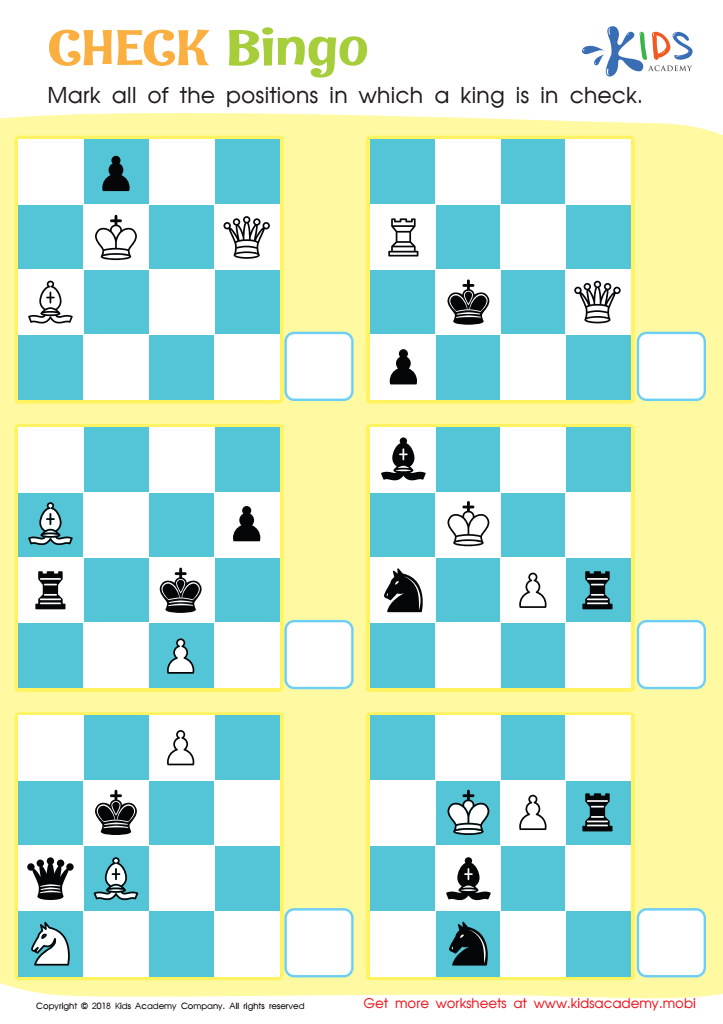
Check Bingo Worksheet
 Assign to My Students
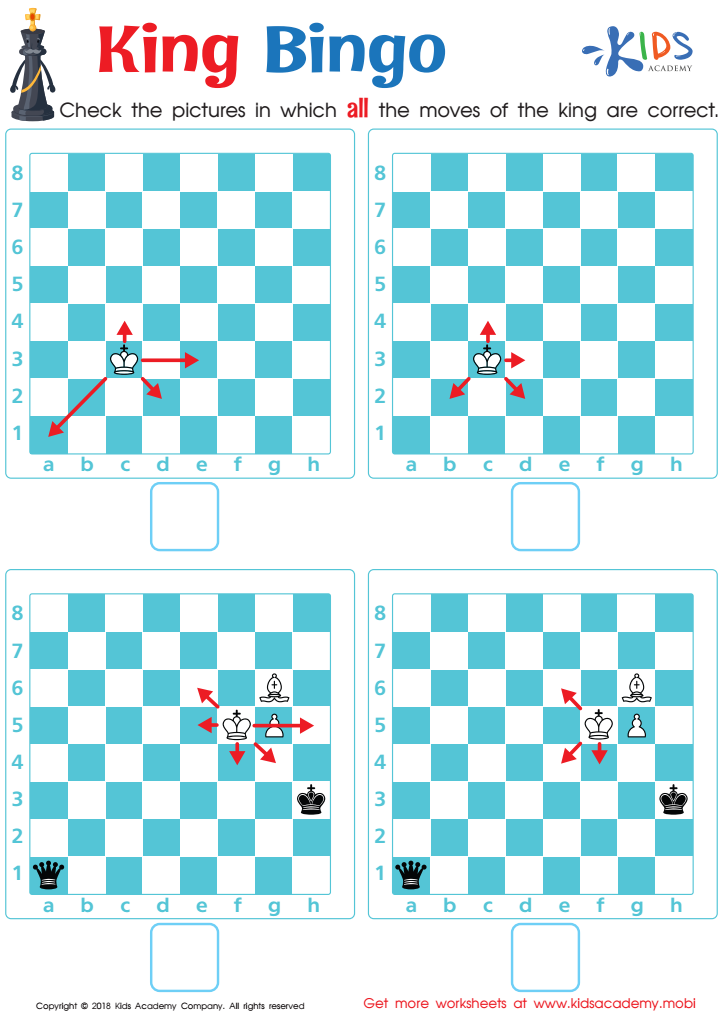
King Bingo Worksheet
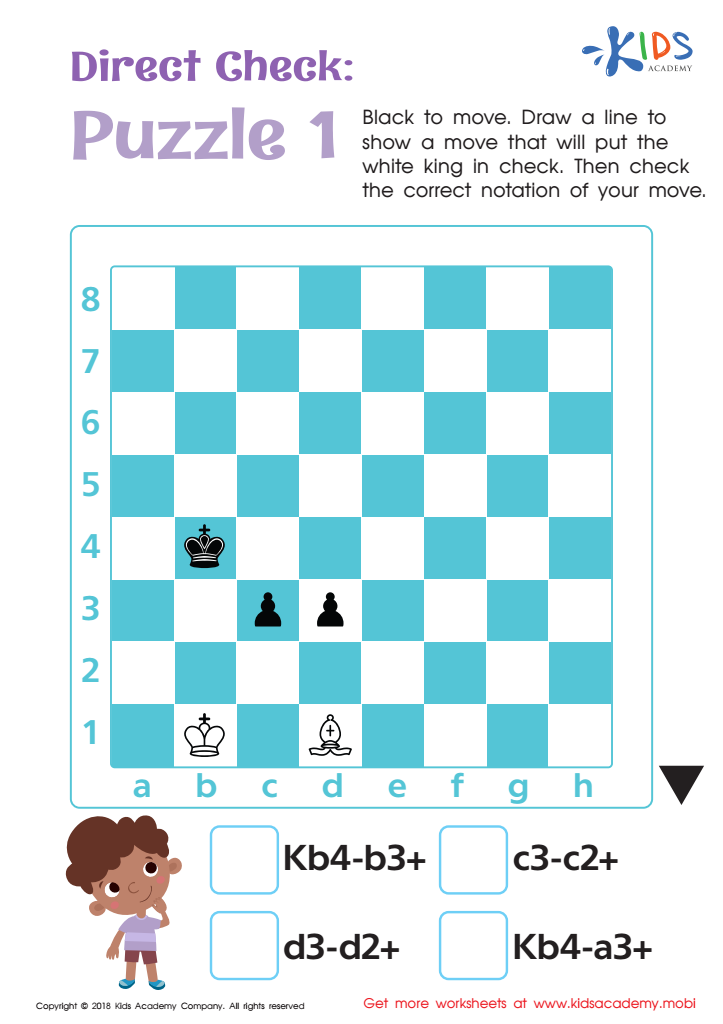
Direct Check: Puzzle 1 Worksheet
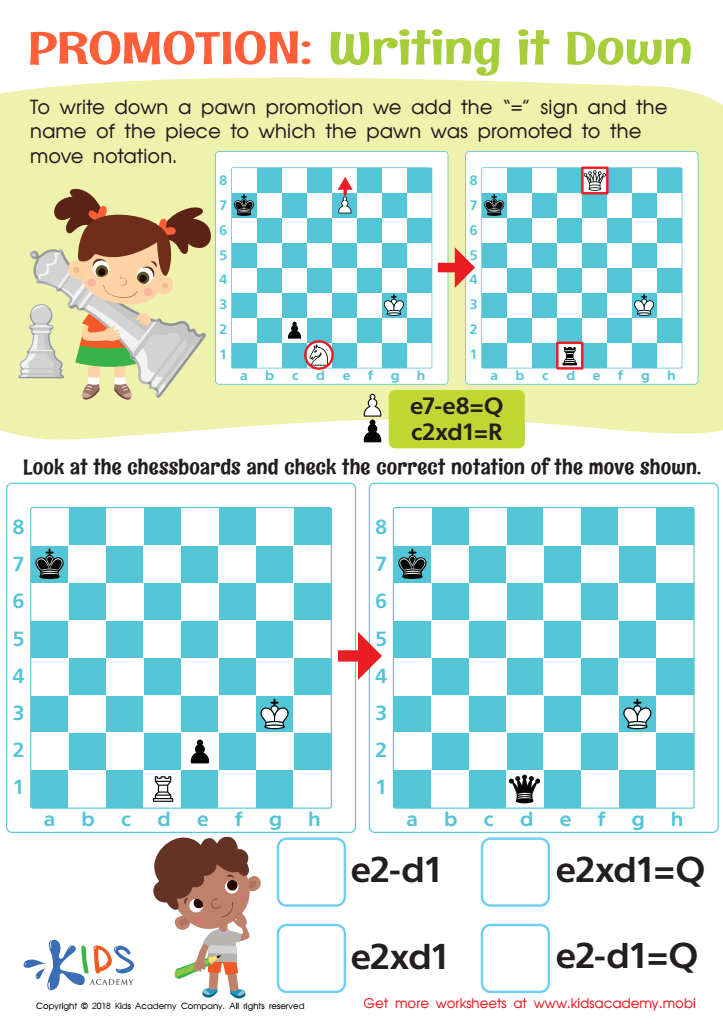
Writing it Down Worksheet







Number Recognition Chess is an innovative educational tool designed specifically for ages 6-7, fostering both cognitive development and early mathematical skills. Parents and teachers should care about this game for several compelling reasons.
Firstly, number recognition is a foundational skill essential for future academic success. By integrating numbers into a familiar and engaging game, children can develop their counting and recognition abilities organically. Chess itself promotes strategic thinking, problem-solving, and patience, skills that are crucial for overall cognitive development.
Secondly, Number Recognition Chess encourages social interaction. As children play together, they learn to communicate, collaborate, and develop essential interpersonal skills. This shared experience enhances emotional intelligence, teaching them about sportsmanship and healthy competition.
Moreover, the engaging nature of this game can spark a lifelong interest in math and critical thinking. By associating numbers with fun and interactive gameplay, children are more likely to embrace learning rather than view it as a chore.
In summary, Number Recognition Chess provides an effective, playful method for developing early math skills, social interaction, and critical thinking, making it a valuable addition to the educational toolbox for both parents and teachers. Engaging children in this way sets a strong foundation for future learning and personal growth.