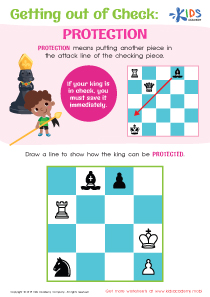
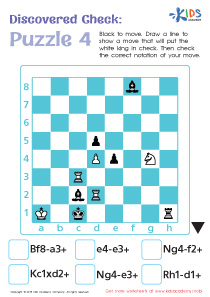
Problem-solving abilities Chess Worksheets for Ages 6-7
3 filtered results
-
From - To
Discover our engaging "Problem-Solving Abilities Chess Worksheets" tailored specifically for ages 6-7! These interactive resources are designed to enhance critical thinking skills and strategic reasoning through the exciting game of chess. Each worksheet features fun exercises that challenge young minds to solve puzzles, analyze positions, and explore various outcomes based on different chess scenarios. By integrating learning with play, children will develop essential cognitive abilities while enjoying the classic game. Perfect for classrooms or at-home learning, these worksheets make problem-solving both fun and educational, building a strong foundation for lifelong skills. Download now and watch your child's understanding and creativity flourish!
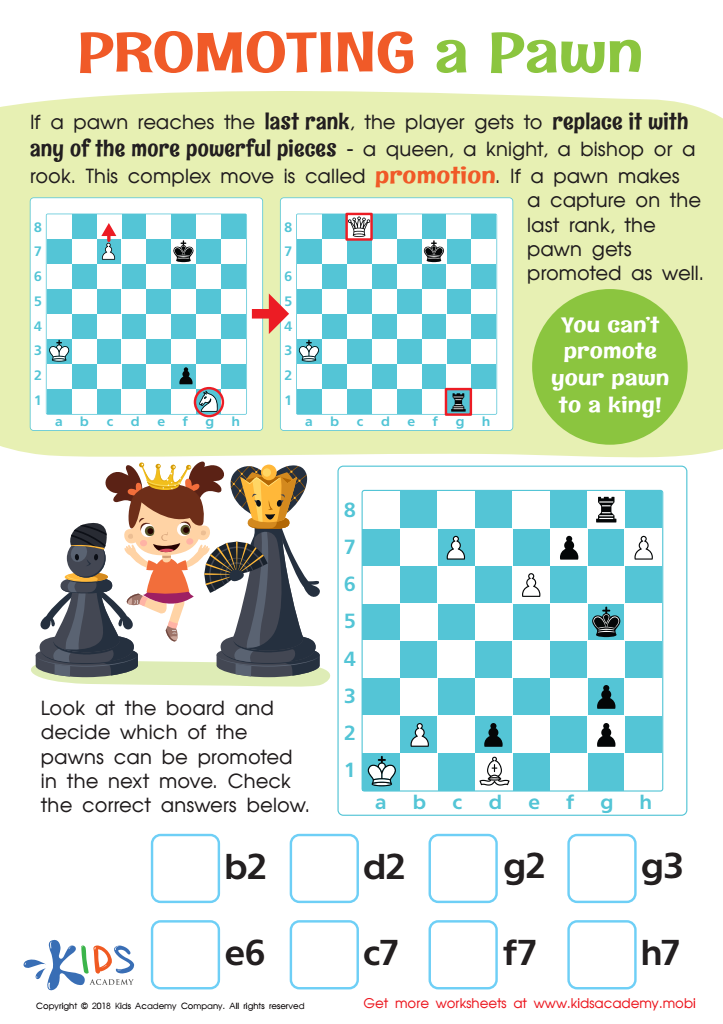
Promoting a Pawn Worksheet
 Assign to My Students
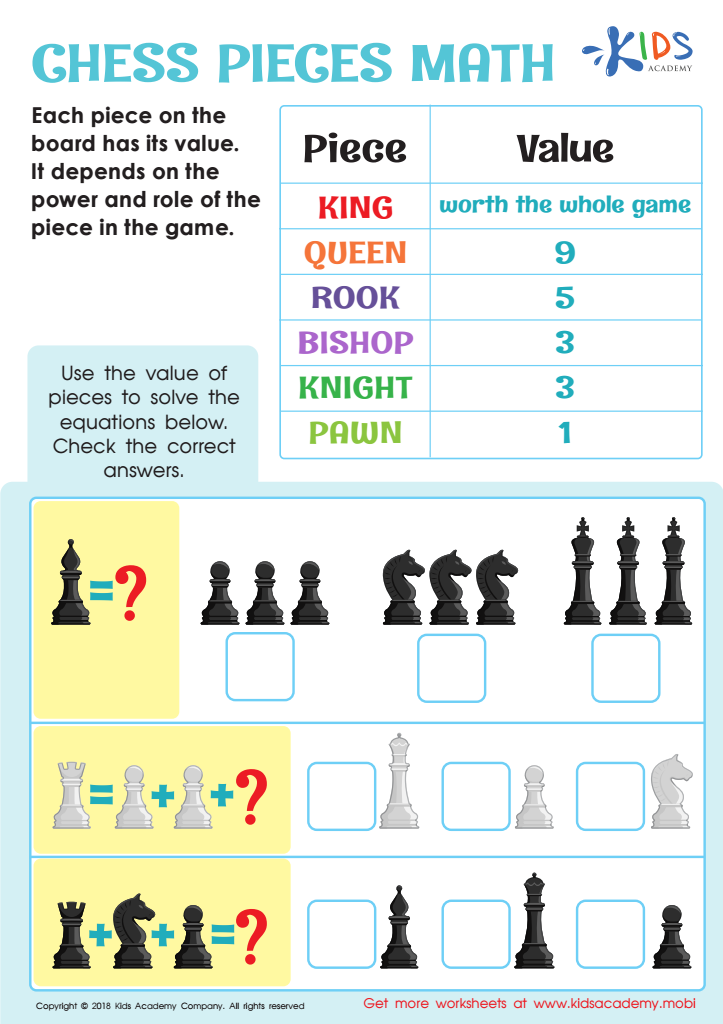
Chess Pieces Math Worksheet
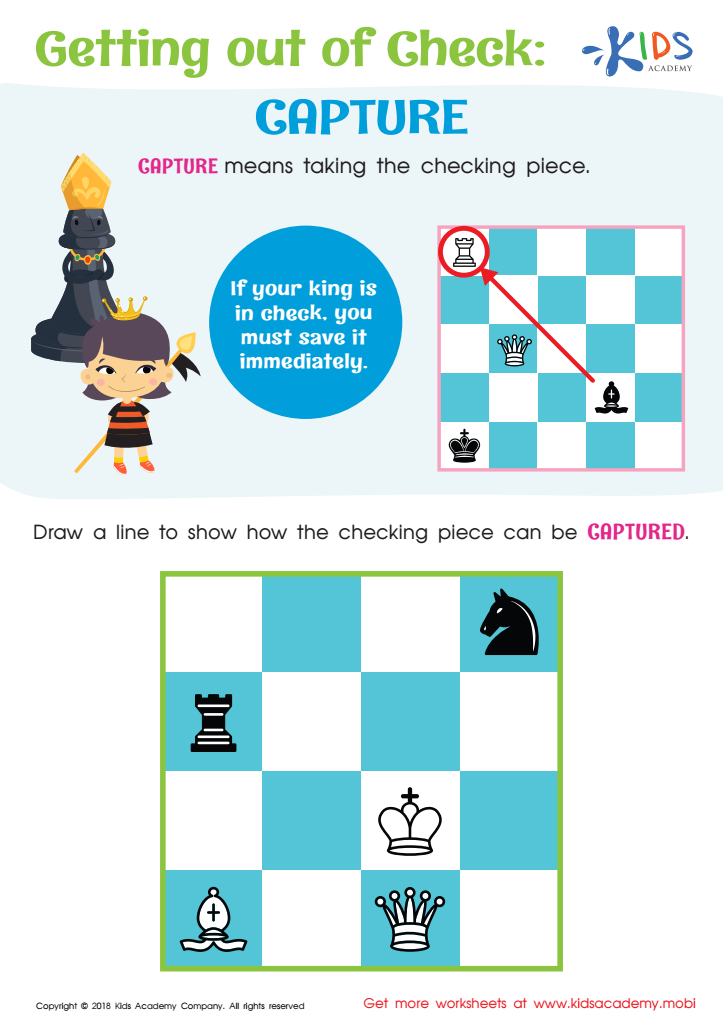
Getting out of Check: Capture







Parents and teachers should care about problem-solving abilities developed through chess for children aged 6-7 because these skills are foundational for later learning and everyday decision-making. Chess is not merely a game; it is a mental workout that encourages critical thinking, strategic planning, and cognitive flexibility. When children engage in chess, they learn to analyze various possibilities, weigh outcomes, and adapt their strategies based on their opponent's moves. These skills are directly transferable to academic tasks, such as math and science, where problem-solving is crucial.
Additionally, chess helps foster patience and perseverance, as children must often think several moves ahead and understand the consequences of their actions. This resilience is invaluable in both academic and social situations. Moreover, playing chess can enhance a child’s self-confidence as they gain proficiency in the game, thereby reducing anxiety in competitive scenarios.
Furthermore, involving parents in this process can strengthen family bonds and create opportunities for meaningful engagement. Overall, promoting problematic-solving abilities through chess cultivates critical life skills that benefit children well beyond the game, empowering them to tackle various challenges in and out of the classroom.