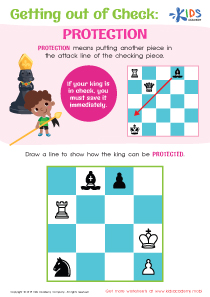
Problem-solving skills development Chess Worksheets for Ages 6-7
3 filtered results
-
From - To
Enhance your child’s cognitive abilities with our captivating Problem-solving Skills Development Chess Worksheets, designed specifically for ages 6-7. These enriching worksheets offer a fun, interactive way to introduce young learners to the strategic world of chess, fostering critical thinking, logical reasoning, and strategic planning. Each worksheet presents engaging puzzles and beginner-friendly chess scenarios, gradually challenging kids while nurturing their problem-solving skills. Developed by educational experts, our printable resources are perfect for at-home practice or classroom use, ensuring your child builds confidence and enjoys the rewarding process of mastering chess strategies. Start your child’s intellectual journey today with Kids Academy!
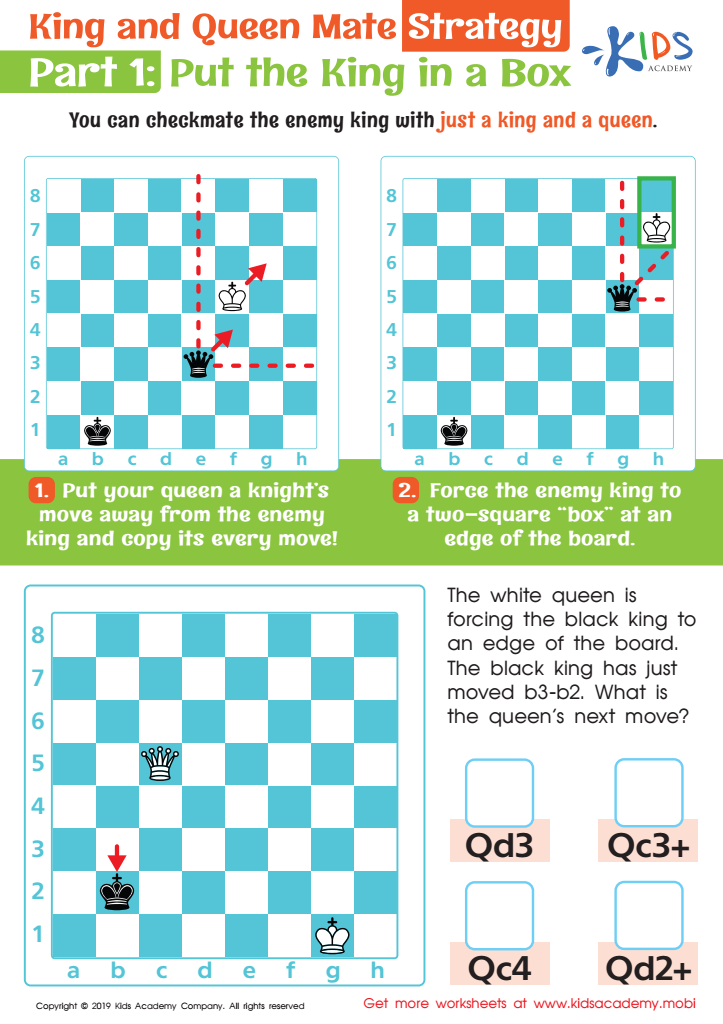
King and Queen Mate Strategy: Part 1 Worksheet
 Assign to My Students
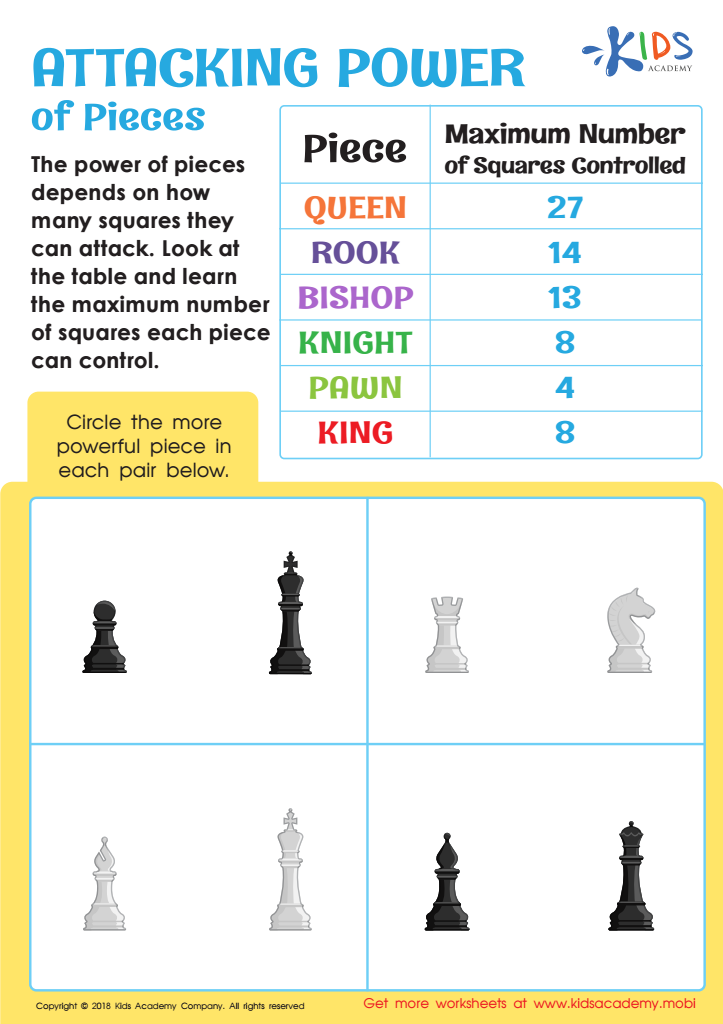
Attacking Power of Chess Pieces Worksheet
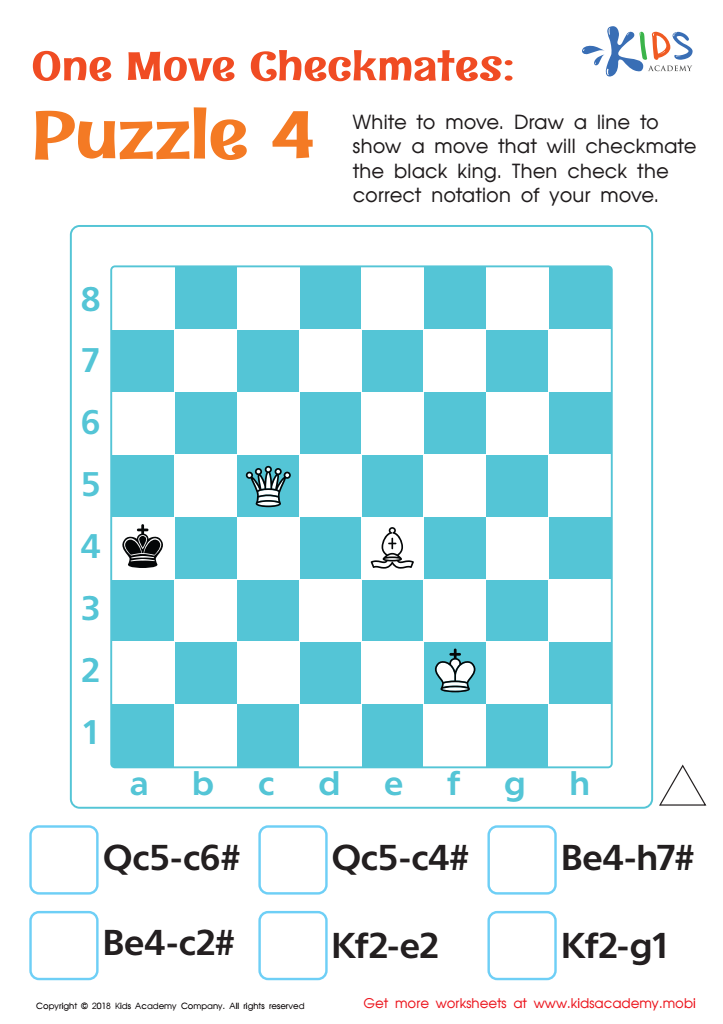
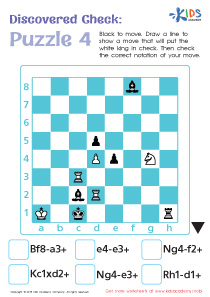
One Move Checkmates: Puzzle 4 Worksheet







Parents and teachers should care about developing problem-solving skills in children ages 6-7 through chess because these skills form the cornerstone of critical thinking and intelligence. At this crucial developmental stage, kids' brains are highly receptive, and engaging them with chess can profoundly impact their cognitive abilities. Playing chess enhances logical reasoning, strategic planning, and foresight, all fundamental components of problem-solving.
Moreover, chess introduces children to complex scenarios where they must think multiple steps ahead, analyze patterns, and make decisions under time constraints. This sets a strong foundation for academic subjects like mathematics and science. Chess also stimulates creativity, as children explore different strategies and solutions to challenges presented by their opponents.
Furthermore, chess teaches patience and perseverance. Young learners understand that setbacks are part of the learning process, and this attitude builds resilience. Problem-solving in chess requires intense concentration and focus, improving overall attention spans that benefit all learning areas.
Lastly, the inclusiveness of chess means it can be played by children with diverse skills, offering a platform for all to improve their problem-solving abilities in a fun and engaging manner. Therefore, incorporating chess into early education ensures the holistic cognitive development of children.