Analog clock reading Worksheets for Ages 6-7
4 filtered results
-
From - To
Discover our engaging Analog Clock Reading Worksheets designed specifically for children aged 6-7. These resources aim to enhance your child's understanding of time through hands-on practice with clock faces. Featuring colorful illustrations and interactive exercises, these worksheets guide young learners in reading analog clocks, identifying hours and minutes, and improving their time-telling skills. Ideal for home or classroom use, our worksheets develop mathematical reasoning while making learning fun and enjoyable. Help your child master the art of telling time with these effective, age-appropriate tools that foster confidence and competency in this essential life skill. Get started on their time-telling journey today!
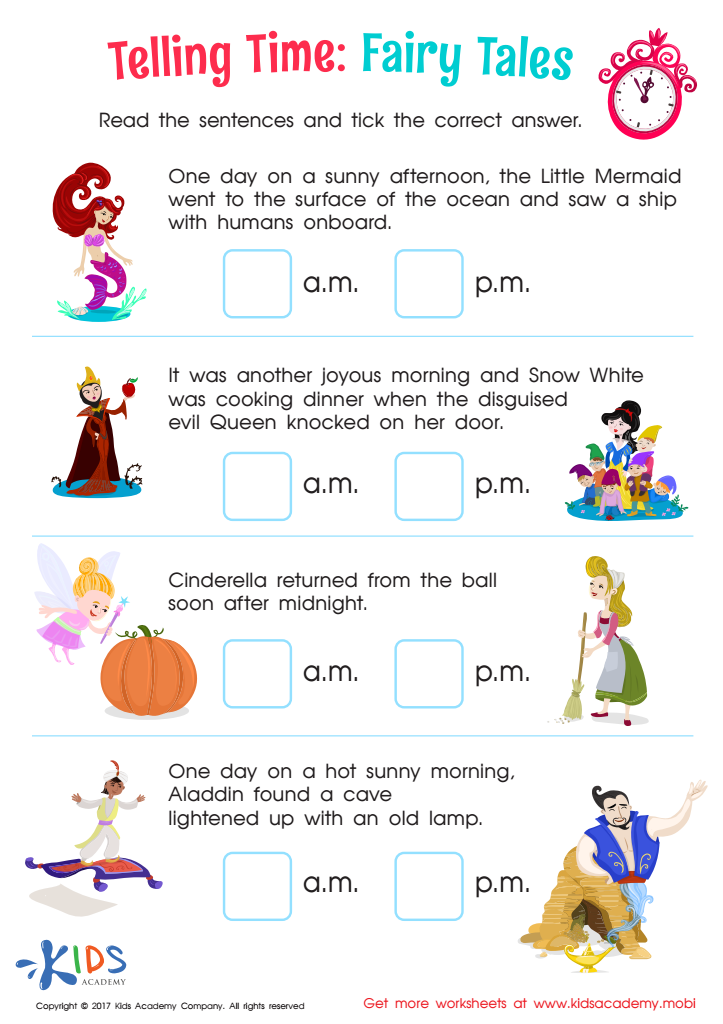
Telling Time: Fairy Tales Worksheet
 Assign to My Students
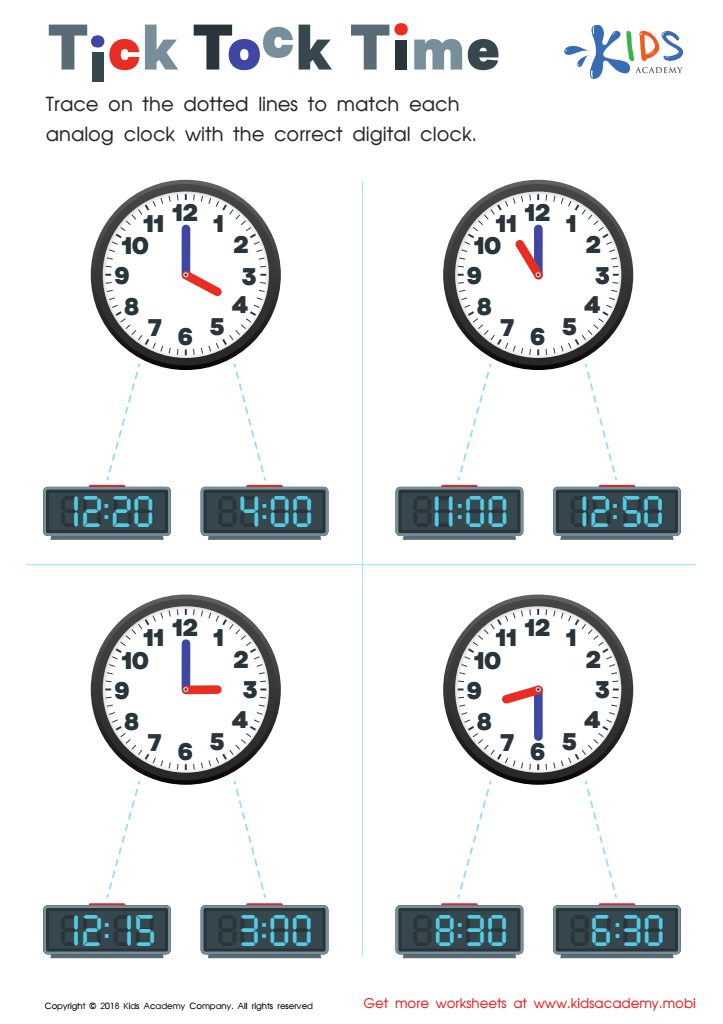
Tick Tock Time Worksheet
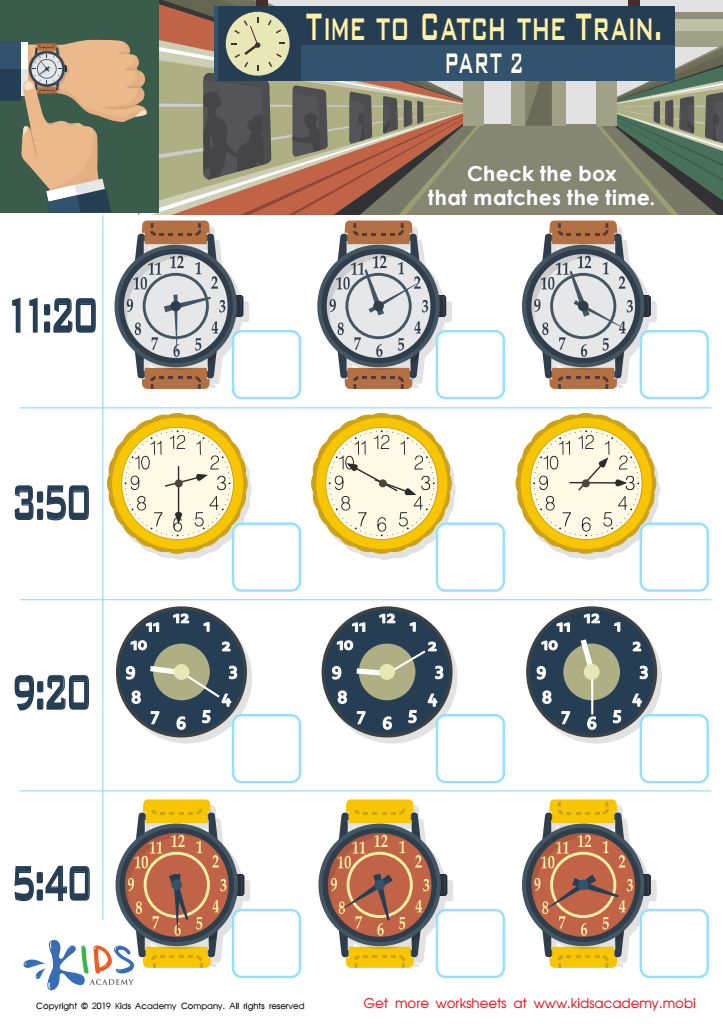
Time to Catch the Train Part 2 Worksheet








Teaching children to read an analog clock is crucial for their cognitive development and everyday life skills. For children aged 6-7, understanding time improves their ability to grasp concepts of intervals and sequences, laying a foundational skill for much more complex mathematical ideas in the future. It enhances their attention span and critical thinking, as they learn to decipher the position of the hands and associate it with time.
Analog clocks also cultivate a sense of responsibility and independence. When children can read time, they manage their schedules and understand the importance of time management. This skill supports routines, ensuring they know when to wake up, have meals, or complete homework, ultimately fostering self-discipline.
From a social-emotional perspective, using analog clocks can foster conversations around time-telling activities, helping children learn patience and understand the importance of schedules in daily life.
Moreover, incorporating analog clocks into their learning exposes them to various visual patterns and fosters spatial recognition—skills essential in math and other disciplines. Thus, for parents and teachers, emphasizing analog clock reading equips children with vital skills that extend far beyond mere time-telling, enhancing their overall developmental trajectory.








