Analog Clock Understanding Worksheets for Ages 6-7
3 filtered results
-
From - To
Discover our engaging Analog Clock Understanding Worksheets designed specifically for children ages 6-7. These fun and interactive resources help young learners master the basics of telling time using analog clocks. Each worksheet features colorful illustrations and age-appropriate activities that promote hands-on learning and encourage kids to practice reading clocks at different hours and minutes. With various exercises, including matching, drawing clock hands, and answering time-related questions, your child will build essential skills in no time. Perfect for enhancing classroom learning or at-home practice, these worksheets lay the foundation for a lifelong understanding of time. Start your child’s journey to time-telling confidence today!
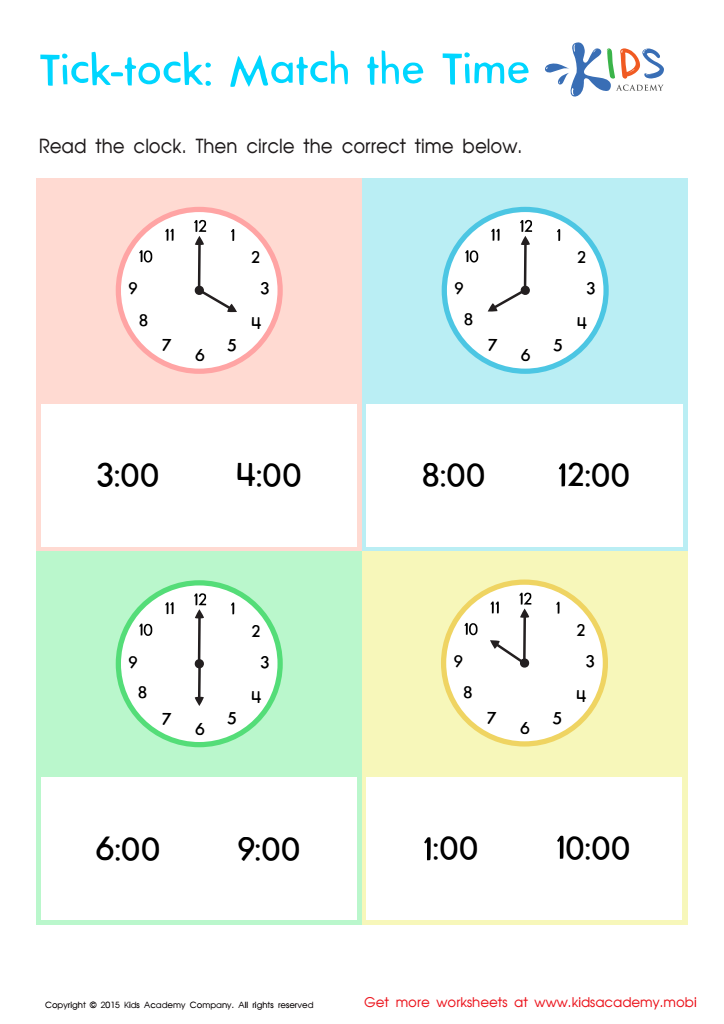
Telling The Time Worksheet: Part 4
 Assign to My Students
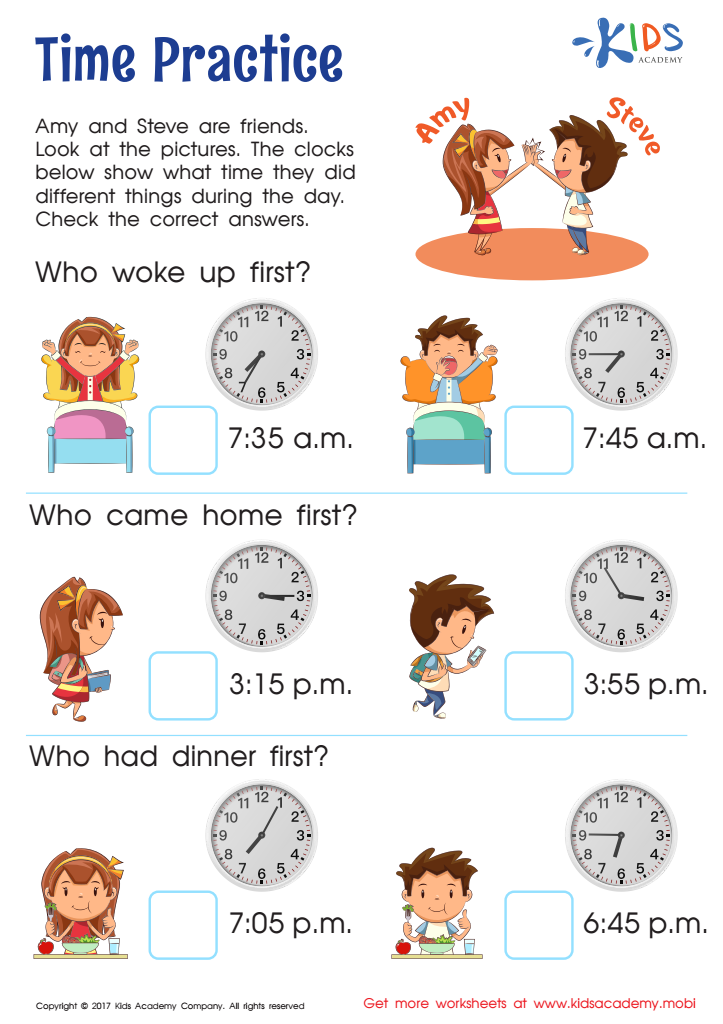
Time Practice Worksheet
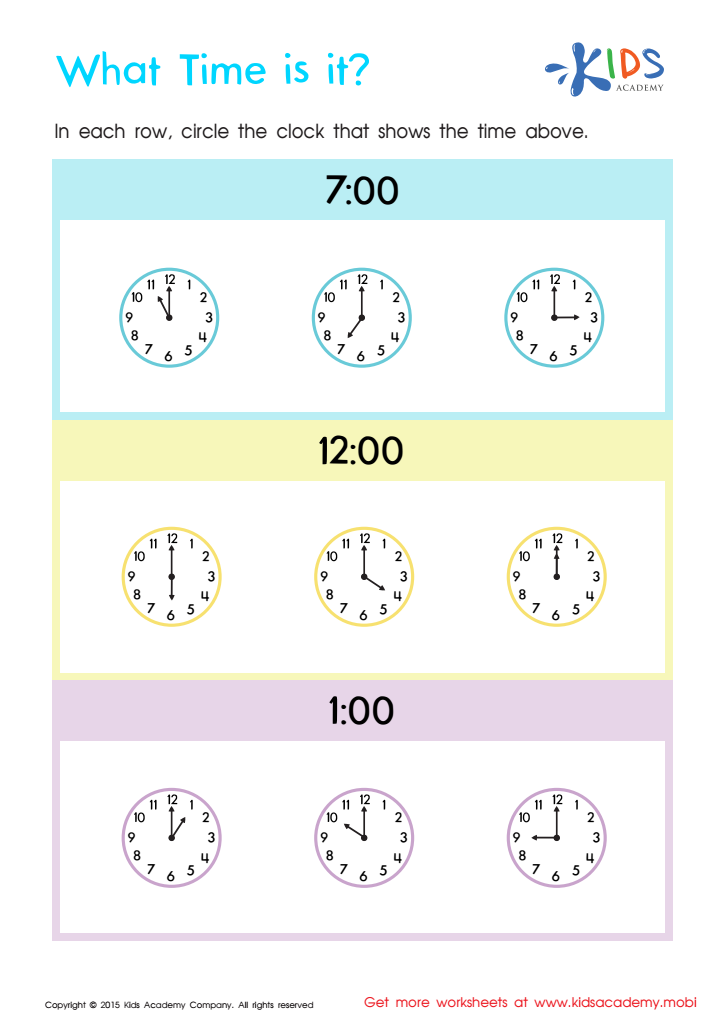
Telling The Time Worksheet: Part 3








Understanding how to read an analog clock is a vital skill for children aged 6-7, as it lays the foundation for their overall math and time management abilities. First, it encourages numeracy and enhances cognitive skills. Learning to tell time helps children grasp the concepts of counting, fractions, and division, as they discern the relationship between the minute and hour hands.
Moreover, analog clocks are commonly used in various real-world contexts, from schools to public places, and understanding them fosters independence and confidence. As children learn to manage their own schedules, they become more responsible for their time, an essential life skill that contributes to their academic success and personal growth.
Additionally, introducing analog clock concepts fosters discussions around routines, punctuality, and the passage of time, which can support emotional development. Parents and teachers play a crucial role in guiding these discussions, creating structured learning opportunities, and providing hands-on experiences, such as interactive games and practice with real clocks. By prioritizing analog clock understanding, adults enable children to thrive not only academically but also in their daily lives, ultimately preparing them for future challenges.








