Introducing our Basic Math Concepts Worksheets for Ages 6-7! Designed to make math enjoyable and accessible for young learners, our worksheets cover essential skills like addition, subtraction, number patterns, and place value. These engaging activities are perfect for first graders, building a strong foundation in critical math concepts through fun and interactive exercises. Our colorful, kid-friendly worksheets not only reinforce classroom learning but also encourage independent practice. Give your child the skills they need to succeed and boost their confidence in math with our expertly crafted resources. Join us in making math fun and easy at Kids Academy!

Check out this FREE "Basic math concepts" Trial Lesson for age 6-7!

Comparing Numbers Word Problems

Favorites
With answer key
Interactive
  • 6-7
  • Basic math concepts
Counting Tens and Ones: Part 1 Worksheet

Counting Tens and Ones: Part 1 Worksheet

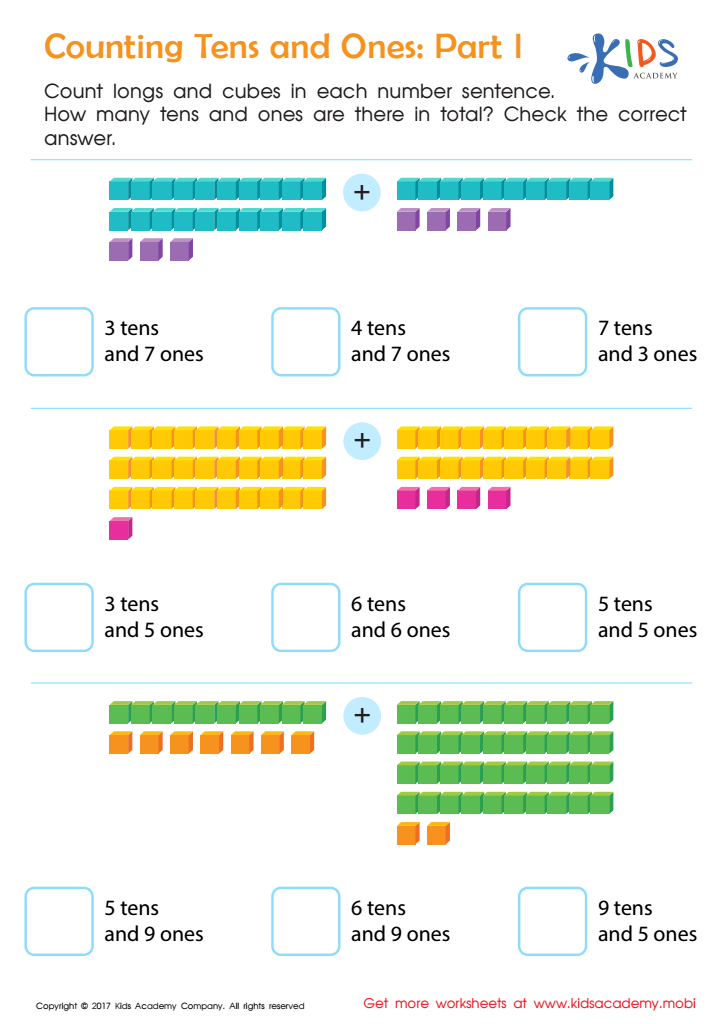
Kids Academy has a great place value worksheet to help kids learn when they don't have manipulatives at home! It includes longs and cubes that kids can count and add to find the sum. Colorful and downloadable, this page will help kids understand addition and place value better. Give it a try!
Counting Tens and Ones: Part 1 Worksheet
Worksheet
Animal Features Worksheet

Animal Features Worksheet

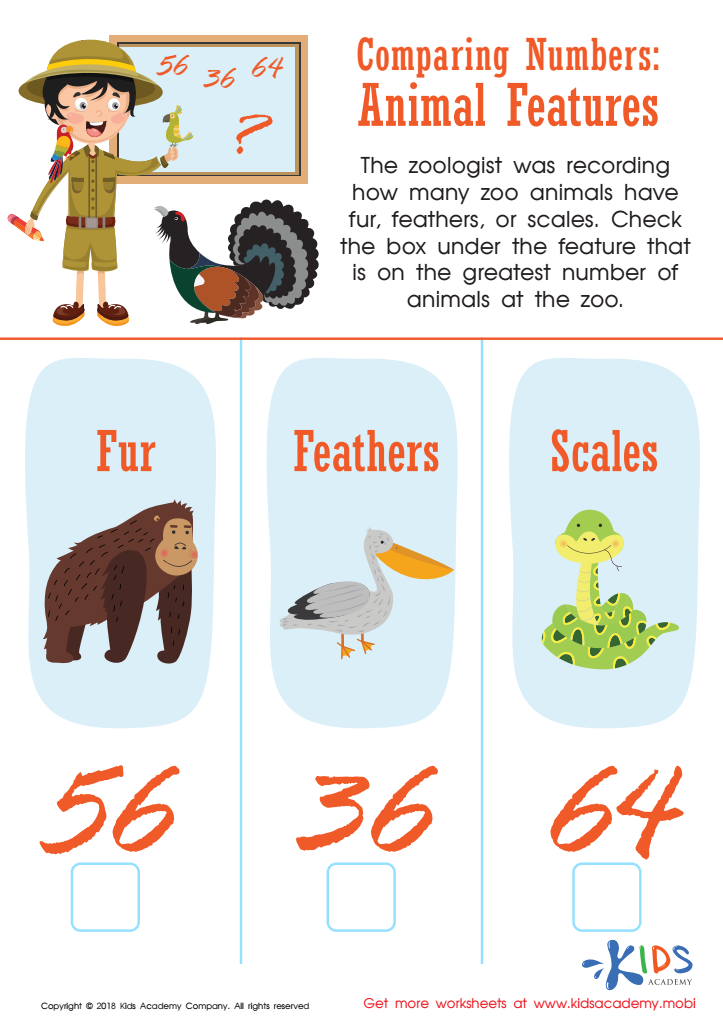
Let your kids join a budding zoologist! They can count zoo animals' fur, feathers or scales, then use numbers and comparison to check the box with the most friends. The PDF will captivate them and help them understand how the value of '6' changes based on its position.
Animal Features Worksheet
Worksheet
Counting Maze Up to 20 Printable

Monkey Math Worksheet

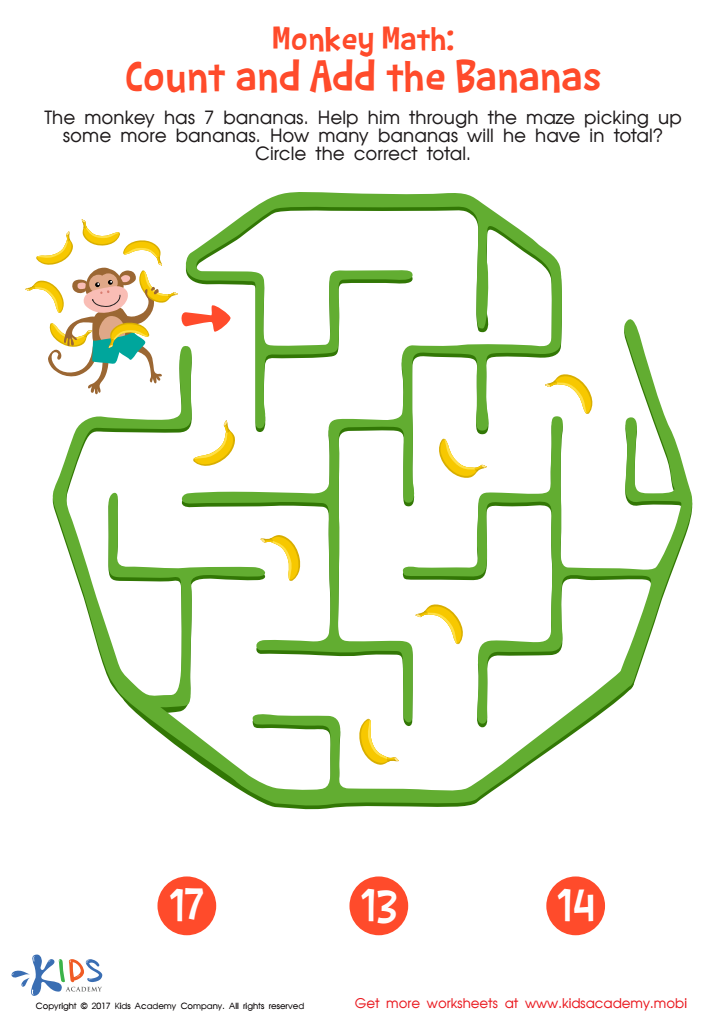
Try our printable maze to 20 for an enjoyable challenge.
Monkey Math Worksheet
Worksheet
More or Less PDF Printable Worksheet

More or Less Size Worksheet

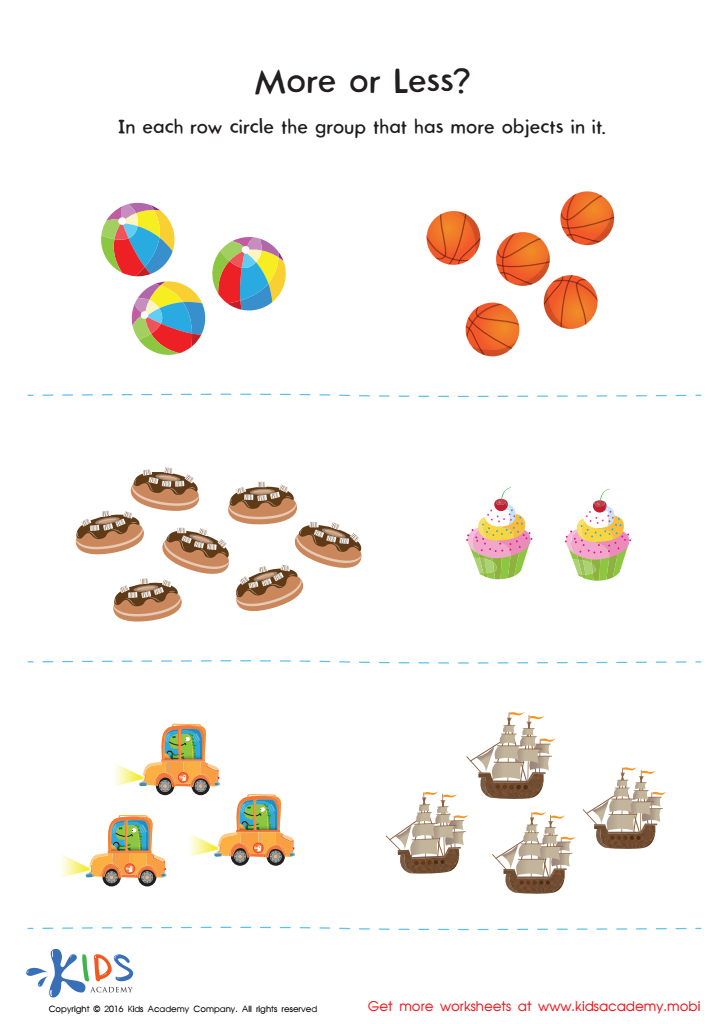
Try this "More or Less" PDF printable worksheet to help them out!
More or Less Size Worksheet
Worksheet
Counting in the Neighborhood Part1 Worksheet

Counting in the Neighborhood Part1 Worksheet

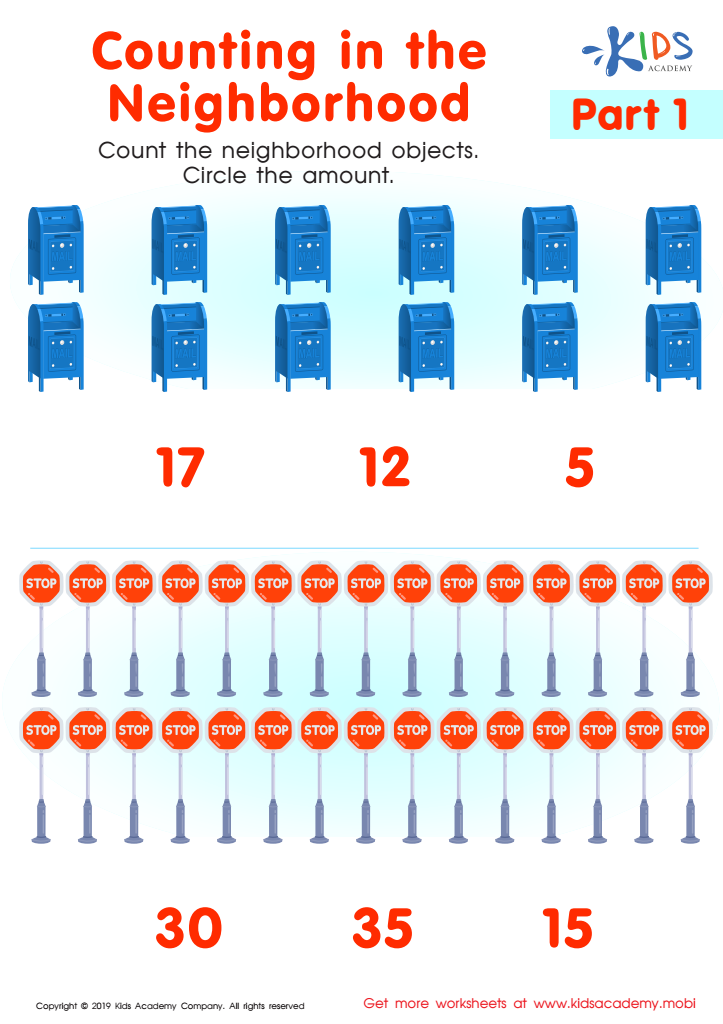
Counting using one-to-one representation is a great way to develop a child's number sense. Use objects, pictures and images to help counting beyond the fingers. This worksheet uses everyday objects to practice counting. It encourages children to find the correct number and count forward. Give it a try!
Counting in the Neighborhood Part1 Worksheet
Worksheet
Let’s Compare Worksheet for Preschool

Let's Compare Worksheet: Big or Small
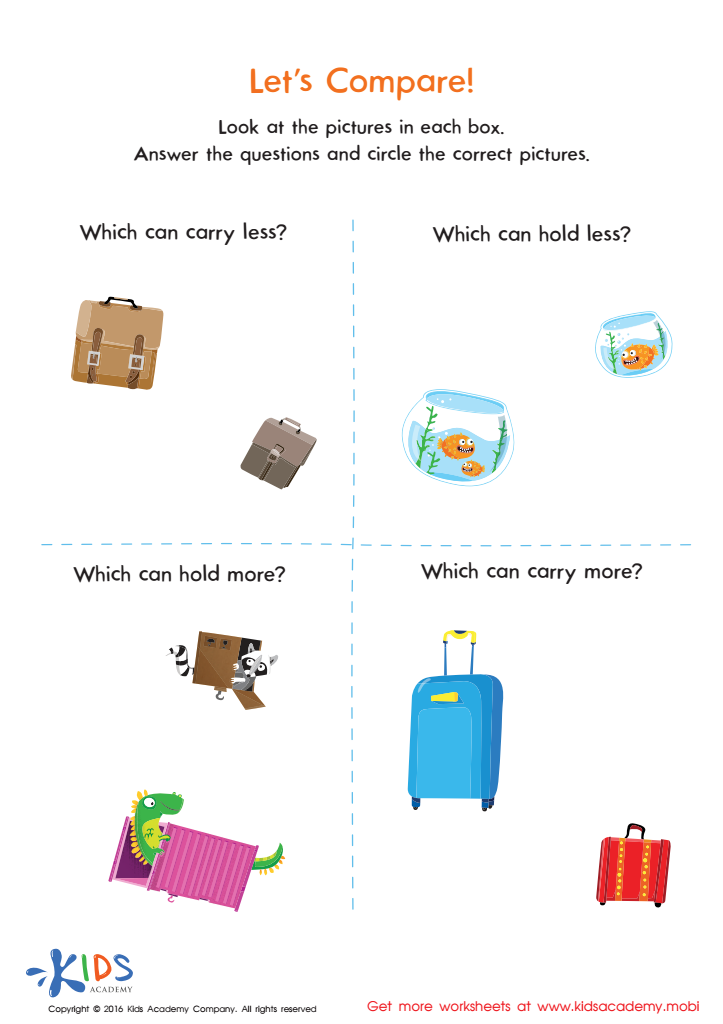
This worksheet will help your child gain an awareness of simple geometry and strengthen cognitive skills. Visualizing objects in 3D and comparing sizes helps to practice solving problems mentally and build analytical skills. Let's Compare worksheet will challenge your child to think hard.
Let's Compare Worksheet: Big or Small
Worksheet
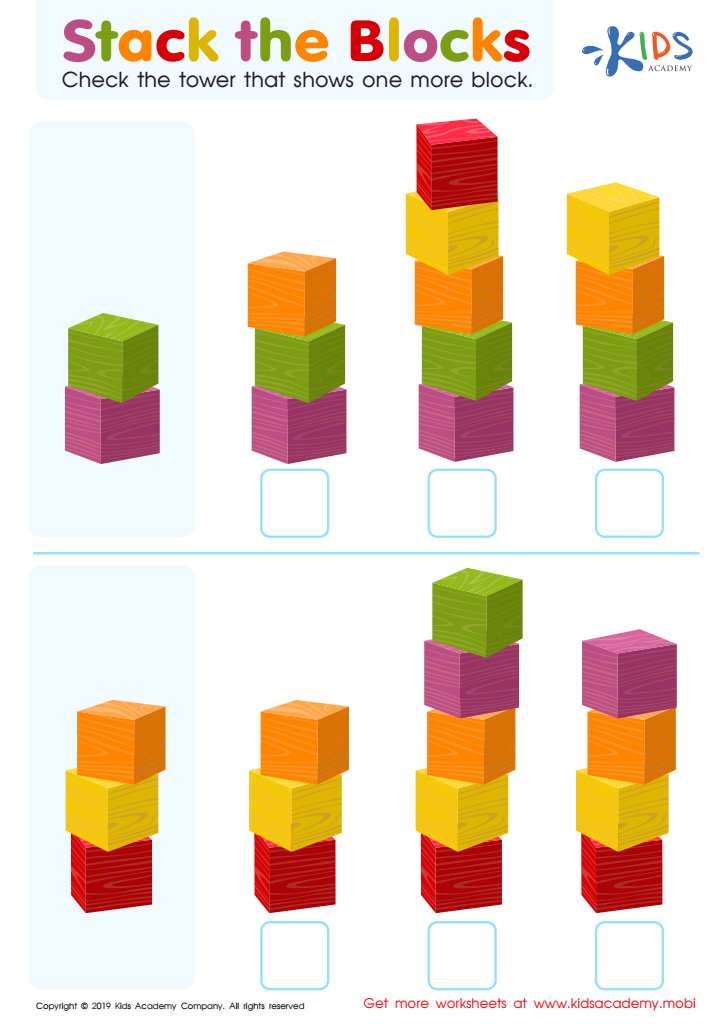
Stack the Blocks Worksheet

Stack the Blocks Worksheet

Playing with blocks is a great way for kids to learn! They can create patterns, shapes, and even count. In this worksheet, ask them to identify the colors and count each stack of blocks. If they can spot one extra block in the tower, even better! Encourage learning through play with these fun blocks.
Stack the Blocks Worksheet
Worksheet
Printable Money Games and PDF Worksheets: Five Cents or the Nickel

Five Cents or the Nickel Money Worksheet
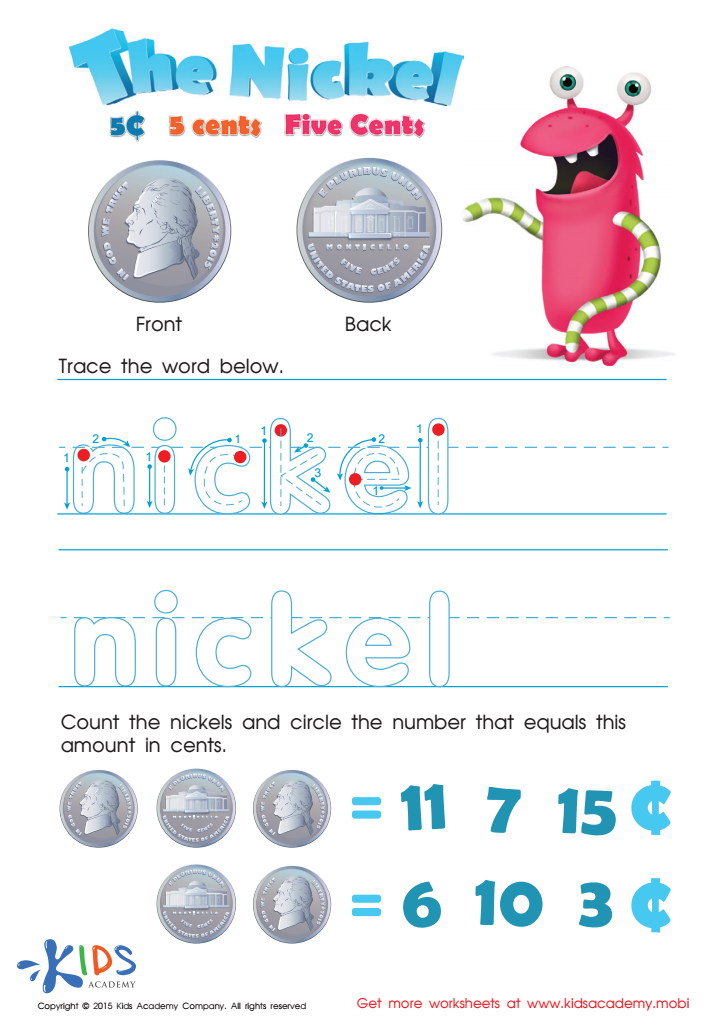
Counting money games help kids make learning money fun and easy. Next up: the 5 cent coin, or nickel. Look at both sides and remember them. Then, trace the word "nickel" to help you remember. Finally, count the nickels and work out amounts in cents. Let's do this! Kids Academy helps make money learning easy and fun!
Five Cents or the Nickel Money Worksheet

Worksheet
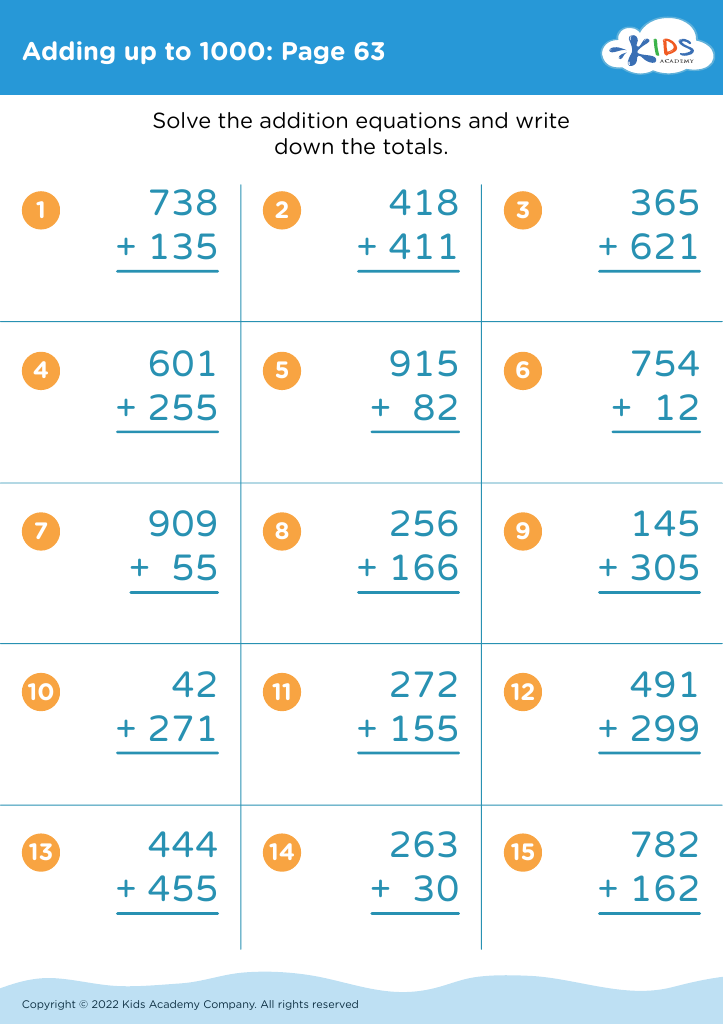
Adding up to 1000: Page 63

Adding up to 1000: Page 63

Adding up to 1000: Page 63
Worksheet


At ages 6 to 7, children are at a crucial stage of cognitive development, and mastering basic math concepts is essential for cultivating their problem-solving skills, logical reasoning, and academic confidence. Early exposure to foundational math principles, like numbers, addition, subtraction, patterns, and shapes, sets the stage for more complex mathematical reasoning later on.

For parents and teachers, prioritizing math at this age helps bridge understanding between conceptual and real-world applications. Math skills not only support future academic success in science, technology, engineering, and mathematics (STEM) fields but also enhance everyday decision-making abilities such as managing time and money.

Children who develop strong math skills early are better equipped to understand and process new information, promoting a positive attitude towards learning and school. Engaging in math activities, whether through games, puzzles, or practical experiences like cooking and shopping, makes math fun and accessible. This engagement can lead to higher academic achievement and more opportunities in later schooling.

Furthermore, when adults show enthusiasm and support for learning math, they model positive behavior, reducing anxiety and fear often associated with the subject. Thus, parents and teachers are integral in nurturing a child's mathematical confidence and curiosity, laying the groundwork for lifelong success and a healthy relationship with learning.