Building vocabulary Worksheets for Ages 6-7
6 filtered results
-
From - To
Boost your child's vocabulary with our engaging "Building Vocabulary Worksheets for Ages 6-7" at Kids Academy! These tailored printable worksheets are designed to enhance language skills through fun and interactive activities. From identifying synonyms and antonyms to exploring new words in context, your child will effortlessly expand their vocabulary while enjoying the learning process. Our worksheets foster critical thinking and reading comprehension, making them ideal for early learners. Perfect for both classroom use and at-home practice, these worksheets lay a solid foundation for your child's linguistic development. Equip your young learner with the tools for a successful reading journey today!
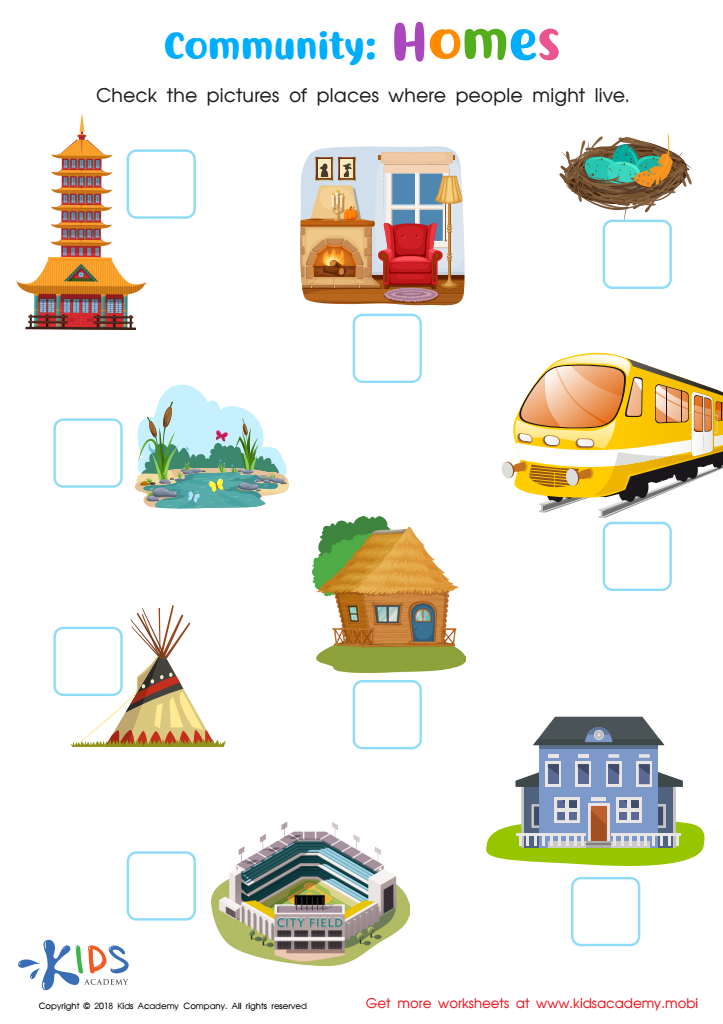
Community: Homes Worksheet
 Assign to My Students
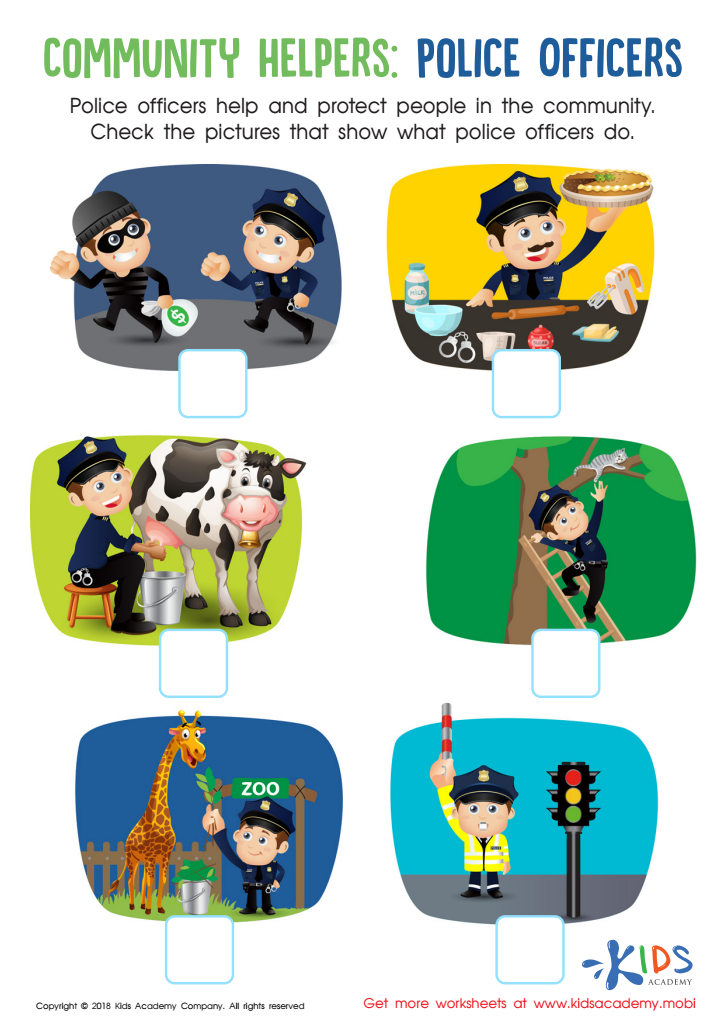
Police Officers Community Helpers Worksheet
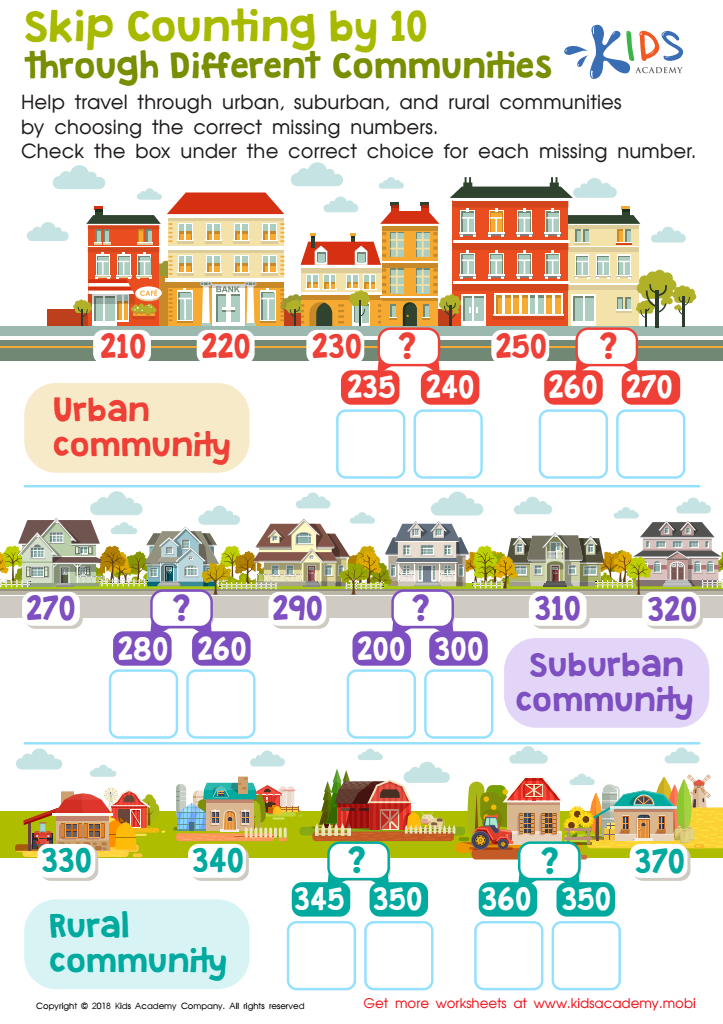
Skip Counting by 10 through Different Communities Worksheet
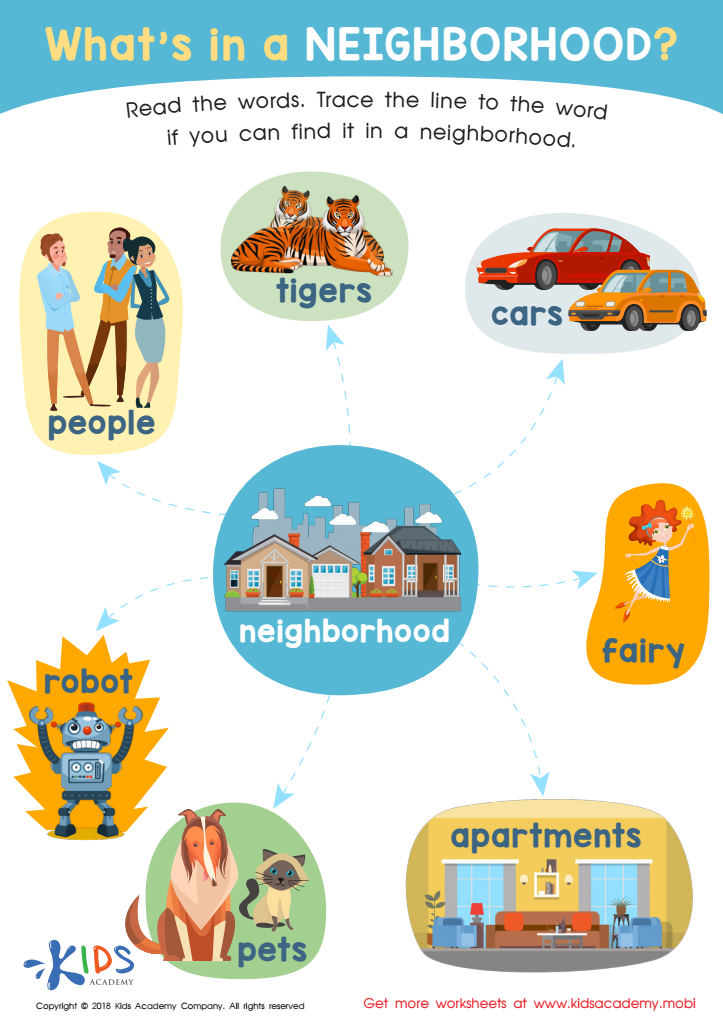
What's in a Neighborhood? Worksheet






Building vocabulary is crucial for young children aged 6-7 for several compelling reasons. At this developmental stage, children are beginning to read more independently and understand more complex sentences. A rich vocabulary directly enhances their reading comprehension abilities, helping them make sense of the stories and informational texts they encounter.
Additionally, a strong vocabulary aids in effective communication. Being able to articulate thoughts and emotions accurately allows children to express themselves clearly, helping to build their confidence and social skills. This is important not only within a classroom setting but also in their everyday interactions with peers and adults.
Robust vocabulary development also fosters a love for reading. When children understand a broader range of words, reading becomes a more enjoyable and less frustrating activity. This positive reinforcement encourages more frequent reading, further developing their language skills and academic performance across subjects.
Finally, having a comprehensive vocabulary sets the foundation for future learning. It’s much easier for children to acquire new concepts and information when they have the words to match. By investing time in building a child’s vocabulary at this age, parents and teachers are setting them up for long-term success in their educational journey and beyond.








