Community awareness Worksheets for Ages 6-7
5 filtered results
-
From - To
Our "Community Awareness Worksheets for Ages 6-7" are designed to foster a sense of understanding and responsibility in young learners. Engaging activities help children recognize the roles of community helpers, understand safety signs, and explore ways to be good citizens. Through interactive puzzles, coloring pages, and simple exercises, kids develop vital social skills while having fun. These worksheets aim to build a strong foundation of community awareness, promoting cooperation, empathy, and respect. Ideal for both classroom and home use, they offer a valuable resource for educators and parents committed to nurturing well-rounded, socially-conscious individuals.
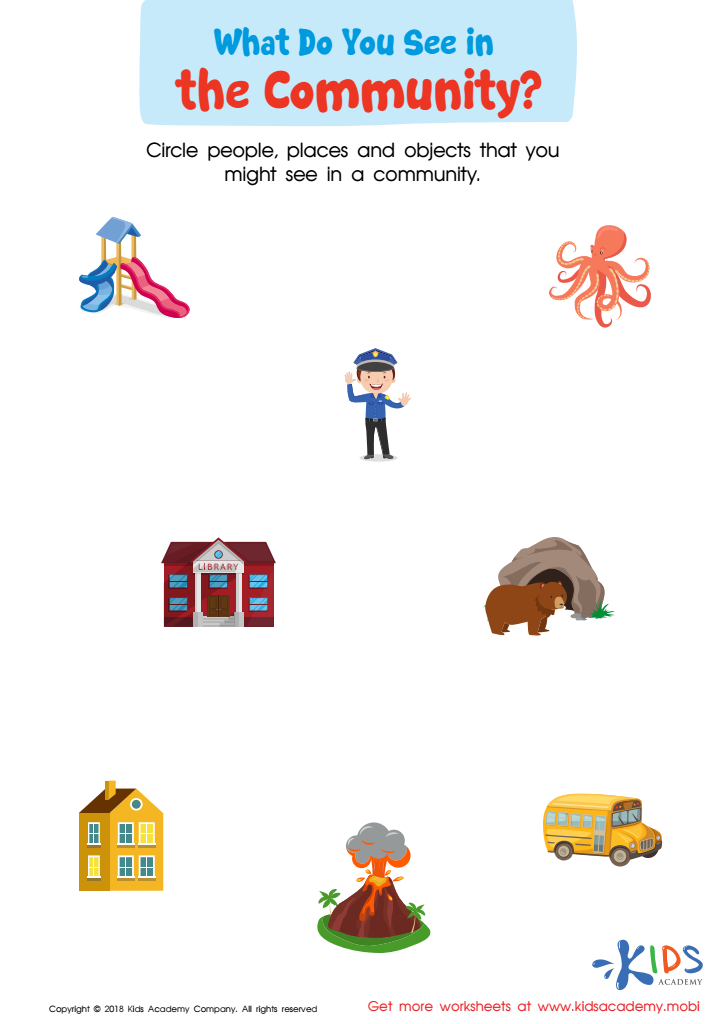
What Do You See in the Community Worksheet
 Assign to My Students
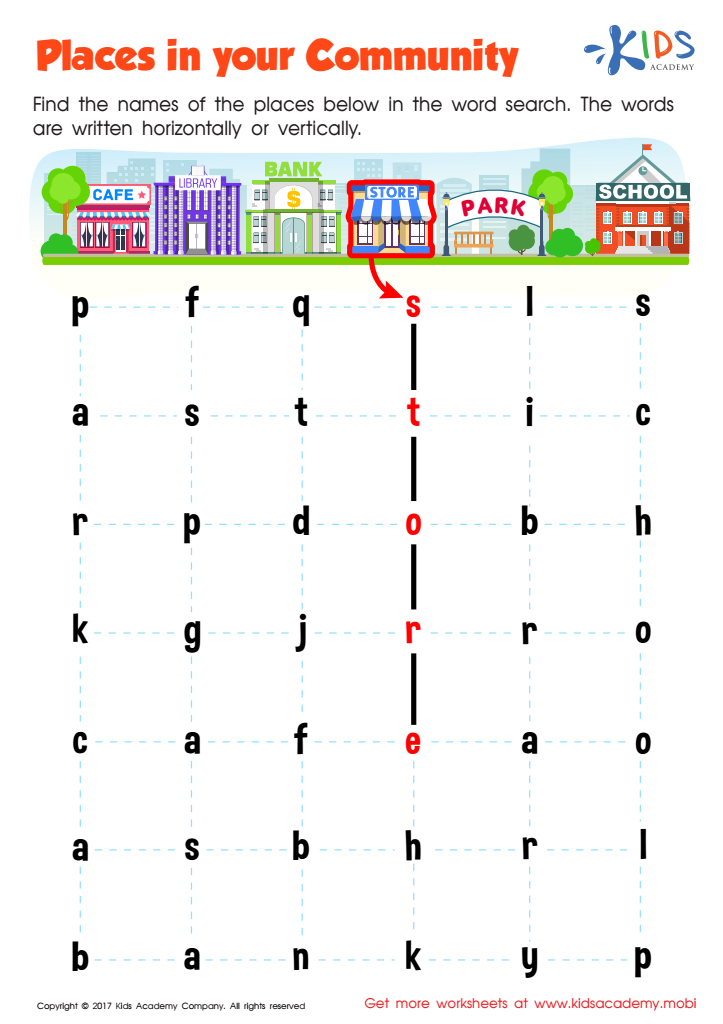
Places in Your Community Worksheet
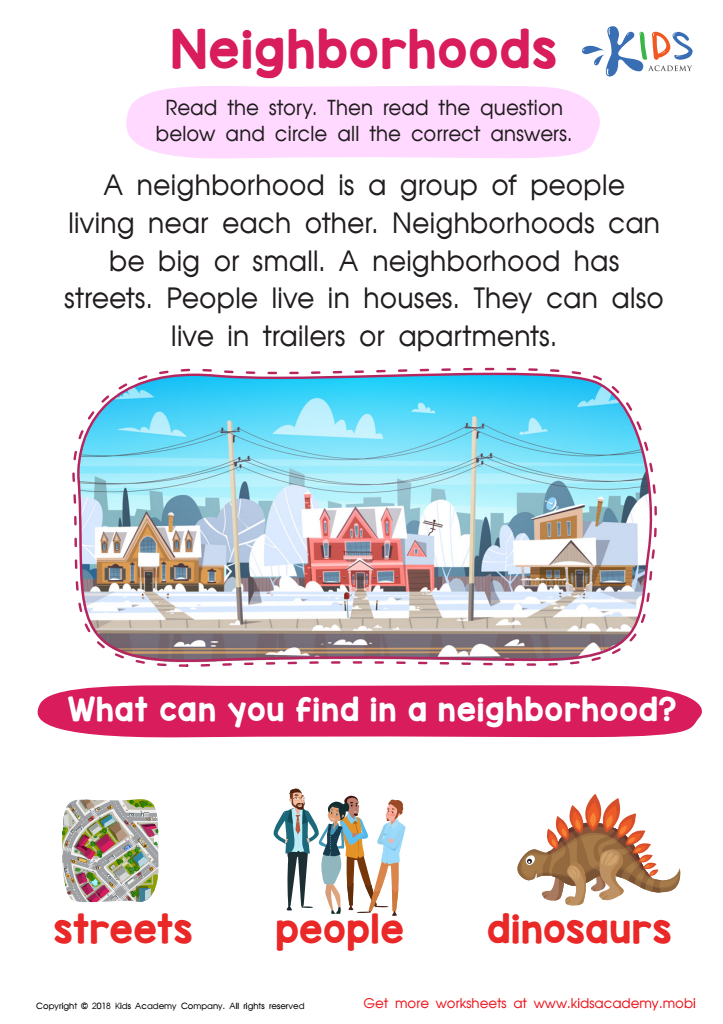
Neighborhoods Worksheet
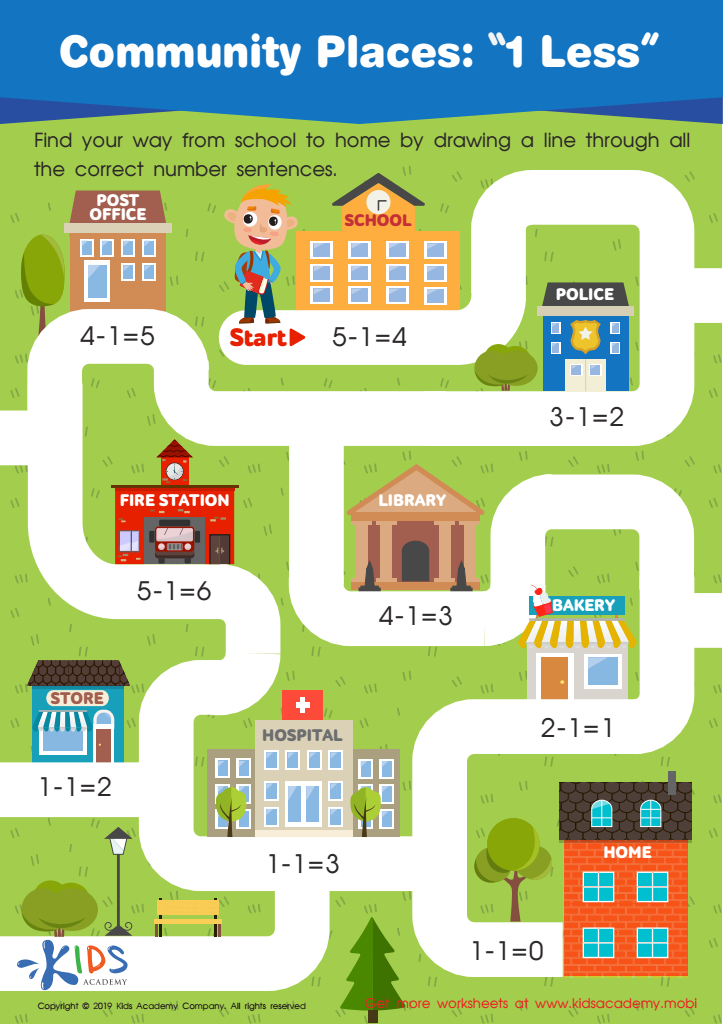
Community Places: 1 Less Worksheet
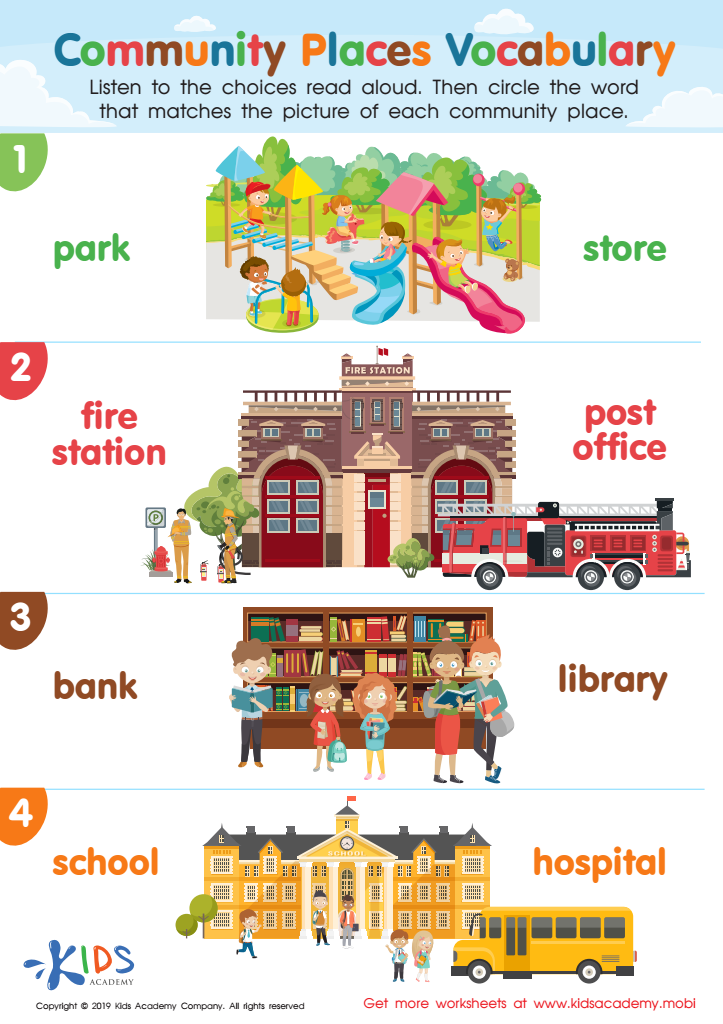
Community Places Vocabulary Worksheet



.jpg)



Community awareness is crucial for young children, especially those ages 6-7, because it fundamentally shapes their developmental journey and social understanding. At this age, kids are naturally curious and begin to recognize the world beyond their family unit. Teaching them about community awareness helps them understand their place in society and the importance of working collaboratively with others.
For parents, nurturing community awareness means instilling values like empathy, respect, and responsibility in their children. This understanding promotes social skills and emotional intelligence, which are essential for building healthy relationships. When kids appreciate their community, they are more likely to become active and compassionate citizens who contribute positively.
For teachers, incorporating community awareness into the curriculum enhances the learning experience by making it relevant and engaging. It provides context for academic subjects, bringing lessons to life through real-world examples. Activities such as local field trips, community projects, and storytelling can make learning dynamic and practical, helping children grasp abstract concepts more concretely.
Moreover, fostering community awareness tackles broader social issues by encouraging inclusivity and diversity. Children learn to celebrate differences and practice kindness. Early exposure to these concepts not only builds a better future for individuals but also helps create a more cohesive and compassionate society.








