
Comparing object weights Worksheets for Ages 6-7
3 filtered results
Difficulty Level
Grade
Age
-
From - To
Subject
Activity
Standards
Looking to make learning fun and educational? Our Comparing Object Weights Worksheets for Ages 6-7 provide young learners with a hands-on approach to understanding weights and measurements. Through engaging and interactive exercises, children will compare different objects and explore concepts of heavier, lighter, and equal weight. These printable worksheets are designed to enhance critical thinking and early math skills in a playful manner. Perfect for classroom use or at-home learning, these activities ensure children grasp foundational measurement concepts while enjoying the process. Help your child develop essential skills with our easy-to-use and educational worksheets.
Favorites
With answer key
Interactive
 Assign to My Students
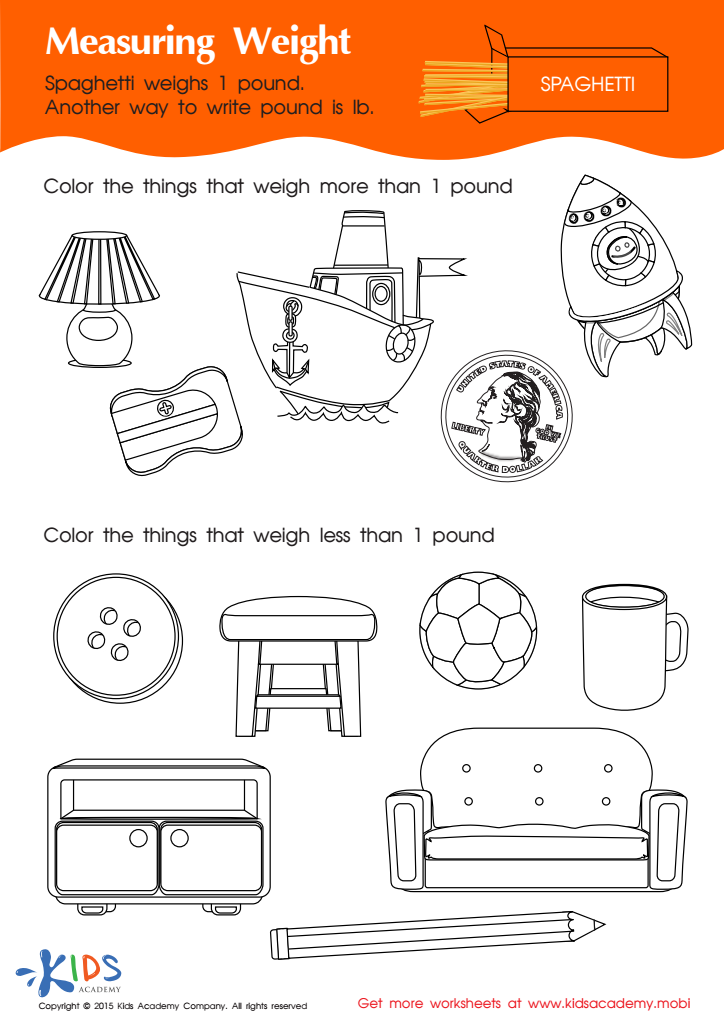
Measurement: Measuring Weight in Pounds 1 Worksheet
Worksheet
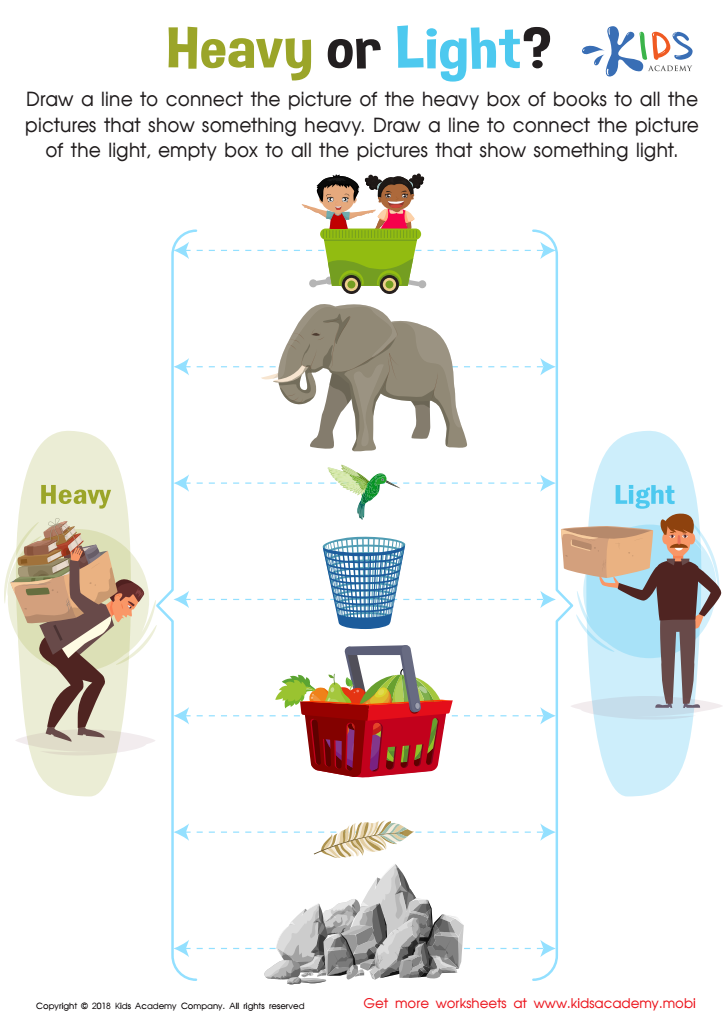
Heavy or Light? Worksheet
Kids can struggle to understand weight comparison, as size and mass matter. This free PDF helps develop fine-motor and hand-eye skills as kids trace lines to match pictures. The familiar pictures create concrete representations, ideal for learning more complex concepts.
Heavy or Light? Worksheet
Worksheet
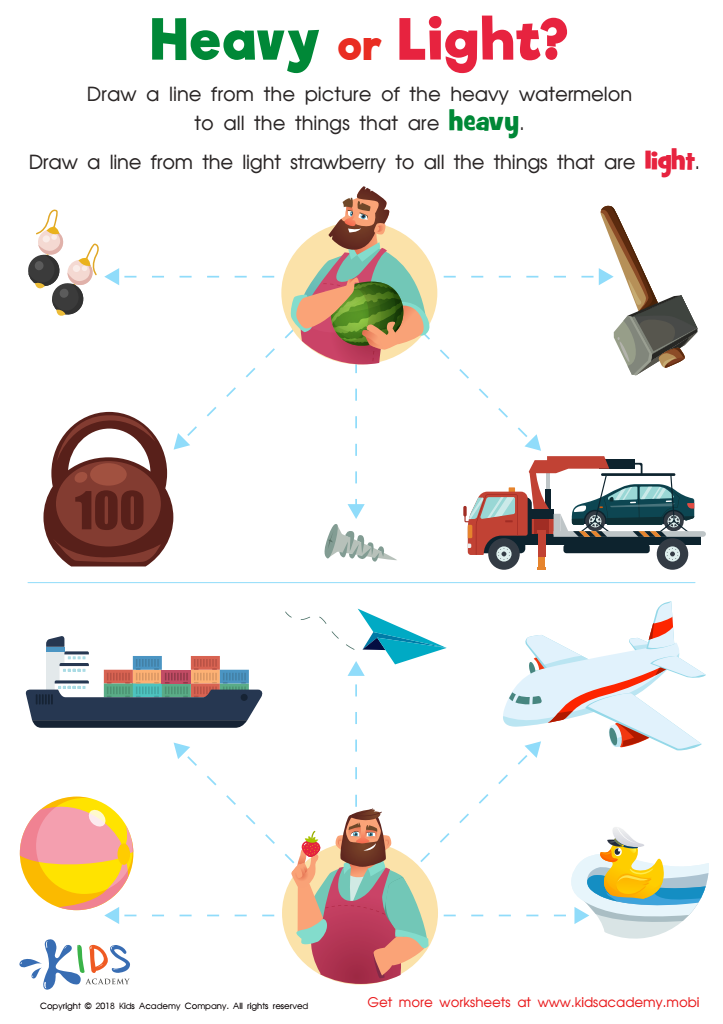
Heavy or Light? Worksheet
This fun, free worksheet helps kids build measurement skills and reinforce concepts of 'heavy' and 'light', while also improving their fine motor skills. Kids use traceable lines to connect the gentleman to objects they know, giving them a strong foundation for understanding weight.
Heavy or Light? Worksheet
Worksheet
Join Kids Academy for Free
Who is primarily going to use this learning content?





Comparing object weights for children aged 6-7 is crucial in their development for several reasons. Firstly, it builds a foundational understanding of measurement, a key concept in math and science. Engaging in hands-on activities helps young learners grasp abstract ideas through concrete experiences, fostering a deeper comprehension. When children compare weights, they are exercising their ability to observe, hypothesize, and analyze, which enhances cognitive development and critical thinking skills.
Secondly, the activity promotes language development and vocabulary expansion. Terms such as "heavier," "lighter," "balance," and "scale" become integrated into their daily language, enabling them to communicate more precisely. This practical application of new words supports literacy growth.
Furthermore, these comparison activities are often collaborative, involving peer interaction which helps in cultivating social skills. Children learn to share, take turns, and discuss their observations, facilitating teamwork and communication.
Lastly, understanding weights and measurements has practical implications. It bridges math and real-life situations, explaining common tasks like cooking or packing. Early exposure to these concepts encourages children to develop problem-solving skills and apply math in day-to-day contexts. Therefore, caregivers' focus on comparing object weights nurtures holistic educational growth and essential life skills in young learners.








