
Comparing objects Worksheets for Ages 6-7
8 filtered results
Difficulty Level
Grade
Age
-
From - To
Subject
Activity
Standards
Enhance your child's early math skills with our Comparing Objects Worksheets for Ages 6-7. Specially designed for first graders, these engaging worksheets focus on fundamental concepts such as comparing size, length, weight, and volume. Through fun and interactive activities, children learn to observe, analyze, and describe objects, promoting critical thinking and precision. Perfect for classroom use or at-home practice, these worksheets support the development of essential skills in an enjoyable and effective way. Boost your child's confidence and mastery in math with Kids Academy's thoughtfully crafted resources. Download today and start learning!
Favorites
With answer key
Interactive
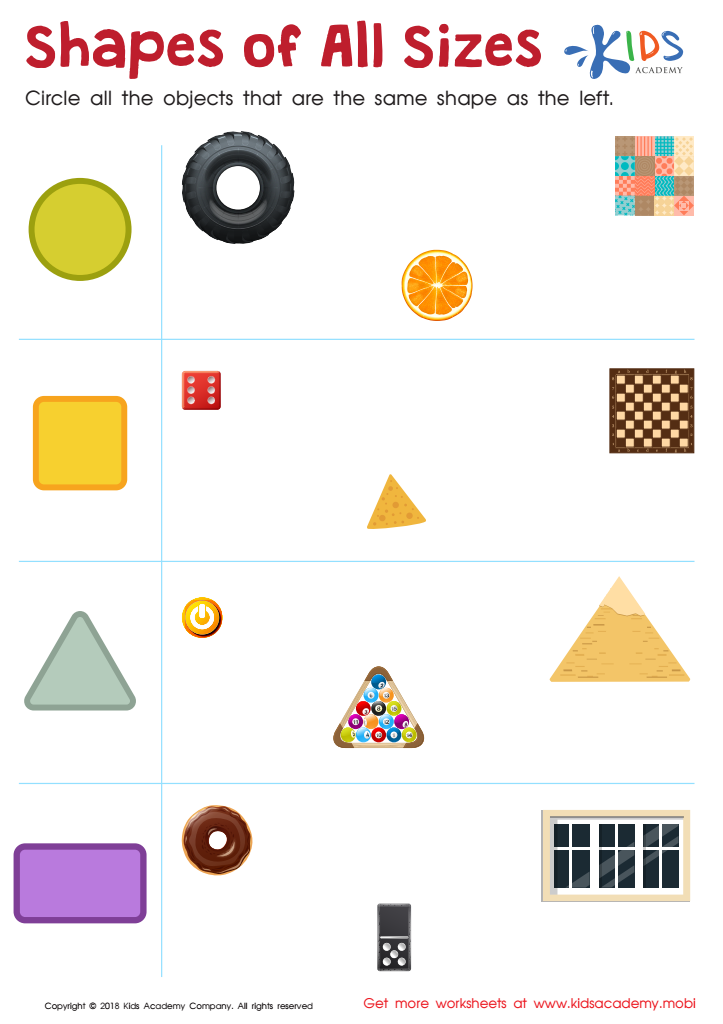
Shapes of All Sizes Worksheet
Students will have fun comparing basic shapes to familiar objects with this worksheet. It's an excellent way to help them recognize similarities in geometric shapes, building strong foundations for understanding congruence and similarity.
 Assign to My Students
Shapes of All Sizes Worksheet
Worksheet
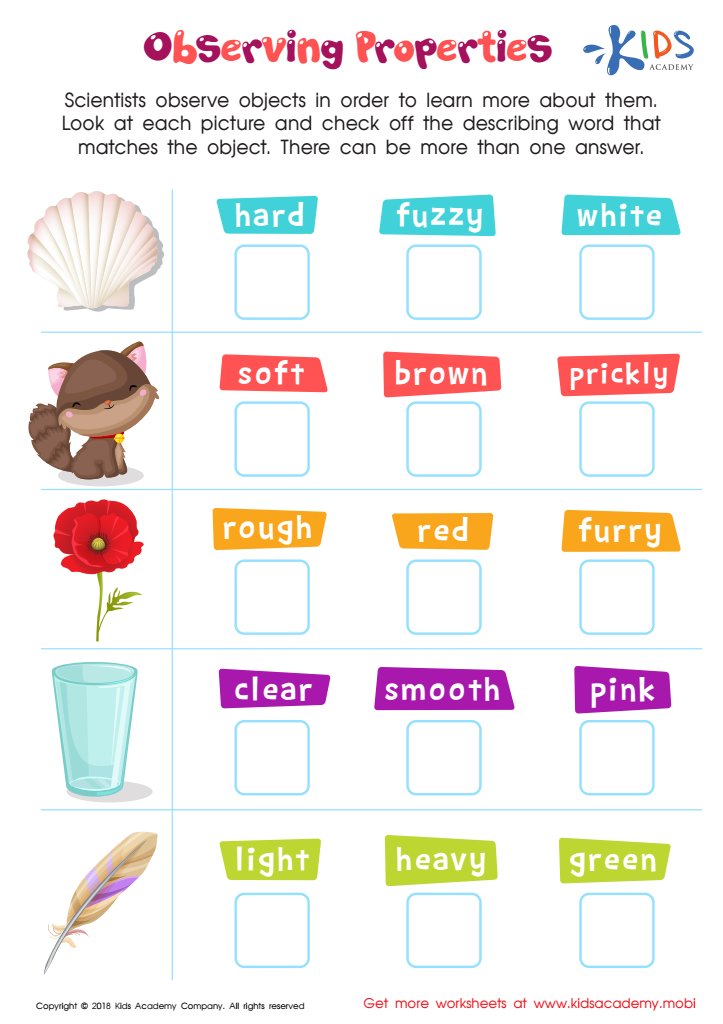
Observing Properties Worksheet
Encourage your kid's interest in science with this fun worksheet! Let them identify the five objects on the left, then choose the most accurate word from the options on the right. There might be more than one answer, so remind them to take their time observing the objects.
Observing Properties Worksheet
Worksheet
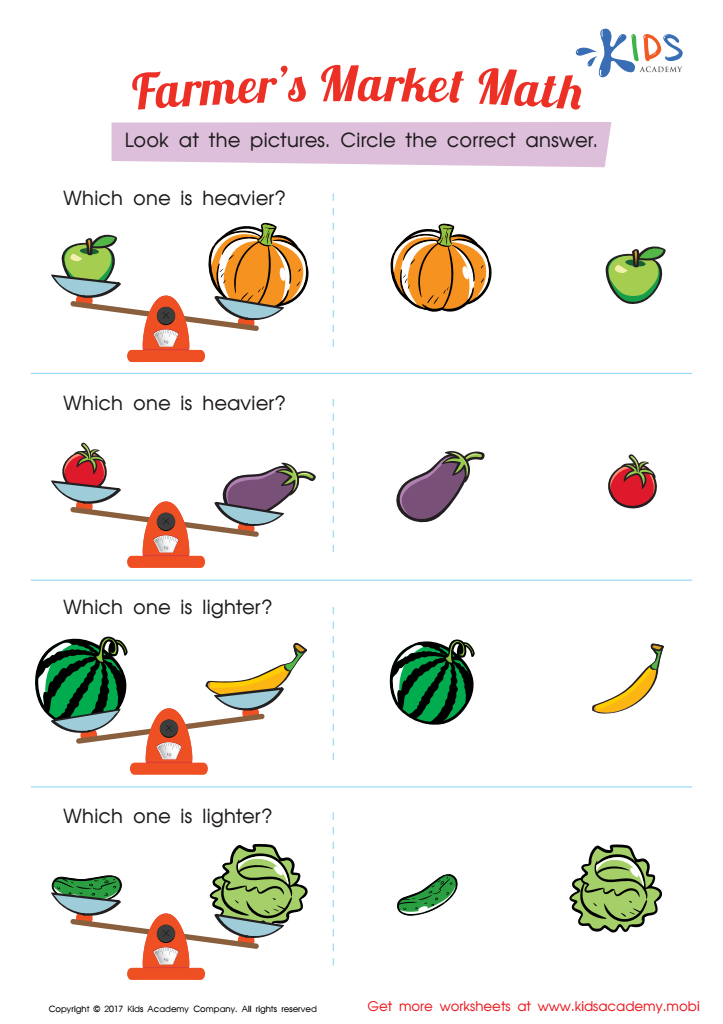
Which One Is Heavier Worksheet
Kindergartners can learn weight easily with this worksheet, featuring images of familiar fruits and veggies. Comparing which one is heavier helps them understand the concept better.
Which One Is Heavier Worksheet
Worksheet
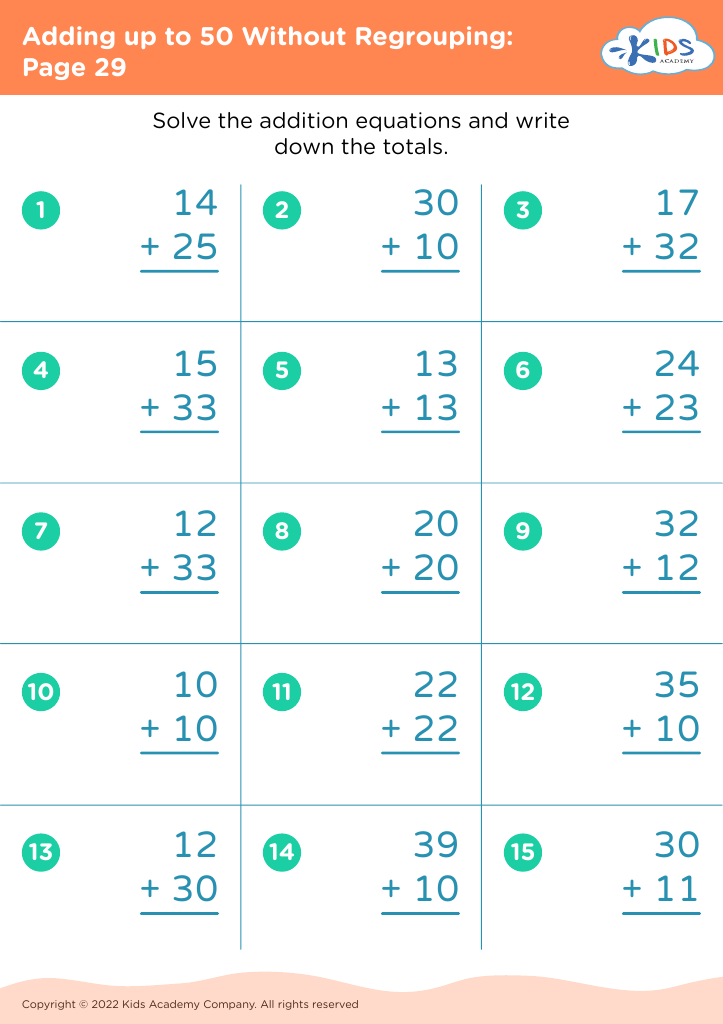
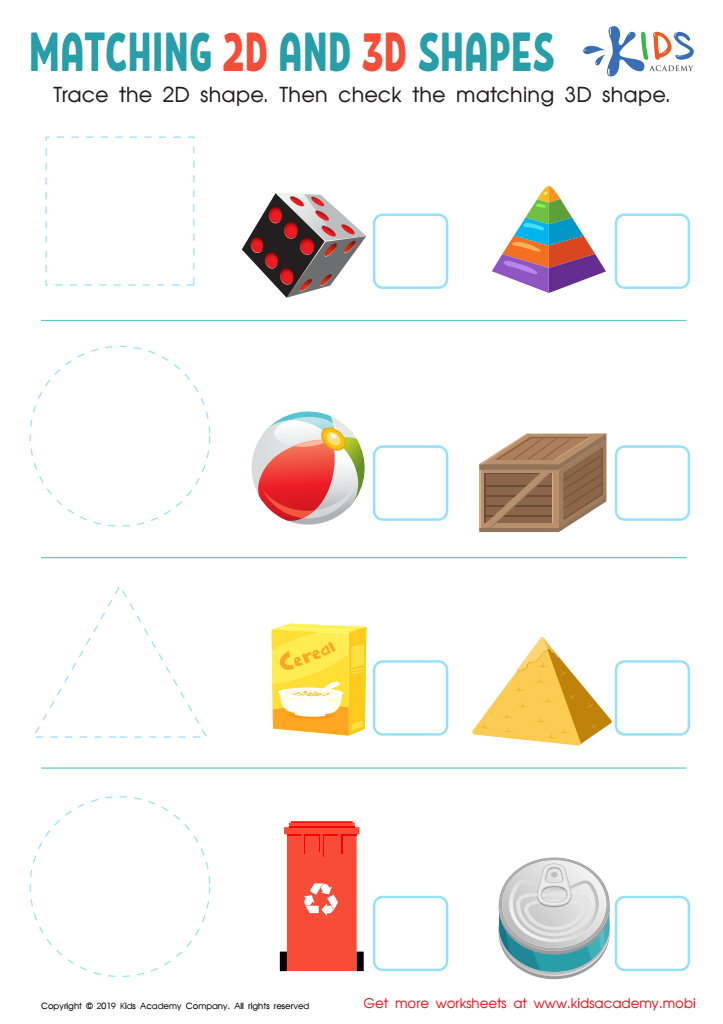
Matching 2D and 3D Shapes Worksheet
Before starting this worksheet, ask your kids what shapes they know and point out the 2D and 3D shapes on it. Help your kids trace the 2D shapes and then match them to the 3D versions. It'll be a fun new world for your kids to explore!
Matching 2D and 3D Shapes Worksheet
Worksheet
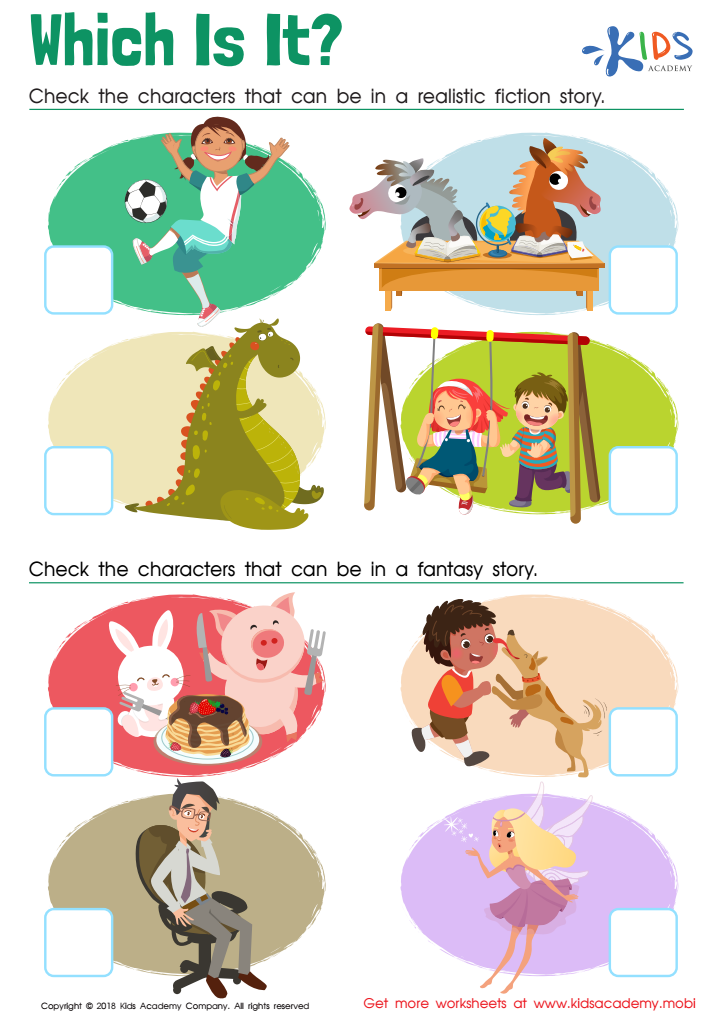
Which Is It? Worksheet
This colorful worksheet helps young readers identify elements of fact and fiction using fun picture clues. They can check off characters who exist in realistic fiction stories, which makes learning the difference between the two genres fun and engaging.
Which Is It? Worksheet
Worksheet
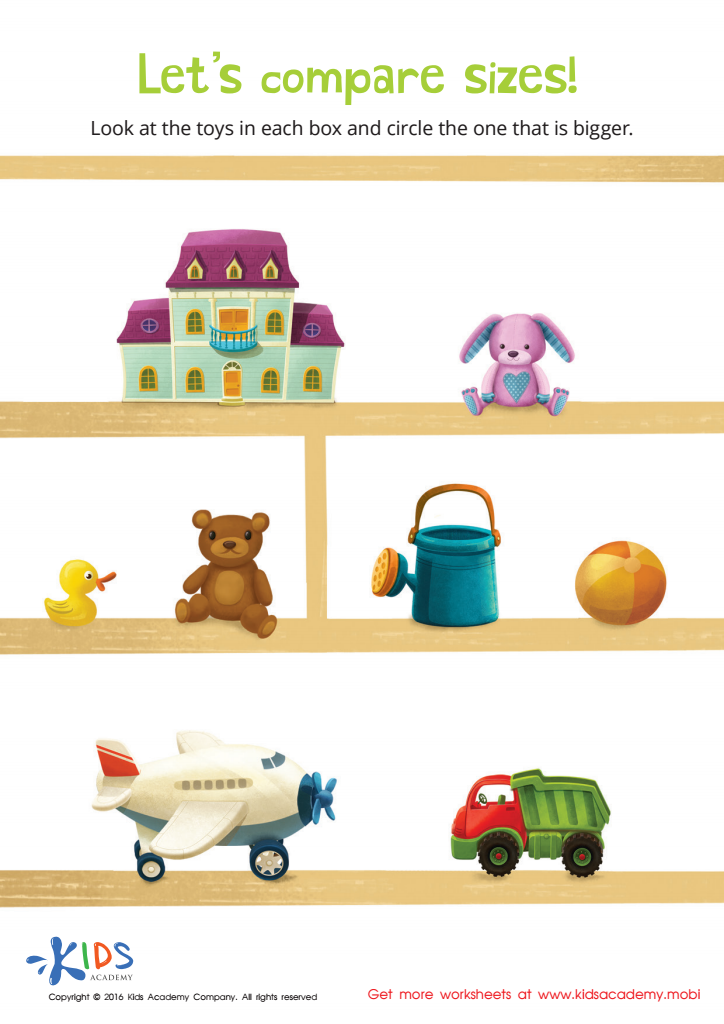
Classifying by Size Sorting Worksheet
Help your preschooler recognize differences in size using this fun worksheet! Your child will engage in important spatial recognition and problem-solving skills while talking with you about objects that can be small or large. Enjoy the vibrant pictures together!
Classifying by Size Sorting Worksheet
Worksheet
Join Kids Academy for Free
Who is primarily going to use this learning content?


.jpg)


%20(1).jpg)
Comparing objects is a fundamental skill for children aged 6-7, serving as a cornerstone for their cognitive development. Parents and teachers should value this practice as it nurtures critical thinking and problem-solving abilities. When children compare objects, they engage in observations and analytical processes by evaluating similarities and differences. This not only bolsters their understanding of basic concepts such as size, shape, and quantity but also aids in developing essential mathematical skills.
For instance, understanding which object is longer, shorter, heavier, or lighter lays the groundwork for future learning in areas such as measurement and arithmetic operations. This analytical skill also has broader applications; it enhances language development by expanding vocabulary—for example, using terms like "bigger," "smaller," "equal," etc., thereby promoting effective communication.
Moreover, comparing objects indirectly encourages curiosity and exploration, as children learn to ask questions and seek answers through hands-on interaction. This active learning process is crucial in fostering a growth mindset and a love for learning. Additionally, equipping children with these skills early on can improve their readiness for more complex concepts in higher grades.
In summary, focusing on comparing objects with children aged 6-7 is a vital educational approach that supports their overall intellectual growth, laying a strong foundation for future academic success.








