History knowledge Worksheets for Ages 6-7
4 filtered results
-
From - To
Discover engaging History Knowledge Worksheets designed specifically for ages 6-7! These interactive, printable worksheets from Kids Academy integrate fun activities to spark children's interest in history. Perfect for first and second graders, the worksheets cover essential historical topics, helping kids develop critical thinking skills while learning about significant events and figures. With colorful illustrations and age-appropriate content, these resources make history both educational and enjoyable. Enhance your child's understanding of the past, foster a love for learning, and support classroom learning or homeschool activities with our expertly crafted worksheets. Start your historical adventure today!
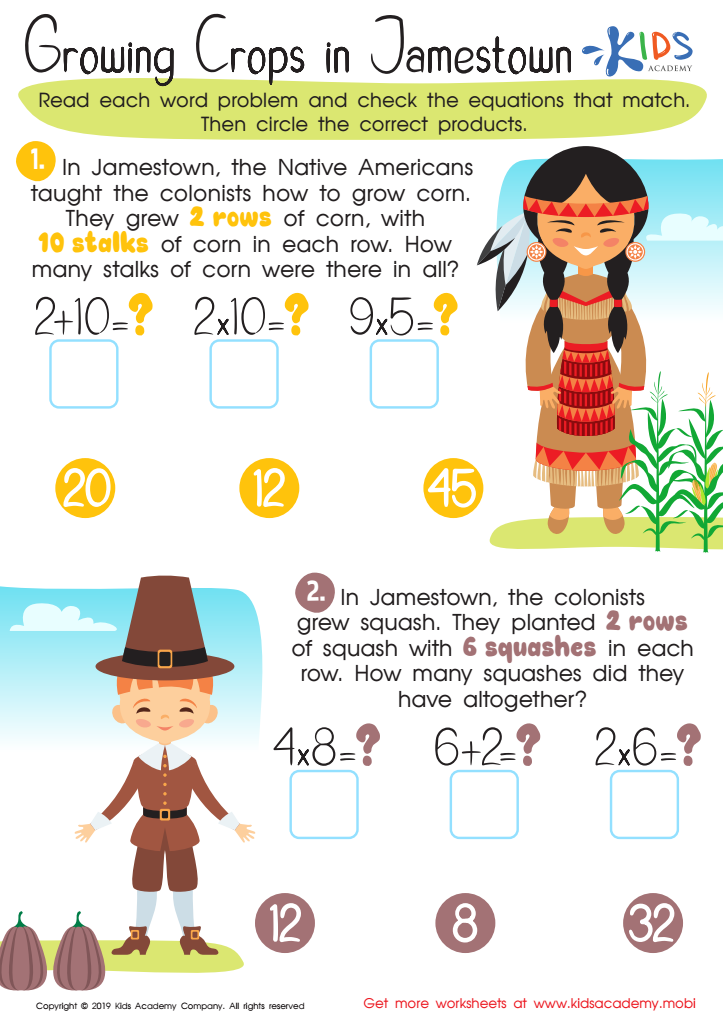
Growing Jamestown Worksheet
 Assign to My Students







Understanding history is crucial for young children, and parents and teachers should prioritize this for several reasons. First, history helps children develop an understanding of their own identity and cultural heritage. By learning about past events, significant figures, and cultural traditions, children begin to grasp a sense of belonging and self-awareness.
Second, history education fosters critical thinking and analytical skills. Engaging with stories from the past encourages children to ask questions, make connections, and understand cause-and-effect relationships. This foundational thinking skill is relevant across various subjects and in real-life problem-solving.
Third, history builds empathy and awareness of diversity. Learning about different people, places, and cultures in a historical context helps children appreciate and respect diverse perspectives and experiences. Realizing that people lived different lives at different times enhances emotional intelligence and social understanding.
Lastly, early exposure to history can spark curiosity and a love for learning. Intriguing stories of explorers, inventors, and ordinary people making choices in extraordinary times can ignite a passion for knowledge and discovery in young minds.
Incorporating history into education for ages 6-7 contributes to the holistic development of children, equipping them with essential skills, fostering empathy, and nurturing a lifelong interest in learning.








