
Improve problem-solving skills Worksheets for Ages 6-7
8 filtered results
Difficulty Level
Grade
Age
-
From - To
Subject
Activity
Standards
Boost your child’s cognitive abilities with our "Improve Problem-Solving Skills Worksheets" designed for ages 6-7. Our engaging and interactive worksheets promote critical thinking through fun exercises that enhance reasoning skills and encourage creative solutions. From puzzles to logic games, each activity is crafted to challenge young minds while maintaining their interest. Perfect for both classroom use and at-home learning, these worksheets support children in developing essential problem-solving strategies in a playful manner. Watch as your child gains confidence and mastery in tackling challenges with these educational tools tailored specifically for early learners. Start exploring today!
Favorites
With answer key
Interactive
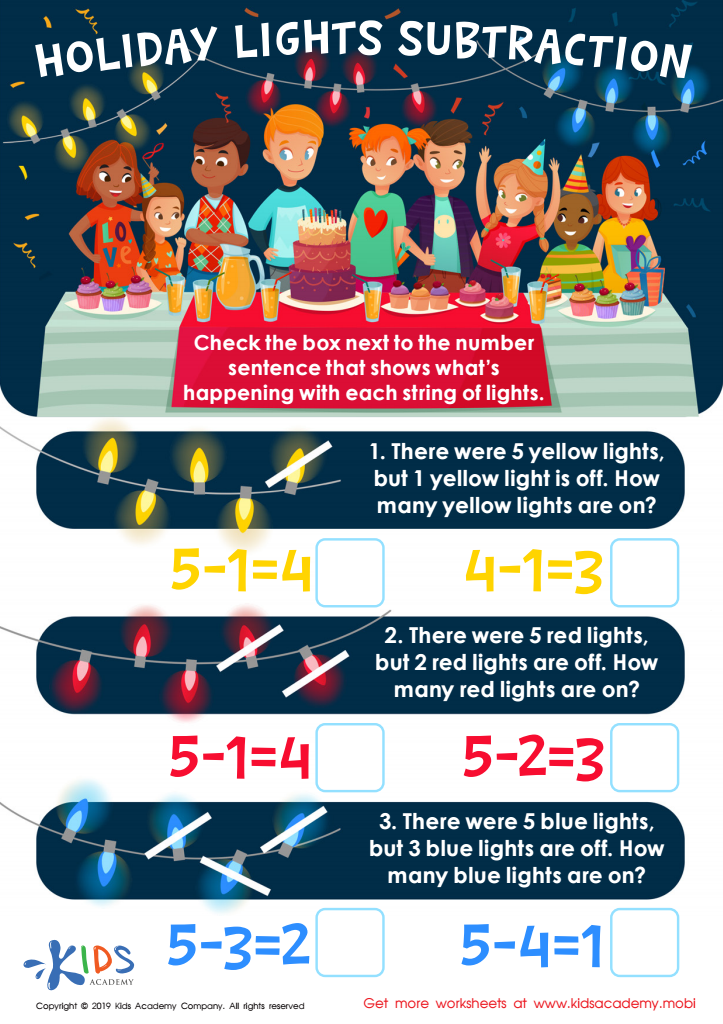
Holiday Lights Subtraction Worksheet
Before tackling the math problem, get your kids ready by asking them to share their favorite holiday and why. Then, look at the picture on the worksheet with them. Help them examine the numbers and problems, and select the number sentence that shows what's happening with each string of light. 80 words.
 Assign to My Students
Holiday Lights Subtraction Worksheet
Worksheet
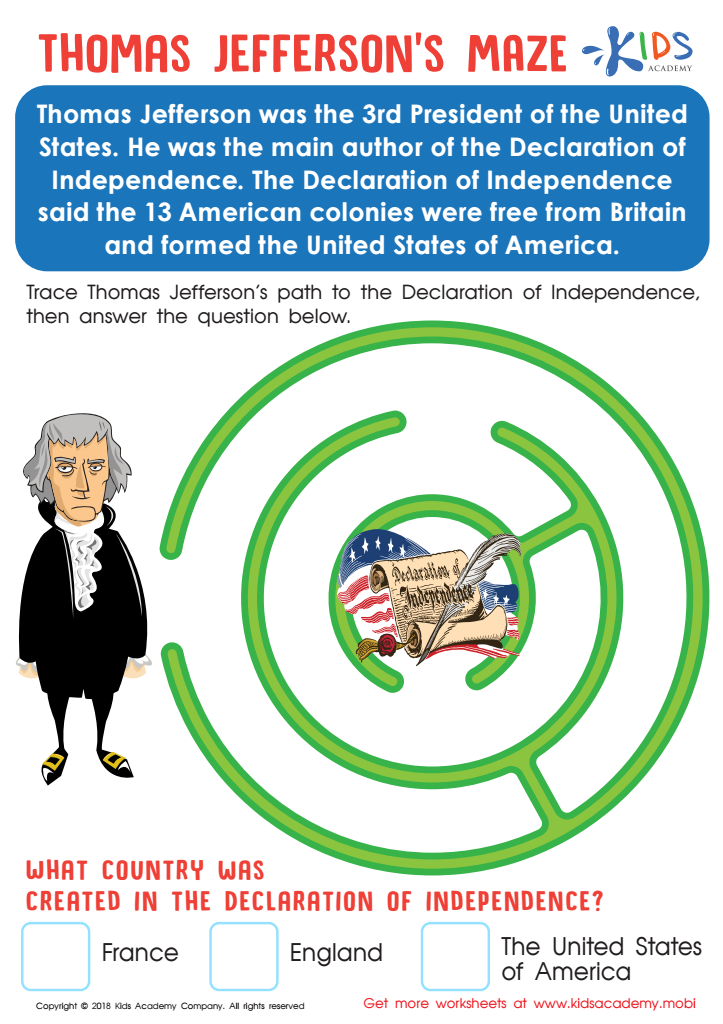
Thomas Jefferson's Maze Worksheet
Do your students know who Thomas Jefferson was? He was the 3rd US president and wrote the Declaration of Independence, setting the 13 Original Colonies free from British rule. This momentous act shaped American history and helped build the nation we know today.
Thomas Jefferson's Maze Worksheet
Worksheet
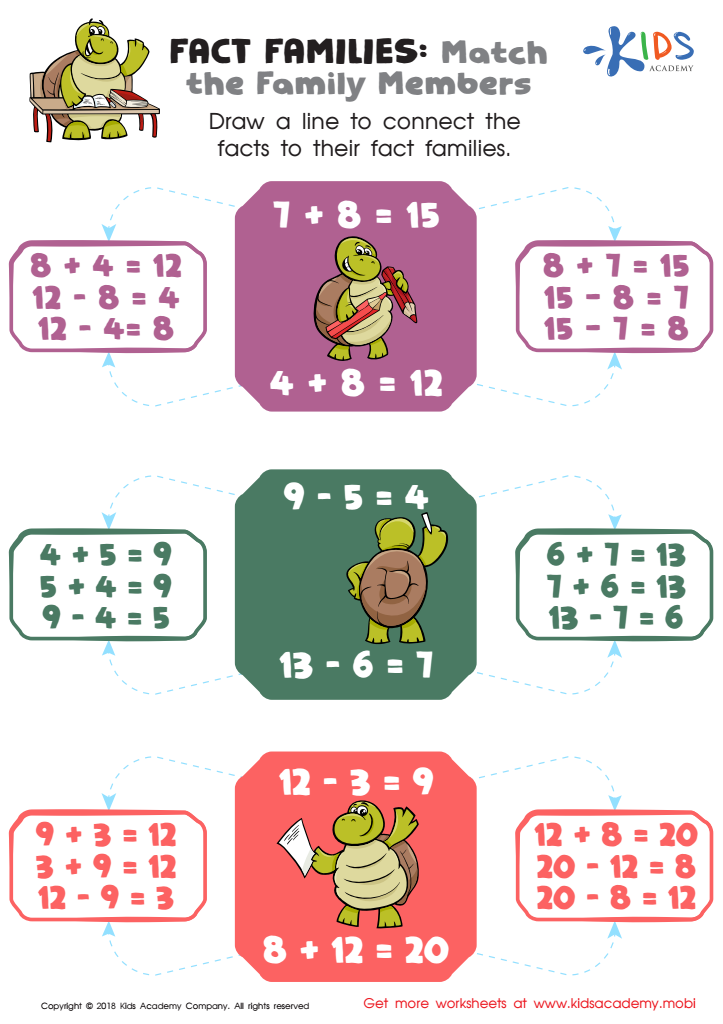
Fact Families: Match Family Members Worksheet
Give your kids a hand at solving this math pdf! Have them figure out the missing numbers and then draw lines to connect the correct fact families. This worksheet will help your students practice addition skills while aiding the turtle in the picture. Let's get those brains working!
Fact Families: Match Family Members Worksheet
Worksheet

Developing Solution Worksheet
Facing a challenge? Boost your child's problem-solving skills with this science worksheet from Kids Academy! Kerry is eating an ice cream cone and it's melting too fast. Read through the suggested solutions and help your child pick the best one! With this activity, your child will understand the cause of the problem and learn to act accordingly.
Developing Solution Worksheet
Worksheet
Join Kids Academy for Free
Who is primarily going to use this learning content?








Improving problem-solving skills in children aged 6-7 is crucial for their cognitive and emotional development. At this age, children are naturally curious and eager to explore the world around them. Fostering problem-solving skills helps them learn to approach challenges confidently and independently. When parents and teachers emphasize these skills, they equip children with strategies to navigate obstacles, whether in academics or social situations.
Developing problem-solving skills cultivates critical thinking, creativity, and resilience. Children learn to analyze situations, identify possible solutions, and evaluate outcomes, paving the way for sound decision-making throughout their lives. This early foundation supports their ability to tackle academic tasks, from math puzzles to reading comprehension, enhancing overall learning experiences.
Additionally, problem-solving fosters emotional intelligence. When children face challenges, they learn to manage frustration and disappointment, building perseverance. This skill is essential for their social interactions, helping them resolve conflicts with peers and understand different perspectives.
Finally, strengthening problem-solving abilities aligns with essential educational standards and life skills. By prioritizing this developmental aspect, parents and teachers contribute significantly to children's lifelong success and well-being, preparing them for an ever-changing world full of challenges and opportunities.








