Lowercase identification Worksheets for Ages 6-7
5 filtered results
-
From - To
Enhance your child's literacy skills with our Lowercase Identification Worksheets designed for ages 6-7. These engaging and interactive worksheets help young learners recognize and distinguish lowercase letters, a fundamental step in reading and writing. Each worksheet features colorful illustrations and fun activities that make learning enjoyable. From matching letters to tracing and filling in blank spaces, your child will develop confidence in their writing abilities. Perfect for use at home or in the classroom, these worksheets provide an excellent resource for teachers and parents looking to support their child’s early literacy journey. Download and inspire learning today!
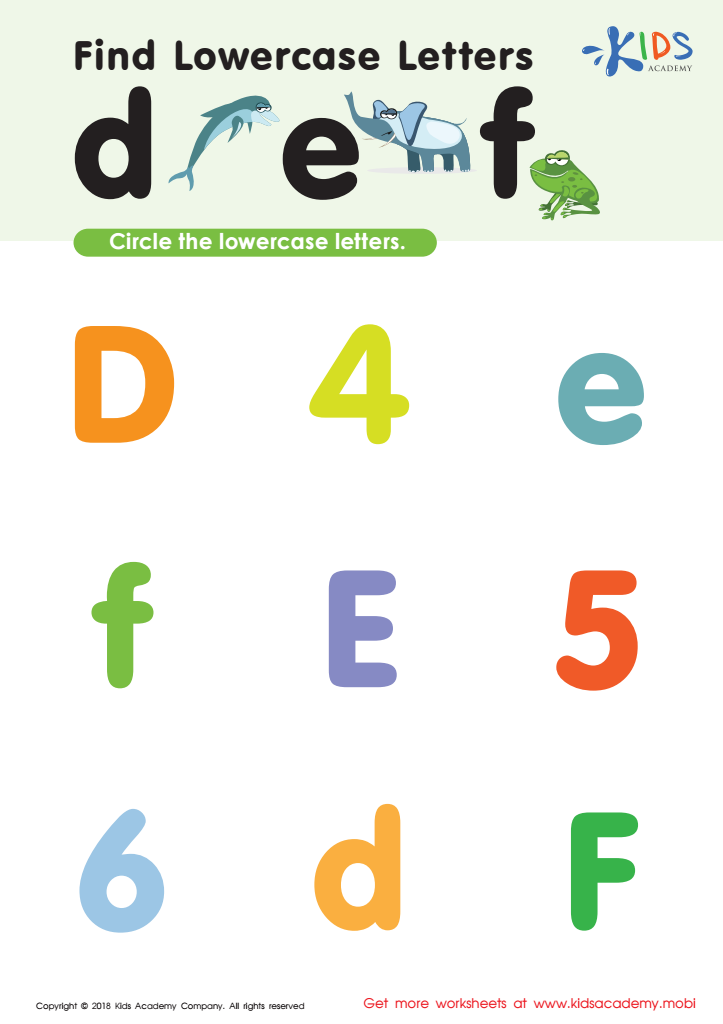
Find Lowercase Letters d e f Worksheet
 Assign to My Students
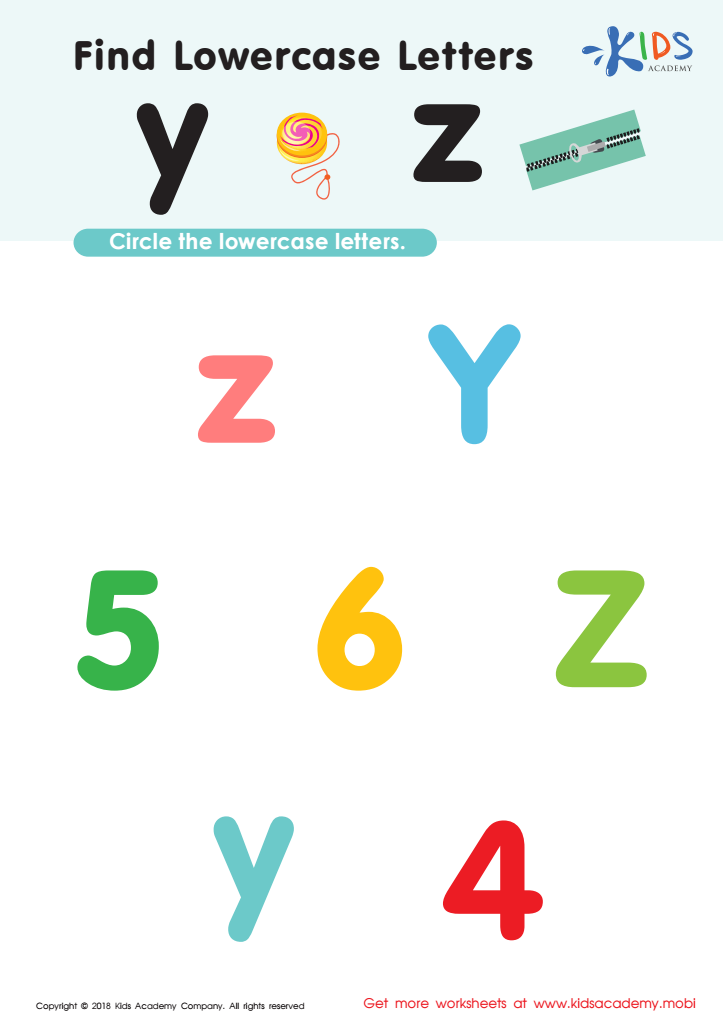
Find Lowercase Letters y z Worksheet
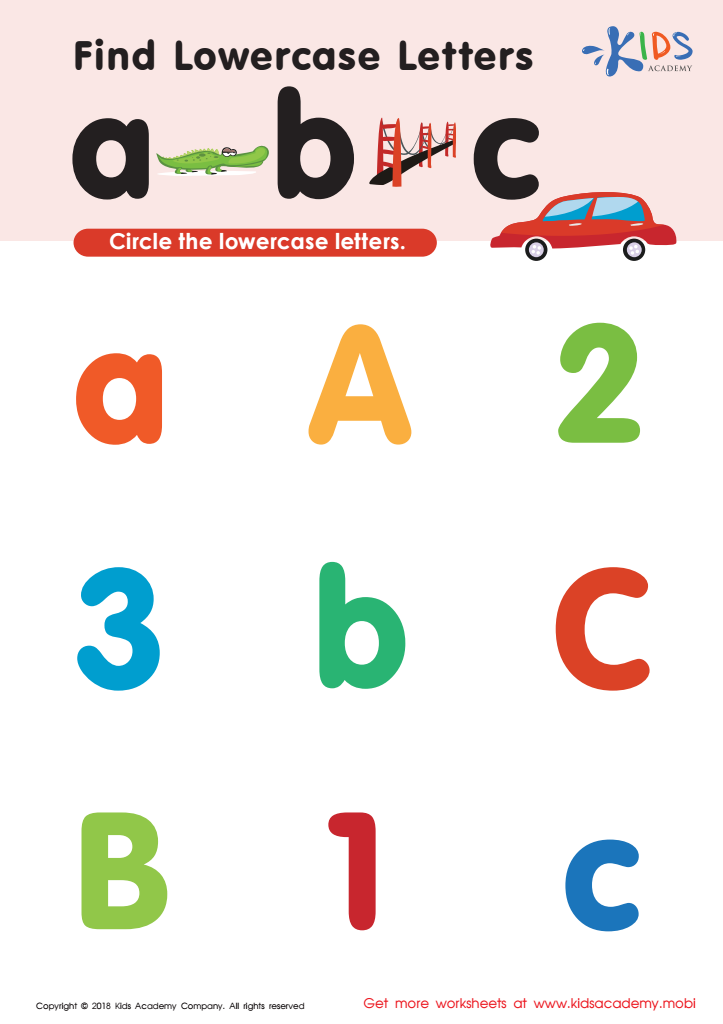
Find lowercase letters a b c Worksheet
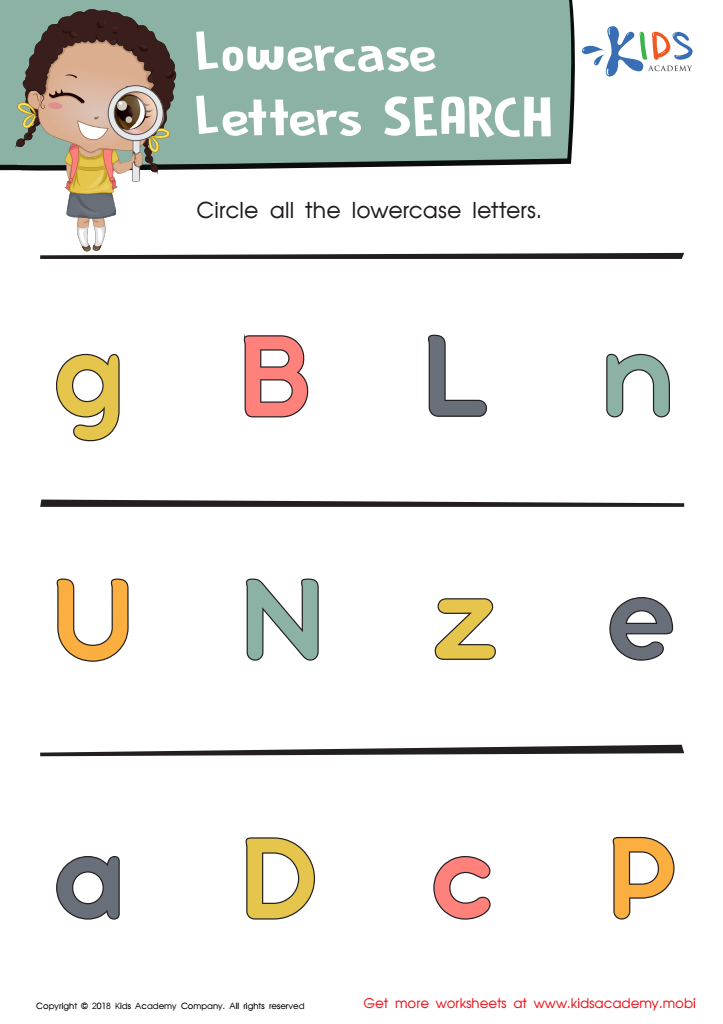
Lowercase Letters Search: Assessment Worksheet
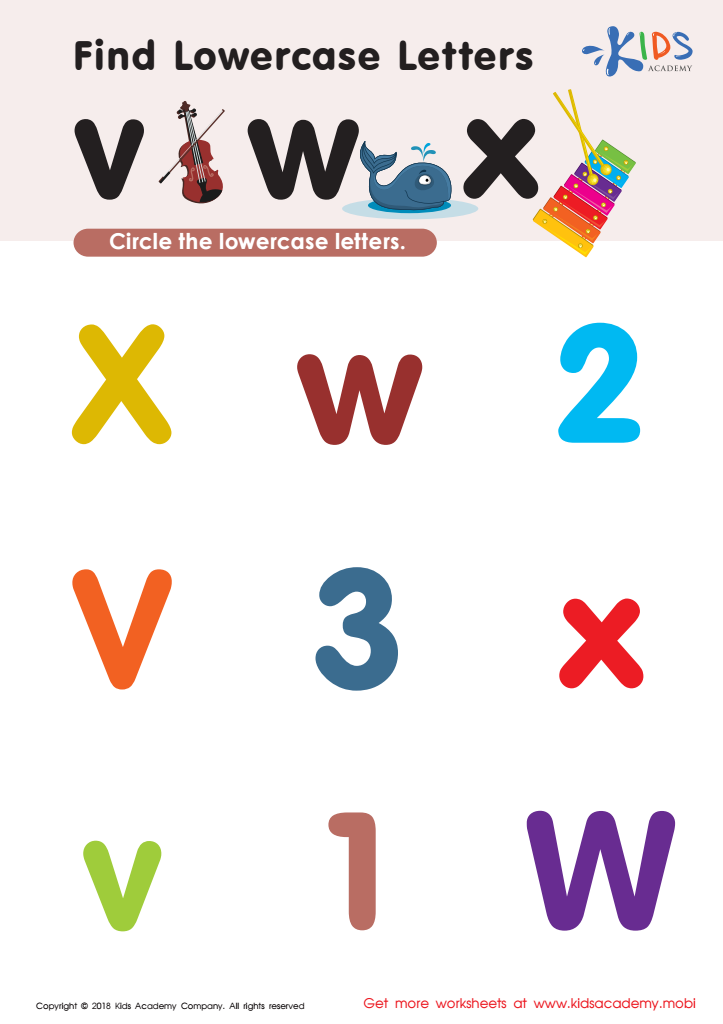
Find Lowercase Letters v w x Worksheet




.jpg)



Lowercase letter identification is crucial for children aged 6-7 as it forms the foundation of reading and writing skills. At this age, students transition from learning to read to reading to learn, making their familiarity with lowercase letters essential. Unlike uppercase letters, which are often more visually distinguishable, lowercase letters present varied shapes and sizes that can be confusing for early readers.
Understanding lowercase letters enhances phonemic awareness, vital in recognizing sounds associated with each letter. This skill enables children to decode words more effectively, setting them up for successful literacy development. Furthermore, their ability to write and communicate depend significantly on their lowercase letter recognition skills, as most writing tasks utilize lowercase letters more frequently than uppercase.
Parents and teachers play a crucial role in supporting this learning process. Engaging in activities such as reading together, identifying lowercase letters in everyday contexts, and utilizing games can reinforce these skills. By prioritizing lowercase letter identification, they help build confident readers and writers, equipping children with the fundamental tools necessary for academic success and a love for learning. Fostering these skills at an early age ensures that children develop a solid literacy foundation that will benefit them throughout their educational journey.








