




.jpg)

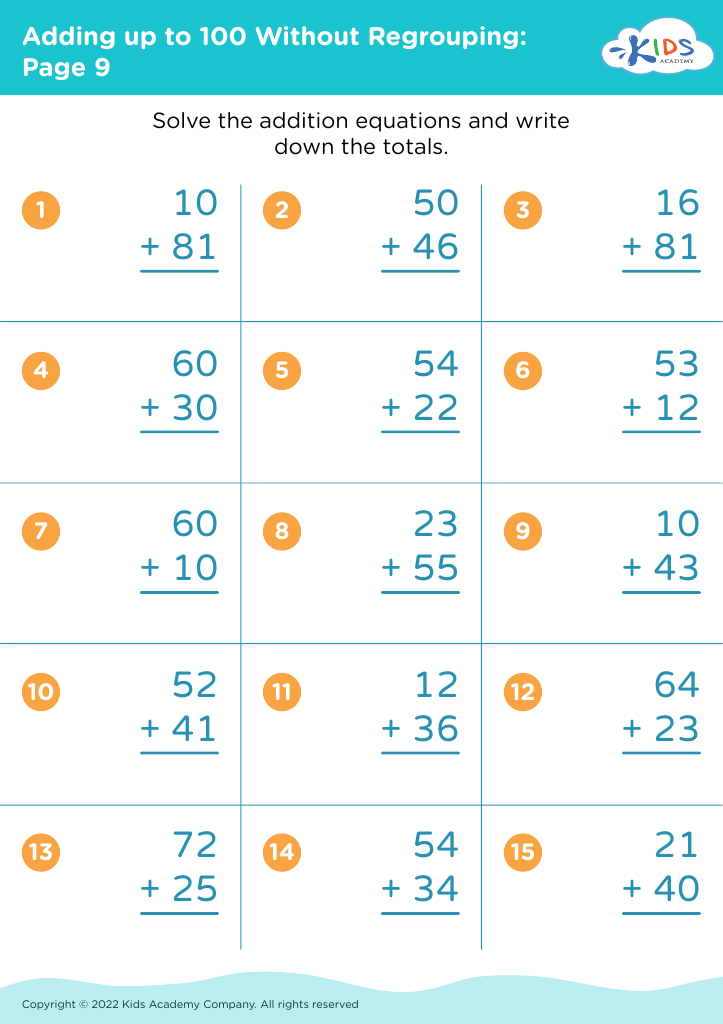
Mathematical reasoning is crucial for children aged 6-7, as it lays the foundation for their future understanding of mathematics and problem-solving skills. During these formative years, children transition from concrete manipulation of numbers to conceptual thinking. This age group is experimenting with basic addition, subtraction, and beginning to grasp more complex ideas like patterns and relationships.
Parents and teachers should care about fostering mathematical reasoning because it nurtures critical thinking, enabling children to approach problems logically and creatively. This skill promotes not just academic success but also enhances life skills, teaching children how to analyze situations, make informed decisions, and solve real-world problems.
Furthermore, developing mathematical reasoning early can boost a child's confidence and interest in math, countering the common misconception that math is only for certain "talented" individuals. By encouraging curiosity and exploration in mathematics, adults can help reduce anxiety around the subject and promote a positive attitude toward learning.
Ultimately, strong mathematical reasoning skills contribute to academic achievement, better performance in higher-level math, and prepare children to tackle future challenges in a world increasingly driven by data and technology. Therefore, prioritizing mathematical reasoning in early education is essential for nurturing well-rounded, capable individuals.








