Number Recognition Worksheets for Ages 6-7 - Page 20
460 filtered results
-
From - To
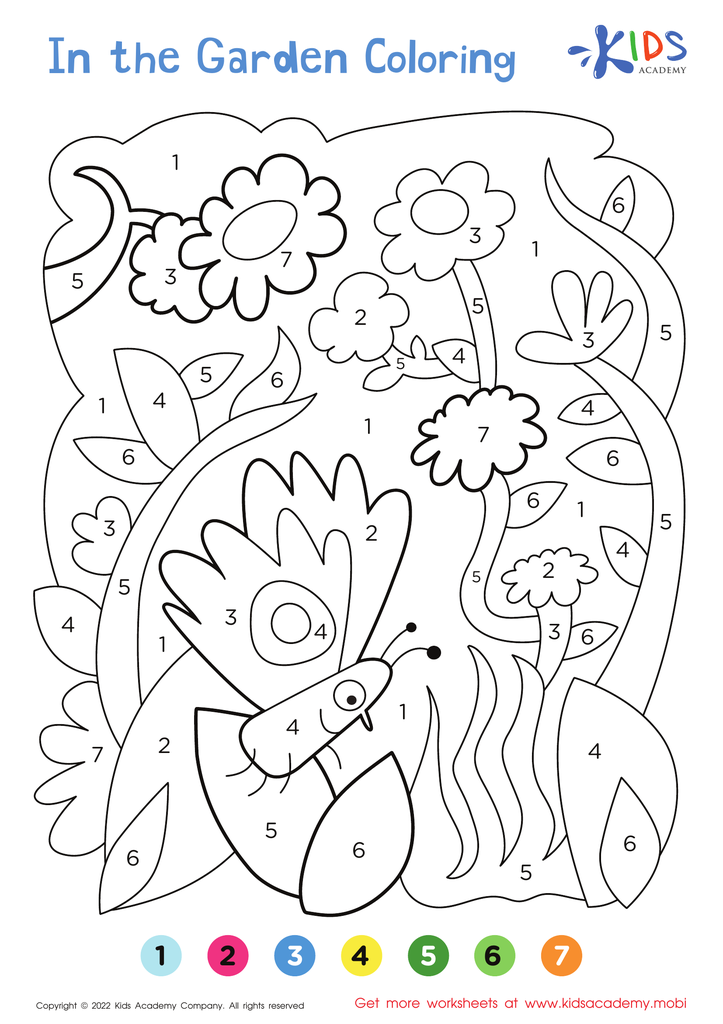
In the Garden – Coloring by Numbers







Number recognition is foundational for children aged 6-7 as it sets the stage for future mathematical understanding and success. During this critical developmental period, the ability to recognize numbers enhances a child’s cognitive and motor skills, fostering an engaging learning environment. When children effectively recognize and understand numbers, they build confidence in their abilities to tackle more complex math concepts later on.
Parents and teachers who emphasize number recognition help children develop critical thinking skills and improve their memory. This skill is not limited to math but extends to practical, real-world situations such as telling time, handling money, and measuring ingredients in cooking. Furthermore, number recognition is deeply tied to language skills; as children learn to articulate and describe numbers, they enhance their vocabulary and comprehension.
Early number recognition also helps identify potential learning difficulties. If a child struggles with this basic skill, parents and teachers can take early actions, such as exploring alternative teaching strategies or seeking specialized support, to mitigate future academic challenges.
Ultimately, laying a strong foundation in number recognition promotes a lifelong appreciation and curiosity for learning, setting children on a positive academic trajectory. Investing time and resources in helping children master this skill is a crucial responsibility for both parents and educators.








