
Number tracing Worksheets for Ages 6-7
4 filtered results
Difficulty Level
Grade
Age
-
From - To
Subject
Activity
Standards
Introduce your child to the fun world of numbers with our Number Tracing Worksheets for Ages 6-7! Perfectly designed for young learners, these engaging worksheets not only develop numeracy skills but also enhance fine motor coordination. Children will enjoy tracing and practicing numbers 0-20 in a cheerful and colorful environment, making learning an exciting experience. Our worksheets are ideal for both classroom and home settings, providing plentiful opportunities for number recognition and writing. These activities build a solid mathematical foundation and confidence. Download our free printables today and watch your child’s number skills flourish!
Favorites
With answer key
Interactive
 Assign to My Students
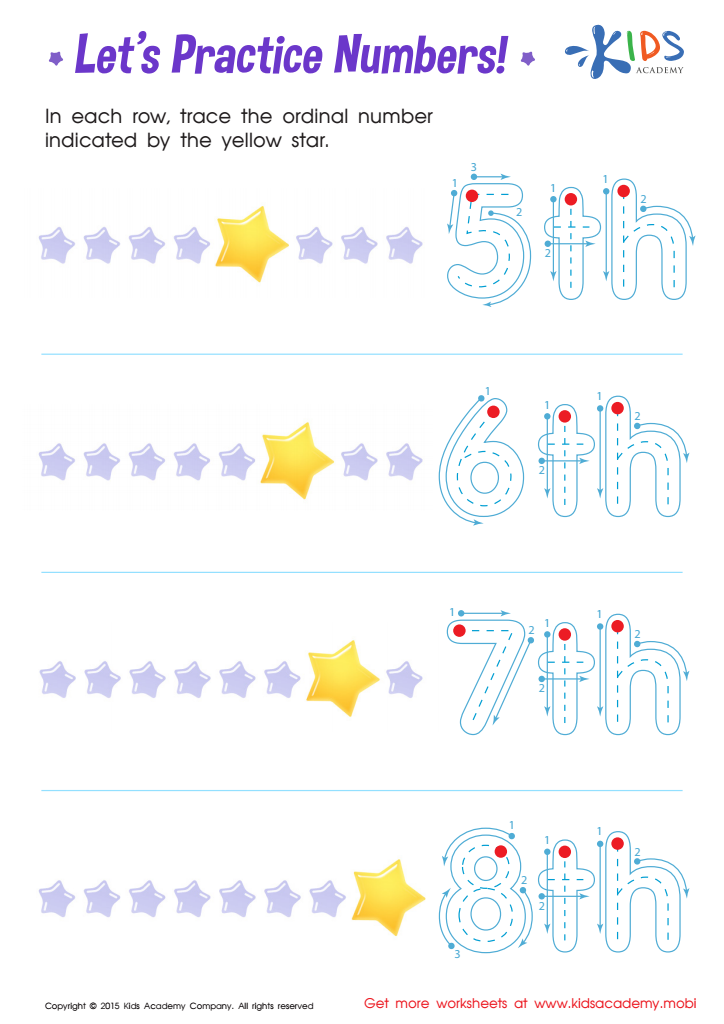
Ordinal Numbers: Let's Practice Numbers Printable
Worksheet

Count the Apples and Trace the Number 5 Printable
Count the juicy apples in each box, find the one with 5 and trace the number 5 following the arrows. Practice makes perfect! Print and get your little mathematician counting.
Count the Apples and Trace the Number 5 Printable
Worksheet
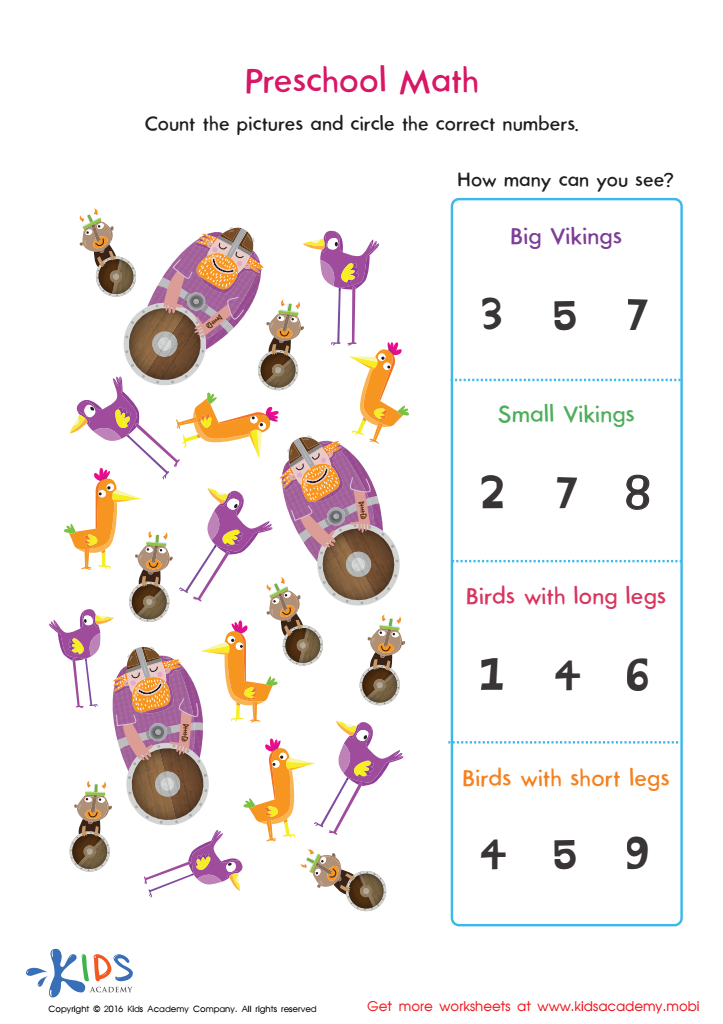
Counting Worksheet: Preschool Math
Worksheet
Join Kids Academy for Free
Who is primarily going to use this learning content?








Parents and teachers should prioritize number tracing for children aged 6-7 because it plays a pivotal role in laying the foundation for future mathematical success and fine motor skills development. At this age, children are just beginning to grasp the concept of numbers and develop the ability to recognize and write them. By engaging in number tracing, kids enhance their number recognition, understand numerical order, and establish a solid base for arithmetic operations such as addition and subtraction.
Number tracing also strengthens fine motor skills. When children trace numbers, they practice hand-eye coordination and improve their pencil grip. This fine motor development is crucial, as it directly affects their ability to write legibly and efficiently, impacting other academic areas as well.
Furthermore, number tracing helps develop cognitive skills by encouraging children to pay attention to detail and follow specific patterns, fostering critical thinking and problem-solving abilities. It instills patience and concentration, essential traits for tackling more complex tasks in the future.
Parental and teacher involvement in this practice also creates an environment of support and encouragement, making learning a fun and rewarding experience. This positive association with numbers can ignite a lifelong interest in mathematics, critical for success in various academic fields and everyday life.








