
Predicting outcomes Worksheets for Ages 6-7
3 filtered results
Difficulty Level
Grade
Age
-
From - To
Subject
Activity
Standards
Our "Predicting Outcomes Worksheets for Ages 6-7" are designed to enhance critical thinking and comprehension skills by engaging young learners in fun and interactive activities. These worksheets encourage children to anticipate what happens next in a story or scenario, fostering essential predictive abilities. Each worksheet is thoughtfully crafted to be age-appropriate, ensuring that kids stay motivated and confident as they learn. By integrating colorful illustrations and relatable contexts, the activities make learning enjoyable. Perfect for at-home learning or classroom use, our worksheets help build vital cognitive and problem-solving skills in early learners.
Favorites
With answer key
Interactive
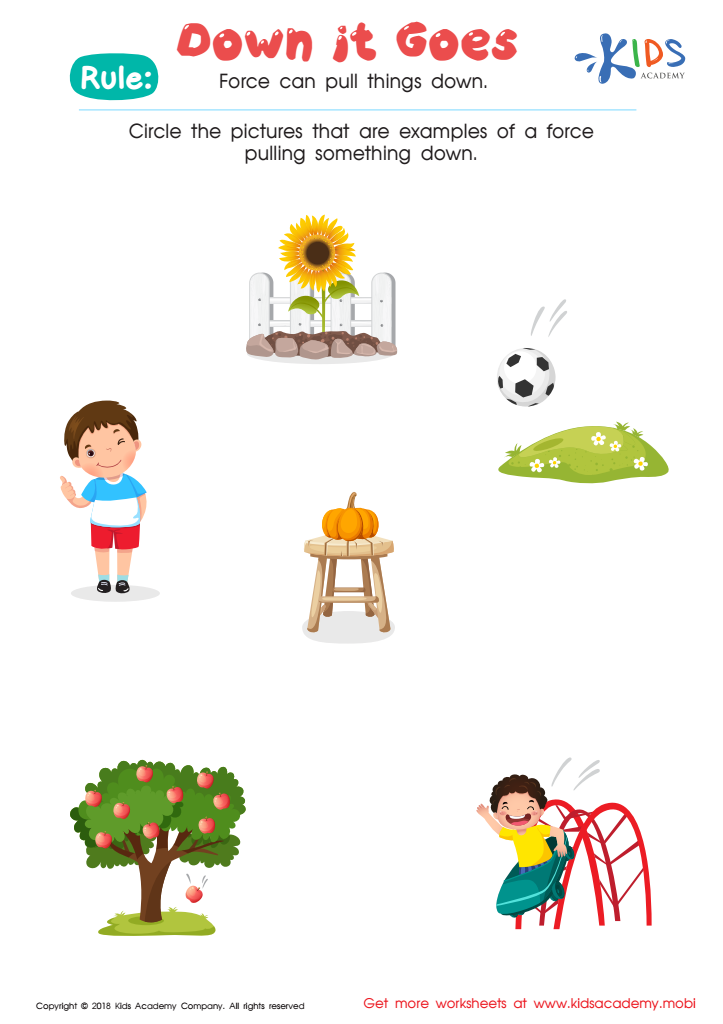
Down it Goes Worksheet
Explain gravity to your child using this fun worksheet. Ask them to give examples of things pulled down with force, then instruct them to circle the pictures that show this. It's a great way to help them understand the concept of gravity.
 Assign to My Students
Down it Goes Worksheet
Worksheet
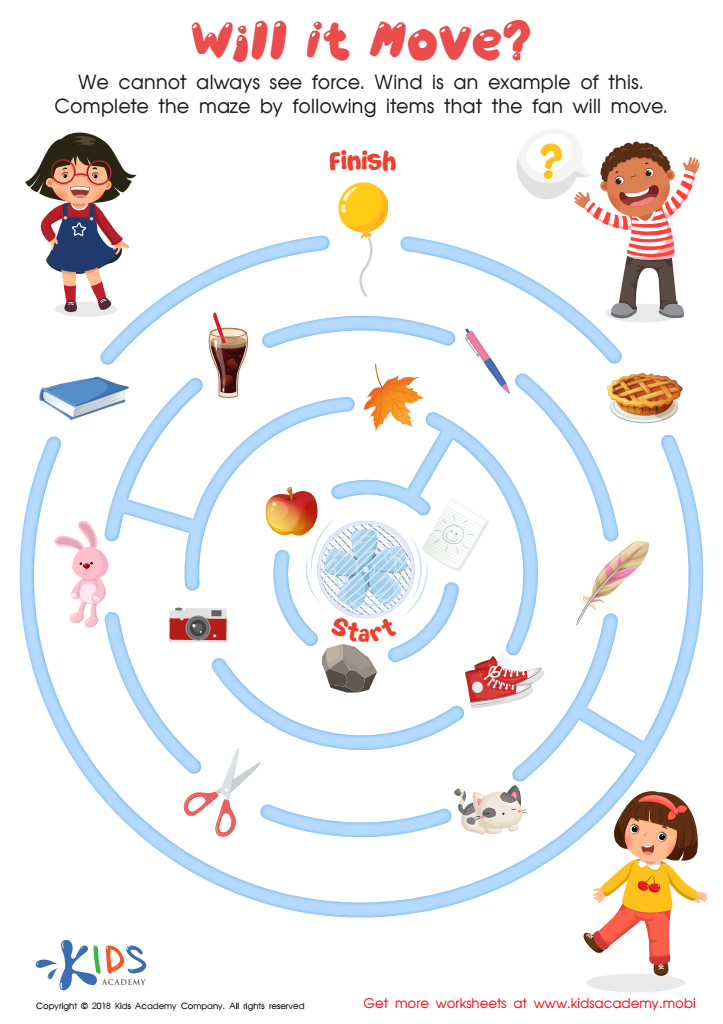
Will it Move? Worksheet
Does your child know about force? If yes/no, this worksheet can help. Force is invisible - like wind - but it moves objects. Ask your child to complete the maze, following the path of items moved by the wind. 80 words.
Will it Move? Worksheet
Worksheet
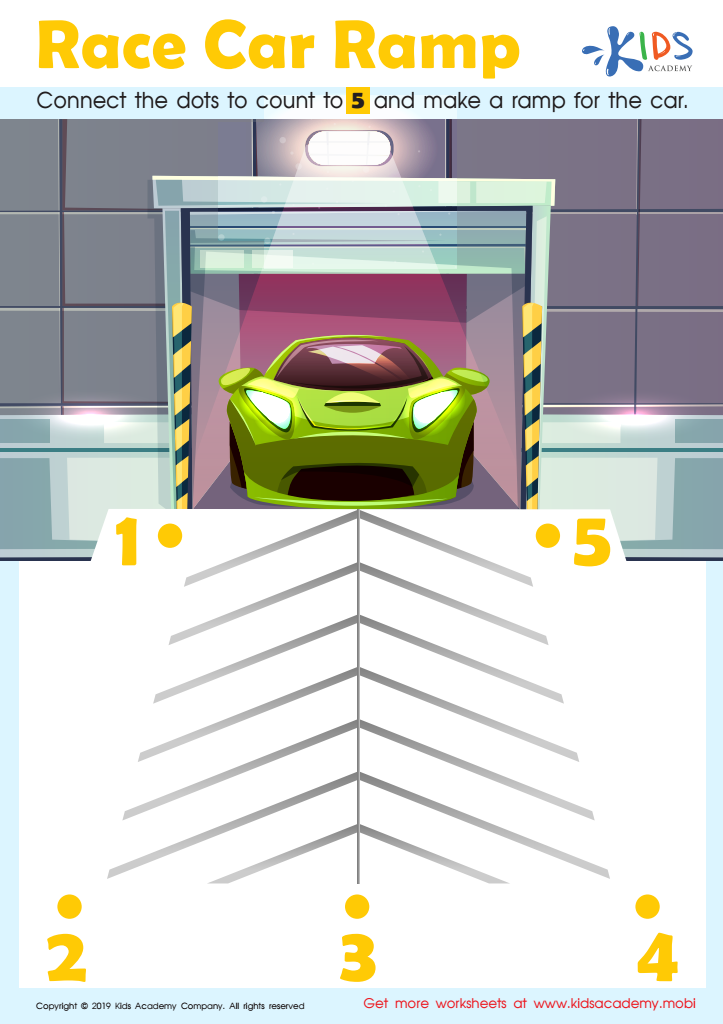
Race Car Ramp Worksheet
Kids can learn numbers quickly and have fun with this worksheet! It teaches preschoolers counting to 5 and allows them to draw a car ramp. It's a creative way to learn numbers, making them fun and easy to remember.
Race Car Ramp Worksheet
Worksheet
Join Kids Academy for Free
Who is primarily going to use this learning content?







Predicting outcomes is a crucial skill for children aged 6-7 because it fosters critical thinking, problem-solving, and comprehension skills that are fundamental for academic success and everyday life. At this age, children transition from simple recitation to more complex cognitive processes such as analyzing and inferring information.
For parents and teachers, nurturing the ability to predict outcomes supports the development of these higher-order thinking skills. When children predict outcomes, they learn to anticipate what might happen next in a story, an experiment, or a social situation, which enhances their understanding and engagement. This skill encourages kids to think ahead, consider possibilities, and recognize patterns, which are essential for subjects like math, science, and reading comprehension.
Moreover, predicting outcomes helps in building a foundation for learning resilience and adaptive thinking. If their predictions are incorrect, children learn to reconsider their thoughts and try new solutions, thus promoting flexibility and growth mindset.
Teachers can use prediction activities to identify students’ prior knowledge and misconceptions, tailoring instruction to individual needs. For parents, these activities can stimulate meaningful conversations and deeper connections through story-telling and everyday observations. Overall, focusing on predicting outcomes cultivates a generation of thoughtful, reflective, and adaptive learners, ready to face future challenges.








