Recognizing equal parts Worksheets for Ages 6-7
3 filtered results
-
From - To
Discover our "Recognizing Equal Parts Worksheets" designed specifically for children aged 6-7! These engaging and interactive worksheets help young learners develop a solid understanding of fractions by visually distinguishing equal parts. Each activity encourages students to identify, color, and compare fractions in a fun and relatable way. With vibrant illustrations and age-appropriate challenges, kids will build their math skills and confidence while enjoying the learning process. Perfect for home or classroom use, our worksheets help reinforce important concepts while sparking a love for math. Explore our collection today and support your child's learning journey in recognizing equal parts!
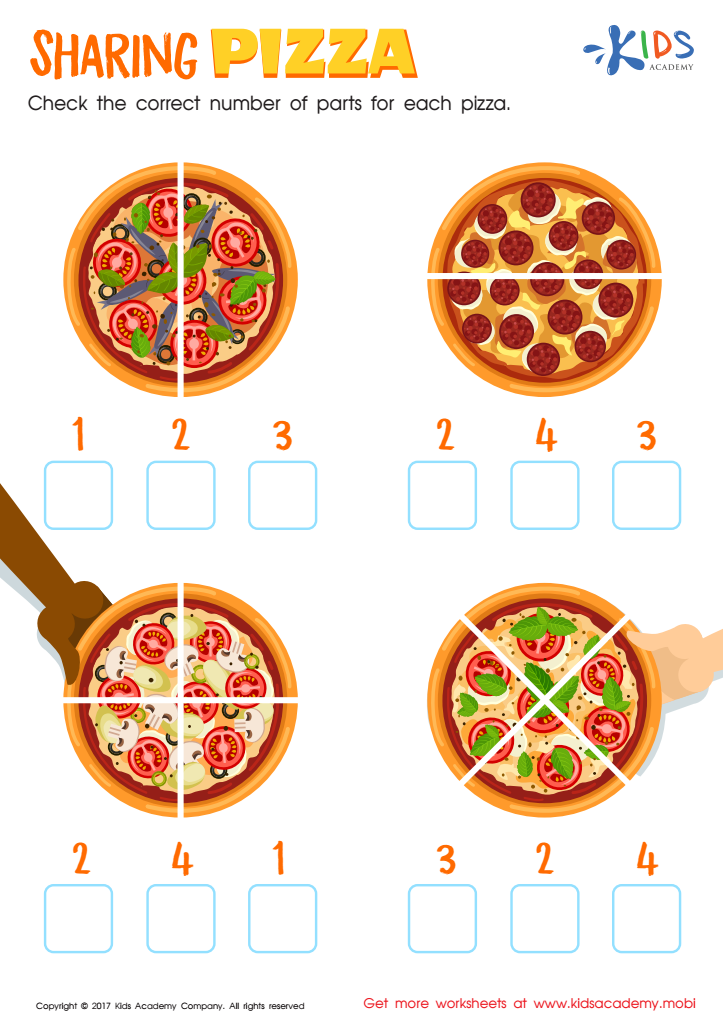
Sharing Pizza Worksheet
 Assign to My Students
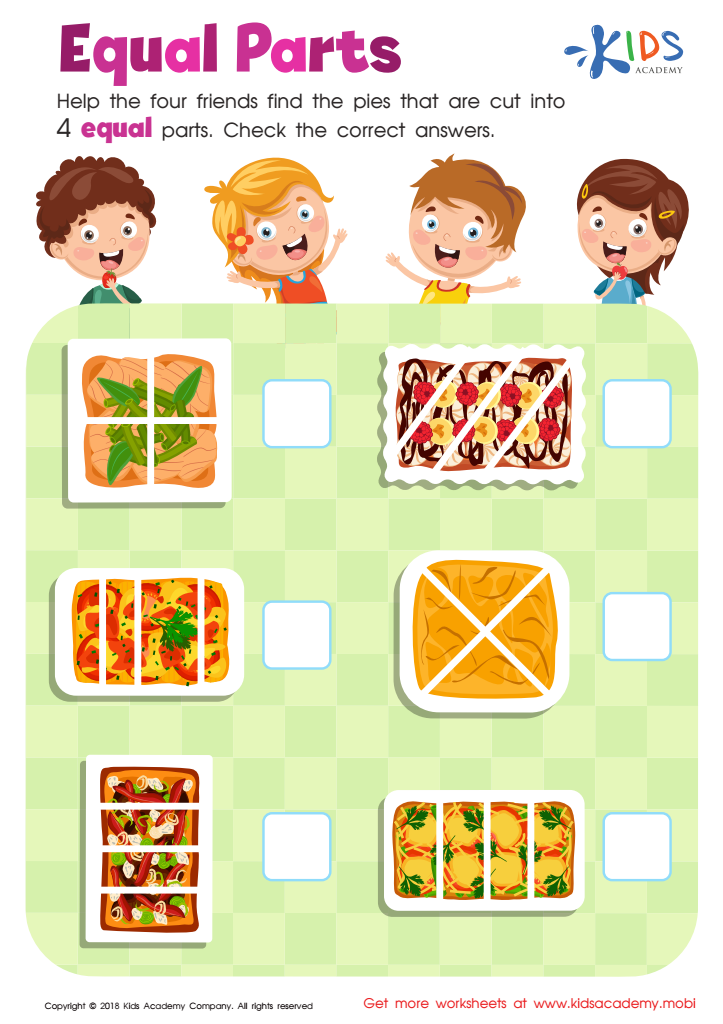
Equal Parts: Food Worksheet



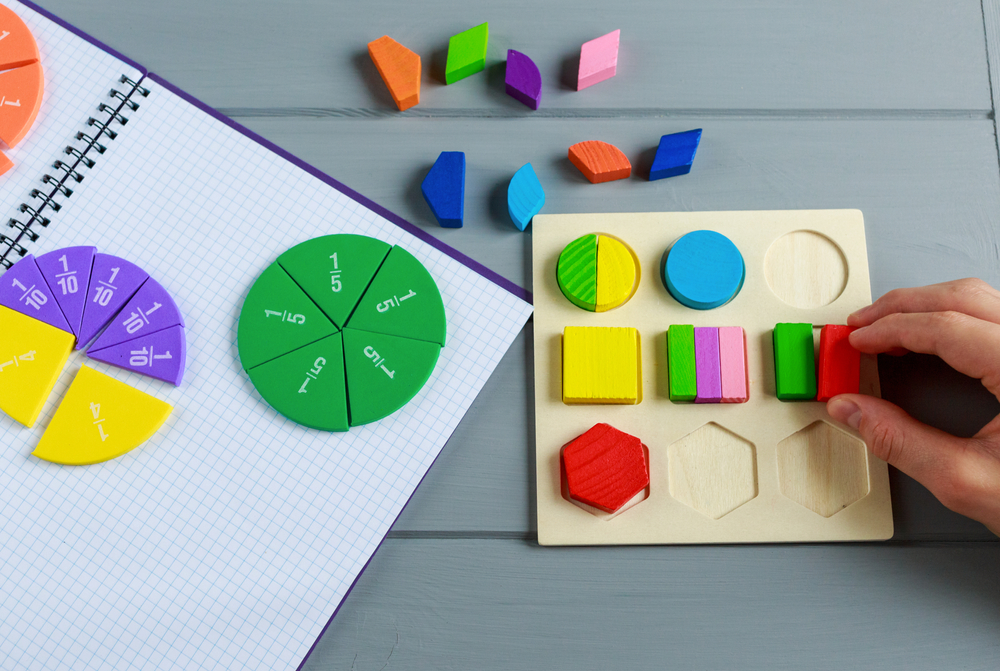
Recognizing equal parts is a foundational concept in mathematics that is crucial for young learners, especially those aged 6-7. At this stage, children are beginning to explore fractions, and understanding equal parts lays the groundwork for future mathematical concepts, including addition, subtraction, and more complex operations involving fractions. Parents and teachers should care about this concept for several reasons.
Firstly, mastery of equal parts enhances critical thinking and problem-solving skills, as children learn to analyze and compare different quantities. It also helps them develop a sense of fairness and equity, as they understand the significance of dividing items equally—important life lessons that extend beyond math.
Moreover, recognizing equal parts plays a significant role in subjects like science and art, where concepts of symmetry and proportion come into play. Engaging with practical activities at home or in the classroom—such as sharing snacks equally or creating patterns using equal sections—encourages hands-on learning, making math more relatable and enjoyable.
Ultimately, by prioritizing the understanding of equal parts, parents and teachers can foster a strong mathematical foundation, ensuring that children are better prepared for future learning and able to approach math with confidence.








