Spatial Orientation Worksheets for Ages 6-7
6 filtered results
-
From - To
Enhance your child's spatial awareness with our engaging Spatial Orientation Worksheets designed specifically for ages 6-7. These fun and interactive activities help young learners develop essential skills such as understanding directions, recognizing patterns, and improving their ability to navigate spaces. Each worksheet is crafted to promote critical thinking through playful exercises that encourage problem-solving and creativity. Ideal for teachers and parents alike, these resources will keep your child motivated while they build foundational skills necessary for future academic success. Explore our variety of worksheets and watch your child's confidence grow as they master spatial orientation in an enjoyable way!
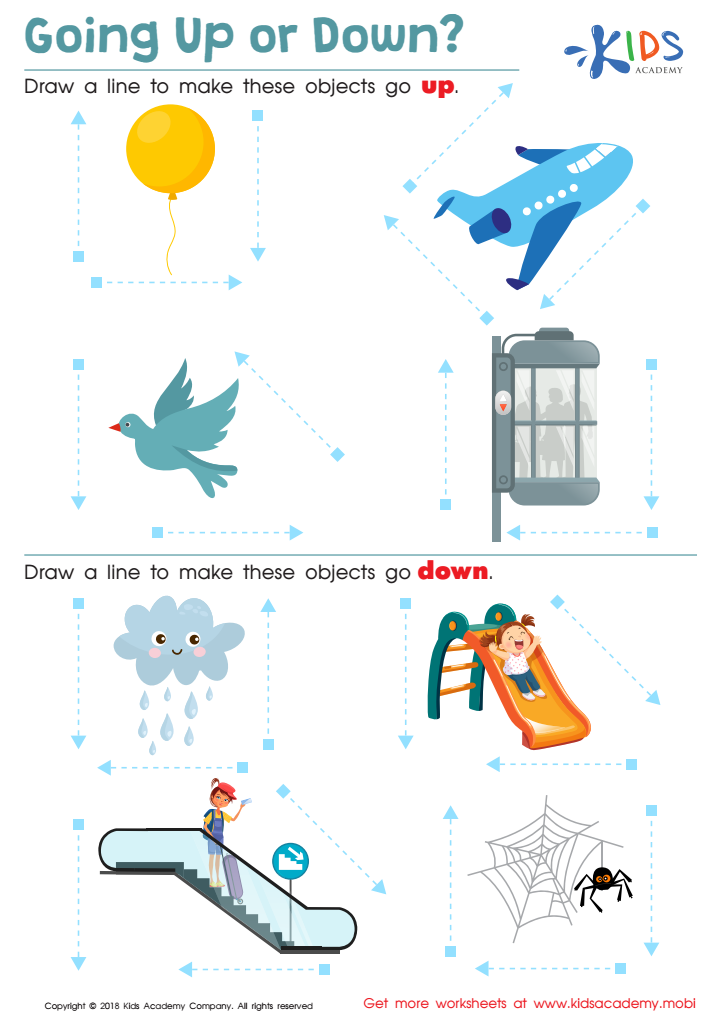
Going up or Down? Worksheet
 Assign to My Students
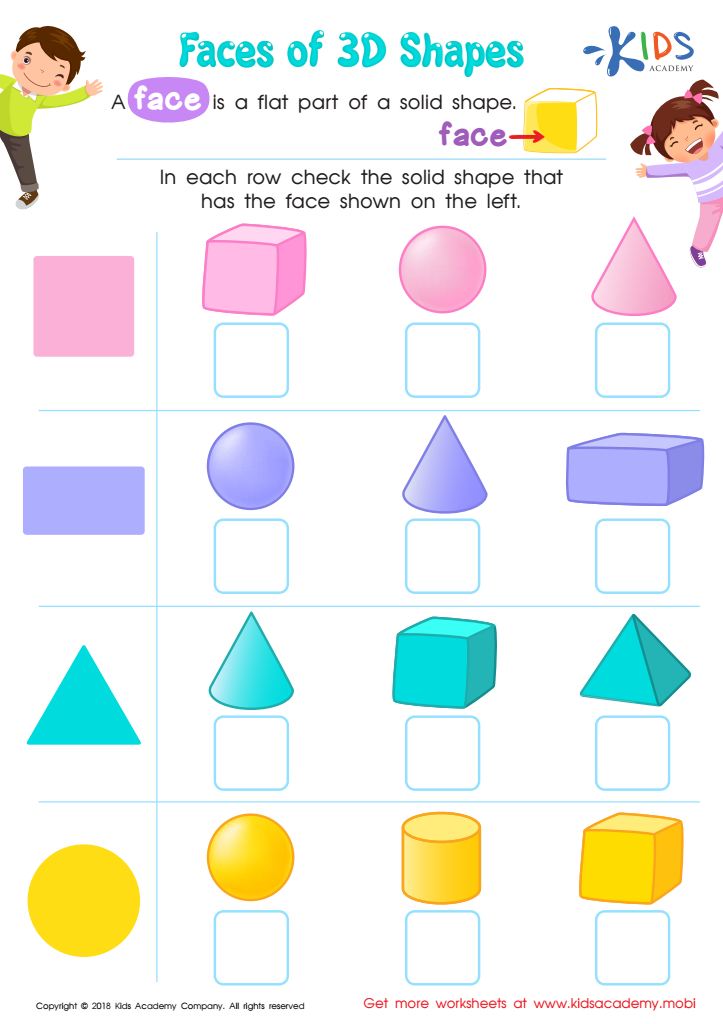
Faces of 3D Shapes Worksheet
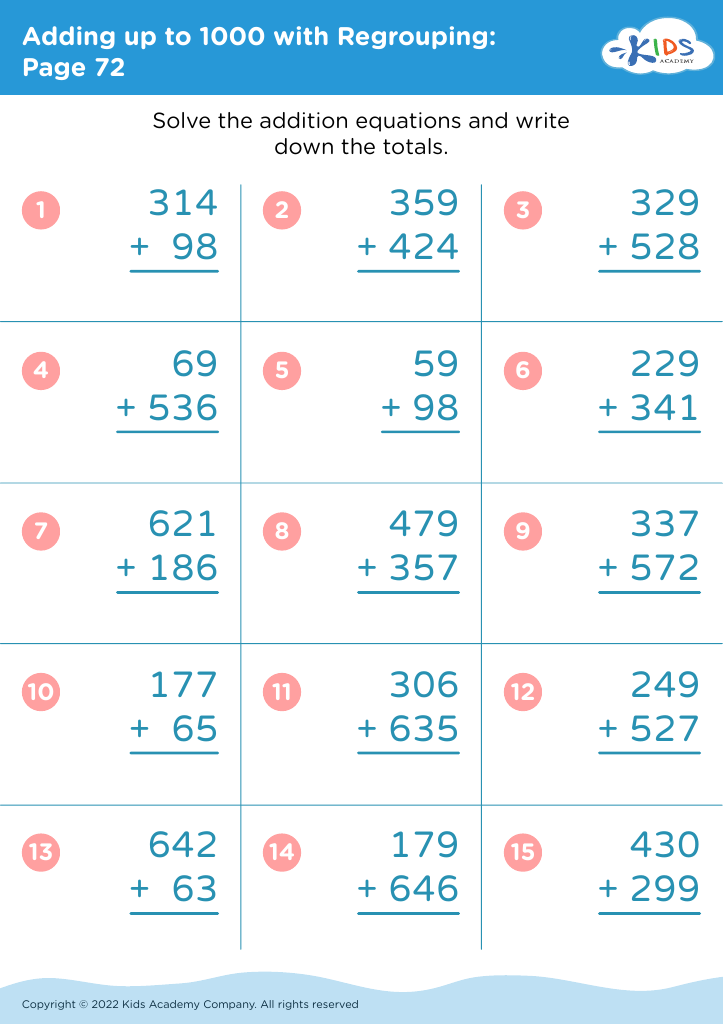
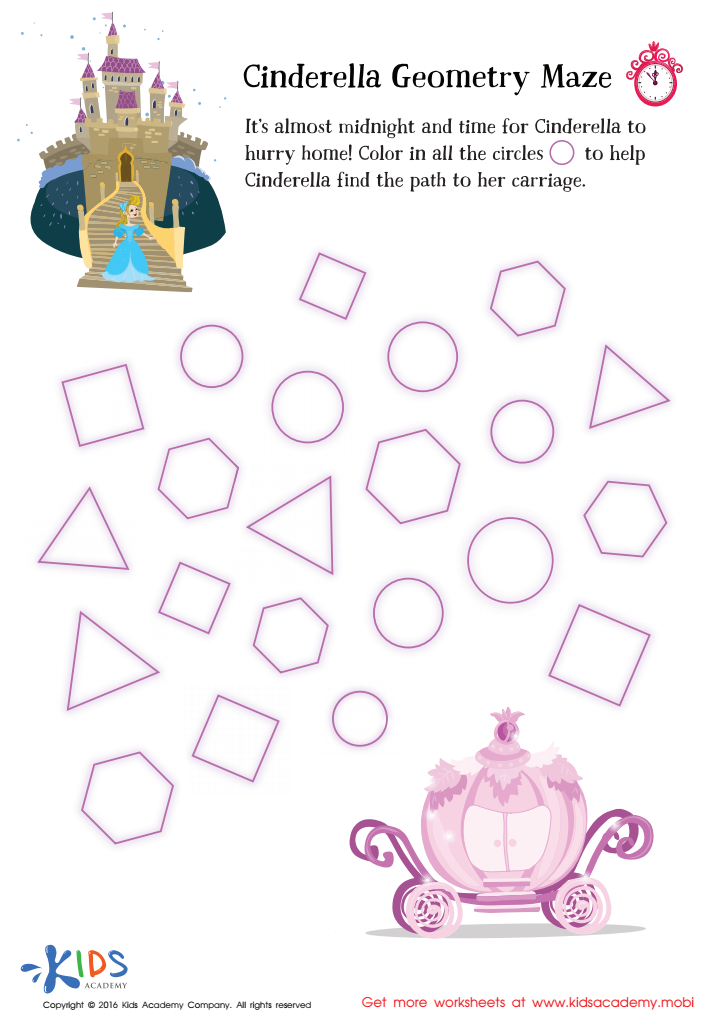
Cinderella Geometry Maze Worksheet
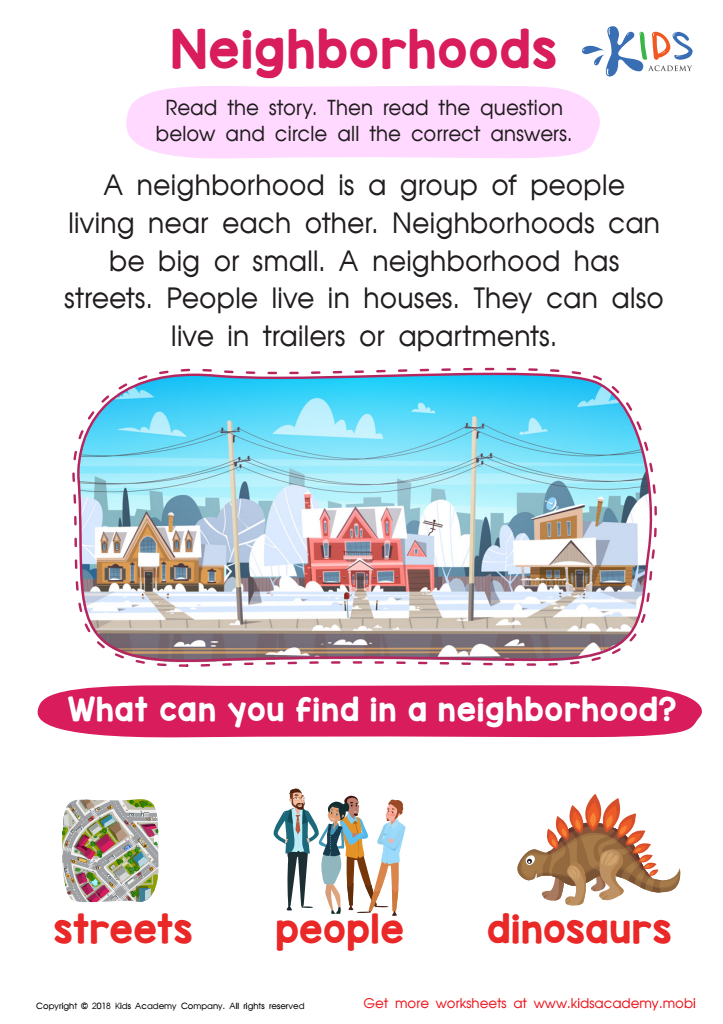
Neighborhoods Worksheet
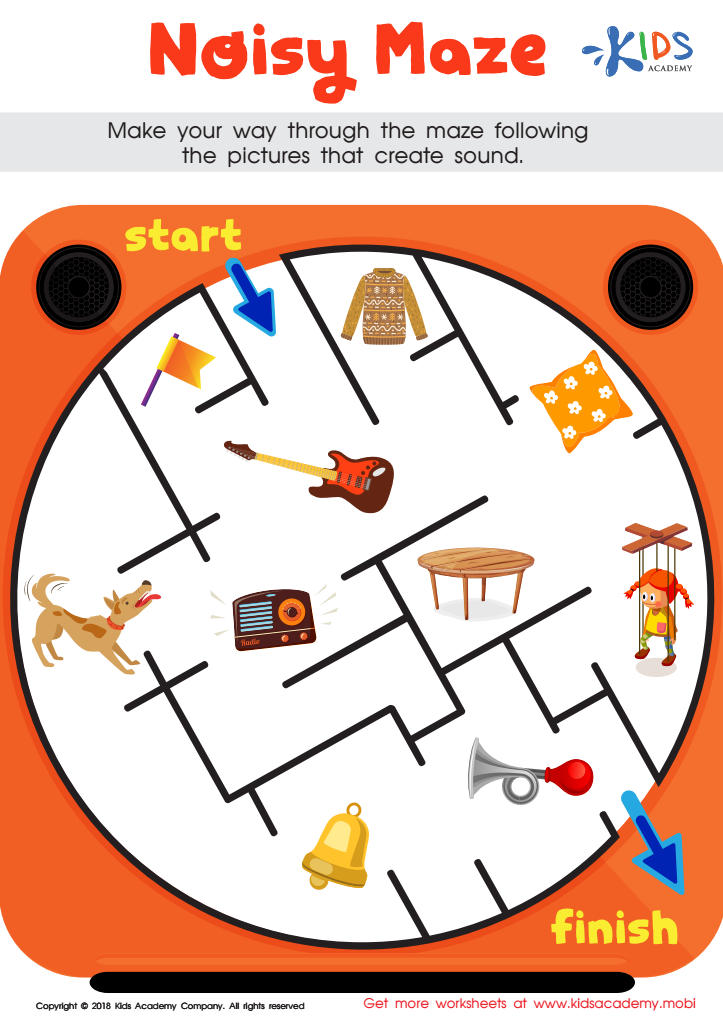
Noisy Maze Worksheet






Spatial orientation is an essential cognitive skill for children aged 6-7, significantly influencing their learning and development. At this age, children are naturally curious and eager to explore their environments. Understanding spatial orientation helps them navigate their world more effectively, fostering independence and boosting their confidence. This skill enhances their ability to comprehend and process information related to geometry, maps, and other spatial concepts, laying a solid foundation for future academic learning in subjects like mathematics and science.
Moreover, spatial orientation enhances critical life skills such as problem-solving and decision-making. By engaging in activities that promote spatial awareness—like building blocks, puzzles, or cooperative games—children develop their ability to visualize and manipulate objects in space. These activities foster social interactions and teamwork, promoting better communication and camaraderie among peers.
Parents and teachers play a vital role in cultivating spatial orientation by providing learning experiences that stimulate children’s natural curiosity. It is crucial for developing motor skills through hands-on activities, enabling children to connect their mental and physical capacities. As children strengthen their spatial orientation abilities, they build self-confidence and a sense of place in their environment, which supports their overall development and readiness for future academic challenges.








