Time recognition Worksheets for Ages 6-7
6 filtered results
-
From - To
Discover our engaging Time Recognition Worksheets designed specifically for children ages 6-7! These educational resources help young learners master the concept of time by recognizing clocks, understanding hours and minutes, and differentiating between AM and PM. Fun and interactive activities, including clock drawings and time-telling exercises, encourage essential problem-solving skills and foster a love for learning. Perfect for classroom use or homeschooling, our worksheets align with educational standards while providing a playful approach to important time concepts. Download and print our worksheets to support your child's development in understanding time, enhancing their math skills, and boosting their confidence. Let’s make learning fun!
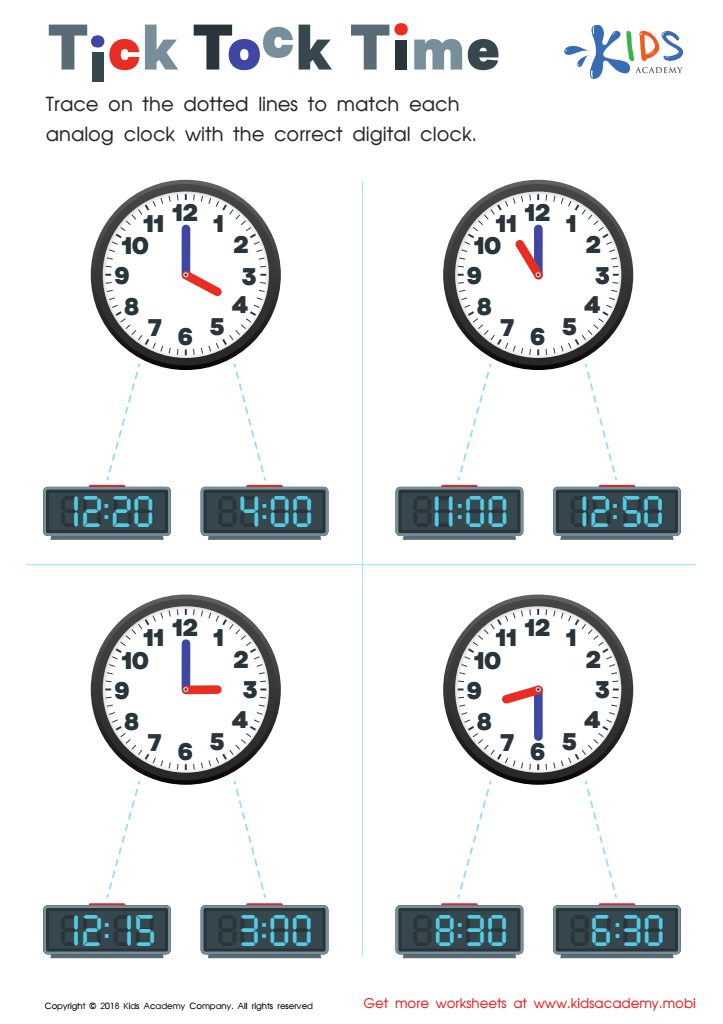
Tick Tock Time Worksheet
 Assign to My Students
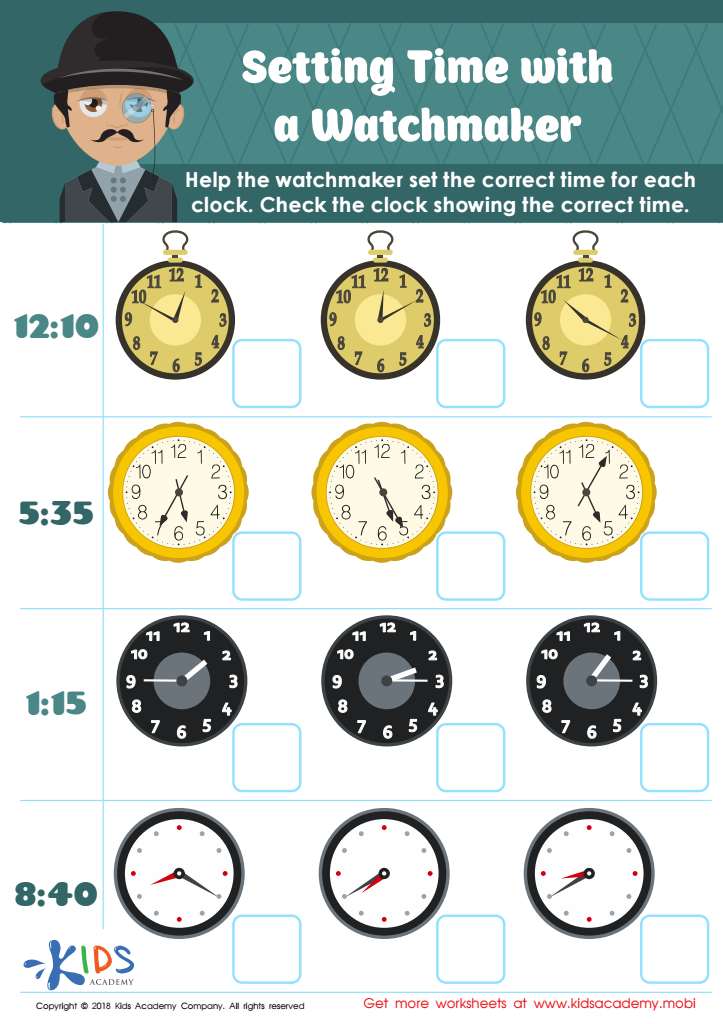
Setting Time with Watchmaker Worksheet
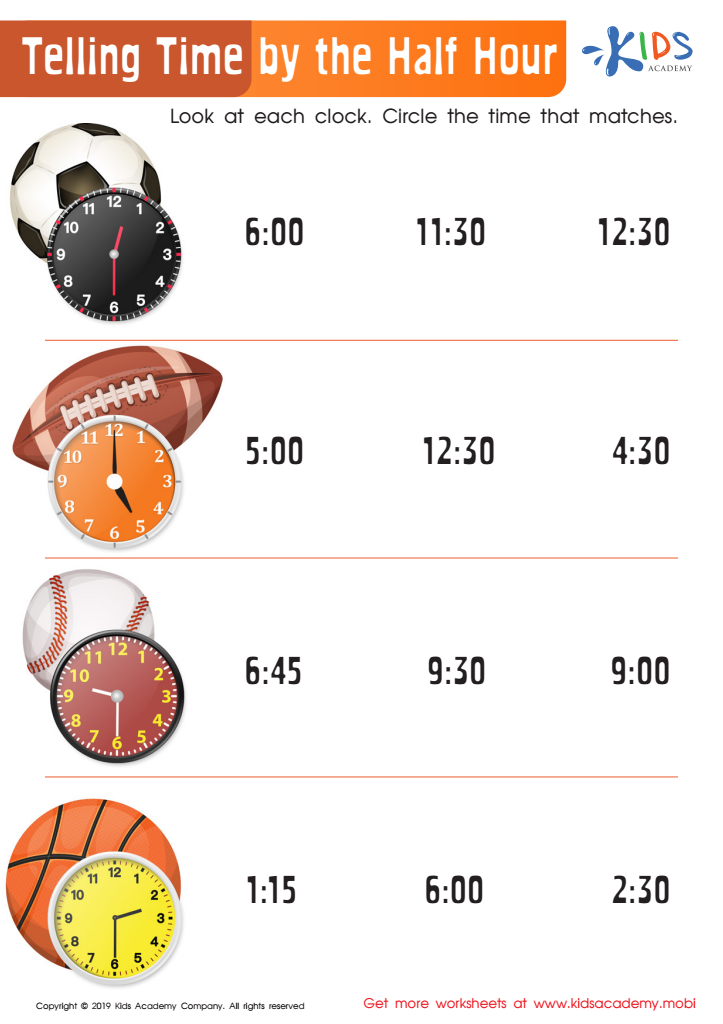
Telling Time by the Half Hour Worksheet
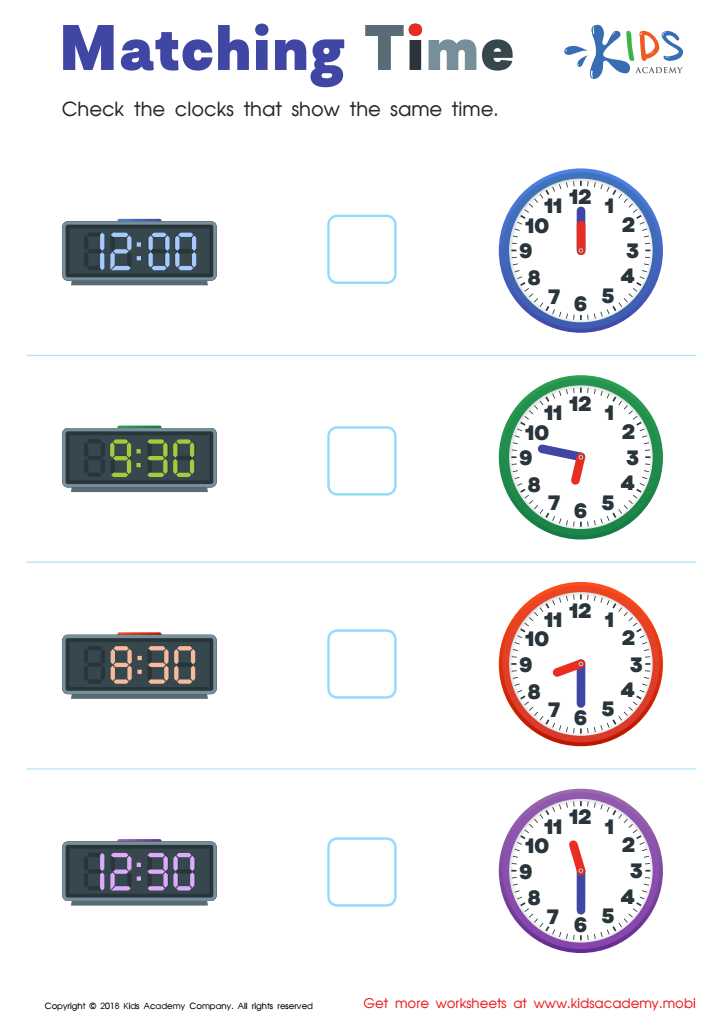
Matching Time Worksheet
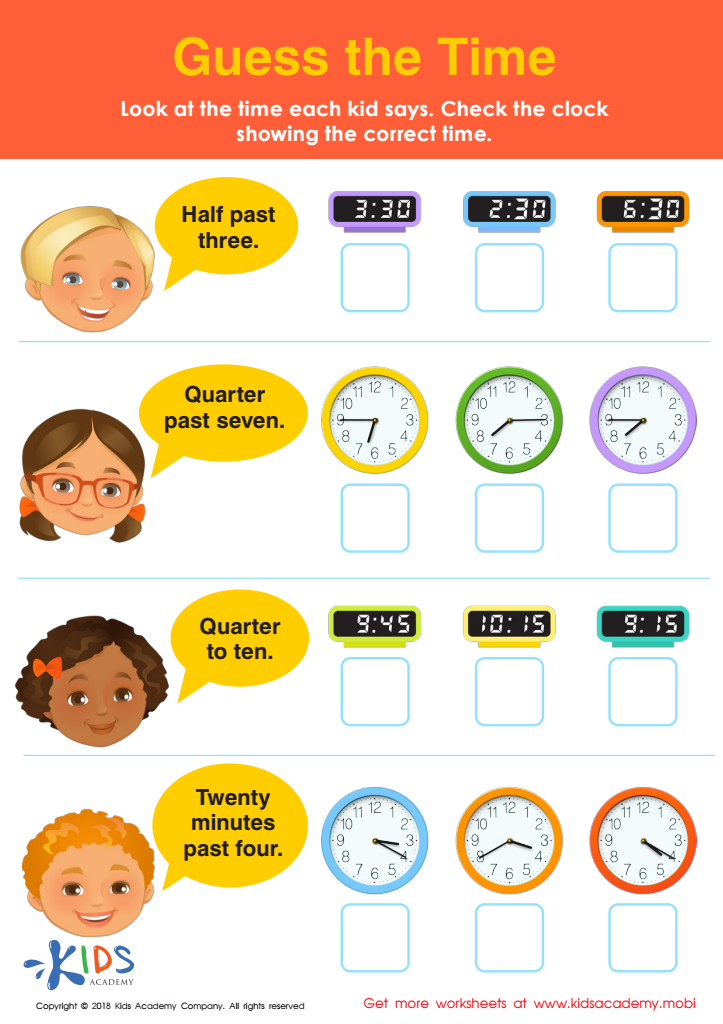
Guess the Time Worksheet
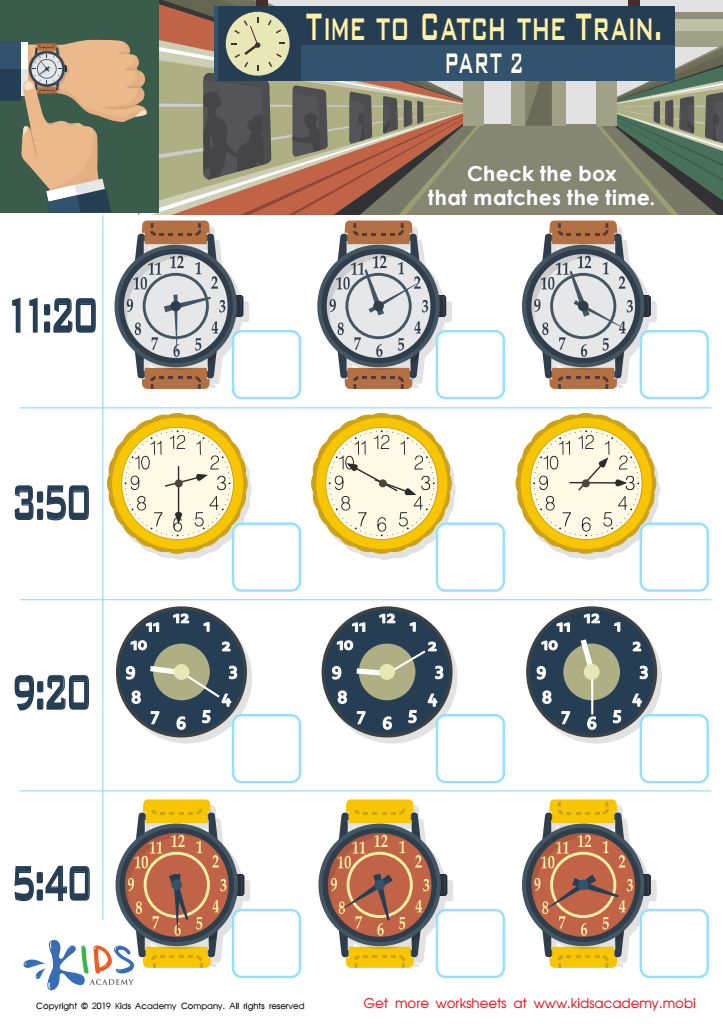
Time to Catch the Train Part 2 Worksheet






Time recognition is a crucial foundational skill for children aged 6-7, as it lays the groundwork for their understanding of order, responsibility, and planning. At this developmental stage, children begin to grasp the concept of time, transitioning from a vague awareness to a practical understanding of minutes, hours, and daily routines.
By learning to tell time, children enhance their cognitive skills, including critical thinking and problem-solving. Recognizing time helps them understand sequences in daily activities, such as getting ready for school or completing homework, fostering a sense of responsibility and independence.
Additionally, time management is a vital life skill that directly impacts academic performance and personal development. Children who successfully learn to manage their time tend to be more focused, organized, and able to prioritize tasks, thus setting the stage for future success in higher grades and beyond.
Moreover, time recognition encourages social skills as it assists children in collaborating with peers, contributing to group activities within set time frames.
Therefore, parents and teachers should prioritize time recognition, as it equips children with essential skills for everyday functioning, academic growth, and ultimately, positive life outcomes.








