Understanding biodiversity Worksheets for Ages 6-7
3 filtered results
-
From - To
Discover the wonders of nature with our "Understanding Biodiversity Worksheets" designed specifically for ages 6-7. These engaging worksheets help young learners explore the variety of living organisms, their habitats, and the importance of biodiversity in our ecosystem. With colorful illustrations and age-appropriate activities, children will engage in fun exercises that promote critical thinking and environmental awareness. From matching animals to their habitats to identifying different species, these worksheets provide a hands-on approach to learning about plant and animal diversity. Inspire your little ones to appreciate and protect the planet with our comprehensive resources that make understanding biodiversity an exciting adventure!
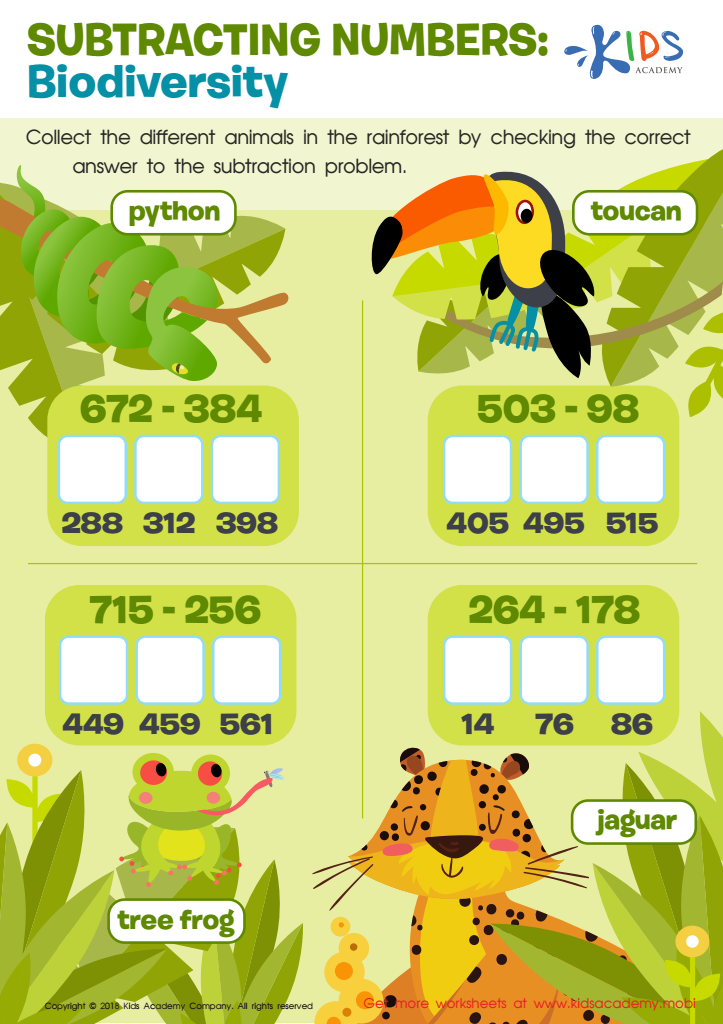
Subtracting Numbers: Biodiversity Worksheet
 Assign to My Students
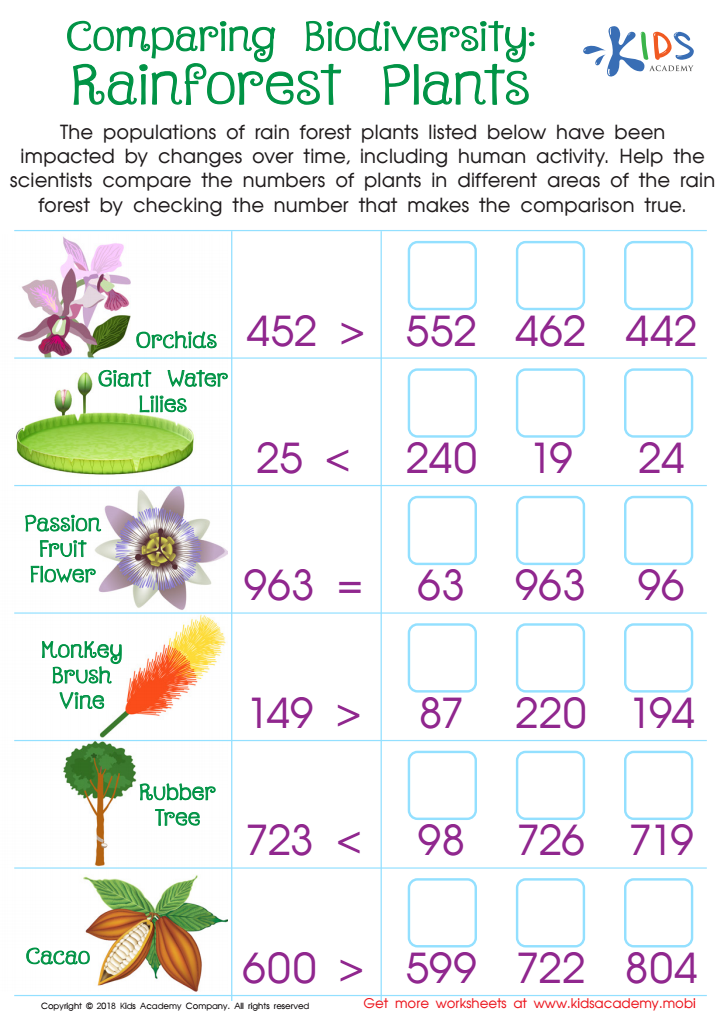
Comparing Biodiversity: Rainforest Plants Worksheet
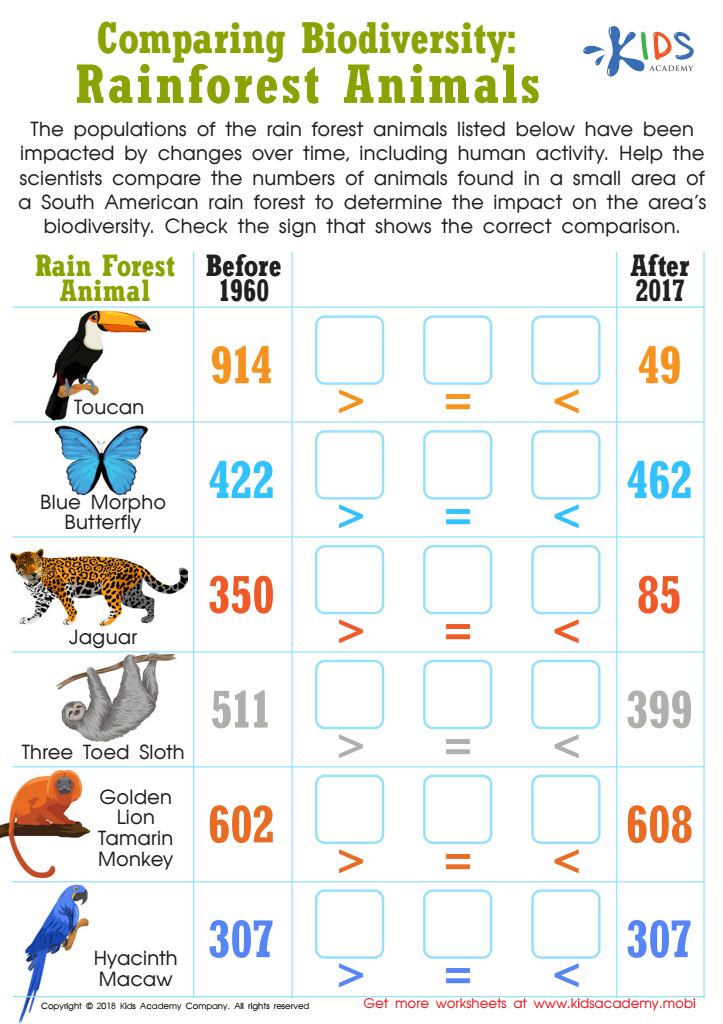
Comparing Biodiversity: Rainforest Animals Worksheet








Understanding biodiversity is essential for children aged 6-7, as it lays the foundation for a lifetime of appreciation for the natural world. Parents and teachers should care for various reasons. Firstly, learning about biodiversity helps children recognize the variety of plants, animals, and ecosystems, fostering curiosity about nature. This early engagement promotes critical thinking, as children explore how living organisms interact and depend on one another.
Additionally, understanding biodiversity cultivates empathy and responsibility. When children learn about different species and their habitats, they begin to understand environmental stewardship's importance, sparking a desire to protect the planet. This is crucial as today's children will become tomorrow's caretakers of the Earth.
Furthermore, biodiversity lessons support educational standards, integrating science, art, and social studies into engaging activities, enhancing traditional learning methods. By exploring local ecosystems, children benefit from hands-on experiences that make learning interactive and memorable.
Promoting biodiversity awareness also nurtures community values. By encouraging teamwork in nature-related projects, children develop communication skills and build lasting bonds with their peers. In short, fostering a sense of respect and care for biodiversity empowers young learners to create a brighter, more sustainable future.








